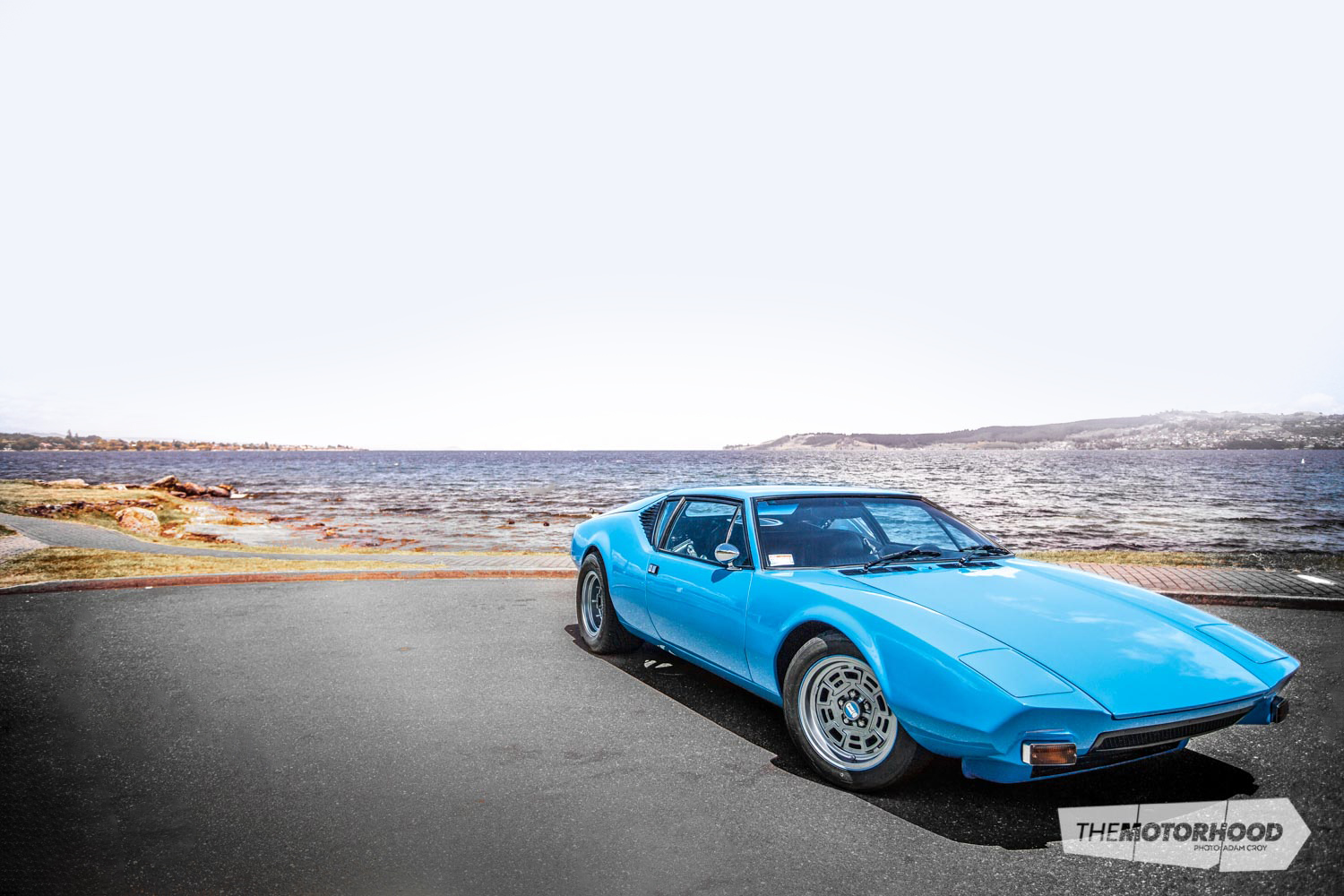
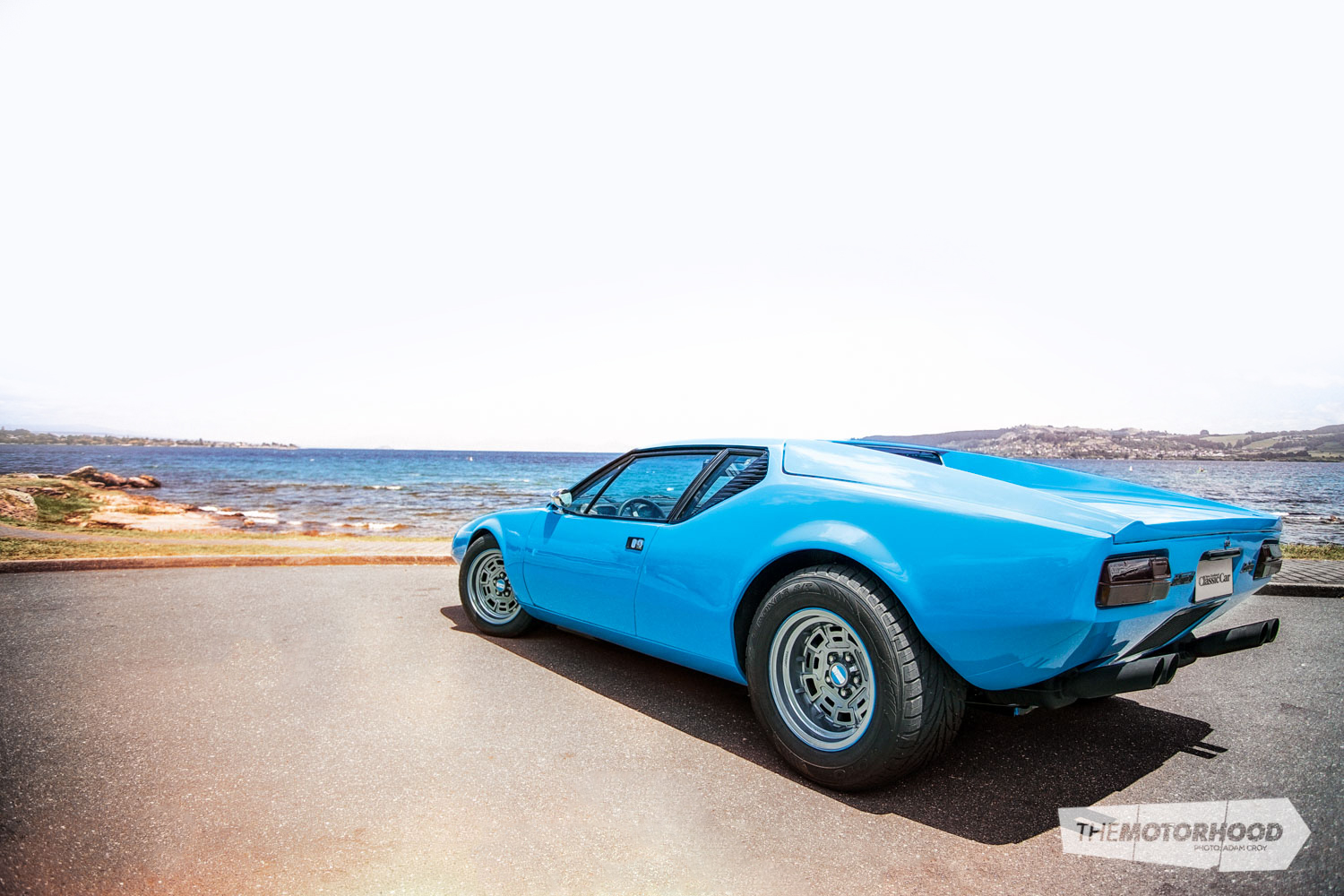
Ten interesting facts about the De Tomaso

1 January, 2015

data-animation-override>
We’ve had a dig around and found our favourite top ten facts about the De Tomaso. Got one we should know about? Leave us a comment below.

  1. The De Tomaso Mangusta was designed to take Shelby’s Cobra head-on, hence the name, which is Italian for mongoose — the cobra’s only known enemy.
  2. The Pantera was styled by Tom Tjaarda, his design being translated into metal by Vignale.
  3. The Pantera made its US debut at the 1970 New York Motor Show.
  4. In the US, Ford sold the Pantera through its Lincoln-Mercury dealership organization.
  5. On inspecting the first Panteras to arrive in the US, Ford technicians discovered many design inadequacies and drew up a list of modifications — these included a complete front and rear suspension rebuild, the installation of around 60 strengthening gussets, air-conditioning alterations, reinforcement of the car’s steering-rack mountings, and further welding of the front and rear frame structures.
  6. The Pantera went through many model changes during its long life — these include the GTS, GR3, GT4, GT5S, GR4, and GR5S. A Countach-like rear wing first appeared on the GT5 and subsequently became a popular retro-fit on earlier cars.
  7. When Ford US finally pulled the plug on the Pantera, De Tomaso had to buy back 200 unsold and unfinished cars, all of which were subsequently sold on the European market.
  8. The Pantera became a film star when a bright yellow example appeared in the 1976 movie Cannonball. Driven by a haughty and aristocratic German race driver (played by James Keach), the Pantera was easily the quickest car in the movie. Of course, both car and driver came to a sticky end. 
  9. Elvis Presley shot his Pantera on more than one occasion when it wouldn’t start. The King’s yellow car — a 1974 example — was purchased by him for US$2400 as a gift for his then girlfriend, Linda Thompson. This car is now on display at the Petersen Automotive Museum in Los Angeles.
  10. Two years into its life, the Pantera was almost replaced with a Series II model. Designed by Ghia, the prototype was unveiled in 1974 but remained a one-off. Renamed the ‘Monttella’, the car remained on display at Ford’s Michigan headquarters until 1981 before being sold. The Monttella was auctioned in 2006, fetching US$99,000.

More to the point

This Daimler SP252 is so rare, few people know it exists. It’s one of a kind. It’s the only surviving, in fact the only SP252 ever completed; the would-be successor to the SP250 Daimler Dart. It is also the last sports car to have been designed by Jaguar’s legendary founder, Sir William Lyons.
Perhaps one of the original Dart’s biggest problems was it’s somewhat-divisive looks. It certainly went well enough to win fans, although Sir William wasn’t among them. It crushed the opposition in the Bathurst six-hour race, finishing five laps ahead of anyone else, and it was snapped up by police forces in Britain, Australia, and New Zealand, as it was the fastest thing on the road.
So you’d think a stunning new body with the magic Lyons touch would have been a surefire success. Why this car never made it into production is still something of a mystery, as the official explanations barely stack up.

Polishing to perfection

The secret to a show-stopping finish is colour sanding, no matter which paint system you use. Even a good painter, no matter how experienced or talented — like my mate Bruce Haye, CEO at Ace Panel and Paint in Whitianga — can’t shoot to a perfect mirror finish. To get that level of perfection, you need to colour sand.
It used to be called ‘rubbing out’ or ‘cutting’, and it was done with pastes that came in cans. They worked — sort of — but the compounds really just rounded off imperfections instead of eliminating them, and they removed a lot of paint in the process. But now your new finish can be made flawless, thanks to microfine sandpapers that come in 1000, 1500, 2000, and even 2500 grit ranges, and Farecla G3 polish — available from automotive paint suppliers.