Not many people can say that they hold a record on their driveway-come-racetrack hill climb —but Rod Millen can. His Pikes Peak Toyota Celica was undefeated once more at the Leadfoot Festival, held at his Leadfoot Ranch in Hahei on the Coromandel during the weekend of February 6–8.
The inaugural Leadfoot Festival in 2011 was a private affair organized by Rod and his wife Shelly to celebrate Rod’s 60th birthday. After this event, and after much thought, it was decided to take the event to the public.
This year’s event lived up to its name, with a diverse mix of fast and fun cars thundering up the mile-long driveway of cambers, corners, and switchbacks. If automotive variety is what you like, then you will appreciate everything from Anne Thompson’s 1906 Darracq Grand Prix car to ‘Mad Mike’ Whiddett’s 1996 Mazda RX-7 drift car. American and Australian muscle cars were also a crowd favourite, and it was a delight to see the return of the Rat Trap fuel-altered drag car direct from the USA performing burnout demonstrations.
Leadfoot Ranch is situated on 150 manicured acres, with authentic American-themed farm barns and other similar retro buildings and vintage farm equipment displayed. The three-day event was an ideal gearhead weekend for car clubs, vendors, and food stalls to participate in, with the vibrant atmosphere attracting visitors all over the world.

Rod Millen’s turbocharged four-cylinder Toyota Celica set a Pikes Peak record in 1994 on an all-dirt road which stood for 13 years. Here it is at rest outside Leadfoot Ranch’s vintage-era Mobil gas station.
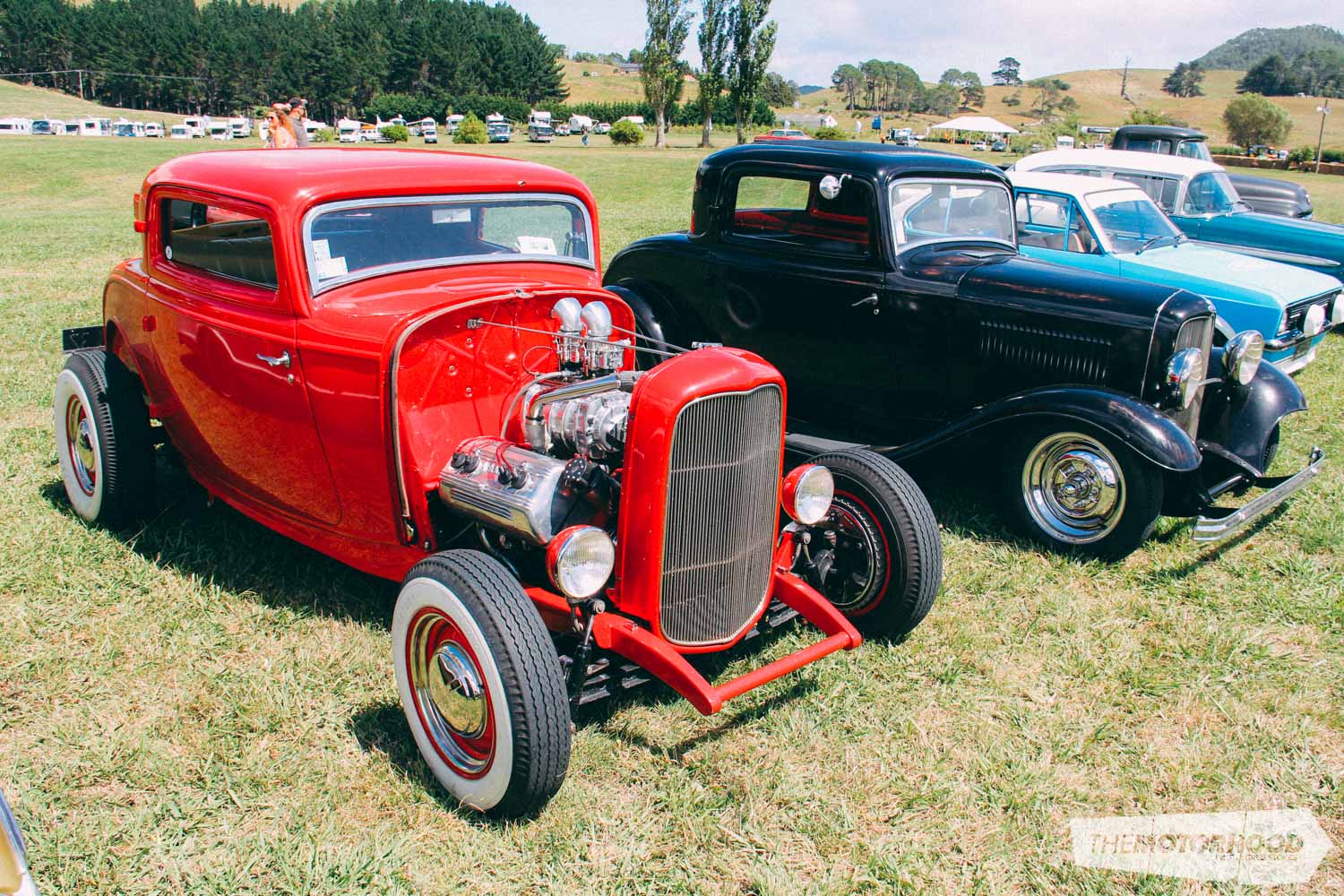
Gary ‘Grease’ Martin’s blown Ardun-powered ’32 coupe, and Steve Dally’s ’32 coupe were just two of the many hot rods on display during the event.
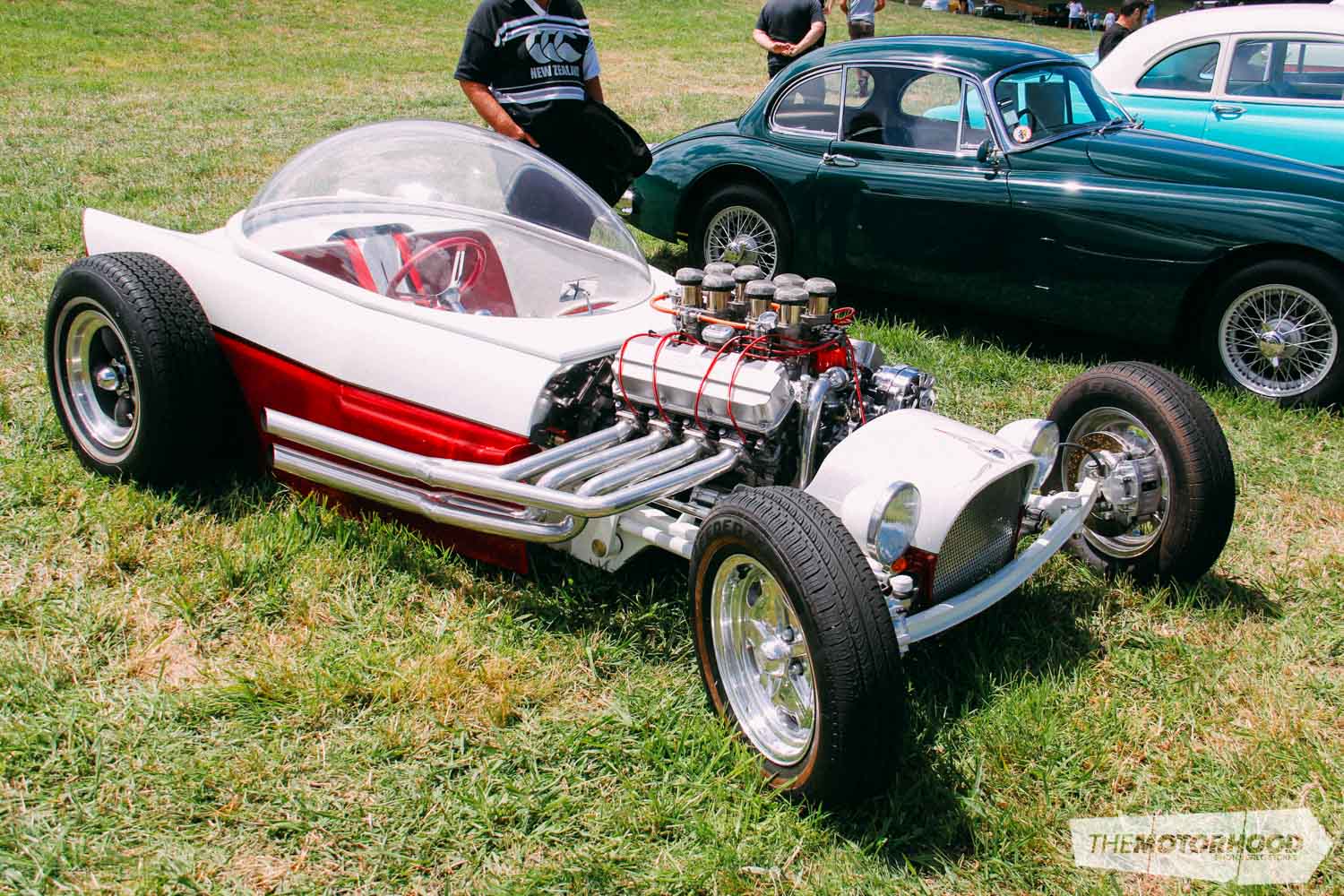
Luke Ennion’s ‘Little Menace’ bubble top was on display — the Ed Roth tribute was the NZV8 Hot Rod Special cover car.

Steve Day’s 1959 Briggs Special was originally built by Christchurch’s Brian Briggs. The chassis is a much modified Ford Model A, with early-Ford running gear, and an Offenhauser-equipped Ford flathead V8 engine.

John Hinton’s modified Ford F100 held the attention of a constant crowd all weekend, showcasing the twin-turbo Lexus V8 engine and full tubular chassis. It’s a past NZV8 cover car, as seen in Issue No. 116, and is currently on the market.
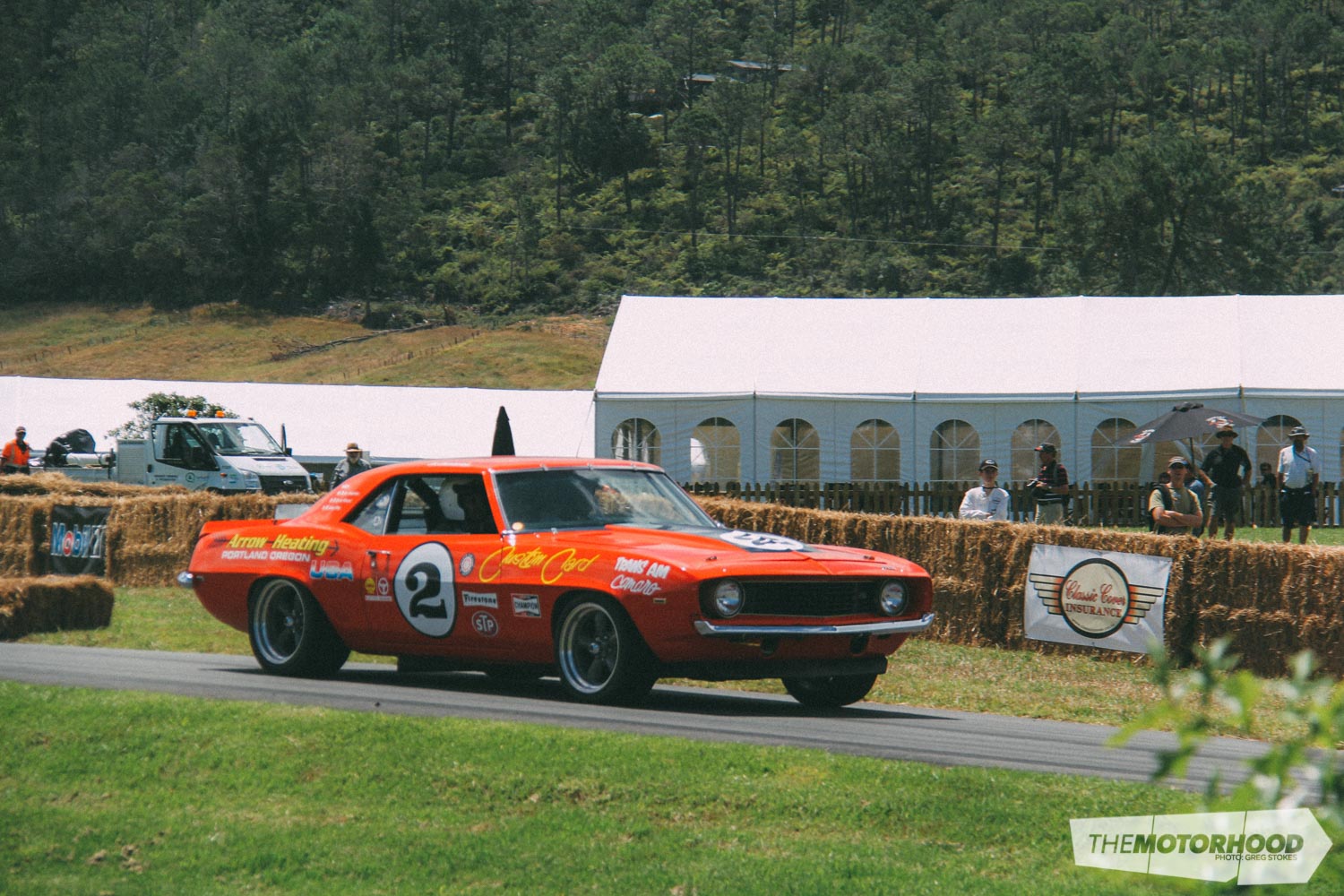
Tony Antonievich’s ’69 Chev Camaro performed well. Its racing history dates back to the 1969–1970 USA Trans Am series, and it was raced in New Zealand by Dennis Marwood and Johnny Riley.
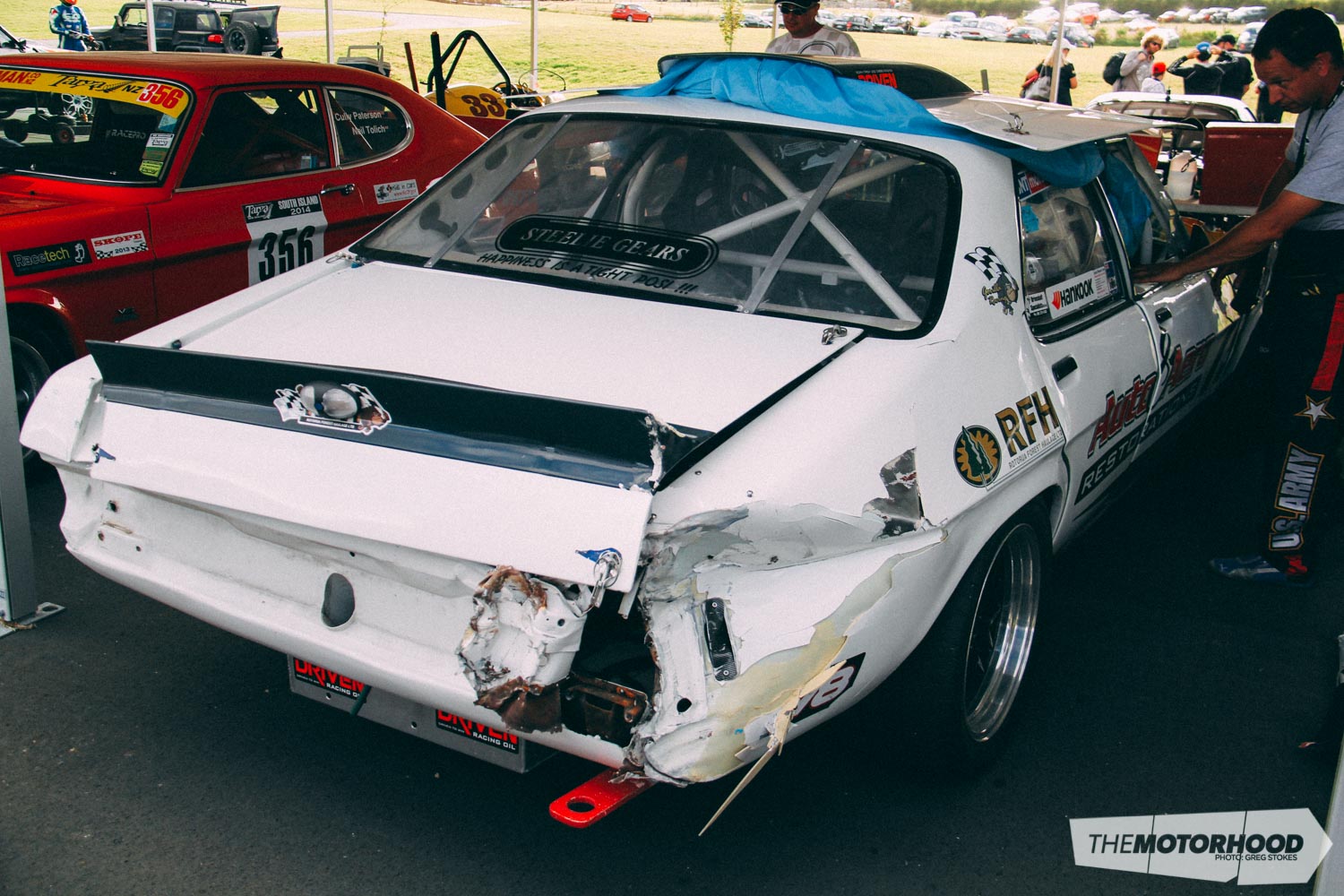
Shane Wigston found out just how tight the course was when he backed his HQ into the bridge. As you could imagine, he put on a great tyre-shredding show for the public all weekend.
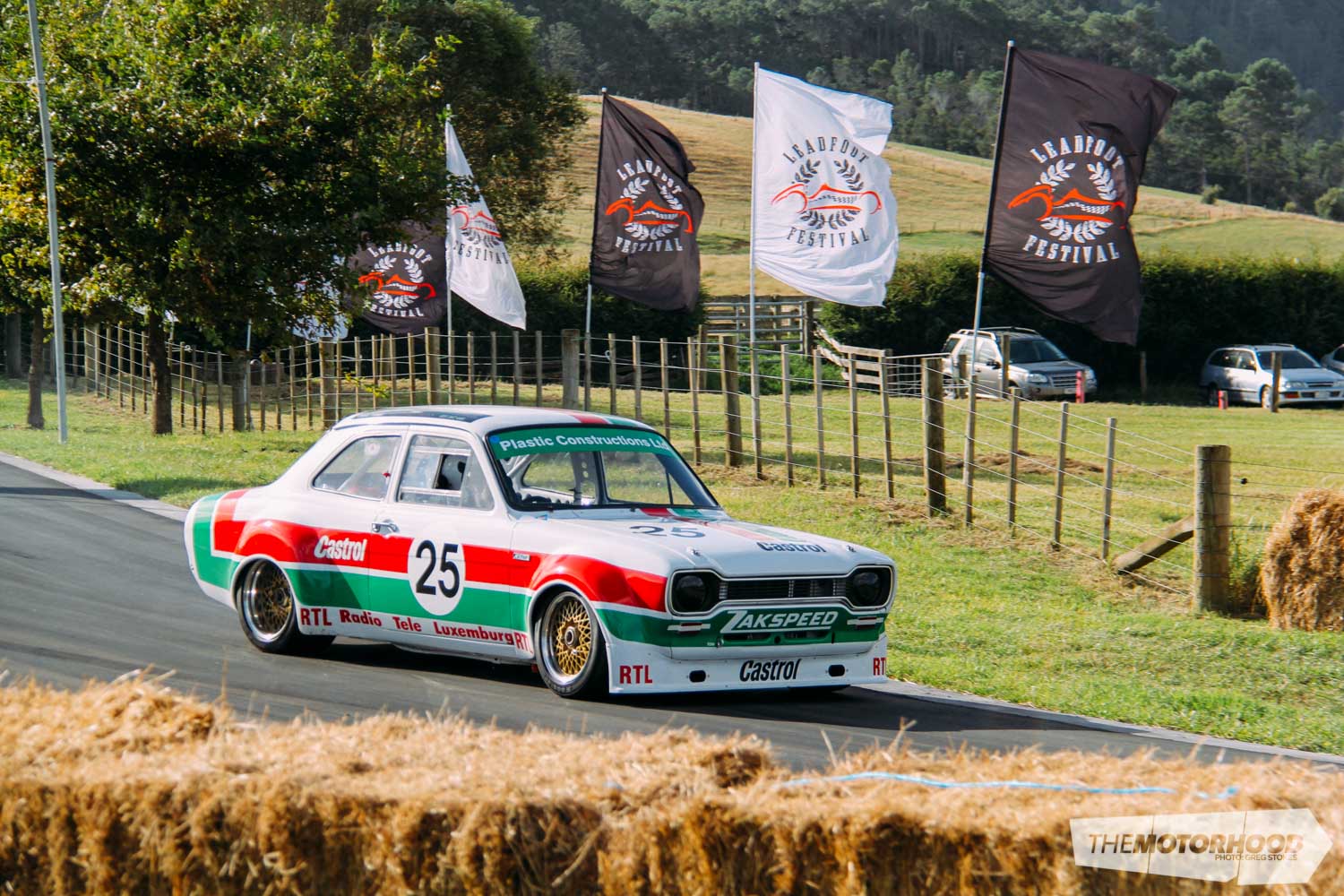
Paul McCarthy won the pre-1975 class with the Zakspeed Escort, which sounded awesome, running an all-alloy BDG engine with Lucas mechanical fuel injection.
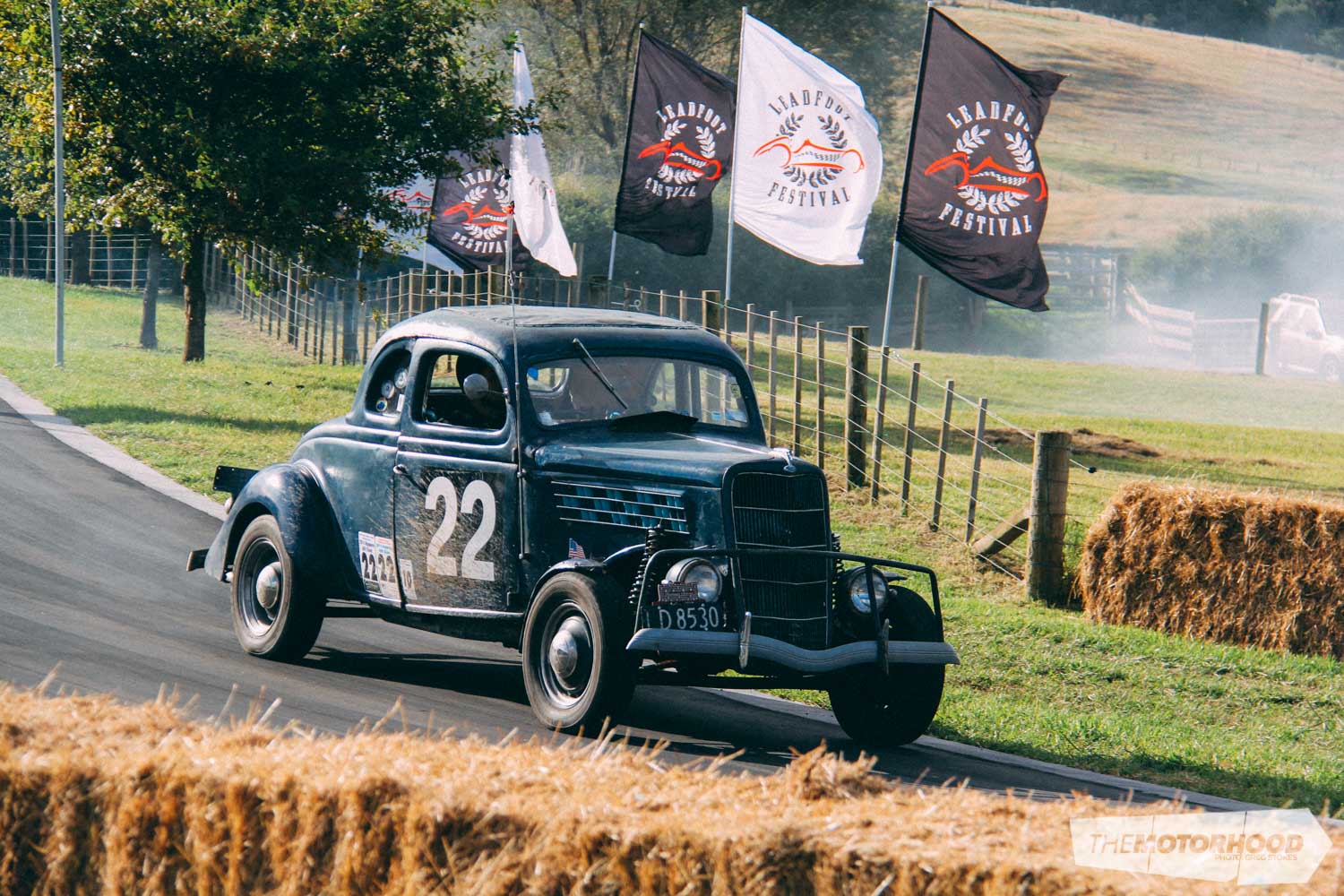
Joe Gillman drove up from the West Coast of the South Island in this flathead V8-powered ’35 Ford coupe that he’s owned for 55 years! Racing at Leadfoot and then driving home, at 74 years of age — now that’s real cool!

After the Friday night outdoor concert, Brian Hope performed a fire burnout in the Rat Trap fuel-altered drag car — a sight to behold.

Rebecca, Brian, and Ron Hope are shown here with the Rat Trap fuel-altered drag car from the USA. The Rat Trap is now staying in New Zealand for the Bay Rodders’ Nostalgia Drags on Sunday, April 5 at Meremere Dragway.