We love bugs!
A bit of TLC that became a major restoration
The 1302S, or ‘Super Beetle’ as it became known, was built for two years before it, too, was replaced by a further-enhanced Beetle, the 1303, continuing an amazing 65-year lineage for one of the World’s best-known shapes.
The world’s best-selling single-model vehicle, the VW Beetle, possibly established another record for the amount of controversy it has created since the inception of the Type 1.
In a meeting with Hitler in June 1934, Ferdinand Porsche was contracted to build a ‘People’s Car’ that could accommodate two adults and three children, was air-cooled and simple to maintain, and could cruise economically at moderate speed along Germany’s proposed new Autobahns.
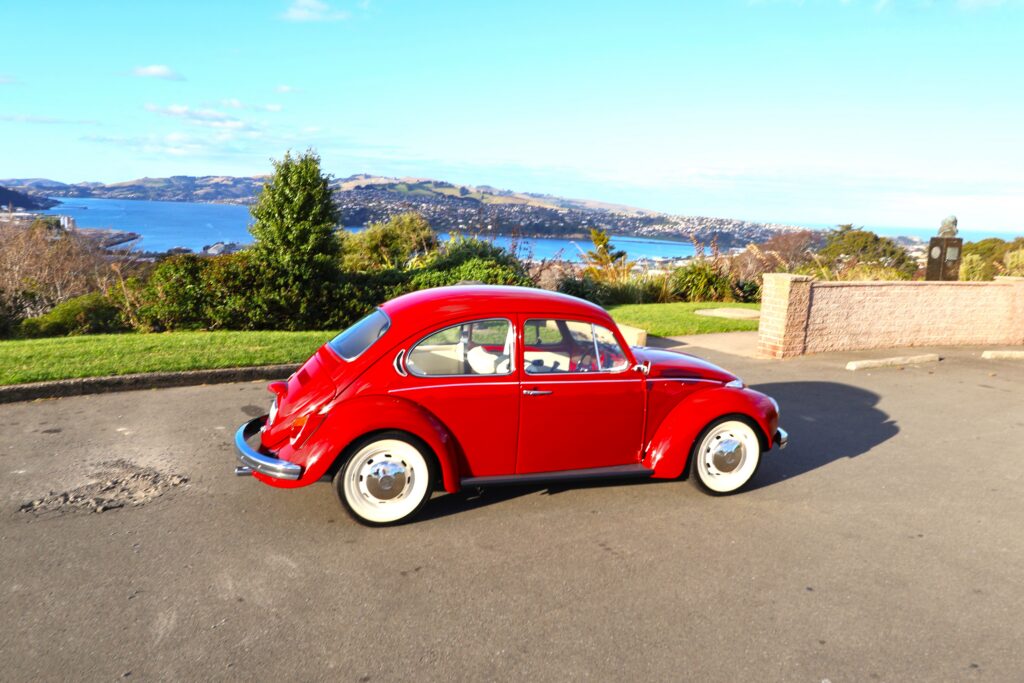
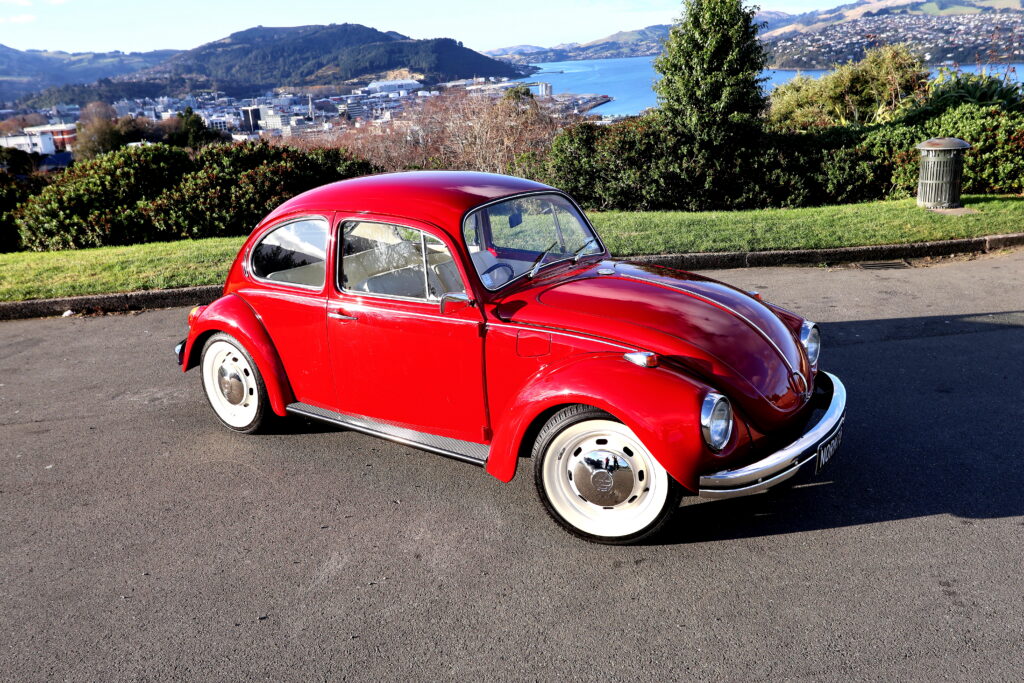
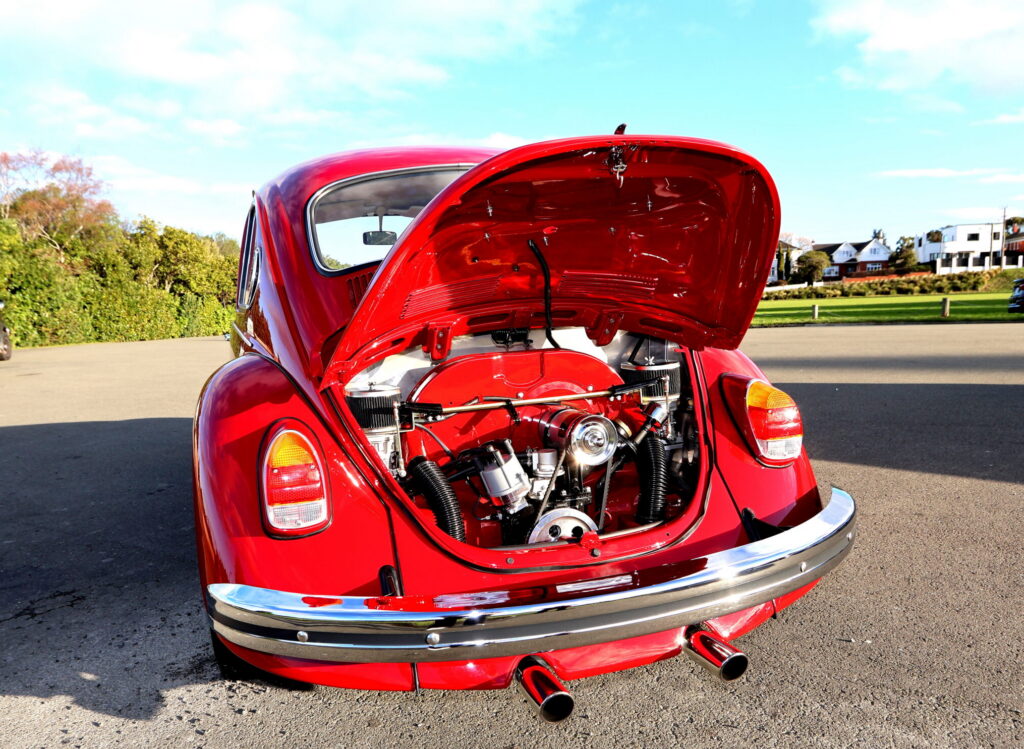
Our feature car, a 1972 1302S ‘Super Beetle’, was found by Dave and Michelle Dickie in Mosgiel a few years back. It was a runner, but like most VWs of this age, it needed a little TLC. They were looking for a daily driver for Michelle when they first came upon the VW being sold locally on behalf of its owner.
“The owner offered it to his grandchildren, and they didn’t want it, so he got the guy out at Mosgiel in the Mobil petrol station to sell it for him, and he put it on Trade Me for them. We never met the owner, and we were always dealing with the guy at the petrol station. We put a bid on it, and we were the only people that bid on it.”
Their bid was eventually successful, eight years ago. Not knowing much of the history, in situations like that, it’s always a risk buying a car, but they were in for a bit of a surprise.
“We went out and took it for a wee run, and we were very happy with it. It was still a standard engine, and it was a similar original red colour to now, but it had been resprayed by the looks of it, because the dash was just a wee bit of a different shade. You could also see that it had received a bit of a knock on the left-hand side front guard. It gave us an indication that it might have been in a bit of an accident, which Corey found out when he took the paint off it and said to me that we needed a new ‘guard for that one.”
Finally, after nearly eight years of use, it was time to take stock of what was needed to tidy the VW when its motor started playing up.
To purchase a copy of this magazine, head here to Classic Car’s very own online shop
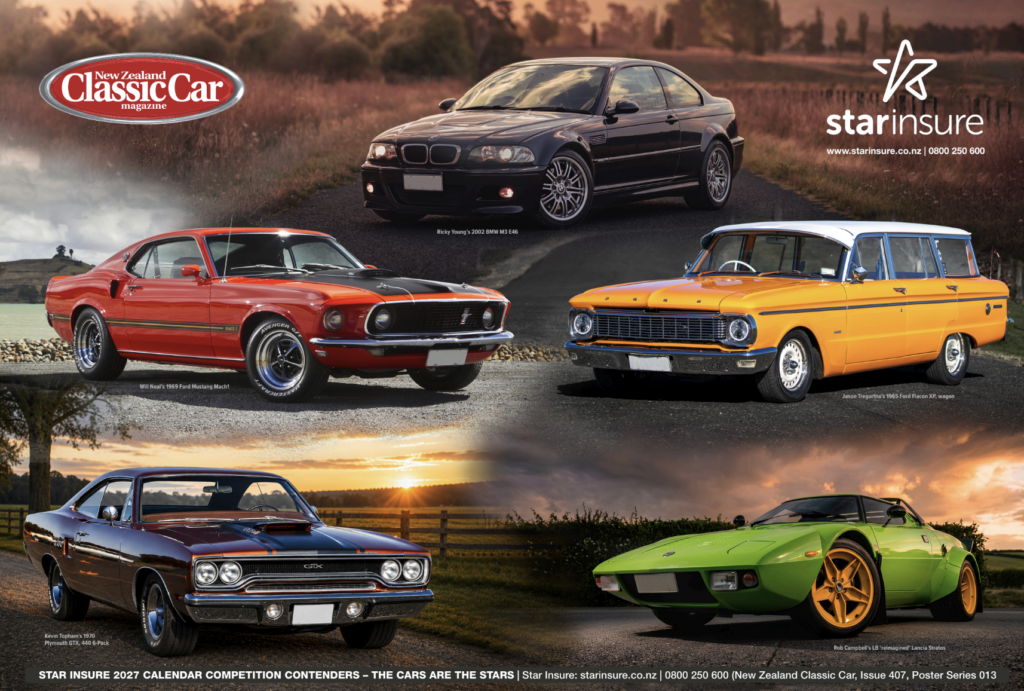
Every issue comes with our FREE huge wall poster; this issue features some of the Star Insure 2027 Calendar Competition contenders.
Wow! We received a flood of top-quality entries into our Star Insurance Calendar Cars of 2027 competition.
Thank you to all who entered, and we appreciate your efforts in sharing your stunning classics with us from around the country. It is a diverse array of classics, and we even received a Trike and an Australian entry!
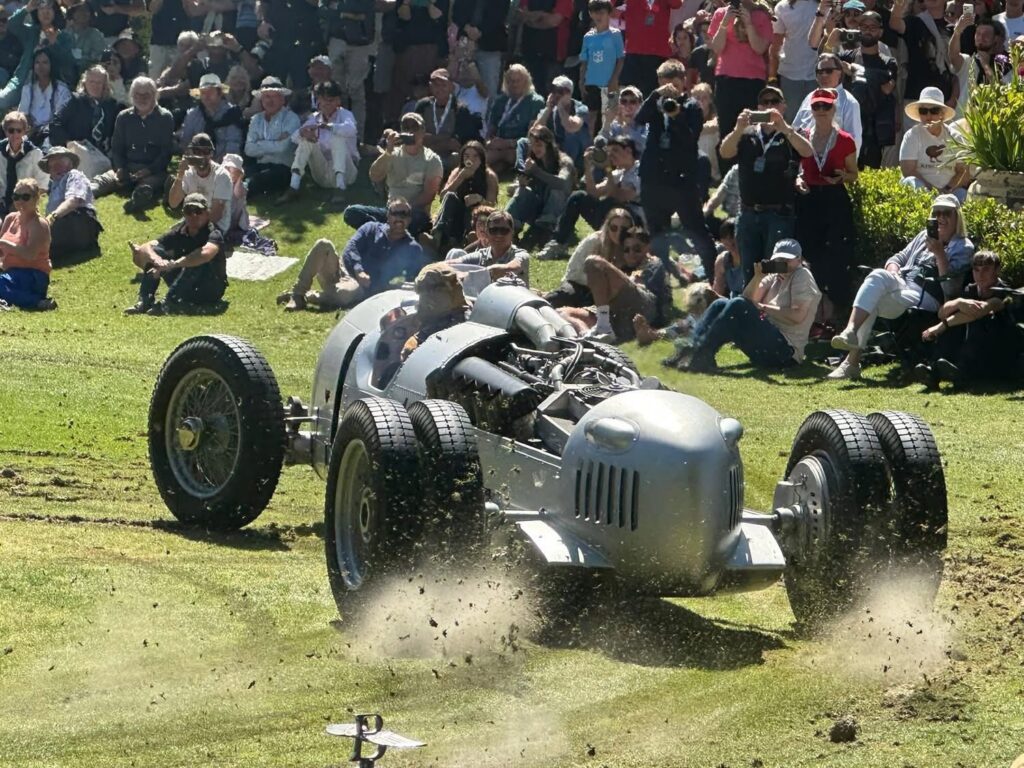
Ayrburn Classic 2027 Special Report
Seize this fantastic opportunity to dive into the rich and vibrant classic motoring culture of New Zealand!
It’s time to turn the Ayrburn Classic 2027 into a true celebration of classic motoring. Organisers are going all out this year to make it an unforgettable family event, building on this year’s outstanding success.
The countdown is on for the Ayrburn Classic 2027, returning to Queenstown from 19–21 February, with Early Bird tickets available until 31 October.
With more cars, more experiences and more opportunities to get involved than ever before, now is also the perfect time to secure your place on the field, with vehicle entries officially open across four distinct categories.
Whether you’re presenting a meticulously restored masterpiece or introducing the next generation to the world of motoring, there’s a class to suit every enthusiast. Entrants can choose from the prestigious Concours Class, the beautifully curated Premium Display, the relaxed Pebble Parade Display, or the all-new Junior Concours.
Motorsport Identities – Man on a mission-part 1
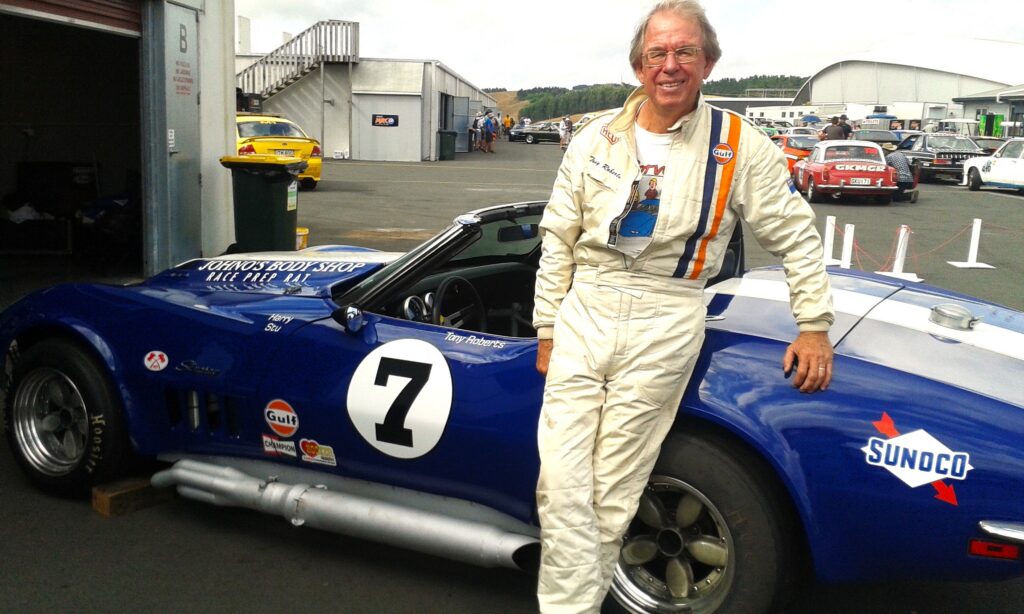
After five decades of motor racing, Tony Roberts shows little sign of slowing down, either on or off the racetrack. Together with a team of like-minded enthusiasts, he has shown that even in challenging times, the impossible just takes a little longer as the Thunder Ridge racing track takes shape.
Tony hasn’t forgotten his roots, having begun his motorsport journey back in 1971. He retains a passion for the sport and a desire to put back into it some of the enjoyment he has experienced by working towards grassroots membership for those keen to get behind the wheel. Hampton Downs racetrack and now Thunder Ridge have been part of that vision.
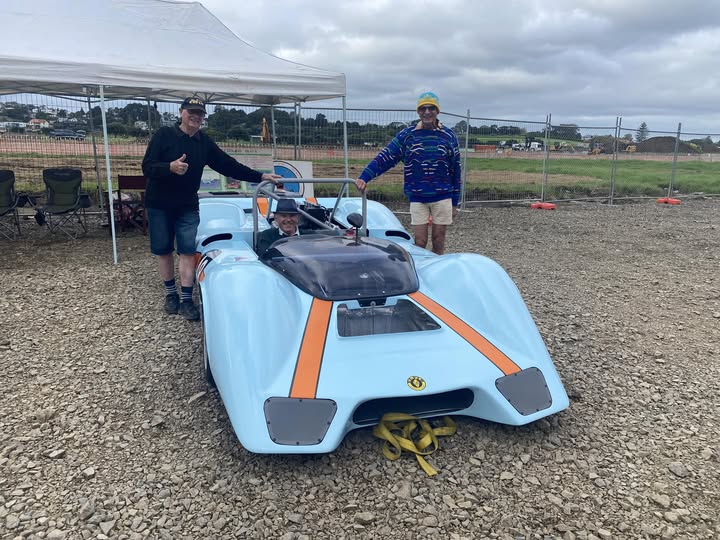
During that time, he admits to being very fortunate to not only have enjoyed stints behind the wheel of various examples of Bruce McLaren’s legacy, but to currently run a pristine example of a McLaren 10A in the country’s popular Historic Formula 5000 racing category. A highlight came with a chance to be part of the McLaren heritage when he was asked to stunt-drive a McLaren M8E in Roger Donaldson’s ‘McLaren’ documentary.
An interview with Andy Buchanan- Part 2
Gerard Richards continues his interview with Andy Buchanan, and Gold Star success, then a change to the increasingly popular sports-car class and success, first with a beautiful Ferrari 250LM, capped off a stellar racing career in an awesome brute-force Elfin 400.
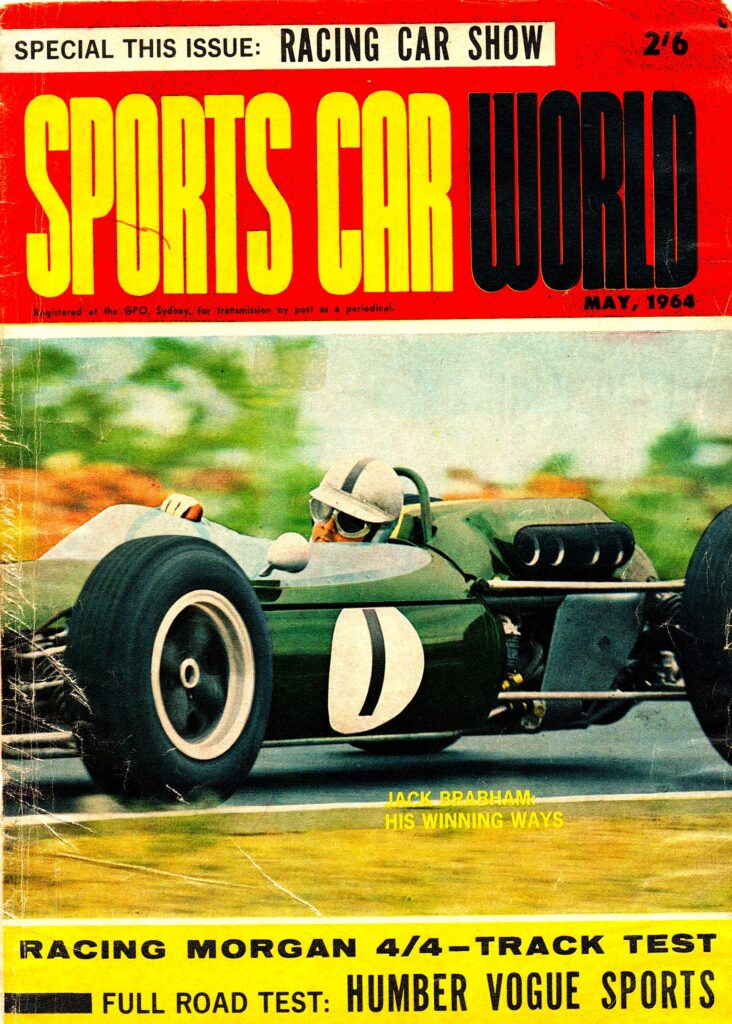
The Brabham was a great little car and the first of its kind here, equipped with the Cosworth Ford Twin Cam engine. With Bruce Wilson’s immaculate preparation, he achieved some great results thanks to nimble handling and often pressuring the larger 2.5-litre Climax-powered Lotus, Brabham and Cooper opposition.
The high point of two seasons racing the Brabham was winning the Waimate 50 Gold Star street race in 1964, in teeming wet conditions. Andy Buchanan had never raced at Waimate, and it was a tremendous performance, taking the lead on the last lap to win and setting the fastest lap.
Andy consolidated his growing reputation in the 1964-65 season.
Although he scored no major wins, he finished second to Roly Levis in the 1.5-litre National Formula series, with four second-place finishes. He also scored 3rd place in the NZ Racing Drivers’ Gold Star Championship. He was beaten only by the two larger 2.5-litre Climax cars of Jim Palmer and John Riley. A great result, with the beautifully prepared Bruce Wilson car.
Mini-Fest: 1975 Morris Mini – The Fixer -Part 2
Vaughan Wilkinson’s old-school restoration philosophy is winning fans, one rescued classic at a time. In Part 2, our Mini-Fest series continues with Matthew Chamberlain’s forgotten little family member finally receiving the love it deserves.
Vaughan openly uses modern technology. At heart, he prefers simple old cars and avoids unnecessary complications, but when it comes to protecting against rust and making cars last, he believes in using the best methods available. He’s honest about how many classics weren’t well protected when new. Since products have improved a lot, he sees no reason not to use them.
His workshop language is full of epoxy primers, proper panel steel, stone guard, underseal and factory-style spot welds. He wants a repaired classic to look right and last better than it did the first time around.
Many restorations involve superficial treatments, but Vaughan prefers a thorough approach: strip the car down, assess its condition, and honestly address any issues. This upfront work can prevent future complications.
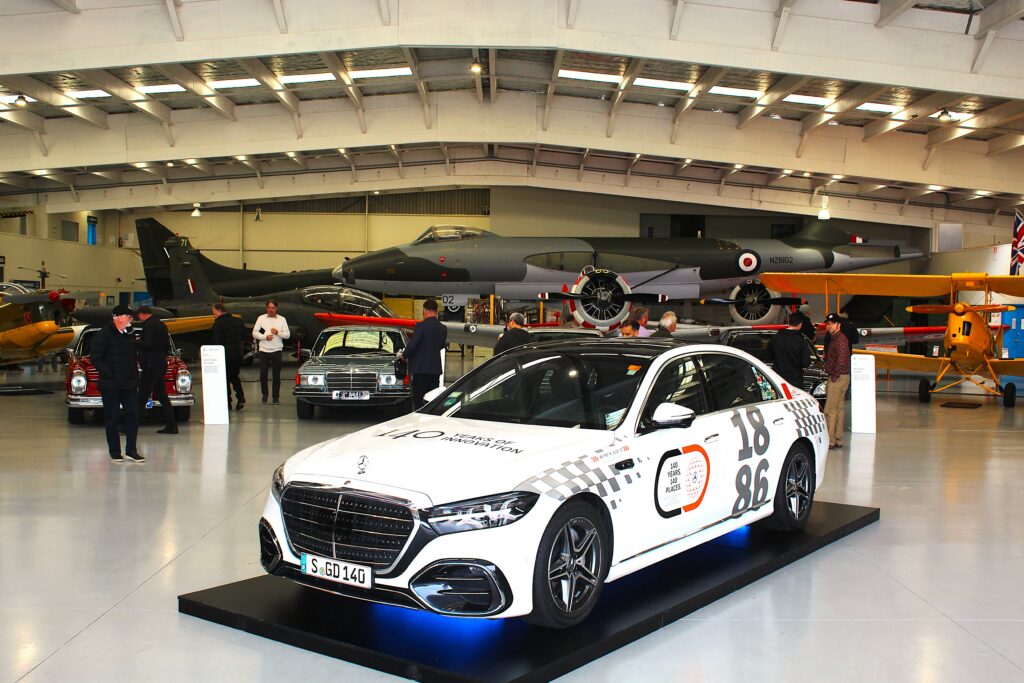
Mercedes-Benz 140 Years. 140 places, tour hits Auckland
The wheels of automotive history literally began to turn, and can you imagine being a passerby on German roads in 1888, and seeing this machine for the first time?
People were aghast. “What was this thing? How was it able to move without horses, and why was there a woman at the controls?” as Bertha Benz, the wife of Karl Benz, drove 106 km from Mannheim to Pforzheim without her husband’s knowledge!
Fast forward to today, and Mercedes-Benz is a powerhouse and one of the most recognisable automotive brands in the world.
To celebrate the 140th anniversary of Karl Benz filing the patent for his Motorwagen, Mercedes-Benz decided to undertake a journey of Homeric proportions. Following the global launch of the new flagship S-Class saloon last January, a team from Mercedes-Benz in Stuttgart travelled to 140 locations to celebrate 140 years of innovation.
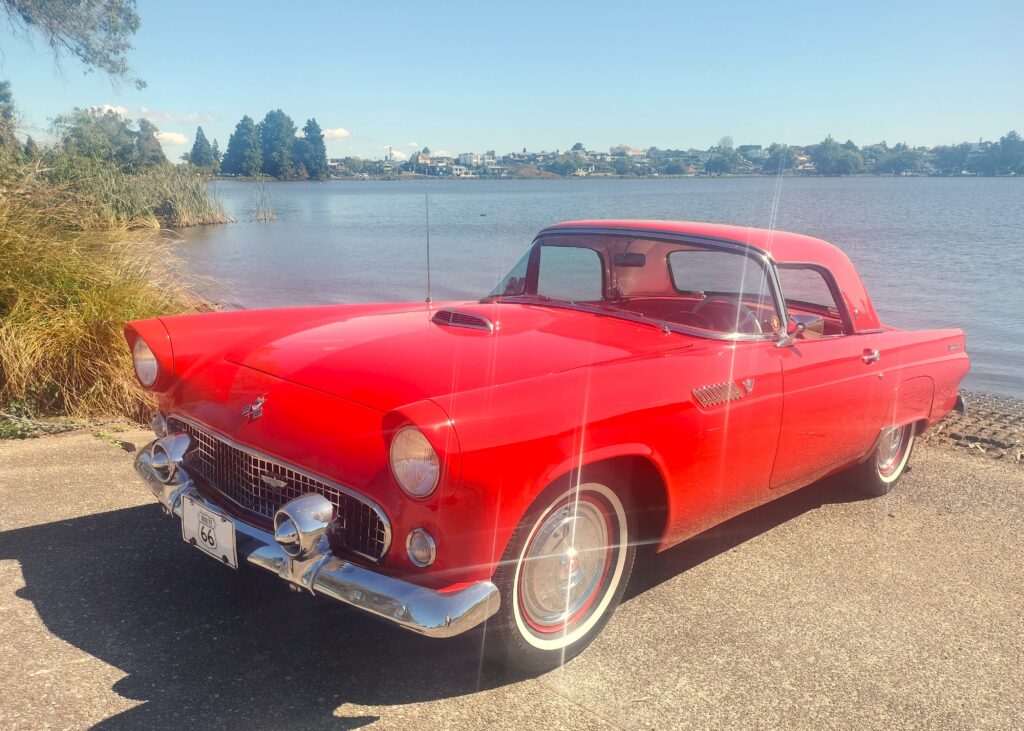
1955 Ford Thunderbird – Taking the long way home
There is no denying Trevor Toon is a dedicated classic car enthusiast. Some amazing cars end up in his garage. You never know what will turn up next!
His enthusiasm is infectious, and his story is about a 1955 Ford Thunderbird he acquired in 2024 while travelling to the United States to secure it. It’s possibly one of the best presented early Ford Thunderbirds in the country, resplendent in its ‘Torch Red’ colour.
Trevor picks up the story of how, after a long search, he found his car in Washington State and made the trip over.
“My love of cars stems back to my childhood. My first vehicle (A 1974 Valiant Charger) reflected that. I had always wanted to own a classic car and began my search in the US. I came across the Thunderbird and was very fortunate to buy the vehicle from a trustworthy dealer, Luther Wilson from Lost and Found Classic Cars, based in Mount Vernon, in Skagit County, Washington State, in the Pacific Northwest of the USA. Luther’s operation is a family-owned business specialising in classics, vintage, muscle cars, and hot rods that has been operating for more than 35 years.
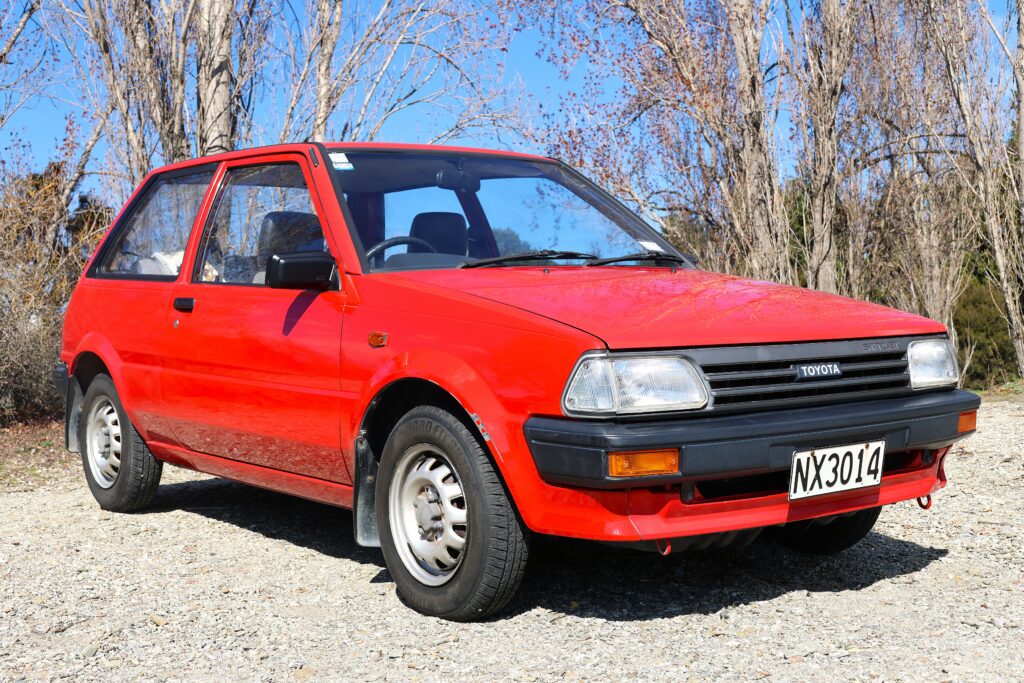
1988 Toyota Starlet 1.3L XL
Starlet – not just a movie star!
Since the early days of the movies, and at least when the ‘talkies’ came out in the late 1920s, Starlet meant a young actress with aspirations to become a star, a Hollywood Starlet or the feminine of the word ‘star’ as in ‘movie star’.
A lifelong car nut, Eric has owned many over the years, from hot rods to American classics.
His daily driver is a 2000 Chevy pickup, and he still owns an MG Midget Model-A racecar. His other car, or to be more specific, his mother’s, is a 1988, one-owner, red, low-mileage Toyota Starlet and Eric is its custodian.
Eric’s mother Annie is not far off receiving a letter from the King. She first purchased the mighty little Starlet new from the Lower Hutt dealership. Her pride and joy, it was her daily driver but limited in her annual mileage.
The Starlet was well looked after, only suffering an occasional carpark altercation and is largely original, as it was when Annie first bought it.
Its mileage is a shade under 88,000 km, and the crocheted blanket in the back shows everyone that this car is owned by someone who is closer to retirement than sitting UE exams.
Reborn Classics: Low ‘N’ Slow
Definition: Lead Sled (noun, slang) is a customised classic car, typically built from a 1930s to 1950s American sedan, that has been heavily modified with body filler (originally lead) and lowered close to the ground.
Younger magazine readers have been asking us to feature their take on what defines a classic car. All are exceptional and expensive rebuilds with one commonality: they are not quite how they came from the factory! Our response has been, why not! We bring you our new section catering to these reborn classics.
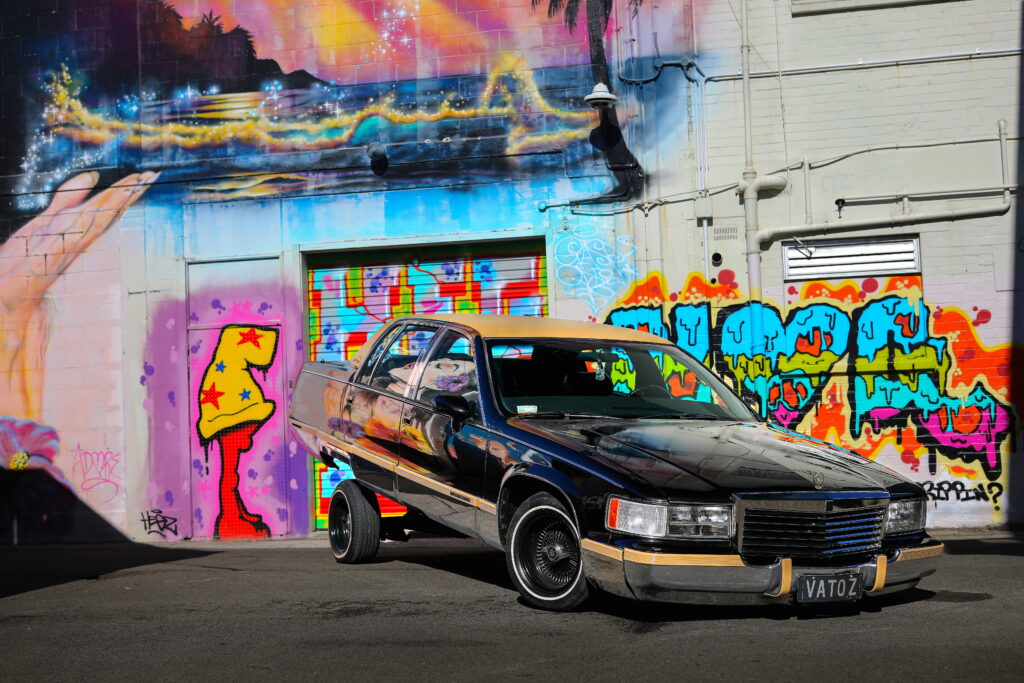
After our last issue’s Datsun 240Z cover car showing what can be done with a mature classic, we take a slower, cruisier pace with the second-oldest surviving name in the US auto industry, Cadillac.
Chrome glinting under streetlights, hydraulic suspension dancing to the rhythm of funk and old-school soul, murals painted across steel like rolling pieces of art — lowriders have always been more than cars.
They are statements of identity, pride, and creativity born from generations of cultural expression. Long before lowriders became global icons appearing in music videos, films, and on magazine covers, the movement began on the streets of post-war California, where Mexican/American communities transformed ordinary automobiles into symbols of individuality and resistance.
To France with flair
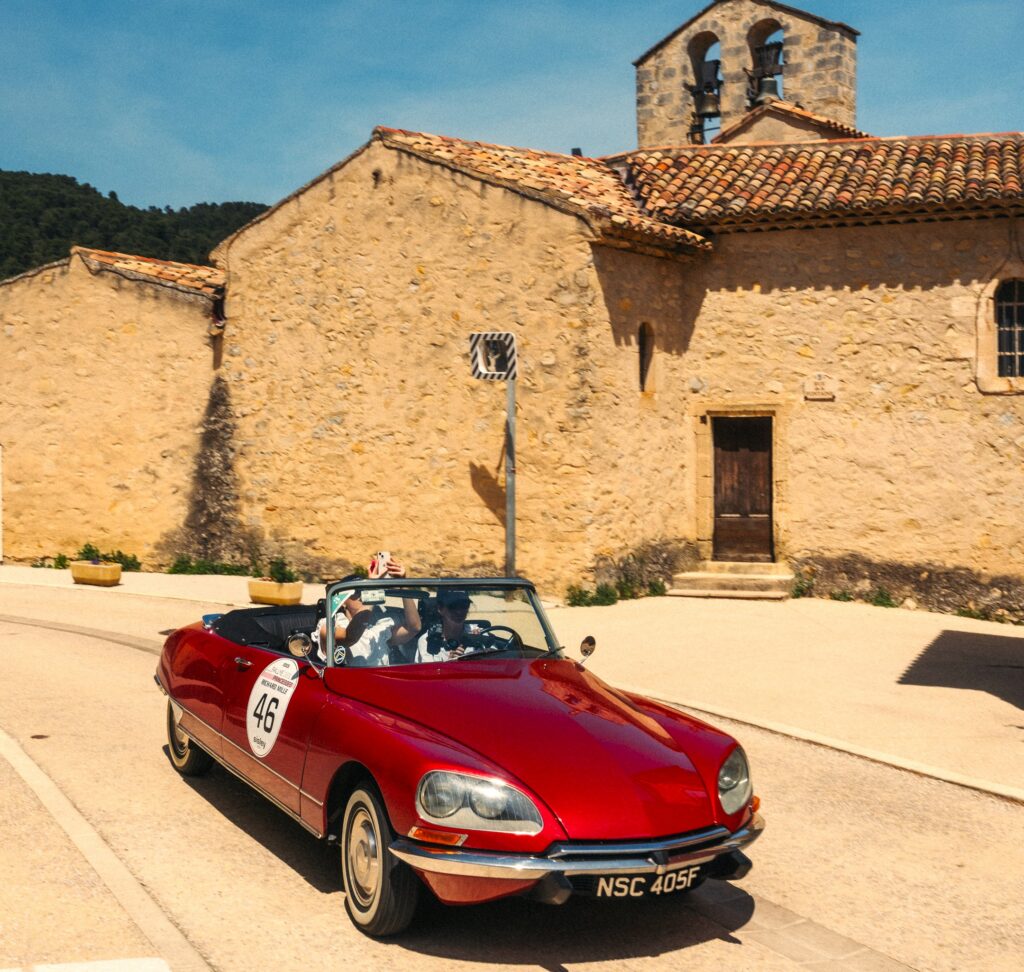
For 25 years, the Rallye des Princesses Richard Mille has attracted car enthusiasts from all over the world. The Rallye celebrates a lifestyle of elegance and a passion for collecting and driving performance and classic cars, with one important cachet: ladies-only!
We continue Annamarie Jamieson’s foray into the French Rallye, driving a very special car graciously loaned for the occasion last year. Don’t forget to scan the QR code to see some amazing French scenery, featuring glorious classic cars.
Kits and Pieces
New Zealand has a history of innovative automotive designs, often driven by the need for viable local solutions to challenges facing the farming industry.
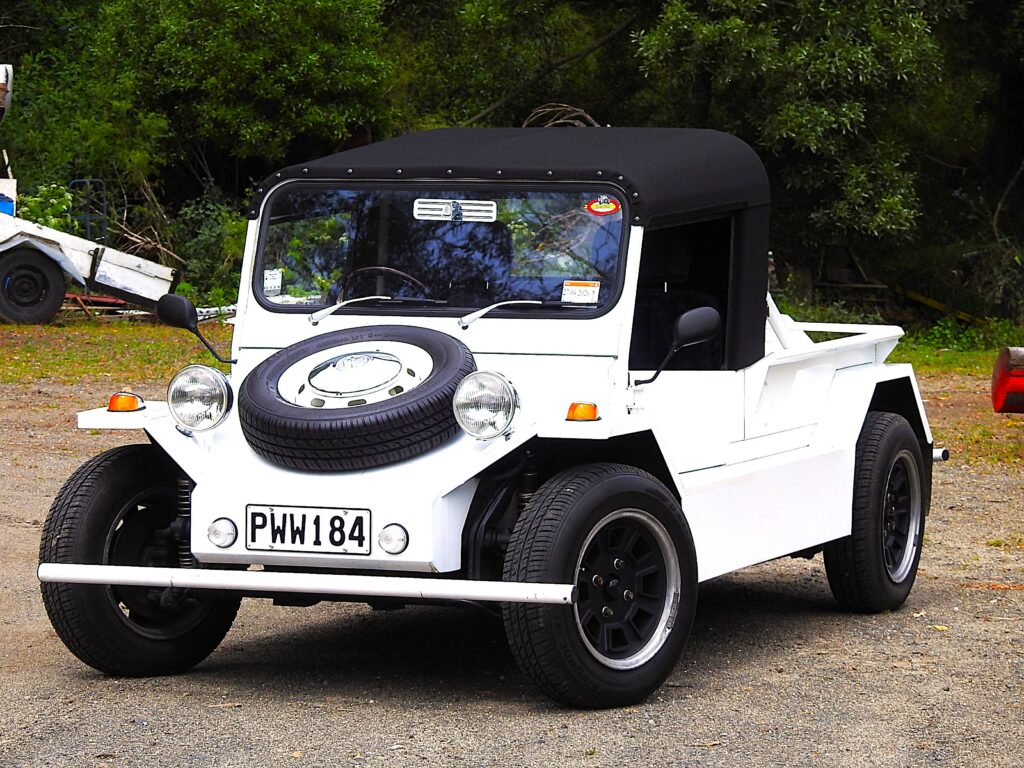
Trailmaker was a farm utility vehicle built in Cambridge between 1965 and ’71, targeting farmers looking for a cheap, reliable vehicle capable of handling steep, grassy, occasionally muddy slopes of the local countryside.
It was difficult to purchase a new vehicle, such as a Land Rover, in New Zealand unless you had overseas funds. Four-wheel drives were expensive. There was a gap in the market for a simple, lightweight utility vehicle and eventually, this role would be filled by quad bikes. For a short time in history, Trailmakers were the go-anywhere vehicle for many farmers.
After years spent tracking him down, I was finally able to visit now-retired John (Johnny) Simpson, one of the people behind the original Trailmaker concept, on his lifestyle block in Cambridge.
In one corner of a paddock, now displaying more rust than steel, was Trailmaker #5. In front of me was Trailmaker #109, which was interesting because, when production ended in 1971, only 108 Trailmakers had been manufactured.
Behind me was a 1/8-scale Trailmaker (#110). Johnny was building a motorised vehicle for his grandchildren. Immediately, I knew I was in for a good story.
John Hardy Chronicles part 2
The Hardy family and friends’ motor racing history
John Hardy continues his fascinating memories of his grandfather’s and father’s involvement in the motor industry and sifts through the puzzle of their early motor racing exploits in the Auckland region.
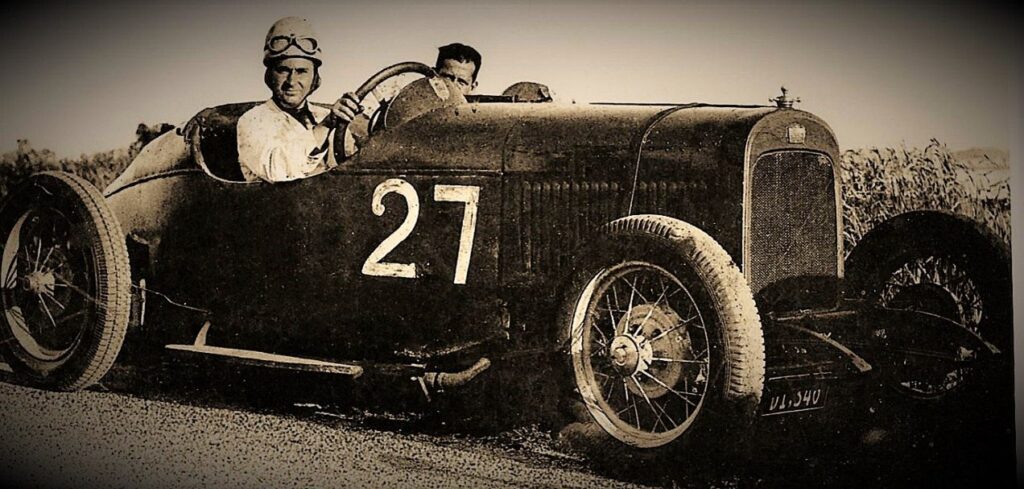
1923 ANDREW-FORD Continued: The car was eventually acquired by Gerry Mathieson, who raced it for a time and then had it built into a dirt tracker by Merv Hardy and Auto Parts Ltd. After the war, parts of the midget were used to build the Hardyford.
In my searching, I have found 16-valve heads were only made by Frontenac (Fronty) and Roof and that Rajo only made 8-valve heads?
As from the first paragraph, the car was eventually acquired by Gerry Mathieson, who raced it for a time and then had it built into a dirt-tracker by Merv Hardy and Auto Parts Ltd.
After the war, parts of the midget were used to build the Hardyford. I believe that the block of this motor was in the ‘Ford T Special’ that was raced at Ardmore by Snow Morris in 1954.
Harlow’s Classics
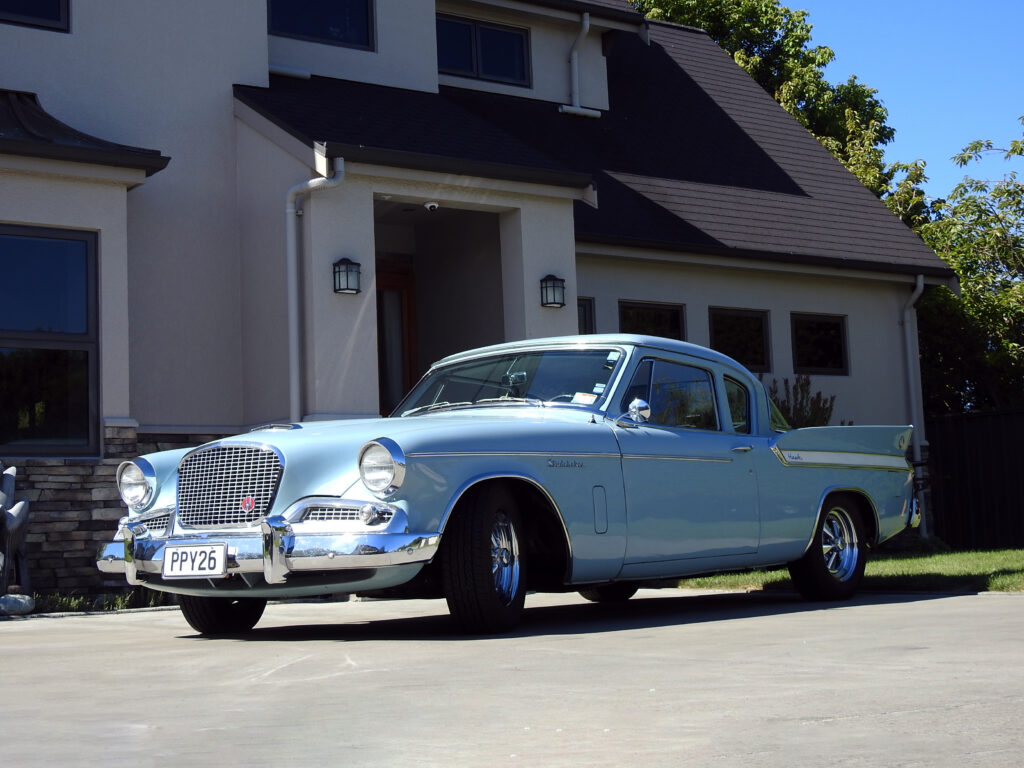
Studebaker’s Hawk set the bar-was it enough?
Timing and money were everything back in the swinging ‘60s. Inevitably, Studebaker lacked the resources to compete with the Big Three and the ‘Pony Car’ onslaught. During the ‘60s, the term ‘Pony Car’ emerged with the introduction of the Ford Mustang and the cars that followed, such as the Chevy Camaro and the Dodge Challenger. The Pony Car evolved, over time, into the ‘Muscle Car’.
These terms are now a part of US automobile folklore. As I stood looking at the Studebaker Hawk owned by Don Price of Hastings, I wondered: what if this car, which preceded the Mustang by 10 years, carried the same kudos/performance as the Mustang? The last Hawk rolled quietly off the Studebaker production line in December 1963. Three months later, Ford launched the Mustang, and everybody knew about it.
Market Report: Lotus Excel
Hethel’s quiet achiever
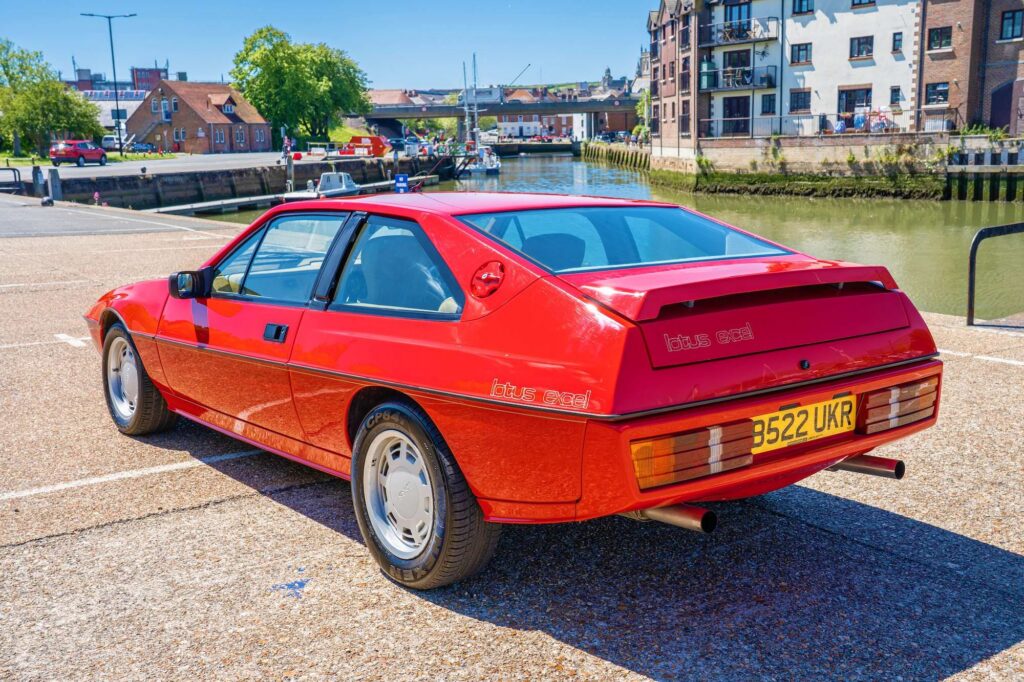
The Lotus back catalogue is chock-full with greats, but one which has flown under the radar for much of its life is the Excel.
The Excel’s origins can be traced back to Colin Chapman’s desire to take his brand as a builder of lightweight kit and sports cars to a more upmarket plain, beginning with the Elan+2, then the wedge-shaped Elite, and Eclat, and culminating in the Elite Excel and finally, the Excel.
While the Esprit and Esprit Turbo stole the limelight, those in the know will tell you the Excel deserves its only special place in the Lotus story.
“It is probably the best kept secret of all the Lotuses,” says owner Keith Pickford. “It’s not a commonly known car. When they brought out the Excel, they called it an Eclat Excel before it became known as just ‘Excel.’ Early ones came with a Lotus 2.2-litre twin-cam four-cylinder 160 bhp engine, then the Excel SE with 180 bhp. The Esprit takes the limelight, but the Excel doesn’t get the attention it should have. It rides nicely, handles well, and it’s probably the most reliable because of all the Toyota stuff in it.”
Price On
My 62 years’ experience in buying and selling classic vehicles
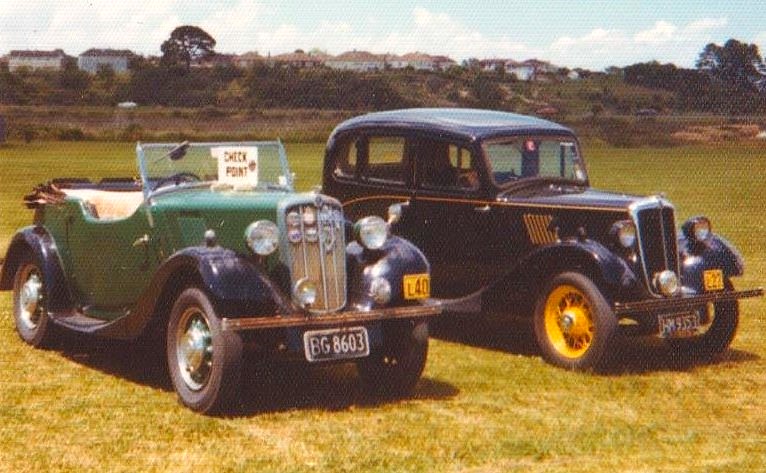
Back when I first contemplated buying a car, there was no internet, no specialist valuation experts, just car dealers! Car dealers were considered the lowest on the popularity ladder, coming in just above traffic officers. Politicians, on the other hand, were generally much more respected!
In Auckland, sources of cars for sale were limited to newspaper advertisements, car yards, and the Newmarket Car Fair, held in the Newmarket Carpark on Saturday mornings from 9.00 am to midday.
Private sellers could drive in, pay a small fee, and display their vehicles with their asking price painted on the window. Prospective purchasers could examine the car, take it for a test drive (if they wanted to), and haggle over the asking price. Many a deal was done there.
Ben’s Next Gen’ classics – By Ben Selby
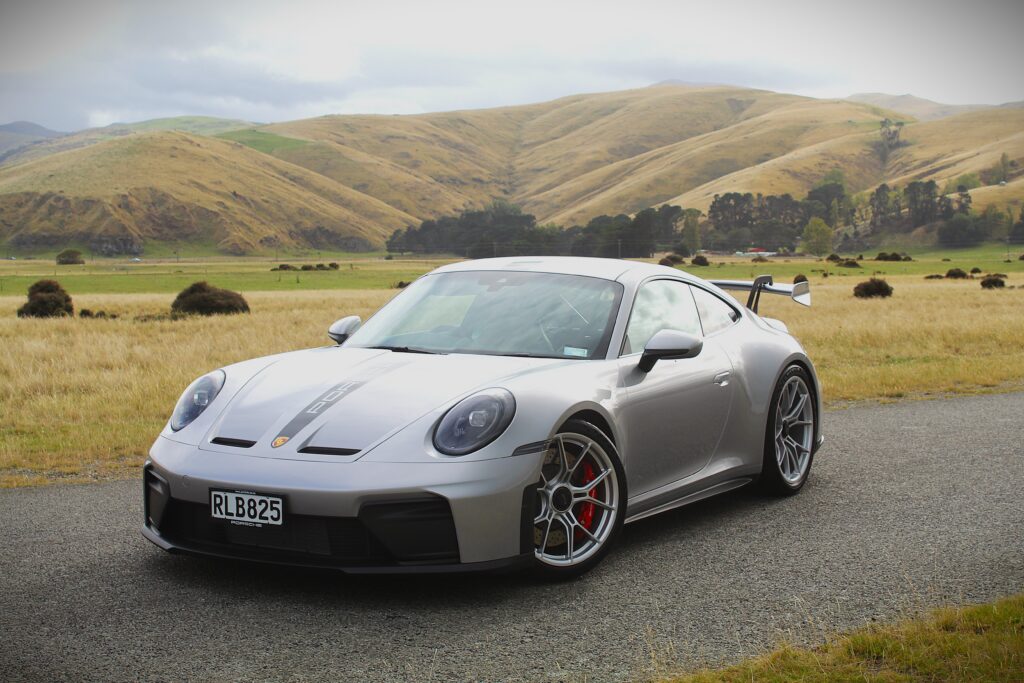
Porsche 911 (992/2 GT3
It’s an almost dead cert that any new Porsche 911 with the ‘GT3′ emblem will by default stand tall on the coveted ‘future classics’ rostrum.
The 911 GT3 was born from Porsche’s appetite to give customers the chance to experience the closest thing possible to a road-going racing car, while continuing a line which can be traced back to the iconic, pared-down and stripped-back 911 2.7 RS from 1973.
The GT3 nameplate, of course, refers to the class of GT3 racing. When the first 911 GT3 (the 996) was launched in 1999, the class was known simply as ‘GT’, and FIA regulations required Porsche to build road-going production versions of the racing car to qualify for competition in the class.
Looking Back: The legend of Longford-part 2
Gerard Richards continues his pilgrimage to Australia’s fastest and most dangerous road circuit, which thrived during the exciting racing years from 1953 to 1968. This asphalt circuit in Tasmania’s central farming region has intrigued Gerard for more than 50 years.
The pressure was mounting on Longford as the cars became progressively faster and the circuit’s shortcomings became ever more visible.
Another spectacular crash in practice during the wet 1968 weekend further underscored this. Greg Cusack lost control of his Brabham BT23A Repco V8 on the wet, bumpy surface approaching the viaduct, at close to 250kph (155mph). It was a huge crash, with Cusack losing control when the car hit a bump, after which he was a passenger. The machine weaved luridly across the track, hit a bank, took out a gatepost, before somersaulting and plummeting into a ditch.
Cusack was sublimely lucky if you could say that in the circumstances, as the inverted car came to rest over a ditch and didn’t crush him. With fuel dripping over the hot engine, he was freed by courageous marshals and ambulance volunteers, and, despite some leg and collarbone fractures, he earned the reputation for the luckiest escape at Longford.
By the scheduled start time of the 1968 Tasman Series Championship race, the rain was pelting down, and everything was waterlogged. Drains had blocked, and water was pooling on the track surfaces, with visibility almost nonexistent.
Speed, style, and legacy – à la vôtre!
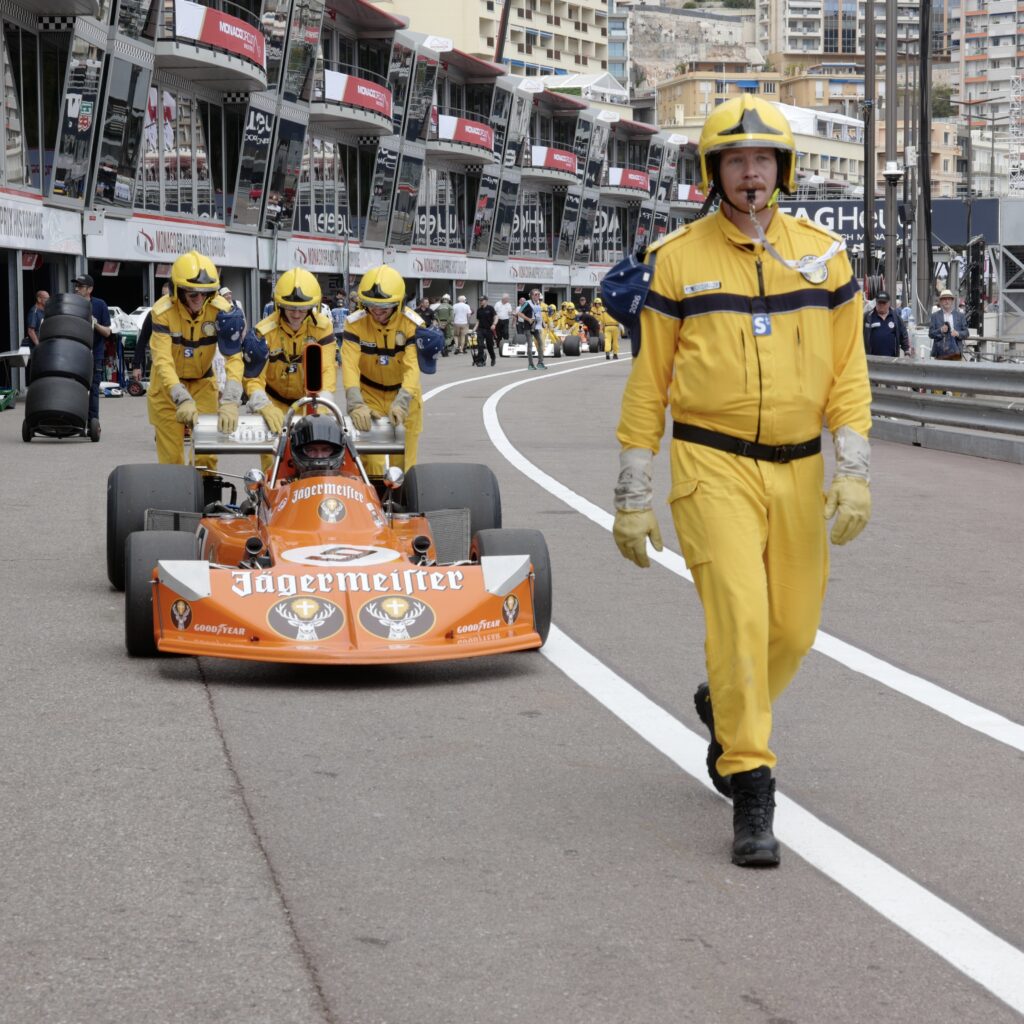
The 15th edition of the Grand Prix de Monaco Historique was held on 24 – 26 April. James grabs a glass of ‘champers’ and reconnects with some old acquaintances, marvelling at the spectacle that is Monaco Historique!
Organised by the Automobile Club de Monaco under the High Patronage of Their Serene Highnesses The Prince and Princess of Monaco (Albert and Charlène to their friends) with the support of the Prince’s Government, and of the Municipality and of the Société des Bains de Mer, it is surely the culmination and epitome of historic motor racing, and glamorous
With the race running on the legendary Monaco circuit and its heritage, ever-present since 1929, everything is already in place for the Historic GP and the Monaco E-Prix in May, with the Formula One Grand Prix in June.
The tribunes are erected for the many spectators, the roads are closed for this most famous of street circuits, and getting from A to B around Monte Carlo is a tortuous affair, but it is all worth the effort for the glitz, glamour, thrills and the spills of red-blooded racing whatever the age of the car.
Motorman
MOTAT, where history comes to life!
Donn Anderson first went to the Museum of Transport and Technology in Auckland in 1963 and was back again in 2026 after several visits over the years to find what was new and what was old.
Contrasts between exhibits are huge and the variety almost overwhelming, yet one thing’s for sure: Auckland’s Museum of Transport and Technology embodies a remarkable collection of our transport past, and a glimpse into the future.
What is apparent is that MOTAT – as the museum is affectionately known – has amassed so much memorabilia over six decades that there is insufficient space to display many of the outstanding exhibits at the Western Springs site. A wealth of exhibits must reside at the Storehouse warehouse location, well distanced from MOTAT and at an address which is kept quiet for security reasons.
Storehouse also serves as the Centre for Restoration, although some of this work can be completed at Western Springs. However, for the few fortunate able to join the small tour groups, what an Aladdin’s Cave this warehouse resembles!
Special Racing Report
Classic Trial New Zealand – Part 2
Where consistency is king on the racetrack, a part of motorsport is making a comeback with a growing following.
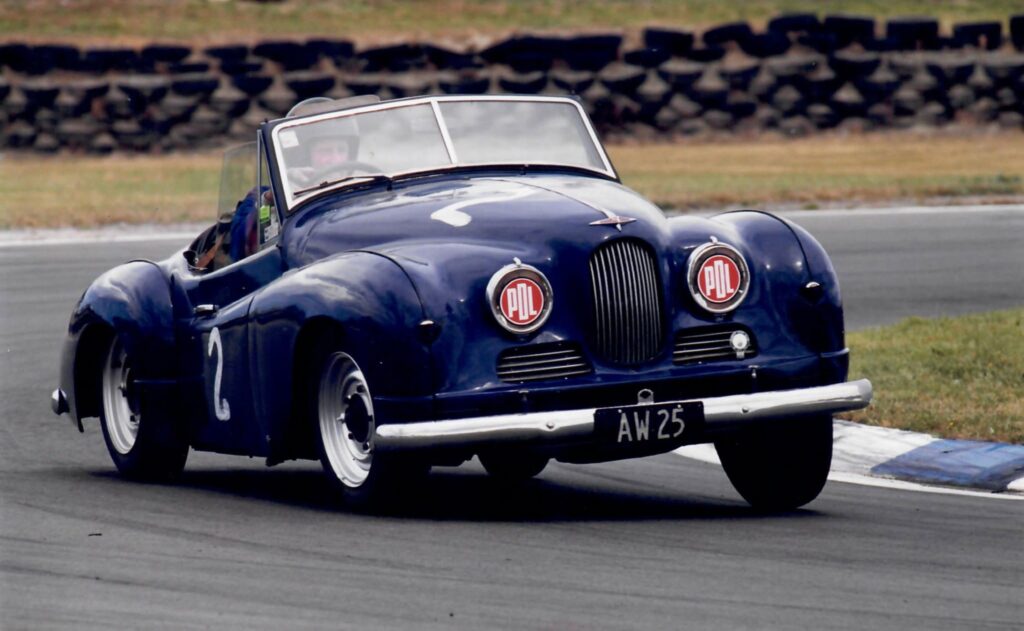
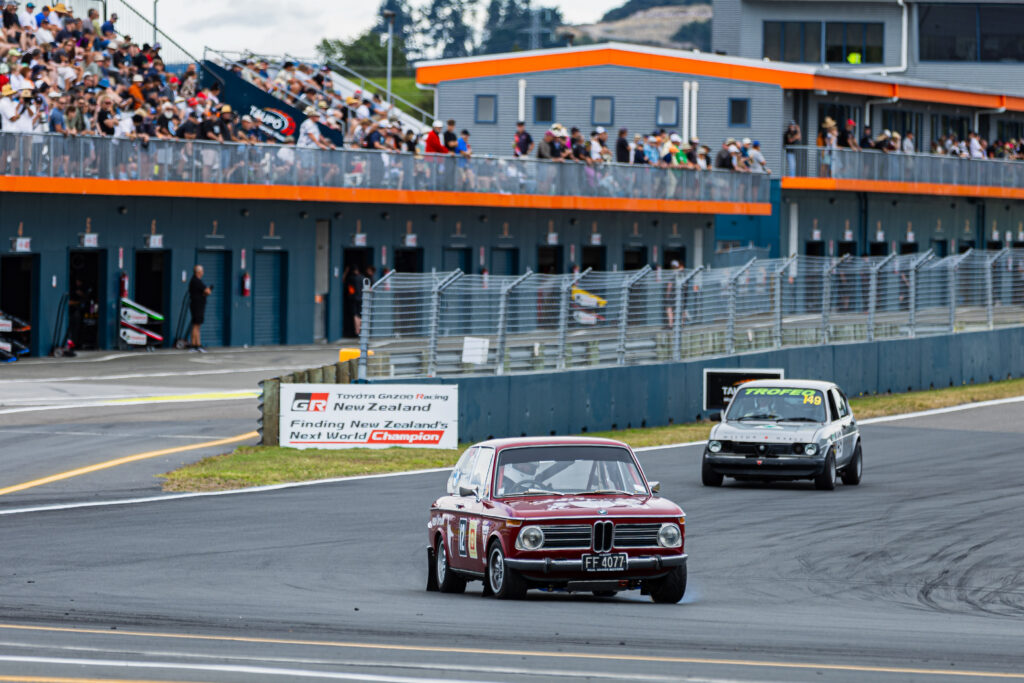
The backbone of the Classic Trial NZ Series grid is exactly what you might hope for: Escorts sitting low and ready, MX-5s light and alert beside them, a Cooper S, a Capri, a Mustang, a Celica. Once driven hard on public roads by people who simply loved them. These are not trailer queens. Most arrive and leave under their own power.
Often something rarer catches the eye. A Porsche 356, a Lotus Eleven, an Aston Martin V8 Zagato, has been known to appear, turning up sporadically; part of their charm. Nobody pretends not to notice their appearance, and maybe a Bolwell Nagari will appear in the 2026/27 season. It feels less like a race grid; more a living gallery of mechanical stories, each car carrying its own history, each driver bringing a distinct philosophy to that stretch of tarmac.
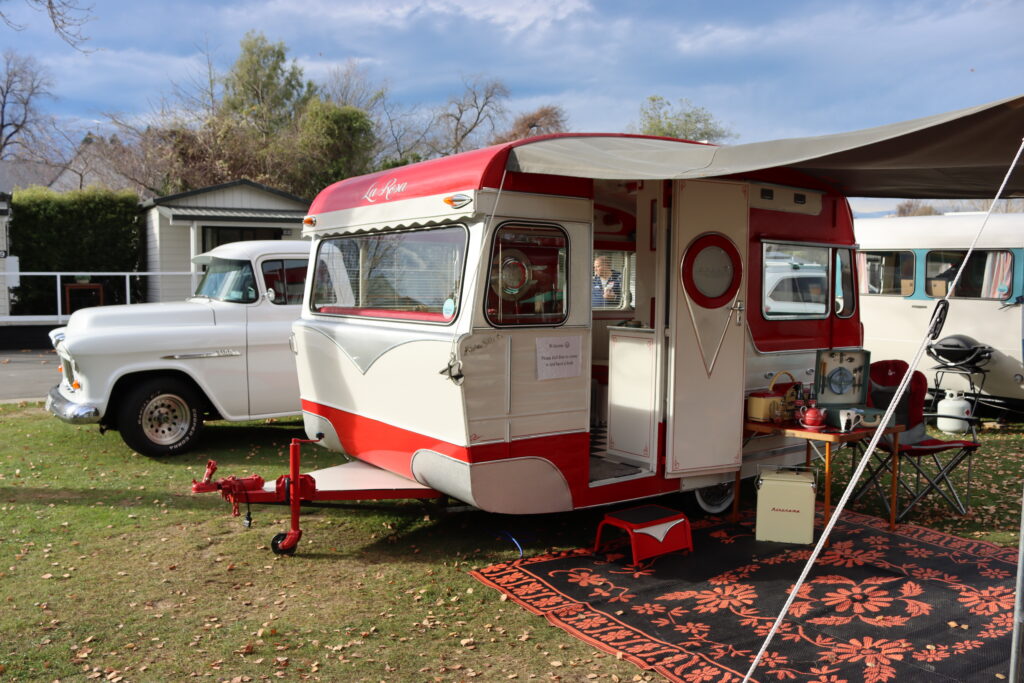
21 years of vintage caravans
Where the car is the accessory to the caravan!
Geraldine Classic Caravan Club celebrated its 21st Birthday at the TOP 10 Holiday Park in Geraldine, on May 31, so we headed along to check it out.
I accidentally turned up on Saturday, though. Clearly, I need to read event details a little better next time!
Saturday was cold and foggy, but Sunday delivered perfect cruising weather, making it a great day to get the cars out and check out the caravans on display.
The annual rally caters for pre-1970 caravans and campervans and is held at the same venue every King’s Birthday Weekend. This year, 29 caravans made the trip to Geraldine for a weekend full of activities.
The weekend officially kicks off at midday on Saturday. Club members gather at the holiday park before heading to the Geraldine Cinema, which is hired out for a private screening of an old movie. The evening is spent around the fire with a few drinks and plenty of laughs.
Museums of New Zealand
Stewart’s Classic Cars
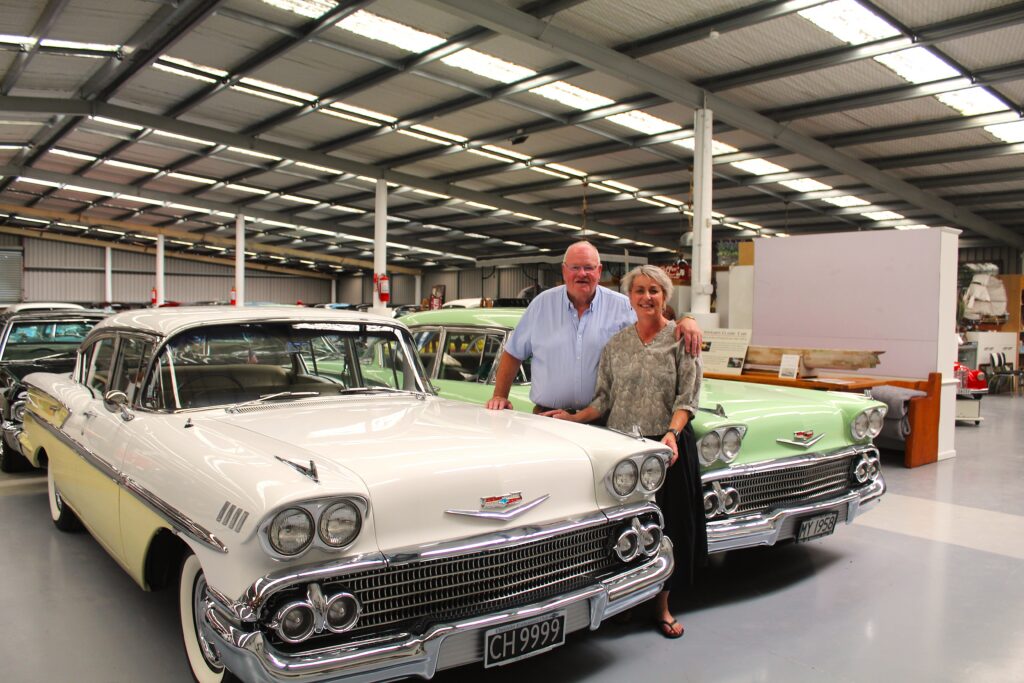
Anyone familiar with John Stewart, or who has even briefly met him, knows he is deeply passionate about cars and preserving New Zealand’s heritage. It is an inspiring story of grit, determination and the result of an intense desire to achieve one’s goals.
His extensive collection of classic vehicles and memorabilia covers 100 years of New Zealand’s automotive history and popular culture. It highlights his dedication, careful attention to detail, and commitment to sharing this heritage while inspiring others to feel the same enthusiasm.
John Stewart was born in 1952 in Roxburgh, Central Otago, and his formative years were challenging.
“The passion for cars started when I was a kid,” recalls John. “We came from a very hard-up family. Mum had 12 kids in 12 years; we had to get clothes off the neighbours, from the dump and pick up stale bread and milk off the neighbours just to survive. My father, Jack, was buying cars and selling them to help put food on the table and send us kids to school. I used to sneak home and sit in the cars after school and make out I was driving them. I wasn’t allowed near them without Dad, but I never got caught.”
Classic Northern Racing
Ford man debuts in F5000
Mention Formula 5000 in racing circles, and there’s an enthusiastic response with memories of the roar of V8 engines and nostalgia.
A prominent class for years in New Zealand motorsport, F5000 crowned its first female champion at the Legends of Speed Festival earlier this year; the iconic meeting also welcomed a very compelling new competitor.
Enter Clyde Walters, the man behind the wheel of a 1969 Ford-powered Lola T142 (chassis SL142/23).
“This is currently the only Ford (F5000) car in the country,” Walters commented. “I didn’t really need a single seater in my life, but everything is Chevrolet powered with these machines. Being a true Blue Oval man, I knew there was one in the country, and I kept an ear out for it. At one point it became available – so here we are!”
Southern Classic Motorsport Report
Barry Robinson Memorial Rally
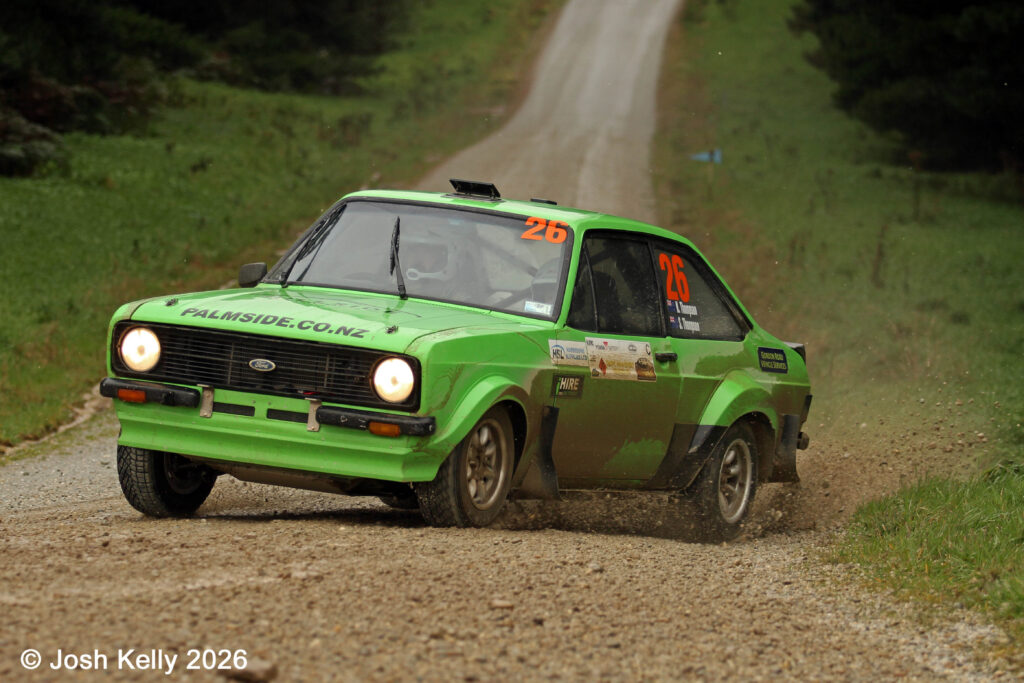
Hayden Paddon and co-driver Jared Hudson had a decisive win in their Hyundai i120N Rall2 car in the Barry Robinson Memorial Rally held at Wyndham on Saturday 18 July.
The pair won every special stage of the rally, finishing with a margin of 2 minutes, 43 seconds. A delighted Paddon was pleased with the result, and his car performed faultlessly.
“It was a great day–awesome fun!. The car ran faultlessly. The stages were very fast in places. All around it is a big tick.”
Round 3 of the NZ Rally Championship, it was Paddon’s first local rally in New Zealand after competing in selected events in the World Rally Championship.
Second crew home was Jack Stokes of Waiuku in his Skoda Fabia Rally2 evo, with co-driver Hayden Graves of Gore.
Close on points starting the round, the pair had a great battle with Jack Hawkeswood of Miller’s Flat and Jason Farmer in their GR Toyota Yaris Rally2, taking the lead only for Stokes to pull it back and finish 24 seconds ahead at the Rally finish.
Classic news and events
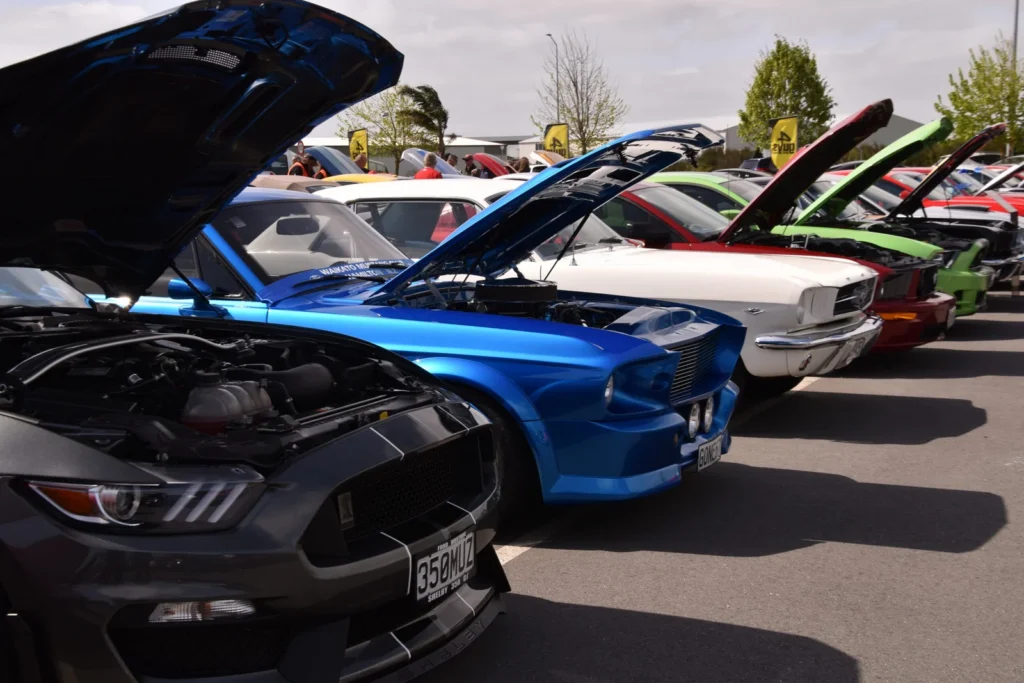
2026 Mustang National Rally, Geraldine Auto Muster, Ruakaka classic car and hot rod show, Ashhurst annual Classic & Hotrod car display and much more.