
Hiroshima Express

21 January, 2025

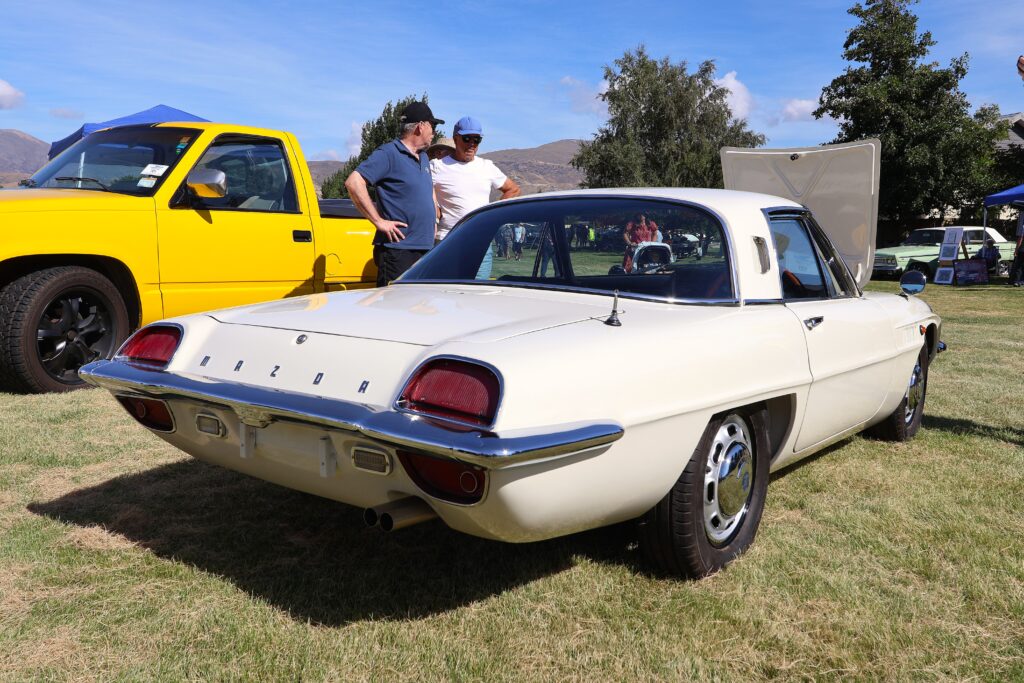
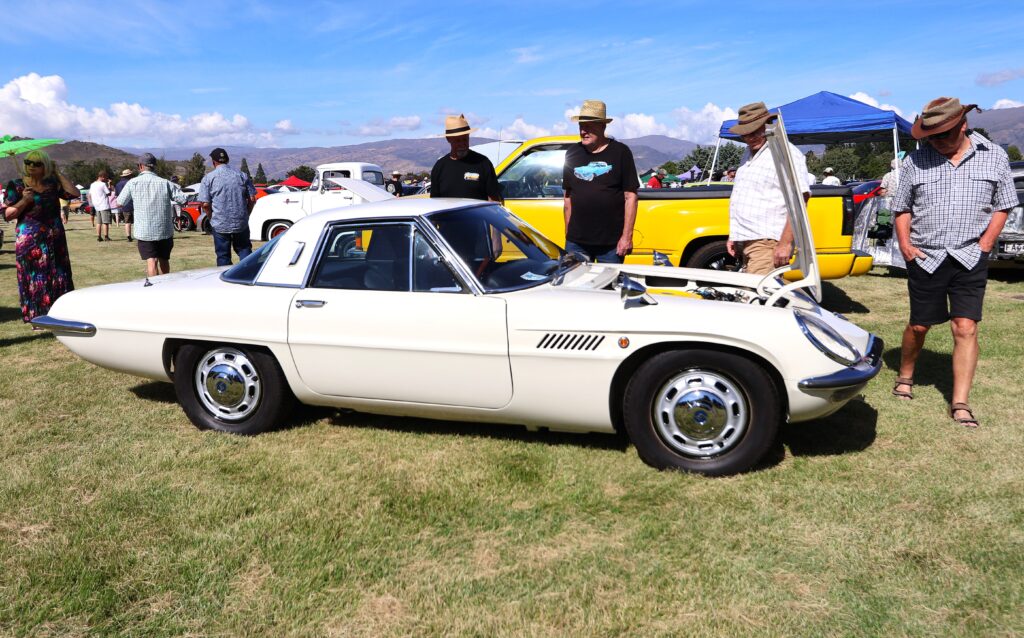
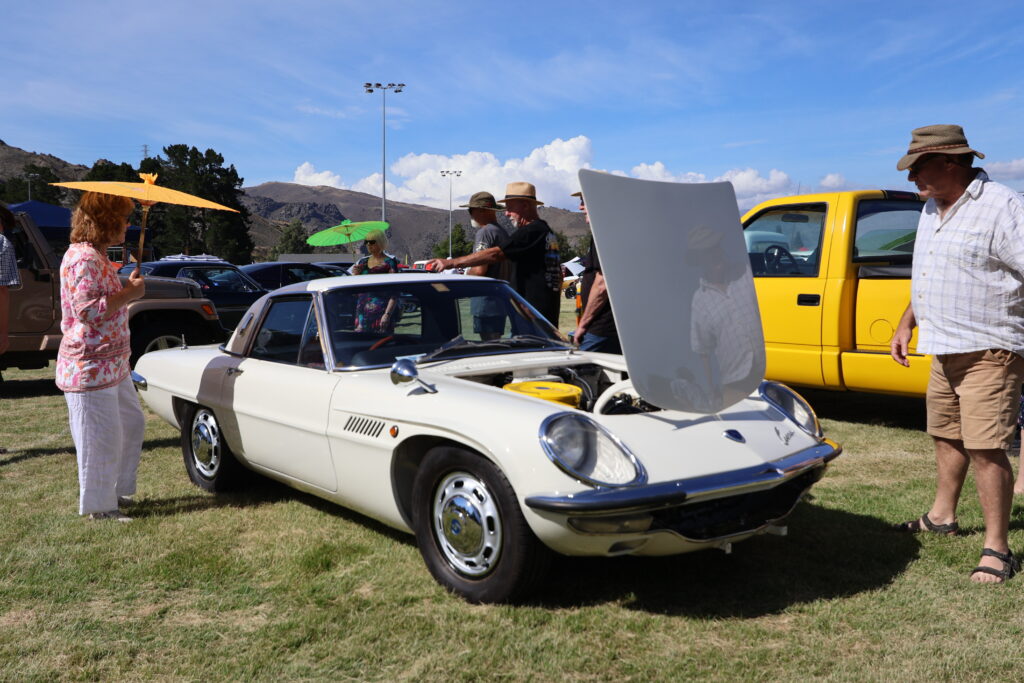
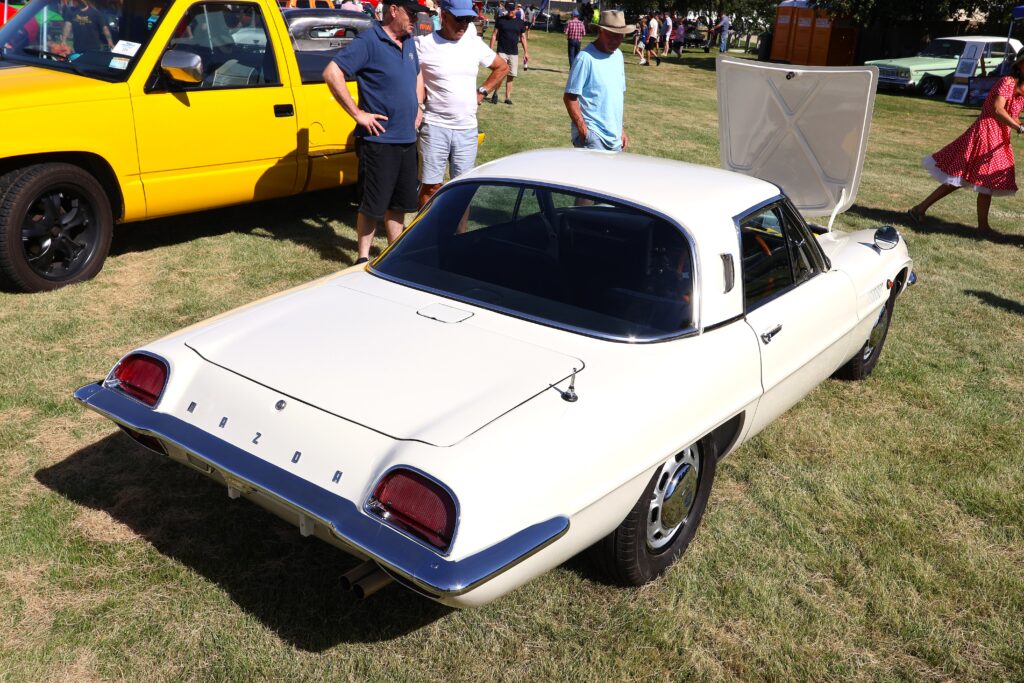
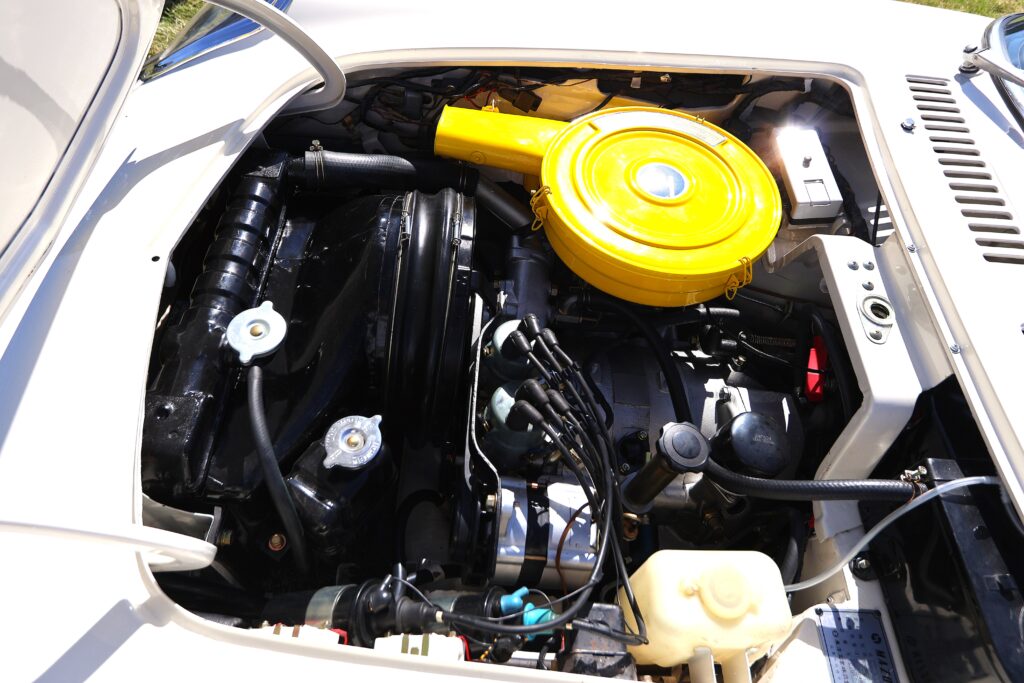
One of the rarest Mazdas, and amongst one of the rarest production cars in the World, a 1967 Series 1, Cosmo made its public debut at the 2025 Cromwell Classic and Hot Rod Car Show on Saturday, January 18 this year.

Restoration journey
After a challenging 5-year restoration, its proud Cromwell owner, Mike Elford celebrated its appearance along with Dunedin specialist, Mazda rotary engine builder, Cory Wilson who trallered the car through to the show.
“There are a number of details still to attend to and fine-tune the engine and then it will at last be finished. I’m very pleased with the result,” Cory said. 
Mike is extremely pleased with the end now in sight of what has been a very challenging project. The tiny jewel of Japanese motoring engenuity attracted many on-lookers at the show as it sat glistening in the sun on an appropriately brilliant Central Otago summer’s day.|
Speculation as to its origin and history ranging from “A Japanese import” to “Must have just been restored in States” was entertaining to overhear with few realising the beautifully prepared car was a product of home-grown skills.
“I spent countless hours online searching  for parts for this car from all over the World. It has been a very hard job gathering all the bits and there are still a few parts to add to complete the detail bits of the car,” Mike said.
He had high praise for the quality of restoration work carried out by Cromwell car restorer, Michael Stewart and Cory who rebuilt the now very rare 10A rotary engine.
“It was great to be able to drive it off the trailer and into the show under its own power. I’m very pleased with the way it has come together,” Cory said.
This is one rare car
With such a small production run in its lifetime, you can’t hop down to your Repco parts agency for bits and in particular, a complete gasket set was hand-made for the 10A rotary by a local expert
Hand-built by Mazda from 1967 until 1972, at a rate of one car per day, just 1,176 Cosmos were produced consisting of 343 Series I cars and 833 Series II cars, with a number of cars going to the Japanese Police for highway patrol duties while some were raced. 
Mazda specialists will observe that this Series I example was built close to model changeover resulting in the inclusion of some Series II parts. It was very much a show-piece of Mazda technology and styling, setting high engineering standards and performance for sports cars worldwide, and introducing the Wankel rotary engine. It’s hard to realise that was now 55 years ago and there is little doubt that the brilliant concept has not yet died. With advances in alternative fuels, we may see a hydrogen comeback for the little screamers from Hiroshima.
New Zealand Classic Car magazine will have a full feature on the little car and its restorers in an upcoming issue.
 

One lady owner

Well, at first glimpse, as soon as the lady opened the garage doors, I knew I was going to buy it. Dark metallic blue with two-tone blue vinyl trim, with a cream American-style steering wheel — I just could not believe my eyes! The Falcon was in as new condition as you could expect from a 30-year-old car. The owner was Mrs Iama Dzenis, aged in her late 60s, at a guess. Mrs Dzenis had bought the car new in September of 1965 from the Ford agents of North Canterbury, Palmer and Doak. Their headquarters were in Rangiora, with branches in Kaiapoi and Amberley.

Double duties for Brendon Leitch in fifth Lamborghini World Finals

Brendon Leitch will have six shots at victory at Misano when the Lamborghini Super Trofeo season comes to a close.
Leitch will finish his Lamborghini Super Trofeo Asia season with China’s JJ Song and Leipert Motorsport in the Pro-Am class.
The New Zealander has also been drafted in for the Lamborghini Super Trofeo Europe final with Australia’s Nicolas Stati in another Pro-Am entry by Leipert Motorsport.
The final rounds of the Asia and Europe series take place across November 6-7 before the Lamborghini World Finals on November 8-9.
The three regional series – Europe, Asia, and North America – finish their respective championships before combining grids for the World Finals.