Bill Leckie’s time in motor racing was short, but he gave the New Zealand motor racing scene two highly memorable cars — one of which was virtually unbeatable
By Michael Clark
Seeking limelight is part of Bill Leckie’s DNA, but when I asked him if anyone had written about his career and the cars he created, he didn’t think so. Even so, I was delighted when he agreed to sit down with me over a pie and coffee to reminisce. I started by asking how it is that someone who is so fanatical about F1 only ever raced saloon cars? Well, we’ll get to that, but where did things start? “I went to Cornwall Park Primary School and then to Remuera Intermediate where I became good mates with Geoff Perry, son of the legendary motorcycle racing legend Len.” Geoff Perry was 23 and on the edge of stardom when he was killed in a mystery air disaster over the Pacific in 1973. “We used to race around his backyard on a cutdown motorbike. It was friendly competition that I suppose helped hone our racing instincts. There was never much between us and so, by 11 or 12, I had a definite leaning towards speed.”
The usual shortage of cash meant waiting until he left school to accumulate the funds to go karting. “I was working for Alex Harvey Metal Containers, not earning much, which meant trying to compete on a diabolical budget … the story of my motor racing.” The lack of funds necessitated ingenuity. “I built my own kart, including bending the tubes to the then-new European design. Karting taught me about overtaking, especially in handicap races.” Bill continued karting until about 1972. “I was competitive, but I broke down in the New Zealand Championship. I couldn’t afford a fuel tank, so I used a tin can, but the alcohol released the jointing compound, which blocked the jets.”
Imp gets a transplant
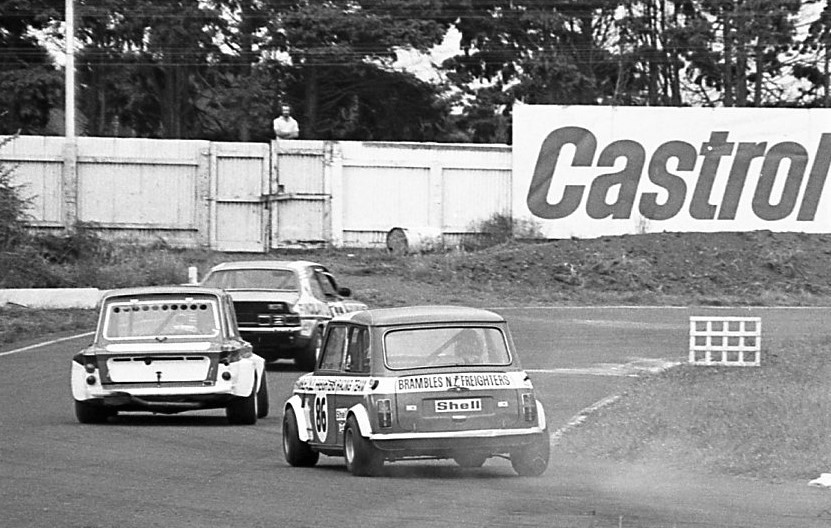
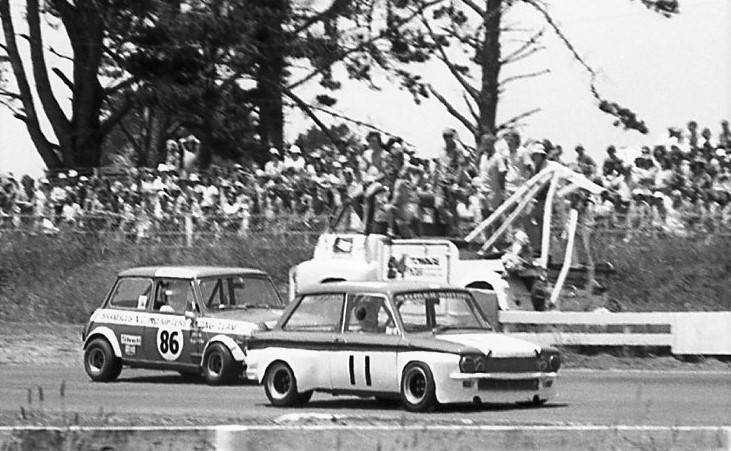
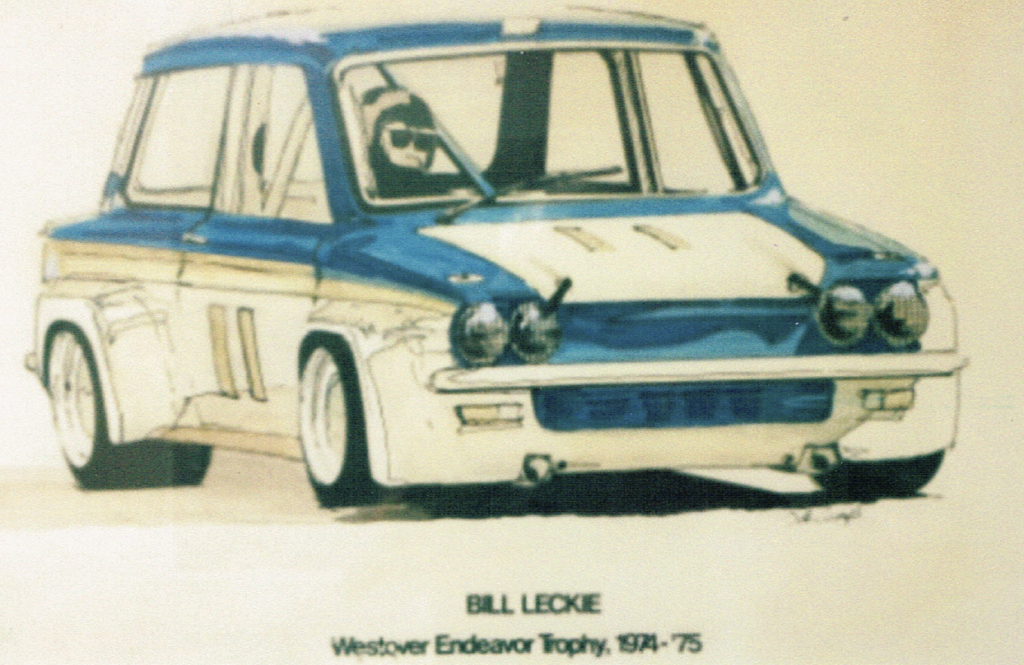
The opportunity to go car racing came via Bill’s friend Graeme Bowkett. “We’re still close mates and have been for about 50 years. He’d raced a Hillman Imp in the 0-1000cc championship, but that evaporated and became 0-1300cc. We went halves and shared costs for a year.” Bill is forthright when I enquire if he’d considered the 1.3-litre Mini Cooper option, arguably the easiest way to be competitive. “I had no desire to drive a front-wheel drive vehicle.” As well as merging classes, the rules were relaxed to allow engine swaps that led to a return of the Allcomer days and the creation of such iconic machines as the Jack Nazer FD Victor with a large-capacity V8 Chev, and various takes on V8s being fitted to Capris and Toranas, among others, but almost exclusively in the larger capacity categories. Both Bill and Graeme knew the Imp needed a transplant. “I don’t specifically remember how the idea came about to fit the Ford, but we bought a second-hand 1.3-litre Cortina crossflow that ran through a VW gearbox. We had a very high top gear that severely limited acceleration. The bottom line was that we had created a cheap alternative.”
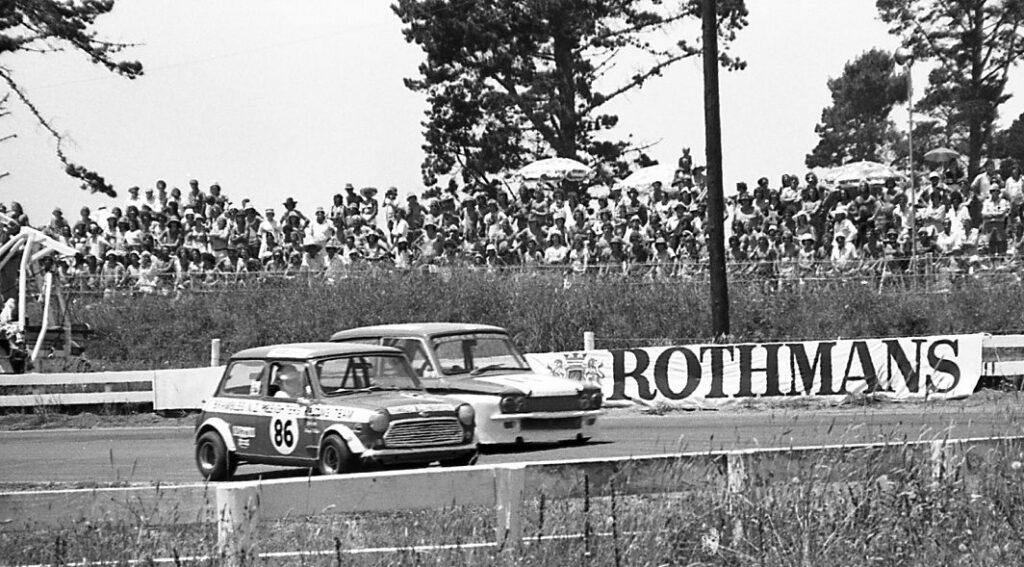
As Bill rolls back the years, I can’t help but wonder if half the enjoyment came from actually building the car. “I always considered myself to be a better engineer than driver. By building it ourselves, we could keep the cost down, but it was critical that the car had to be reliable. I was there to enjoy my motor racing, and there’s no fun fixing broken racing cars at the track.” I mention to Bill that every photograph I found of the Imp also included the beautifully presented gold Mini Cooper of Barry Phillips. “Barry was a bit of a thorn in my side, and I suppose I was for him. We had our first coming together at Timaru. Barry taught me if you didn’t leave room, you reduced the chance of another guy diving up the inside. We ended up having some magnificent door-handle-to-door-handle races with Barry, Roy Harrington, and once with Mike Moore in a wonderful scrap we had at Levels.”
Fun with firewalls
While it was the ‘Sleepyhead Capri’ that made Bill famous, his fan base had grown with his performances with the Imp as the innovative new boy up against motor racing’s established elite. It was when the 1300cc pushrod blew towards the end of that first season that the Imp story took an interesting turn. “We patched up that engine but then imported a Burton-tuned twin-cam from England. We mated it to a Formula Ford gearbox so that I could change ratios — if I could have afforded them …” So far so good, however: “The rules said that the firewalls could be moved 12 inches. I presume whoever wrote the rules never envisaged anyone would do that with anything other than a front-engined car — as in ‘move the engine back 12 inches’. I moved the firewall forward 12 inches and I firmly believed that that was within the rules.” So the engine was now mid-mounted — and much quicker. “At Bay Park over Labour weekend 1974 I had a second and a fourth but was ultimately disqualified.” More than 47 years on, he remains miffed. “I was never given a specific reason why, but I have no doubt that one of the other drivers complained to the technical committee. It took a lot of talking to even let me race.”
The next meeting was a fortnight later at Pukekohe and, because they were banned, Bill was also without the all-important prize money. “We returned the engine to the back — you can imagine the work that involved. To my delight, the car went well but with its tall first gear I could never get off the line and would regularly lose four to five places before the first corner. For the Ruapuna meeting in November, I imported a five-speed kit and so now had a low-ratio first gear. I made sure not to tell anyone … I started from the second row but I was gone off the line.”
The engineer’s view
I sense the engineer in Bill is still slightly annoyed that when he returned to Bay Park for the New Year’s meeting, he went quicker than when the car had been mid-engined. “I won both races. I would have loved to be a fly on the wall in some of the other camps. That was probably my best meeting in the Imp and included 20 minutes or so on TV — not that that translated to a big sponsorship deal.” I recalled the support race at the 1975 NZ Grand Prix and a bit of controversy. In a flash Bill is there. “I ended up before the stewards and was given a big slap on the hand. I was probably a bit naughty … but I was the lead car.”
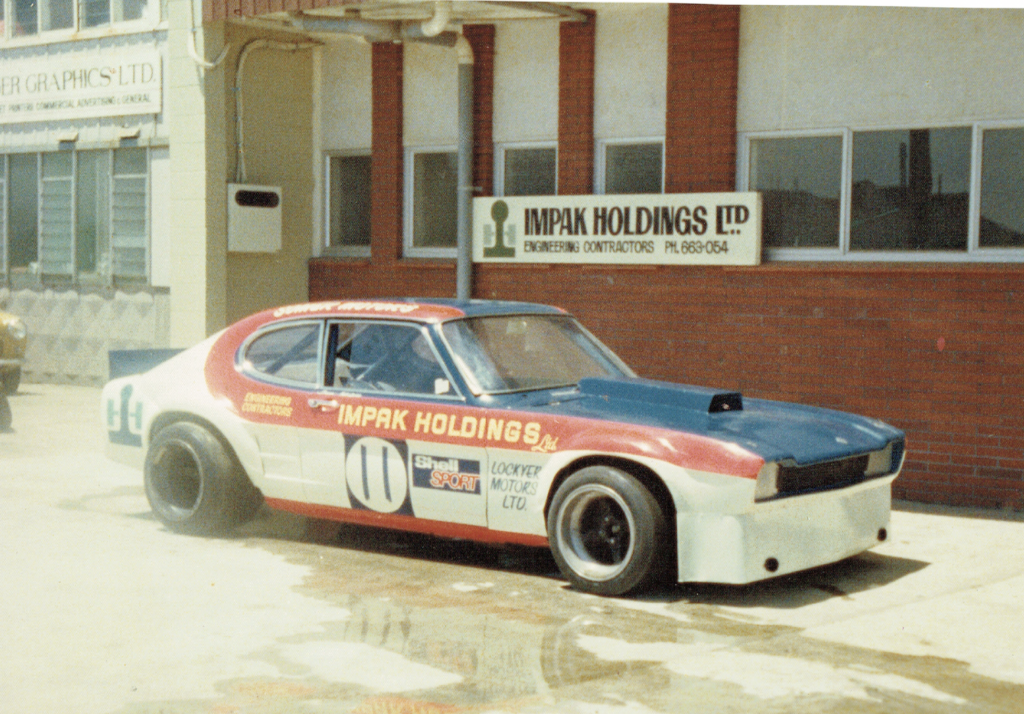
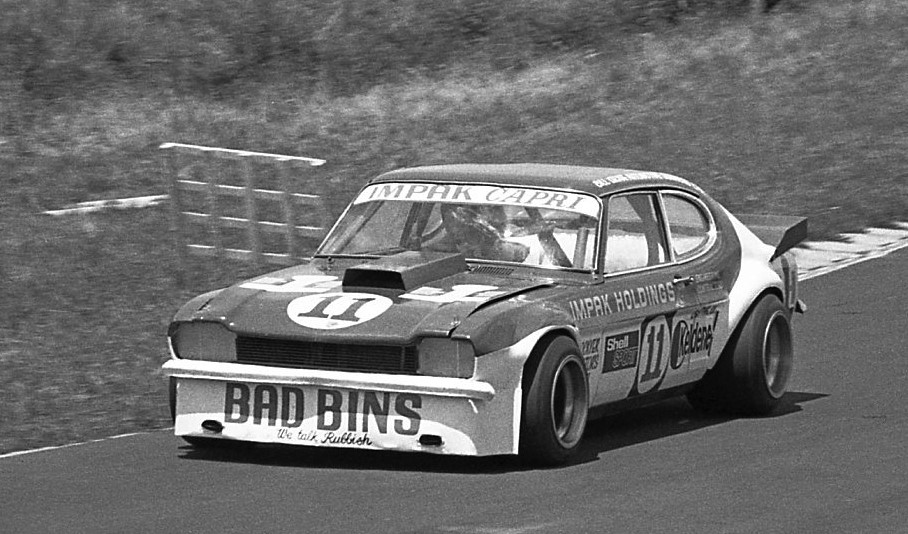
A month later Bill was in Timaru: “… with a blown engine, a long way from home and no money. Shell arranged a local workshop and a young guy there had an old piston from something and a valve from another Ford — but they both fitted so I went racing, set the rev limiter to 1000rpm less, and got my first pole!” Bill gave his new friend half his prize money. The Imp was close to its final race. “I flipped it end over end, but by then I was already thinking about my next project.” Bill knew full well how competitive the 0-1300cc category had been, as was the top class — 4201-6000cc — but he detected an opportunity in the sub-4.2-litre group. His fertile mind took him in a direction no one else had gone — the Imp had got him noticed, but de-stroking a F5000 V8 Chev to just under 4200cc and fitting it to a Ford Capri is what made his name, as we’ll explore next month. It was a combination of Kiwi ingenuity, superb preparation from his mates Graeme Bowkett, John Rush, and Mike Moffatt (and many others), resulting in a car Bill recalls as being “so insanely reliable”.