Despite its great ingredients, the Daimler Dart only just scraped into ‘one-hit wonder’ territory. What if Jaguar had gone on to make a Mark II Dart? It very nearly did.
By Ian Parkes, photography by Bernard Gammon
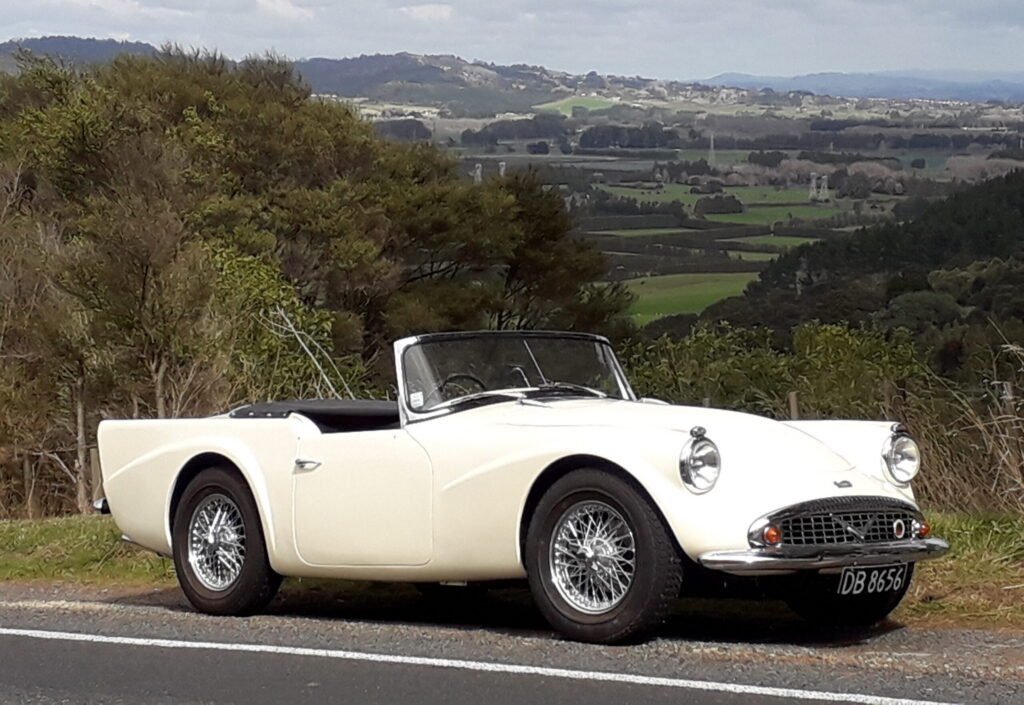
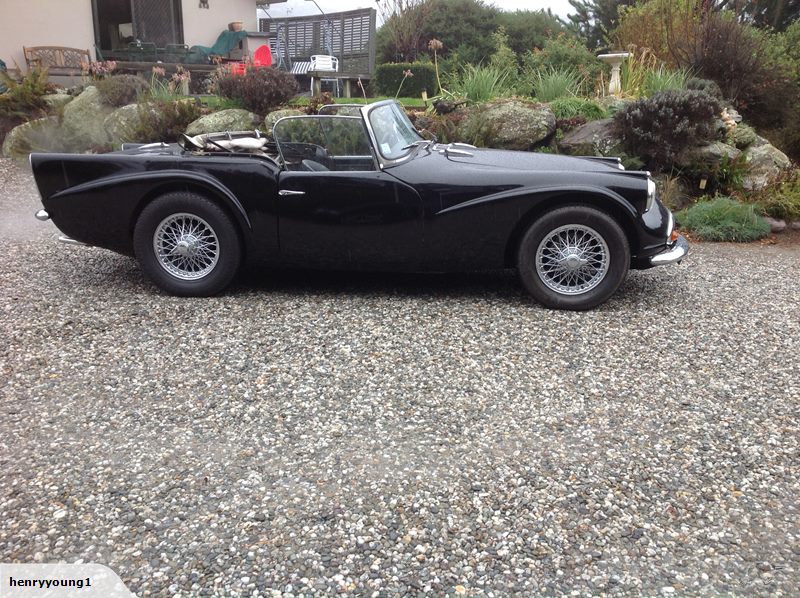
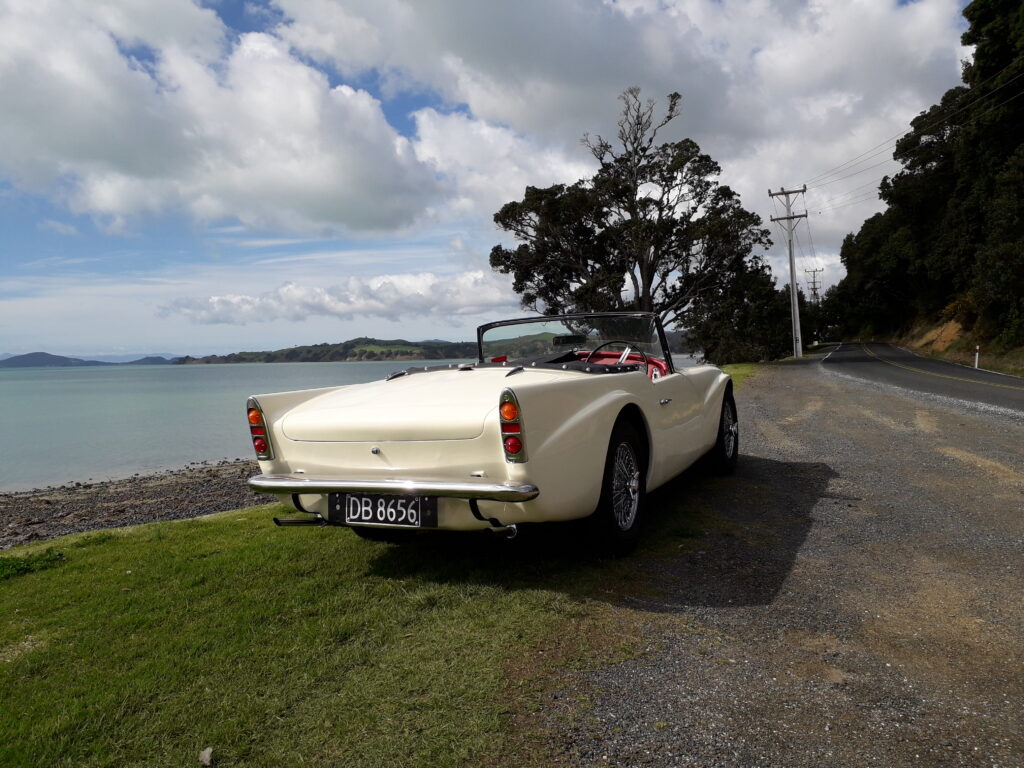
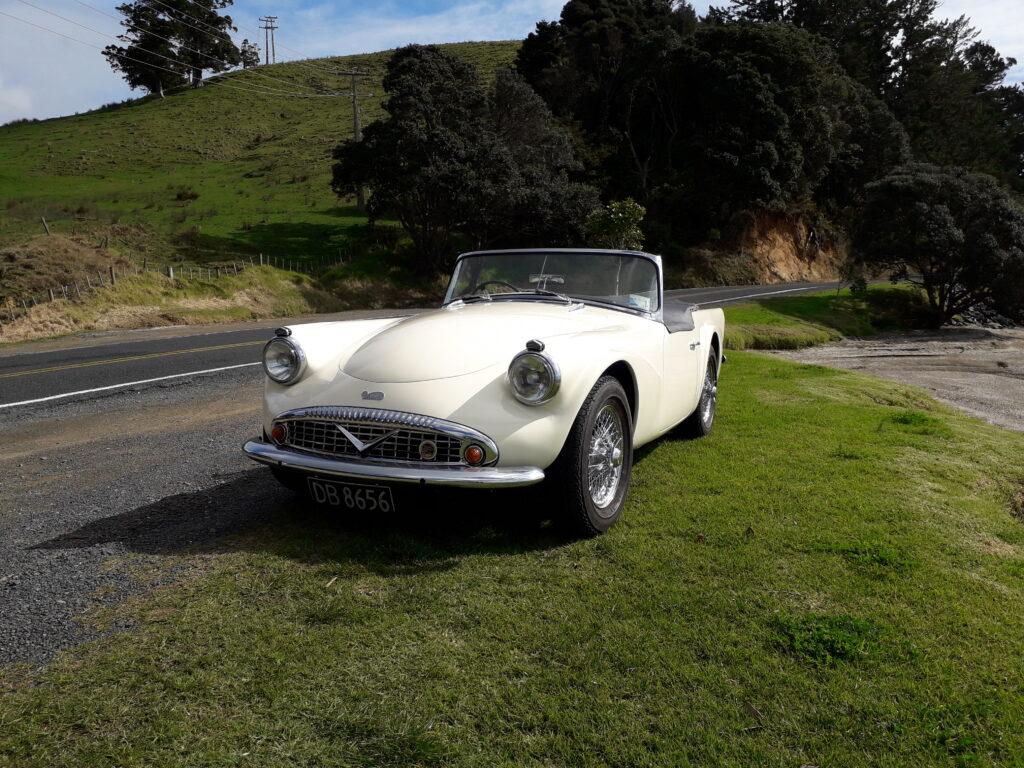
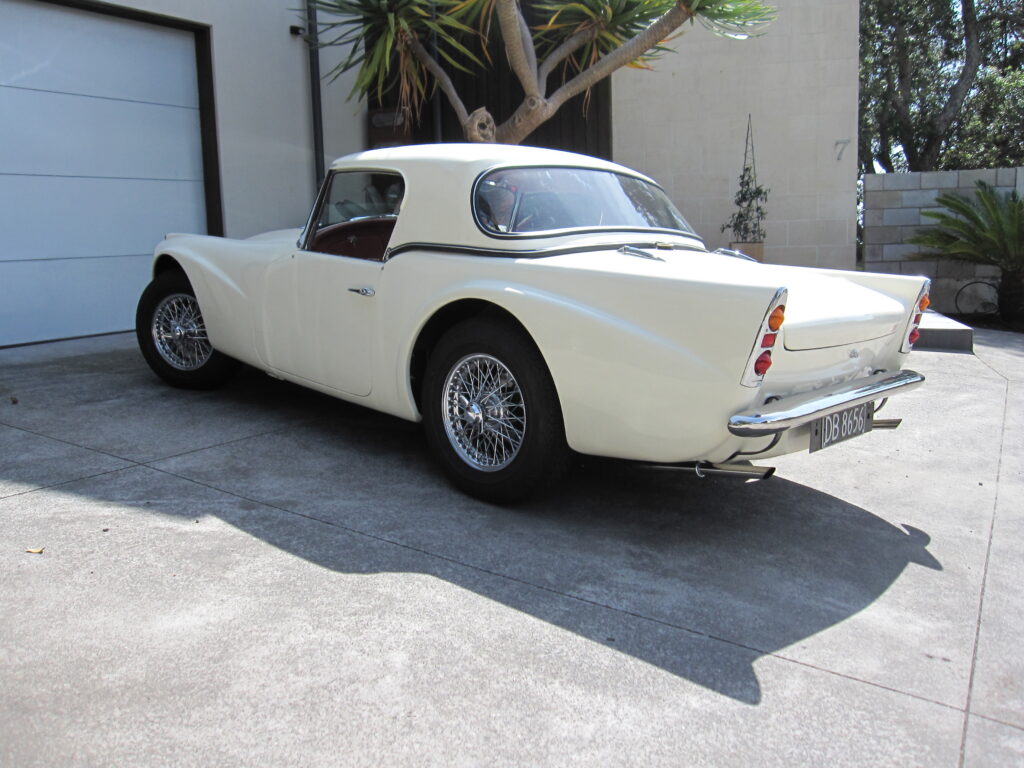
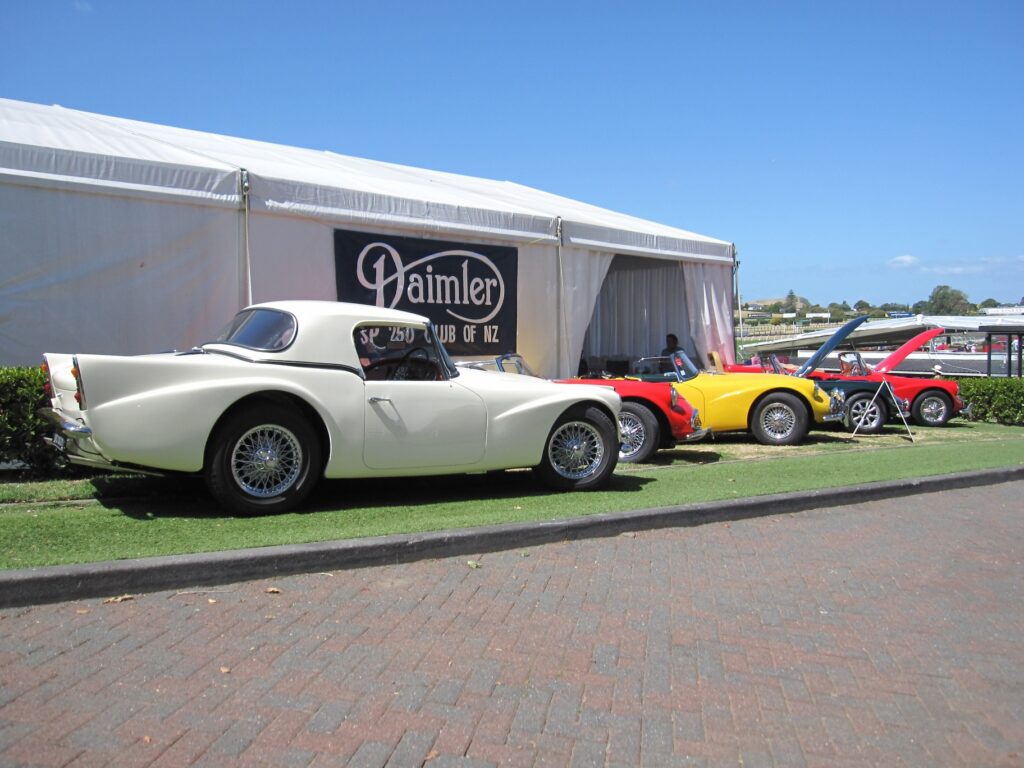
This Daimler SP252 is so rare, few people know it exists. It’s one of a kind. It’s the only surviving, in fact the only SP252 ever completed; the would-be successor to the SP250 Daimler Dart. It is also the last sports car to have been designed by Jaguar’s legendary founder, Sir William Lyons.
Perhaps one of the original Dart’s biggest problems was it’s somewhat-divisive looks. It certainly went well enough to win fans, although Sir William wasn’t among them. It crushed the opposition in the Bathurst six-hour race, finishing five laps ahead of anyone else, and it was snapped up by police forces in Britain, Australia, and New Zealand, as it was the fastest thing on the road.
So you’d think a stunning new body with the magic Lyons touch would have been a surefire success. Why this car never made it into production is still something of a mystery, as the official explanations barely stack up.
An enigma wrapped in a mystery
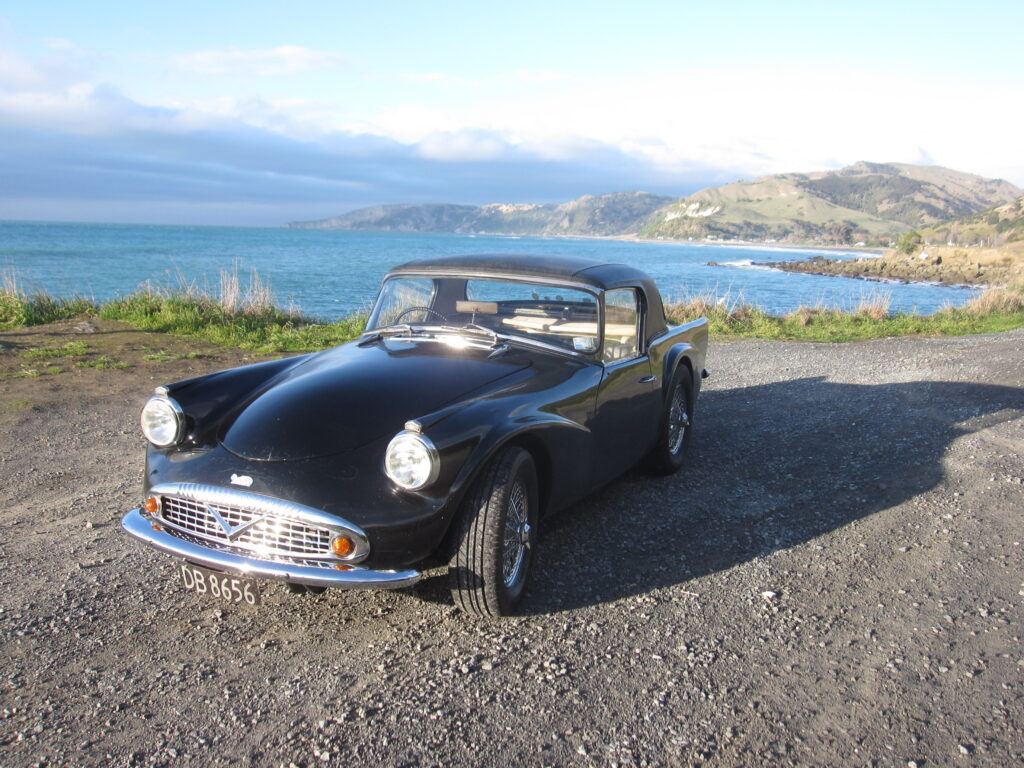
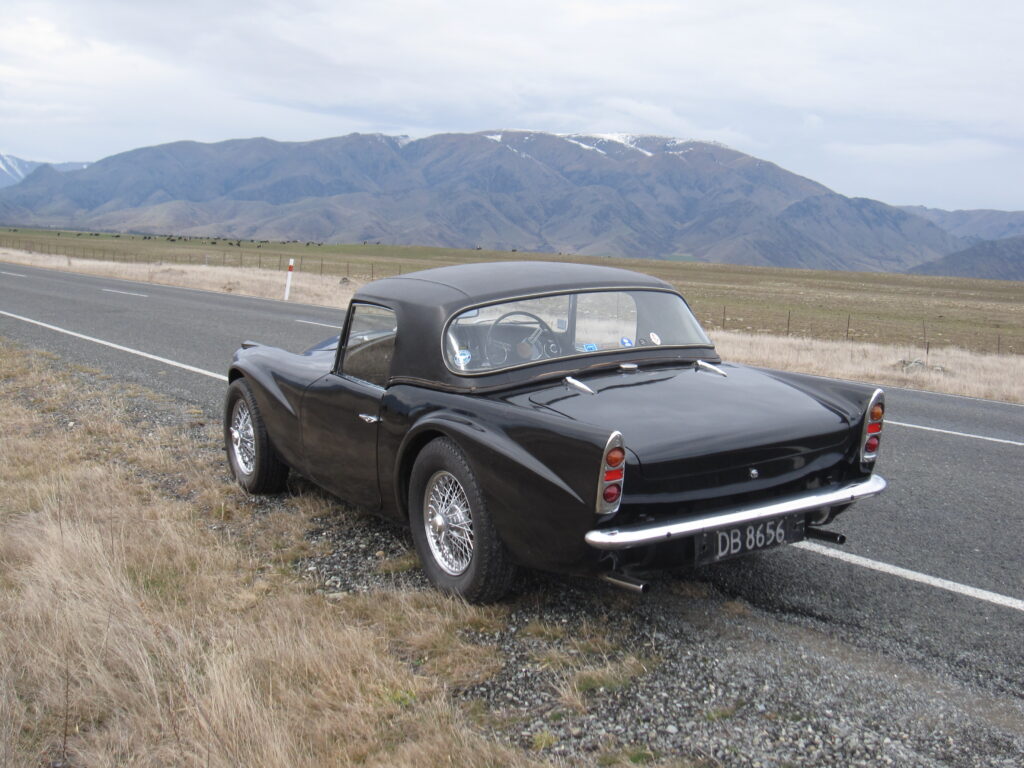
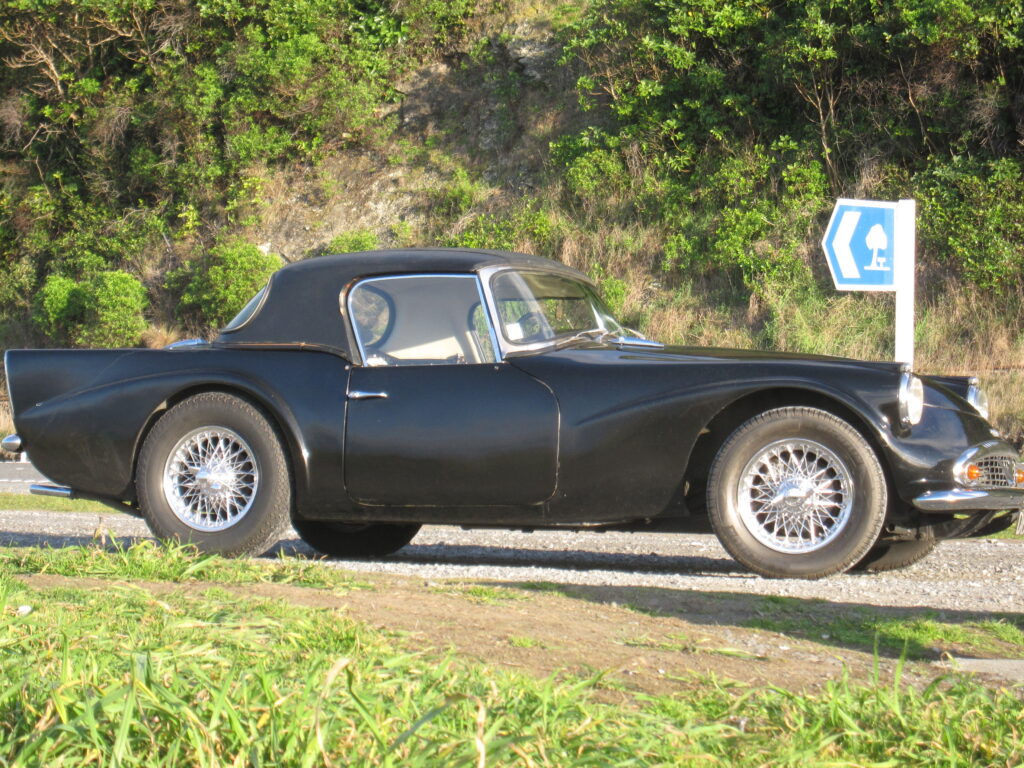
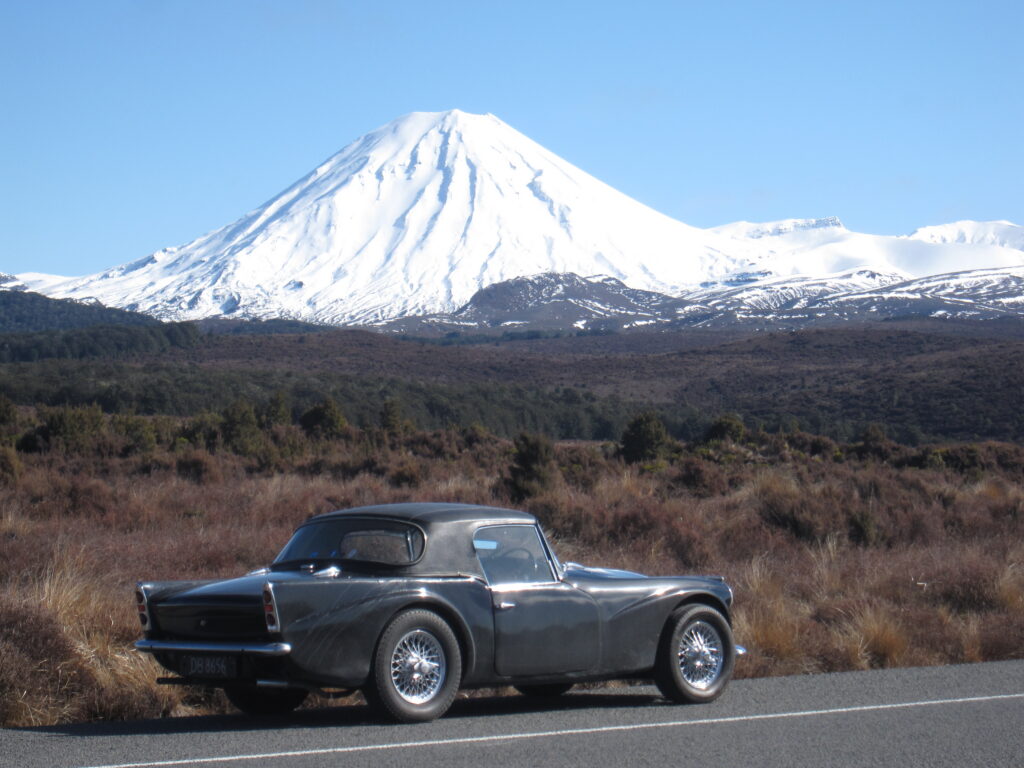
Aucklander Kevin Lindsell, who is also the owner of the dark-coloured Dart featured here (making him at one time the owner of two of the world’s most beautiful Darts), bought this unique and important car in the UK, which prompted him to research its origins.
Its murky history has clearly played on Kevin’s mind for some time, as he has turned this and some other intriguing motoring mysteries into the plot for a thriller novel. While there’s a hint of MGB (which came later) around the headlights, the overall lines and some of 252’s styling cues show up surprisingly well in Pininfarina’s beautiful Fiat 124 Spyder which debuted in 1966. Interesting … Check out the nose, the headlight recess, the hip line, and the long rear haunches — especially if you round off the tips of the fins.
Then consider the startling similarity between Lyons’ Jaguars Mark I and II design and Pininfarina’s design for the Delahaye from a few years earlier … There’s clearly a lot of scope here to imagine high stakes industrial espionage and payback shenanigans.
But back to the Daimler. Jaguar bought Daimler in 1960, just after the Dart was launched, primarily for the extra production capacity at its factory just 3km from Jaguar’s Brown’s Lane works.
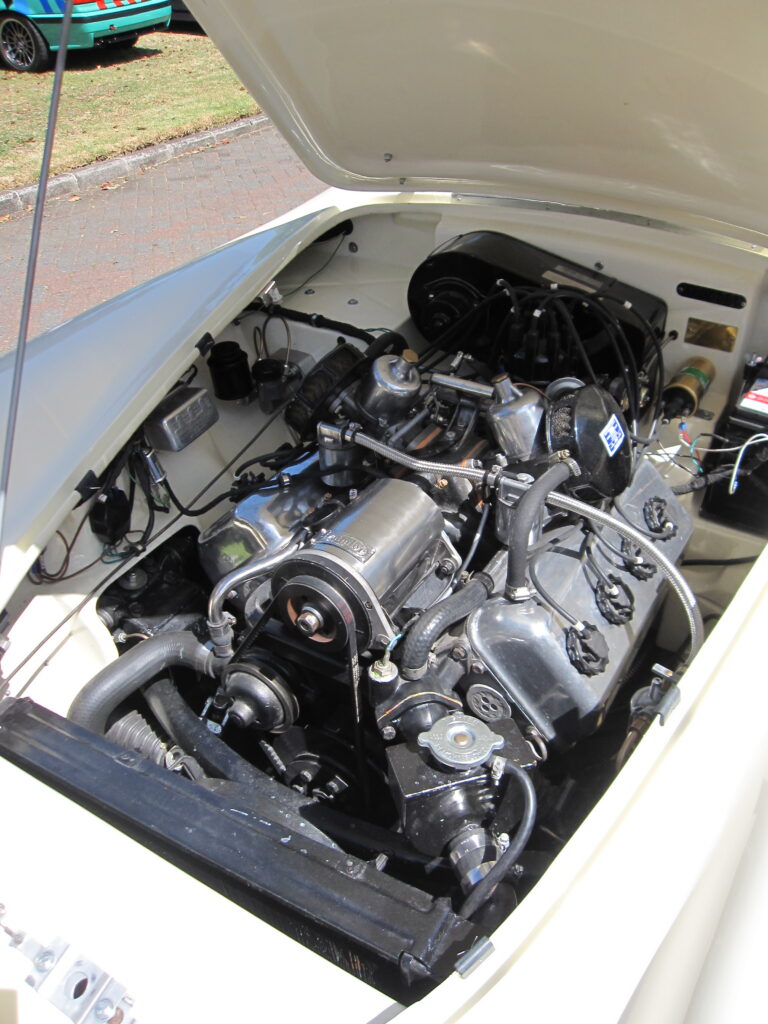
The Dart’s brilliant V8 engine was quickly seconded into a Daimler version of the Mark II Jaguar, and Sir William assigned the project for a new Dart to Fred Gardner. They used three prototype SP250 chassis: 100003, 100004, and 100005. The car we see today is 100005.
Lyons’ design
The team used the existing SP250 moulds for the engine bay, scuttle, and cabin, but made new moulds for all of the exterior. Sir William’s new design lopped off the original’s fish face, wing-top side lamps and the first car’s incongruous wheel flares, and added longer wings and boot. That made room for twin fuel tanks, which would have improved the car’s balance.
One body was fitted to 100003 and another to 100004, which had been modified and fitted with rack and pinion steering and torsion bar front suspension. The body from 100003 was later fitted to 100005.
So why was this handsome car abandoned? The usual reason is cited in Brian Long’s history of the Daimler SP250. In a letter to the SP252 former owner Tom Sweet, one of the project engineers and later managing director of Jaguar, Lofty England, said they could only produce 140 engines a week and the car would not be economical to produce. He later wrote directly to Long saying it would have cost more than an E-Type to build, producing a very small margin; and there was no guarantee of success.
This baffled Kevin. Sir William gave the car the go-ahead after seeing the prototypes. He was fanatical about detail and production costs, so it’s unlikely he would have given the go-ahead if it wasn’t going to stack up.
The numbers don’t add up
Kevin points out that even at 120 engines a week and with four weeks’ holiday, the factory could produce 5760 engines a year. The original Dart was only using 800 a year and the Jag saloon around 2500, so the plant was only running at around 57 percent capacity.
“So in fact they could have built as many as 2000 SP252s per year and still not max out production capacity. This would have made it one of the most successful Daimlers ever made,” says Kevin.
Its in-house fibreglass body was also an asset, as Jaguar was worried about industrial action at Pressed Steel Bodies, which made bodies for Jaguar as well as BMC. The rest of the car was not overly expensive either. Jaguar knew from day one each Dart cost around 630 to 640 pounds to produce and they could have saved a lot of these costs using existing Jaguar parts. The dashboard in 100005, for example, was lifted directly from an E-Type. And surely there were many more synergies to be made in production.
There were other distractions at the time. Jaguar had recently bought Climax engines and met with Lotus to discuss taking over that company too. Executives from both companies looked over each other’s projects. The Dart’s V8 engine was mooted for a new Elan. A verbal deal was reached which would give Lotus shares in Jaguar. But then Chapman got cold feet and pulled out of the deal. Had the deal gone ahead, who knows what that would have done to the SP252 — a Dart with a Lotus chassis is an enticing prospect. Regardless, with one thing and another, by 1964, the next-generation Dart was shelved.
What really killed the 252?
Kevin advances a couple of explanations. He says by 1964, Lyons was working on the XJ6, and as he was now 65, that would be a satisfactory swan song. The Dart’s chassis design could also now be considered dated, although Ferrari and Aston Martin were still using separate chassis. Perhaps the market was also being squeezed. The Daimler would have slotted neatly between the Triumphs and MGs and the upmarket Astons and Italians, but it would compete with the Jensen Healeys.
“I still believe that it was probably a combination of Lyons’ waning interest in the car and internal politics at Jaguar that probably killed it off,” says Kevin.
There was still an outside chance of a comeback as the prototype sat under dust covers at the factory for three years, when the usual fate for abandoned projects was to scrap them.
In any event, this car, 100005, emerged as a running car in 1967, some say to perhaps catch the eye of new partners BMC as a successor to the Austin Healey. It had a custom windscreen surround for its Perspex windscreen and a hood.
The car’s first owner, Peter Ashworth, saw it being worked on when his own Jaguar was in for service. He bought it for his wife but she didn’t like how it drove so, after just two weeks, it moved on to Tom Sweet for £700.
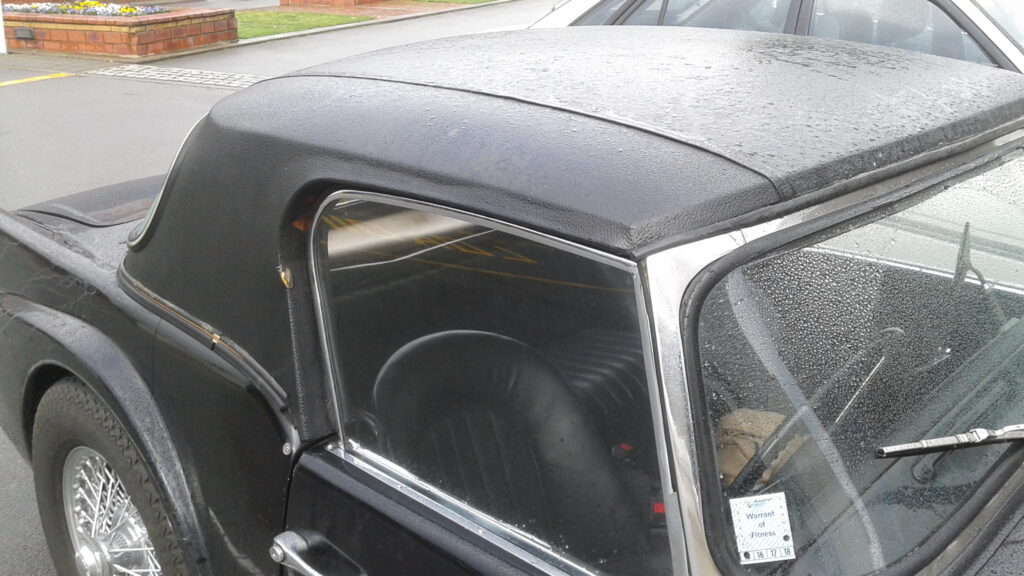
Kevin says previous owners replaced the Perspex with a glass screen cut down from a Skoda and noted the surround was held together with twisted wire rather than bolts. Wire wheels replaced the original steel items and a grille had been custom made to replace the one shown to Lyons, which was made from cardboard covered in aluminium foil. And the immediately previous owner replaced the steering box with the Jaguar rack and pinion system and column that it would surely have had in production. Kevin bought the car in 2018 from a keen SP250 owner and historian, who had owned it since 2007. Kevin says he has since found another appropriate owner for the car in the UK and, as part of that deal, it will now go on loan to the Jaguar Heritage Trust, which will display it alongside the pre-production SP250.
“The SP252 is a piece of Jaguar and Daimler’s history. It would have been the last Daimler to be produced without a Jaguar body or engine incorporated into it,” says Kevin in his history of the car. “I think it would have also been a successful car. Not competition for the E-Type, which appealed to a different crowd, but a sports GT for middle management not yet in the league for an Aston, Ferrari, Porsche, or Mercedes. As Stratstone’s, a significant Daimler retailer, has confirmed, Daimlers were being sold to non-Jaguar customers trading up from Triumphs and Rovers, whereas Jaguar clients tended to be loyal to that brand. I’m just relieved it wasn’t consigned to the scrap heap and am proud to be part of the ownership chain, preserving it for the future.”