
Rural delivery

11 April, 2025

Lew Eustace didn’t have to go far to find his next classic car project. It was sitting derelict in a neighbour’s paddock
By Quinton Taylor

Lew might be slowing down a bit on the car restoration front. He says he just does projects for friends and family now, but any time you visit Lew and Ann’s place in Invercargill, you’ll see at least one or two restoration projects underway.
“I’ve forgotten how many vehicles I’ve restored over the years,” says Lew. “It’s quite a few.”
Ann and Lew are dedicated car enthusiasts with several interesting, mainly American examples, in their garage. Lew does most of the work himself, apart from upholstery and electrics, and the quality of his work is renowned. He worked for five years restoring vehicles in Bill Richardson’s truck collection before it was opened to the public and established as Bill Richardson’s Transport World in Invercargill.
“The very early Mack truck in the Richardson museum was one of the vehicles I restored and I’ve worked on [Bill’s daughter] Jocelyn O’Donnell’s VW Kombi, ‘Archie’. I also restored her blue VW Kombi. That was a total restore.”

A twinkle in his eye
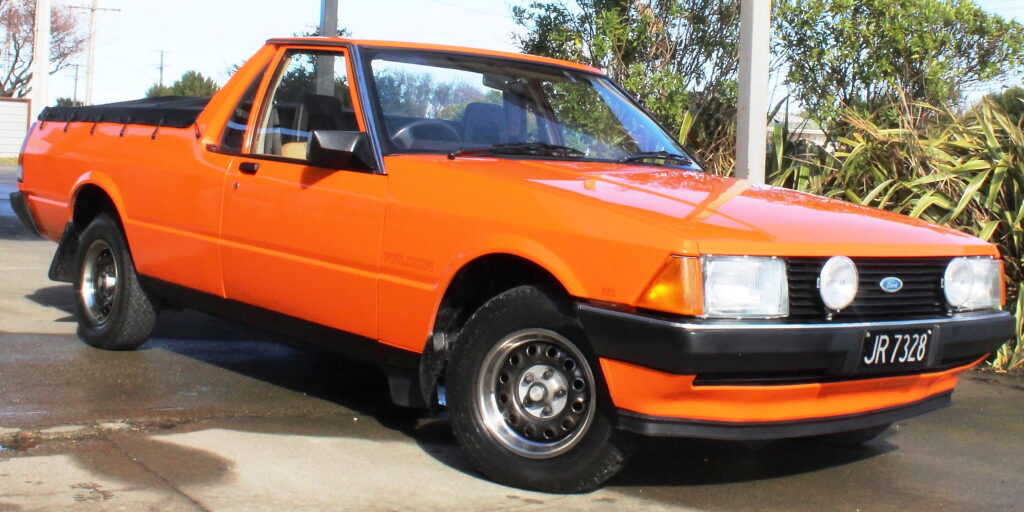
Lew gets a real thrill out of people enjoying the work he does, and sometimes more than just a thrill. We featured Lew’s fully restored and very rare 351cu-in, V8-powered 1980 Ford Falcon XD ute last year. Just a few days after publication, a collector made contact and fronted with the proverbial offer he couldn’t refuse — happily an all cash one, free of mob-style menaces.
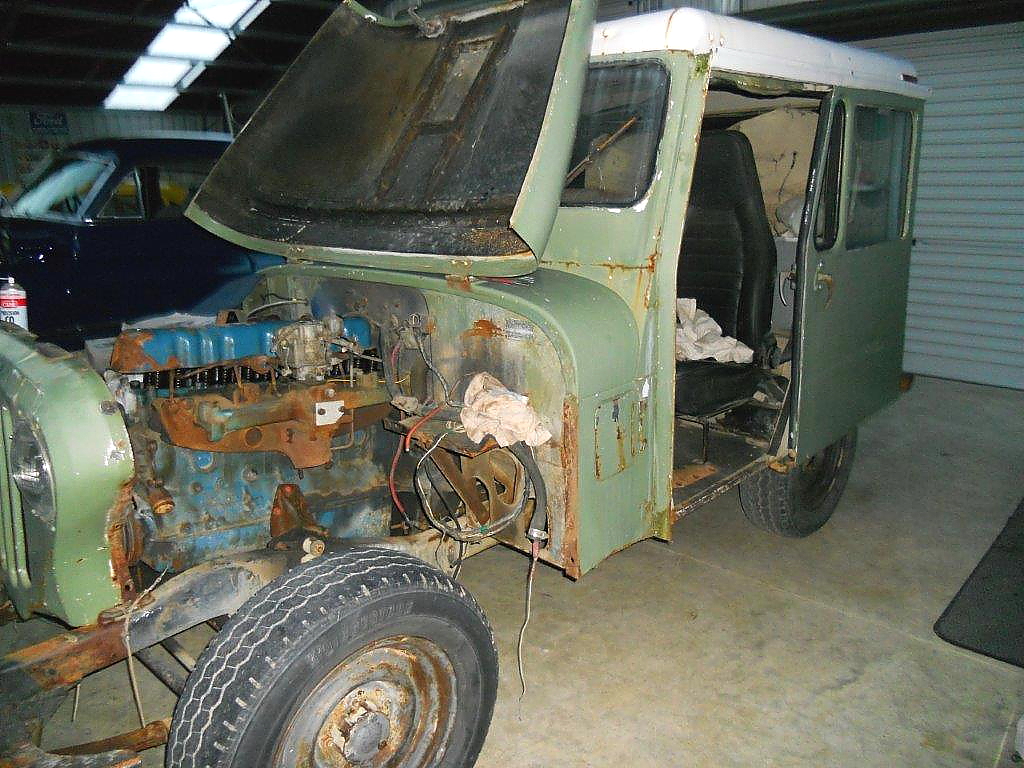
Lew’s restorer’s eye is always alert to something that might be worth salvaging and this impulse urged him to approach his neighbour enquiring about the unusual Jeep sitting in his paddock. Lew said nothing seemed to be progressing with it and it was too good to let it deteriorate further.
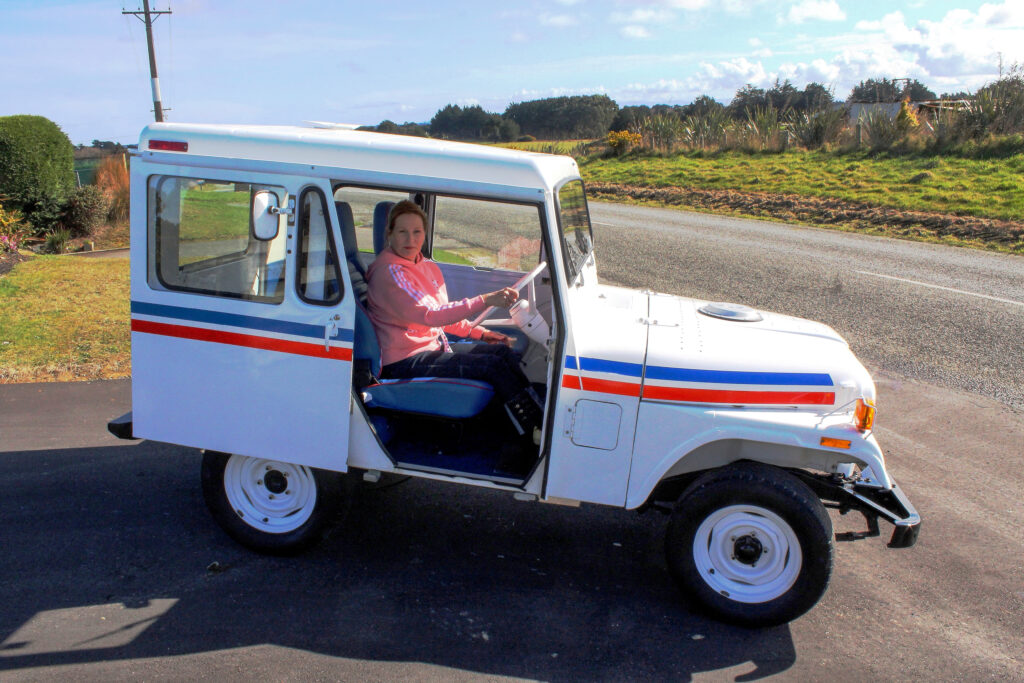
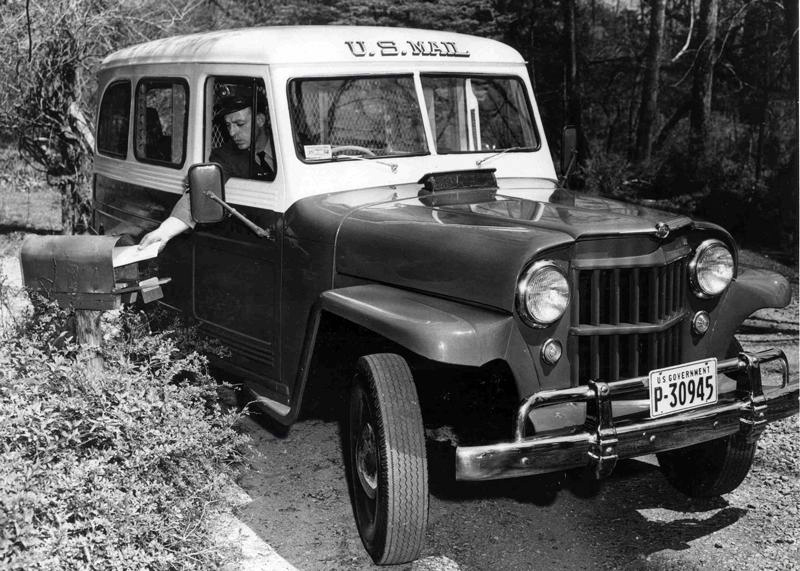
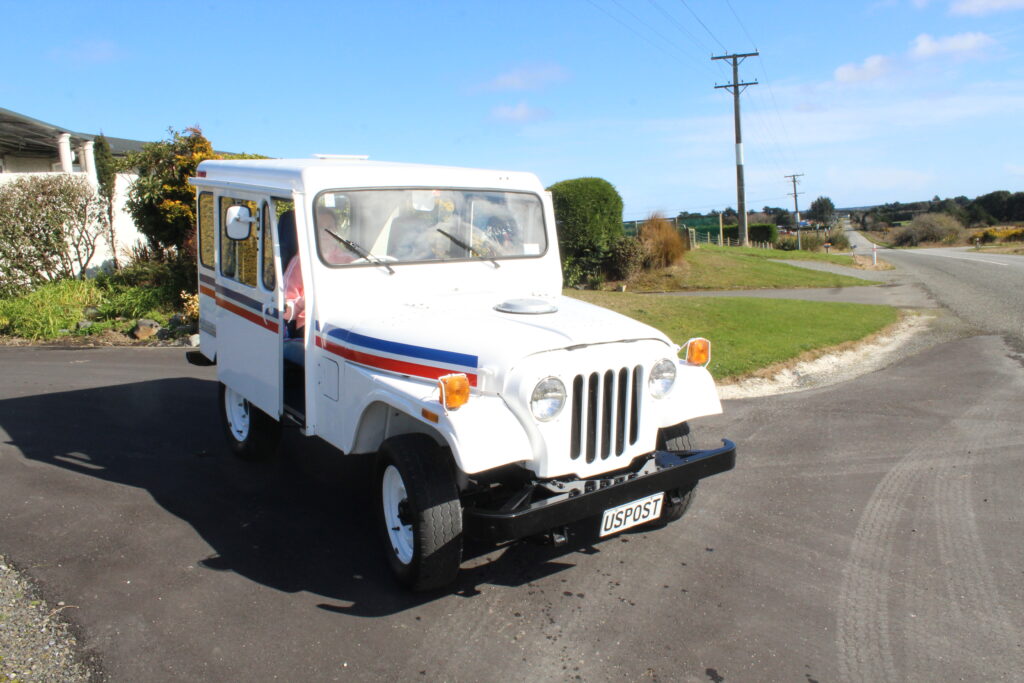
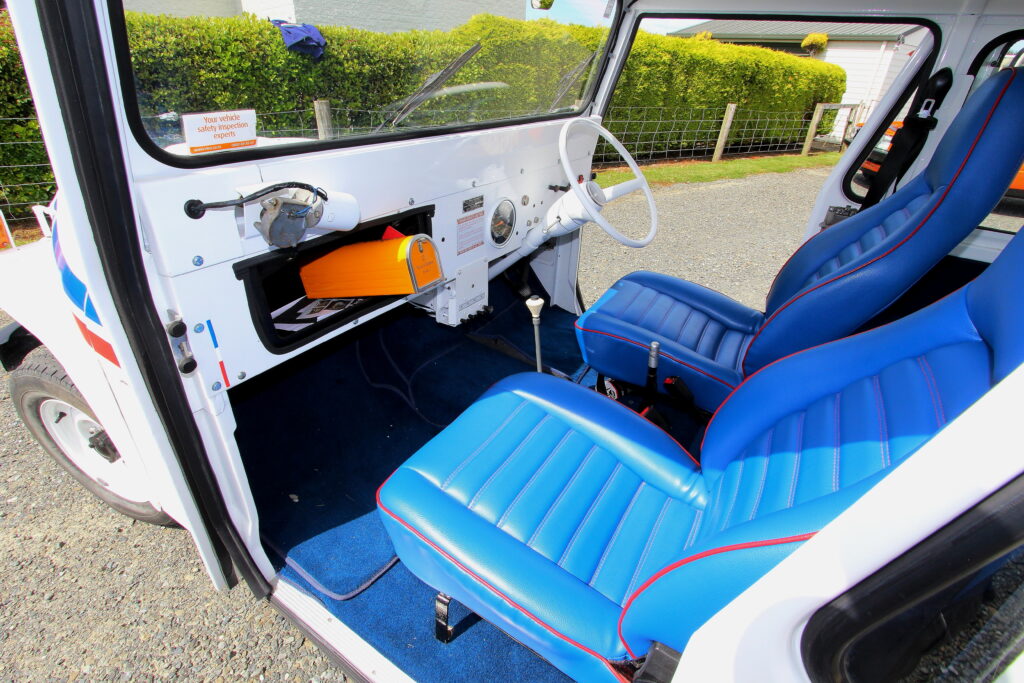
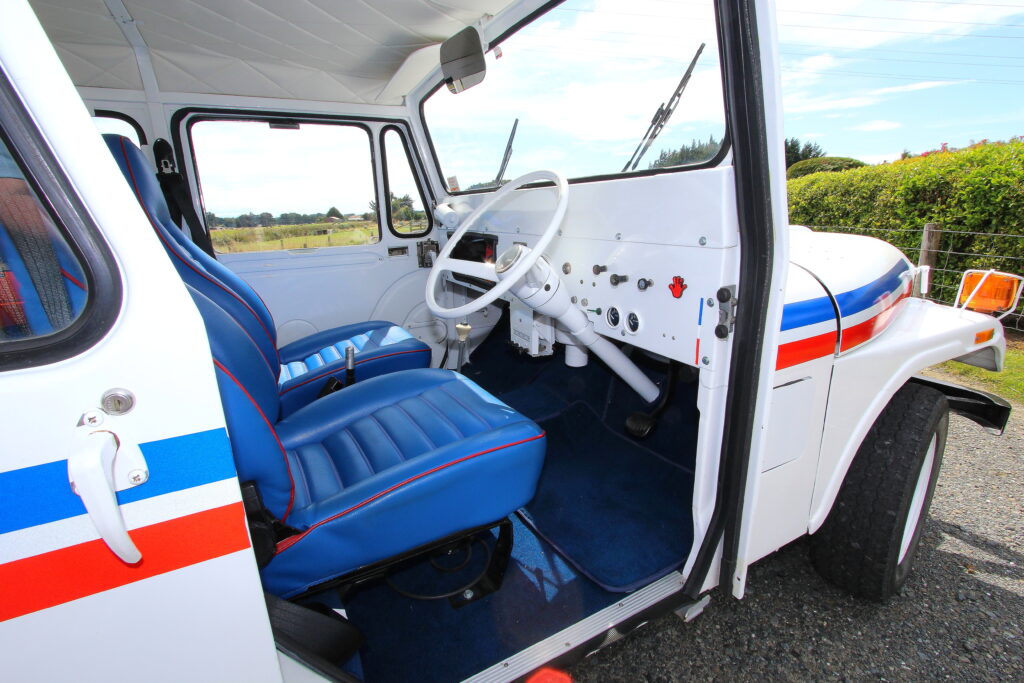
It turns out this unusual right-hand drive Jeep was built for mail delivery. Both the CJ series built for the US Postal Service and later DJ models were right-hand drive which, together with the locked-back sliding door, made it easy to deliver mail from the driver’s seat without having to get out.
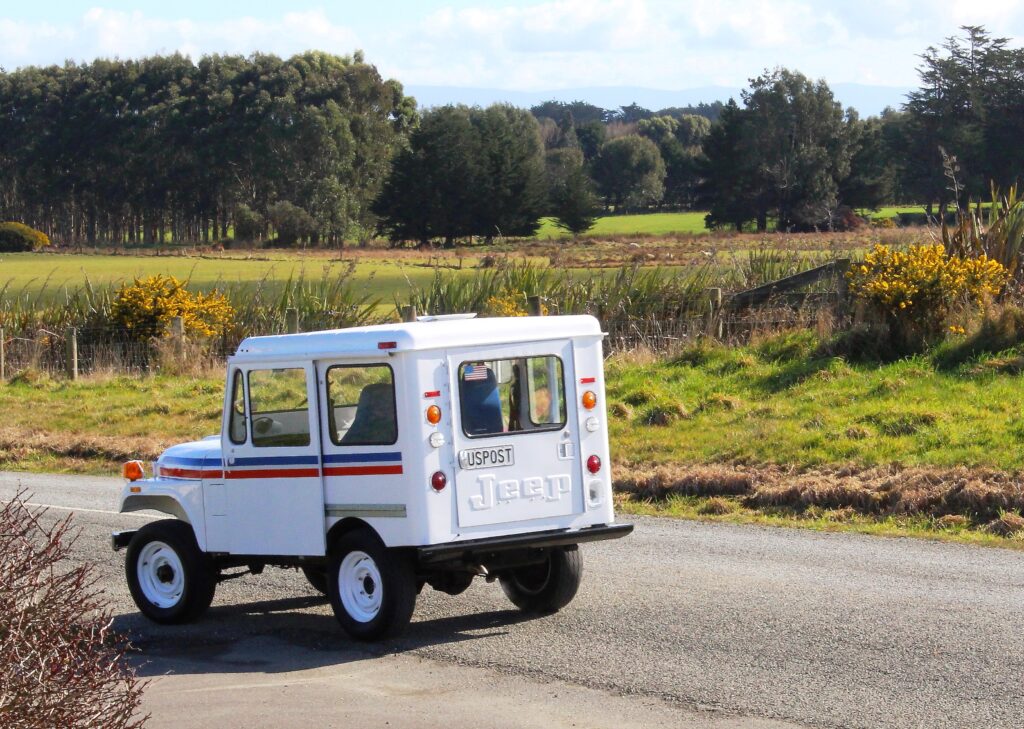
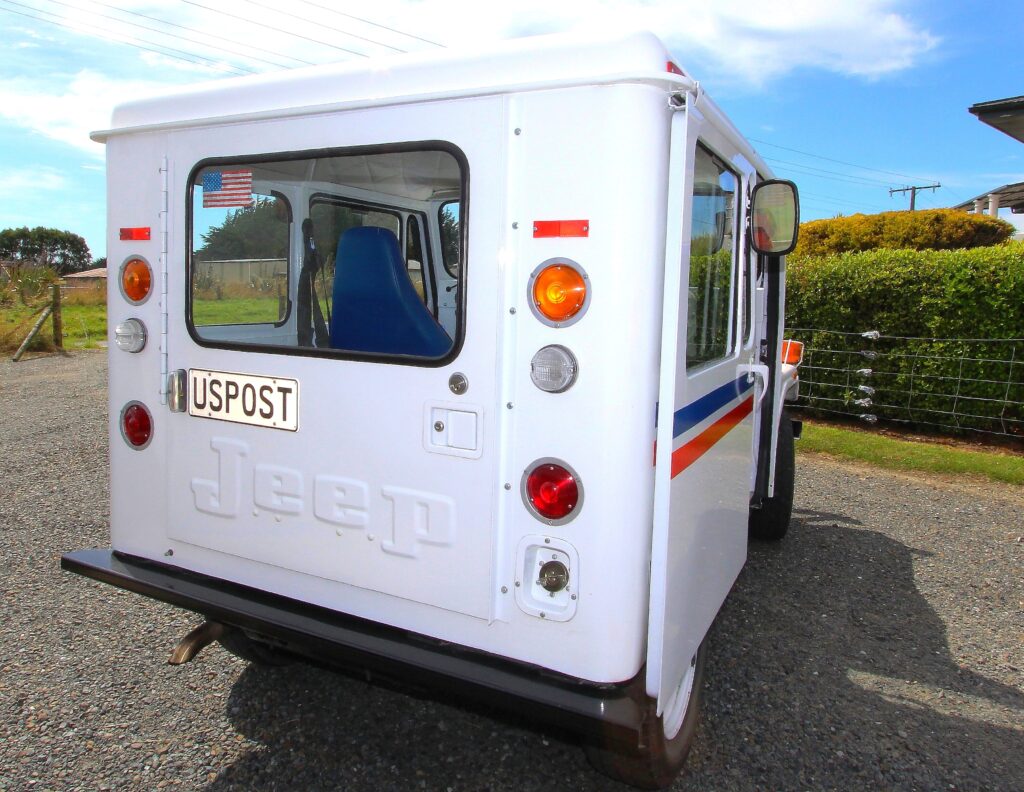
As Donn Anderson described it in his February issue ‘Motorman’ Jeep feature, the Jeep was ‘the car that won the war’. In the early 1950s, Willys found a new vocation for their returning war hero with the rapidly re-organising and expanding US Postal Service. Following World War II, Willys secured the rights to the Jeep name with the company becoming Kaiser-Willys in 1953, then Kaiser-Jeep (K-J).  K-J built on its wartime fame by modifying it and extending its possible range of uses aimed in a civil version called the CJ. K-J reduced the four-wheel drive to rear wheel drive for some versions, including a full panel-van body with a fixed windscreen. This panel van appealed to the US Postal Service and it was adapted to accept parcels and bulky freight through a large, single back door. The side doors were both sliding types to avoid causing a nuisance on the sidewalk. It also meant the doors could be left open, recalling the original Jeep’s open air experience.

Fit for purpose
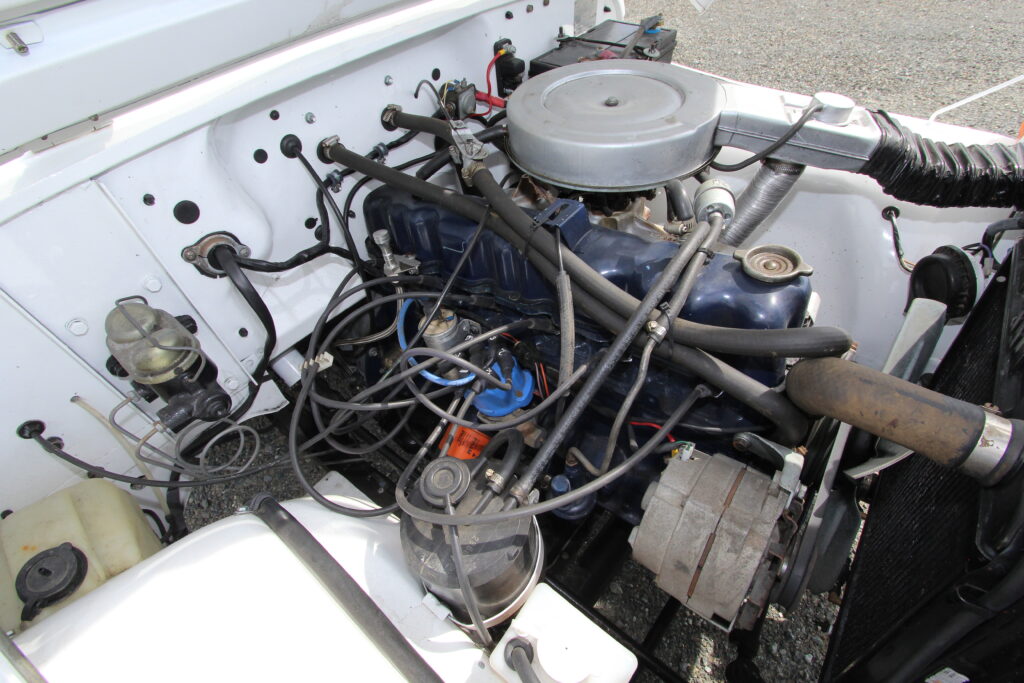
The K-J company’s changes of ownership during this period resulted in a mish-mash of model variations. This version is a somewhat rare 1978 model built under AMC ownership, hence the big Rambler 3.8 litre straight six and automatic transmission. A limited slip differential was usually fitted as standard. The chassis was extended 76mm to make it fit. The firewall was moved back by 51mm, along with other structural changes, and the mudguards and bonnet were also lengthened. It wears the distinctive five-slot radiator grille introduced in 1971. The indicators were moved to the outer edges of the mudguards, modifications used solely on US Postal Service Jeeps. 
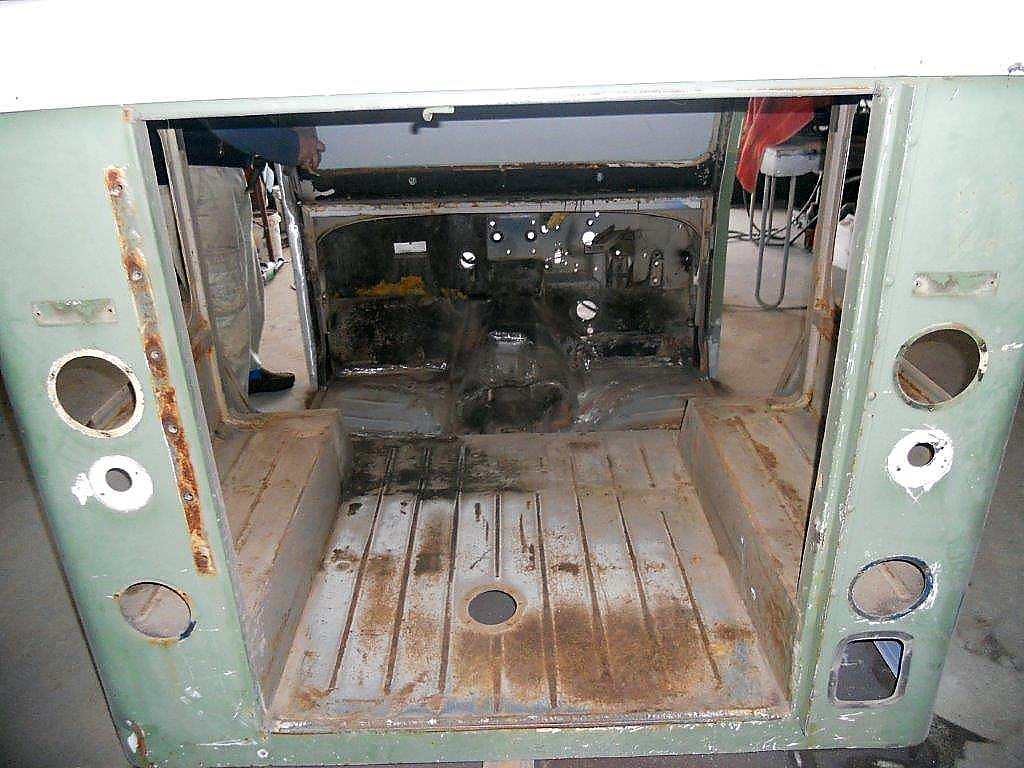
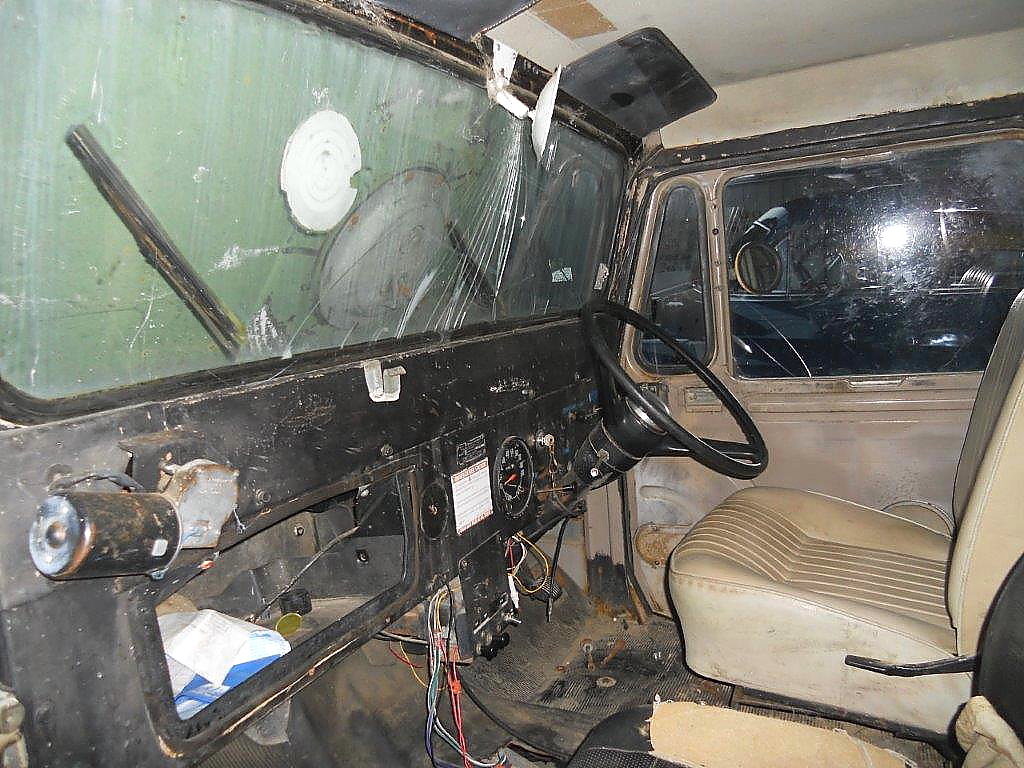
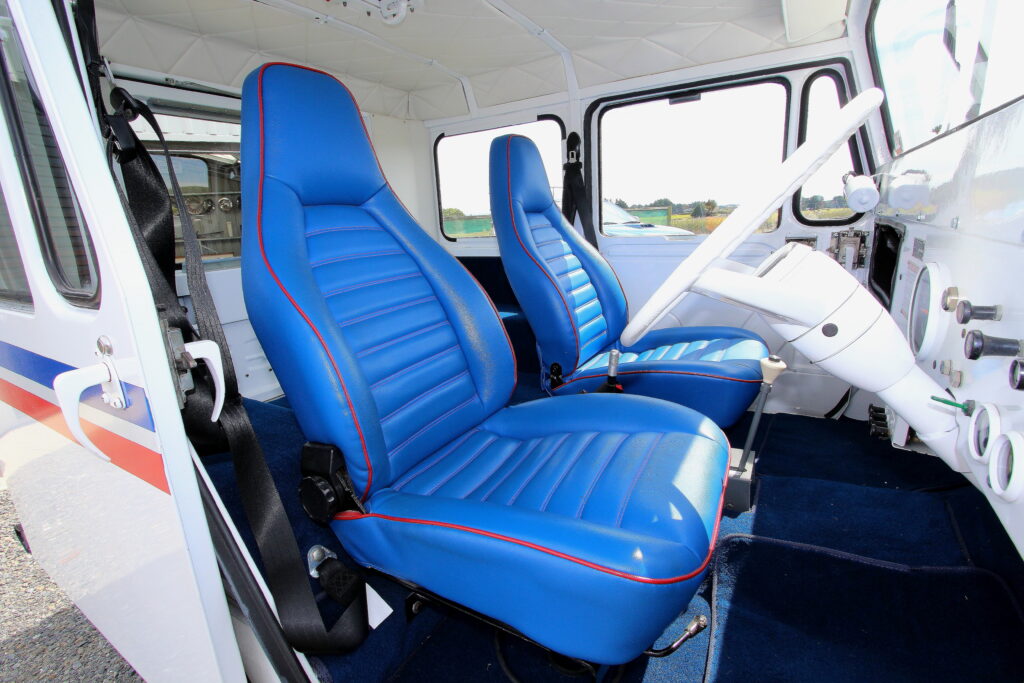
For extra parcel space, only a driver’s seat was fitted in the front. Alongside was a large tray for the driver to store and sort his mail. More trays were fitted in the rear and they had extra interior and exterior lights to illuminate postboxes and the like.
Some 1.5 million CJ and later models based on the CJ series were produced from 1945 to 1986. Other models included the DJ-3A (Dispatcher Jeep), and lasted through various DJ-5 and DJ-6 models up until the 1980s, when the Jeep was slowly replaced by a new Grumman (Aircraft Engineering) built LLV model that used Chevrolet Blazer running gear and a four-cylinder engine.
Lew’s initial assessment of the derelict Jeep was that it was pretty rusty, but it looked complete, and he thought it would make a pretty nifty and fun town car for Ann.
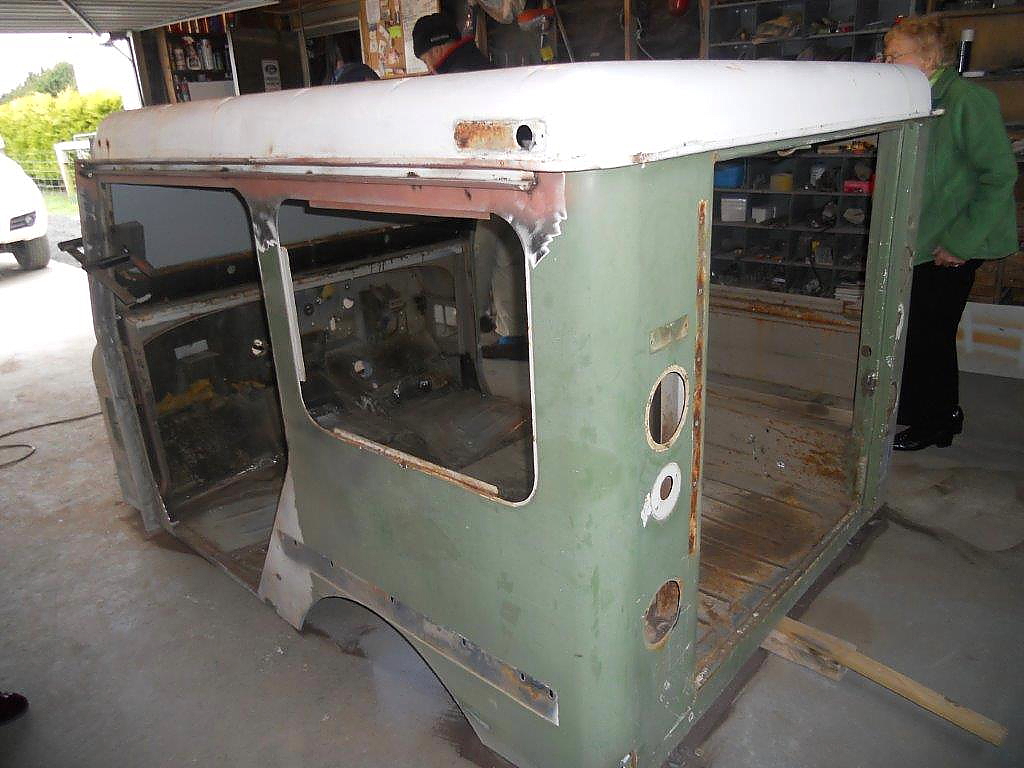
“That was about six years ago. It took me about four or five months to restore it; there’s not much to it. I don’t know a lot about the history of this Jeep, although I do know they made a lot of them. There are only a few in New Zealand and since I got it here, I’ve heard that there are one or two more in the country, but none of them on the road.” He believes one might be near Omarama and another in Christchurch.
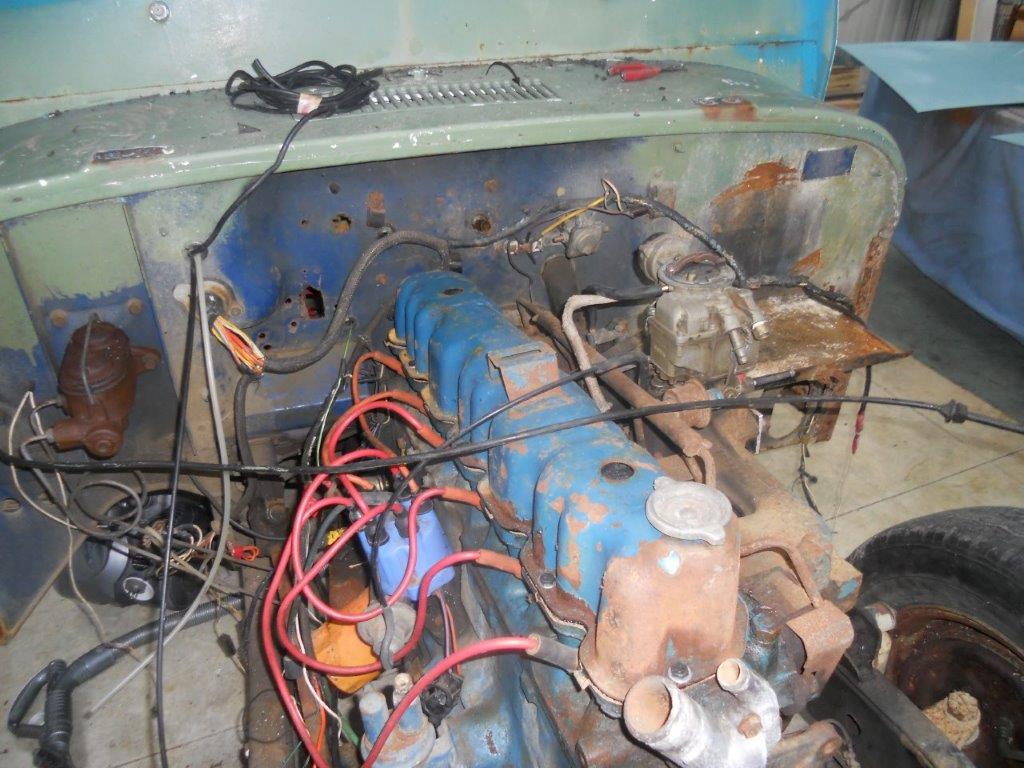
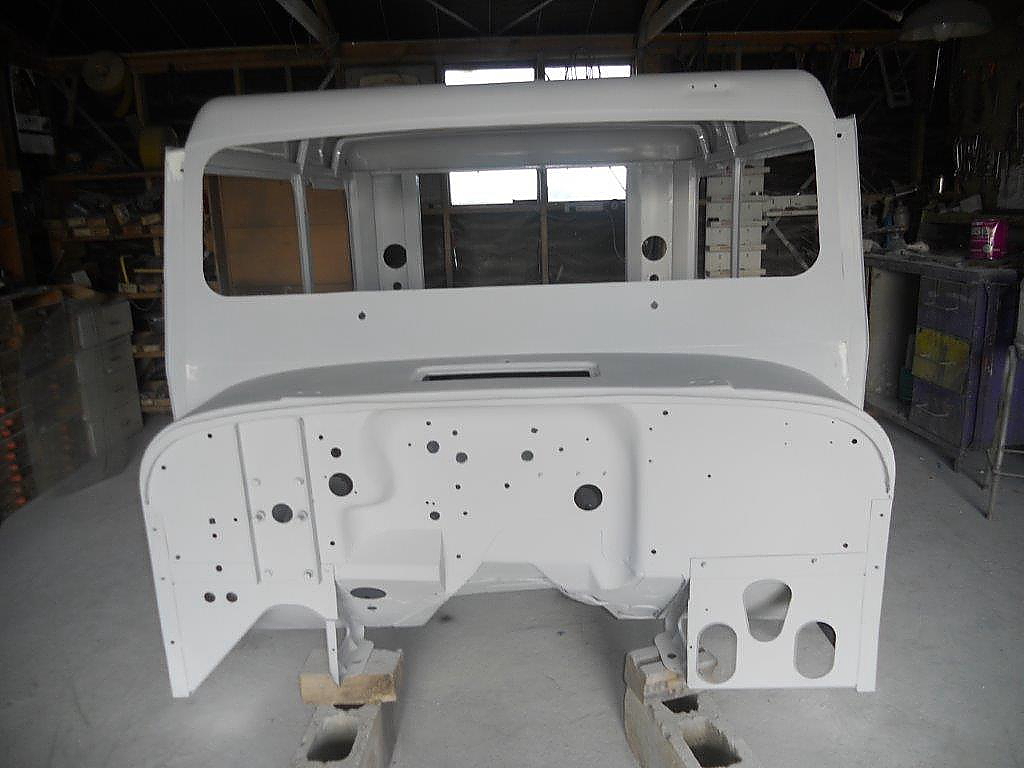
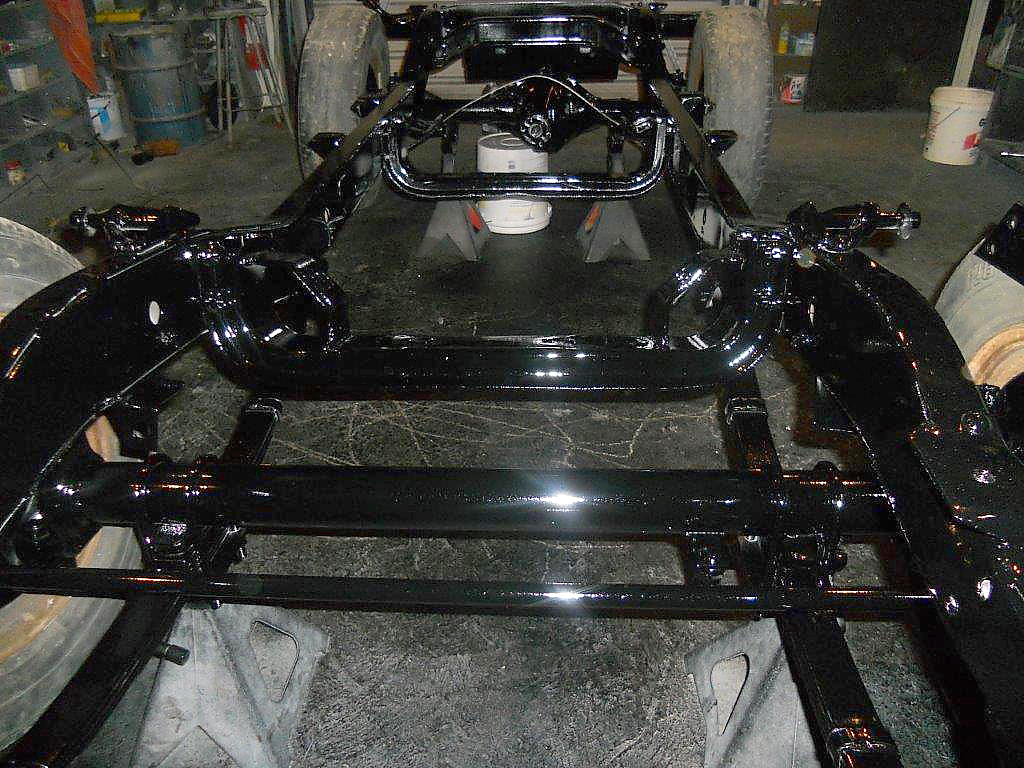
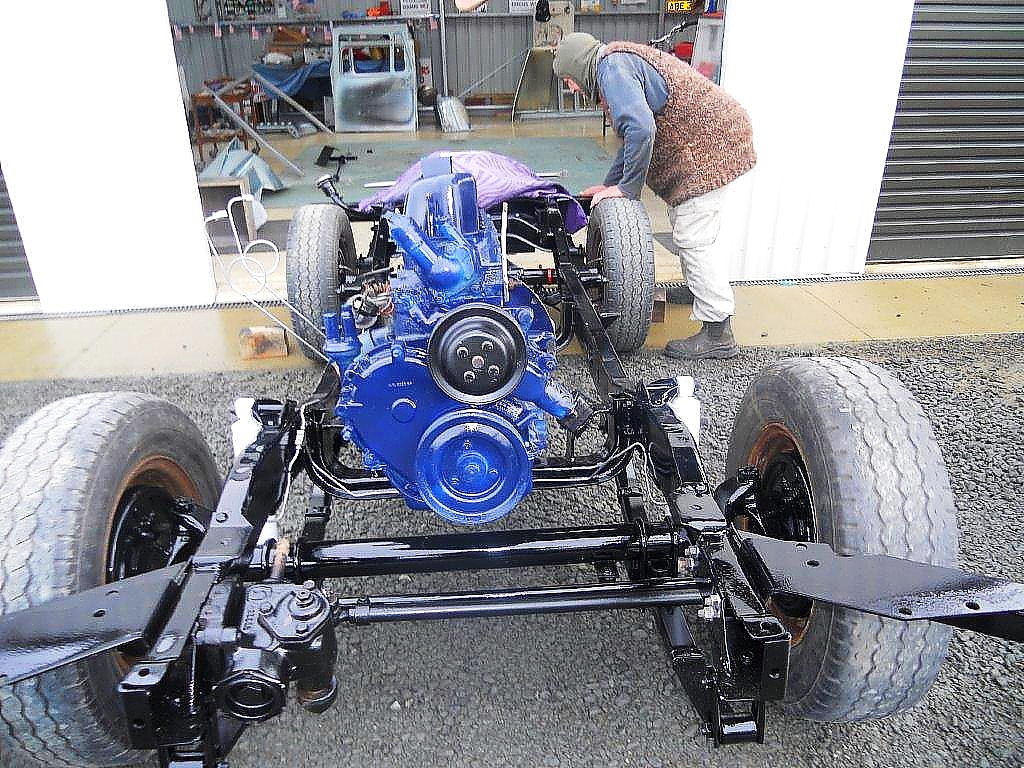
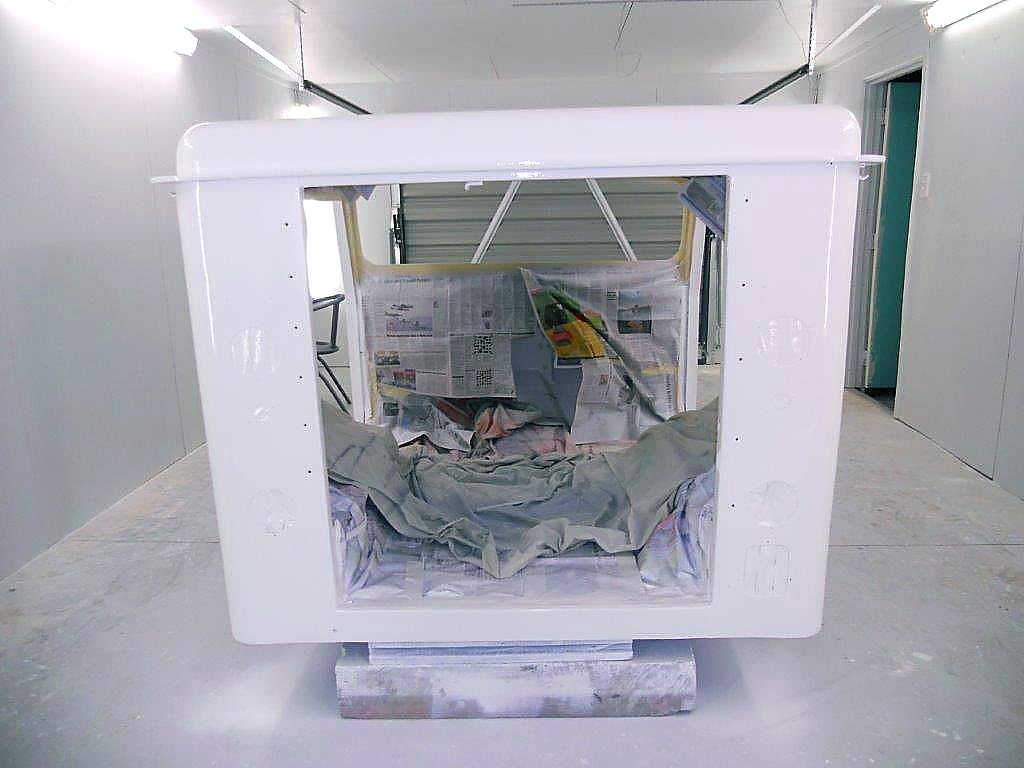
Lew and Ann decided to put the Jeep back into its original distinctive US Postal Service livery, and the result is impressive. Hours of sanding, grinding, and welding have produced a Jeep that looks like it is fresh from the production line. The chassis was media blasted and repainted in a gleaming black, and all components were overhauled.

Civilian casualties
The AMC Six fires easily and runs smoothly. “It’s got a Rambler engine of 232cu-in, and it has a Chrysler auto-trans and two-wheel drive. It goes very well, and it has plenty of power for what is quite a light Jeep, so I’ve kept the driver warning sign attached to the dash,” says Lew.
It advises drivers to take care when cornering under power. It’s not impossible to imagine the combination of a big torquey six, a short wheelbase, rear-drive, big loads, and a high ground clearance causing a few moments of self-reflection in slippery conditions. Contemporary road tests by safety authorities reported the postal Jeep allegedly had an alarming tendency to roll over with little provocation, so AMC fixed that by attaching the warning plate, comforted by some conflicting reports that the vehicle was not as delicate as first described.
For a bit of extra comfort, Lew fitted high-back bucket seats from a Mitsubishi along with seat belts. Clad in blue vinyl, they provide an eye-catching contrast with the sea of gleaming white and they are very comfortable. The blue theme is also carried over to new blue floor carpet and mats throughout in a similar shade. A nice little contrasting touch is the bright orange mini post-box sitting in the dashboard parcel shelf, courtesy of French champagne maker Veuve Clicquot.
The little white Jeep is like nothing else on the road. It offers a big dose of eye-catching uniqueness, and the roar of the big six and chunky tyres add more than enough get-up-and-go to an already high fun factor.
Ann’s other car is also something special but is much less practical as a shopping cart. It would probably occupy two parks on most city streets. The unusual back window caught Lew’s eye as he perused online car ads.
“I wondered what it was and so I looked through the advert. I believe it is the only one of this Citation model registered in New Zealand.”
Ann was having trouble driving Lew’s 1957 Ford sedan, which doesn’t have power steering, so this 1958 Edsel Citation with just about every available extra became her other car.
“I quite often take a group of friends out in the Edsel, and I love it,” says Ann. “It’s quite a bit longer than even the Ford, so the Jeep is what I usually take to town. The Jeep is fun and so easy to drive and I love it.”

White on cue
Jeeps are a staple of World War II movies, the postal version less so. However, Netflix has a film production underway in the lower South Island and I happened to spot an online enquiry asking if anyone knew of a useable US Postal Service Jeep that could be used as a prop in the movie. I contacted the enquirer who was delighted to hear it was not just a runner but fully restored. I sent him details of Ann’s vehicle.
“It was quite a surprise,” says Ann. “This person phoned me and we discussed it and the Jeep is now going to be used in the movie. We won’t be in the movie or driving it in the movie, but he did say we could come along and visit on set. I think the movie is called The Royal Treatment and I’m looking forward to it and seeing my Jeep in the movie.”

SPECIFICATIONS

Manufacturers:             Willys Motors, Kaiser-Jeep, American Motors, AMC-General (LTV Corporation)
Production:                     1955–1983
Model:                              Jeep CJ [in various marks] and later DJ-5 & DJ-6
Engine:                              AMC 232cu-in [3800cc] in-line six-cylinder (1977-1978 only)
Transmission:                 Borg-Warner T96 manual transmission / 727 TorqueFlite automatic transmission (production 1977-78)
Weight:                             1209kg
Wheelbase:                     83.5in
Brakes:                              Drums all round
Differential:                     Limited slip

Last Tango in the Fast Lane

In the mid ’80s, I locked into a serious Nissan/Datsun performance obsession. It could have kicked off with my ’82 Datsun Sunny, though this would have been a bit of a stretch of the imagination, given its normally aspirated 1.2-litre motor — not the sort of thing to unleash radical road warrior dreams. But it did plant a seed, and it was a sweet little machine and surprisingly quick, in contrast to all the diabolical English offerings I had endured.
I was living in South Auckland at the time and was an unrepentant petrolhead. Motor racing was my drug of choice, and I followed the scene slavishly. Saloon car racing, with the arrival of the international Group A formula, was having a serious renaissance here and in Australia and Europe. There was suddenly an exotic air in local racing that had been absent for 15 years.
I was transfixed by this new frontier of motor racing that had hit our tracks in 1985–87 and the new array of machinery on display. In 1986, the Nissan Skyline RS DR30 made a blinding impression on me. The Australian Fred Gibson-run, Peter Jackson-sponsored team of George Fury and Glenn Seton were the fastest crew of the 1986 Australian Touring Car Championship. But Kiwi legend Robbie Francevic snuck through to win the Aussie Championship in his Volvo 240T after a strong start and consistent finishes.

NZ Classic Car magazine, May/June 2026 issue 405, on sale now

Reincarnation of the snake
We are captivated by a top-quality sports car
The Shelby NZ build team at Matamata Panelworks has endured a long and challenging journey, culminating with the highly anticipated public unveiling of the 427SC and firing up of its sonorous V8 at the 2026 Ayrburn Classic Festival of Motoring in Queenstown on February 20. This is a New Zealand-built car with loads of character and potential.
The car is now back in Matamata, and I finally have an opportunity to get up close and personal with it. But before then, the question that must be asked is, “Why would ya?”
The first answer is easy, as mentioned in the last issue of New Zealand Classic Car (#404). It was a great way to use up all the surplus Mustang parts acquired while converting brand-new Mustangs into Shelbys. The unused new Mustang parts would be great in any kit car, but the 427SC in front of me cannot be classified as one.
This is not a kit car. The reality is that it is a high-quality, factory-made production car.
Possibly the second answer is because the CEO of Matamata Panelworks, Malcolm Sankey, wanted to build a replica of the car that is a distant relation to the Shelby Mustangs scattered around his showroom floor, a car created long before the first Mustang was even thought of, and the brainchild of Carroll Shelby back in the early ‘60s.