
Pininfarina

The Pininfarina 230 SL

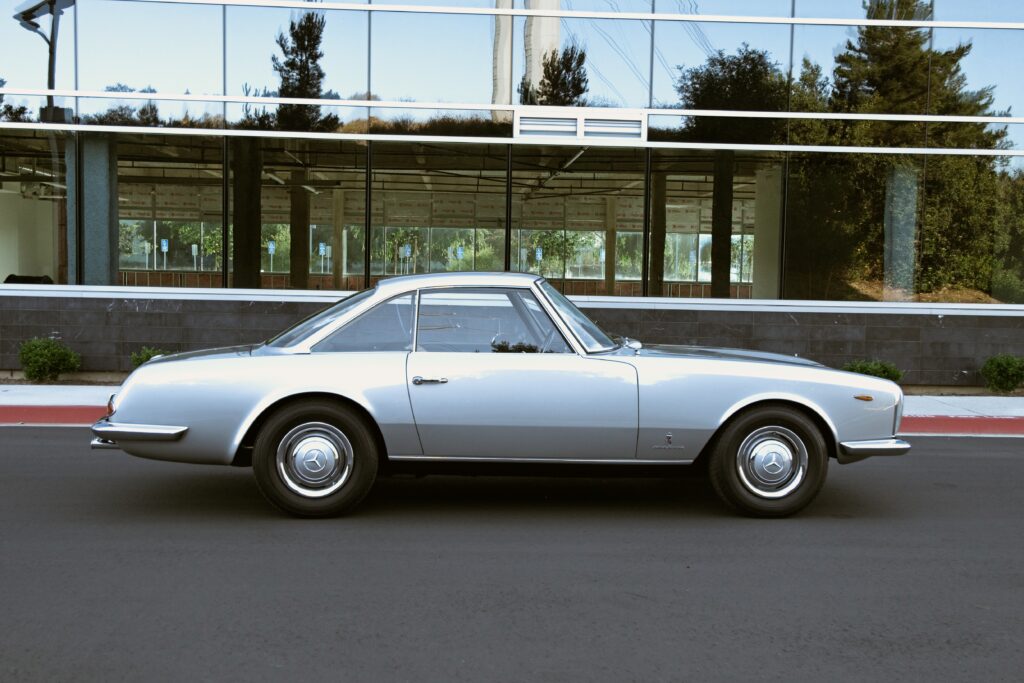
It’s October 1964, and imagine you’re an automotive journalist covering that year’s Paris Auto Show (Mondial de l’Automobile). As you approach the Pininfarina booth, you come across a car that looks a bit like the Mercedes-Benz 230 SL introduced the previous year at the Geneva Auto Show, a car then arriving at Mercedes-Benz dealerships around the world.
But looking closely, its styling and proportions seem to be a bit different. And it has a fixed roof, unlike the Pagoda-style greenhouse of the removable hardtop seen on the production 230 SL. While today, the styling of the W113, under the supervision of Head of Styling Friedrich Geiger, with lead designers Paul Bracq and Bela Barenyi, is considered a mid-century modern masterpiece, acceptance in-period was not universal. Some critics called out the concave design of its removable roof, which ultimately gave the car its “Pagoda” nickname.
Leonardo’s lighting legacy

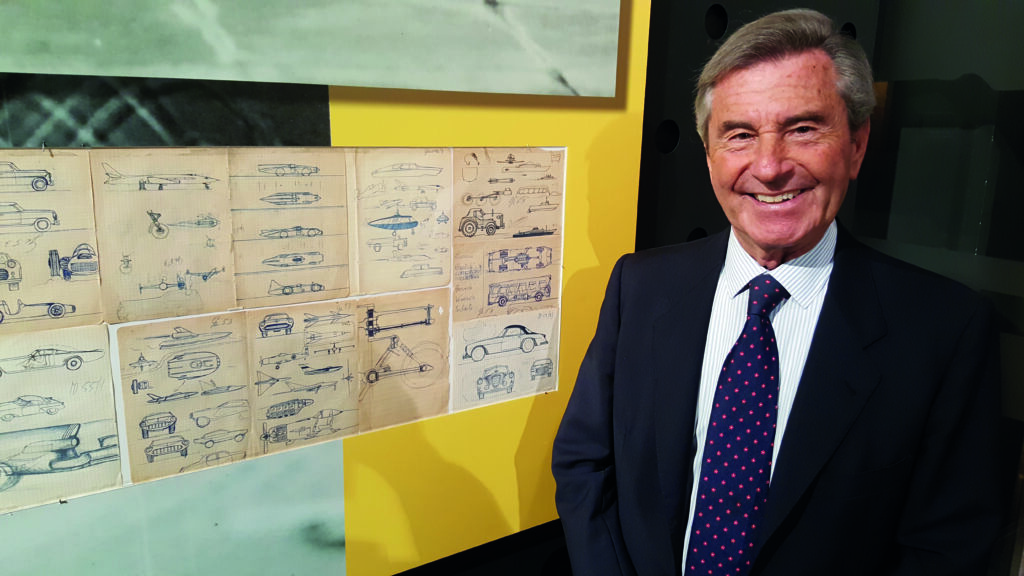
Ferrari owner and enthusiast Roger Adshead got to wondering where the simply beautiful twin tail lamps that are a signature of many Ferraris came from and what inspired them. It led him on a fruitful journey…
There are no more defining or memorable Ferrari design cues than a pair of twin circular tail lights, which find their echo in the rear valance in two pairs of circular exhaust tips.
Introduced fifty years ago by Pininfarina designer Leonardo Fioravanti, this charismatic Ferrari identifier has more than stood the test of time.
They first appeared on the Dino 206, and then on the 365 GTB/4 Daytona, two of Signor Fioravanti’s most revered designs.
Unlike Pininfarina’s trademark slim vertical tail lights of the 1960s, which subsequently found their way onto the mass-produced Austins, Morrisses, and Peugeots of the period, the twin circular tail lamps remain emblematic of Ferrari supercars and sportscars.
Some earlier Corvettes copied them, and they have been partially mimicked by Golf Mark V and Honda Civics of similar vintage, and it’s probably no coincidence they added some visual flair to Nissan’s high-performing Skylines, but they have been a recurring theme on Ferraris right through to its latest designs.