Un parapluie pour quatre – an umbrella for four
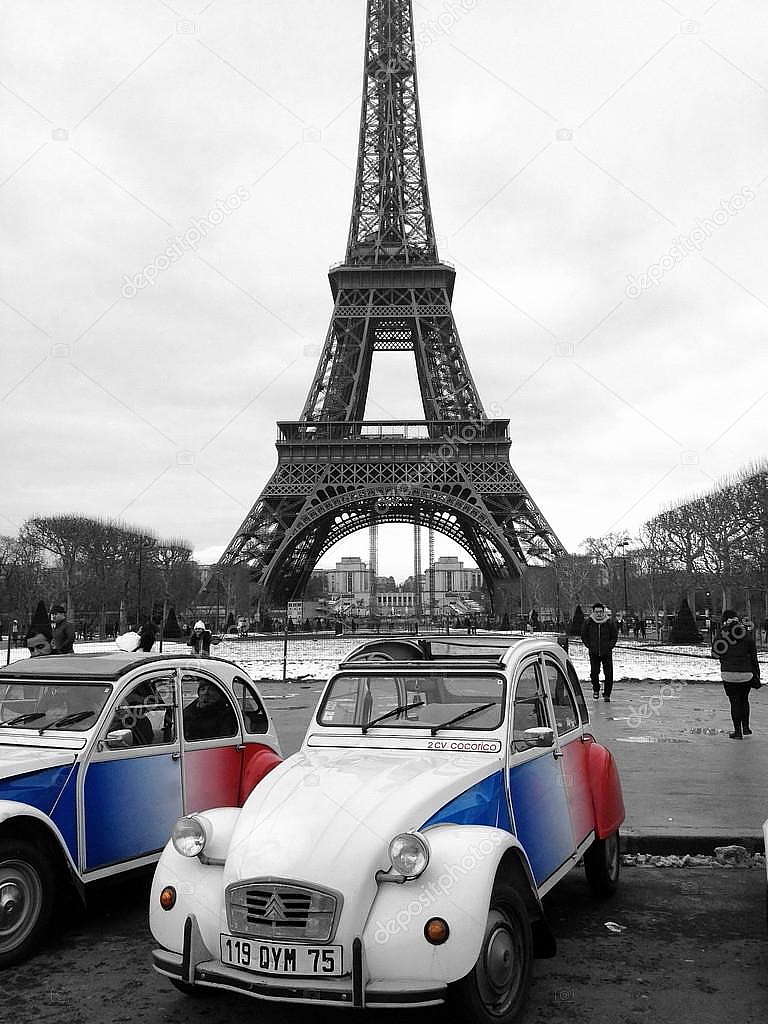
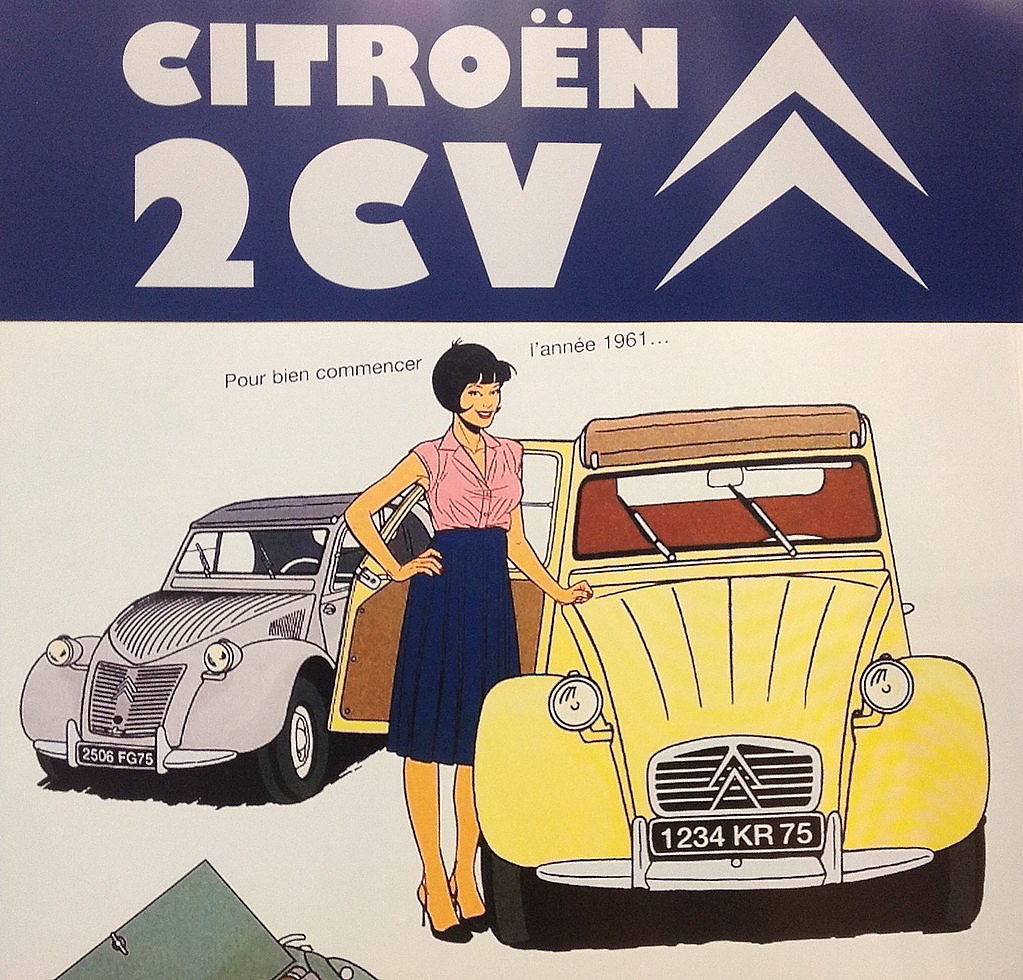
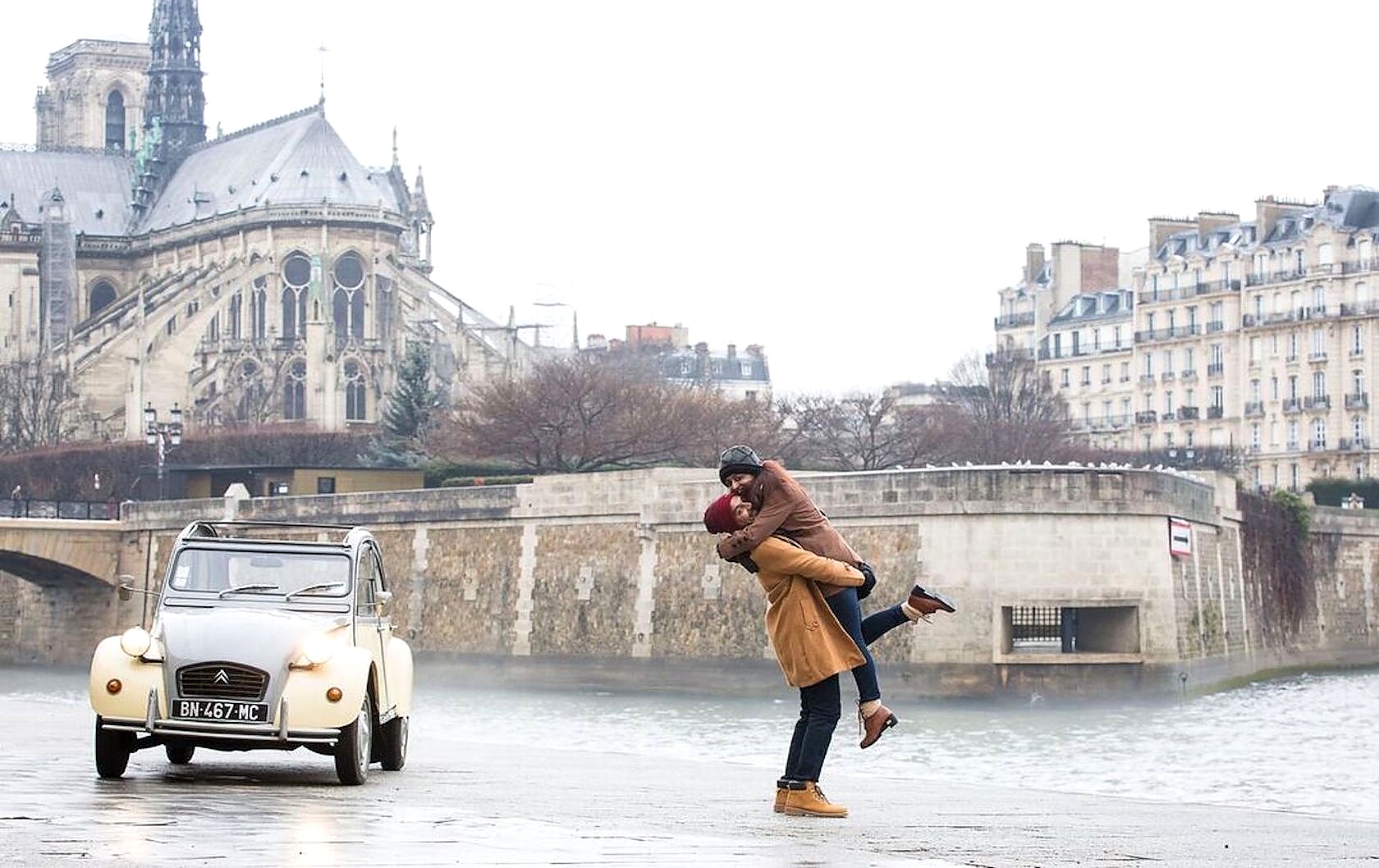
Citröen’s iconic 2CV embodies French chic. It is a triumph of minimalist design with a large dose of practicality, packaged to make the most of the least
By Quinton Taylor, photography by Lynda Brewer and NZCC archives
For more than four decades, the little ‘umbrella for four people’ soldiered on through an array of models, upgrades and eye-catching colour schemes, from 1948 right through to 1990.
Quirky and with a rationality of design that sets it apart from any other, the 2CV endeared itself to generations, achieving almost cult status. The only other car that survived longer in production was Volkswagen’s almost equally quirky Beetle, which was also developed in the 1930s.
Toute petit voiture
In 1934, a bankrupt Citröen, struggling with the lasting effects of the Great War of 1914-18 and facing the Great Depression, saw as a possible salvation the vast population in rural France still using horses and carts on poor country roads. The company, which had been bought by Michelin, recognised the need for a special kind of car. But this was not founder André-Gustave Citröen’s vision. He succumbed to cancer in 1935.
The Michelin family, famous for its tyres and its eponymous guide to the best food in France, created to encourage more gastronomes to travel, conducted a survey to determine the best way to get more French people more mobile.
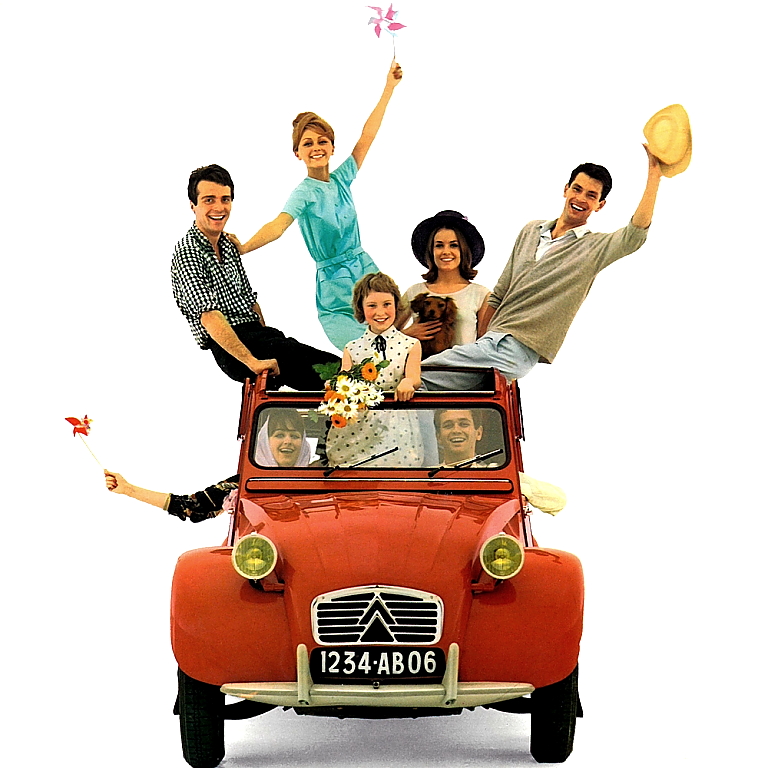
The answer from Citröen vice-president Pierre-Jules Boulanger was an affordable, simple and rugged ‘umbrella on four wheels’, that would carry four adults, plus 50kg of farm goods at 50kph. An ability to handle rough roads, tracks, even fields, would be essential. Famously added to the design brief was a requirement that it should carry a basket of eggs across a ploughed field without whipping up an omelette.
Naturally, it also had to be extremely economical.
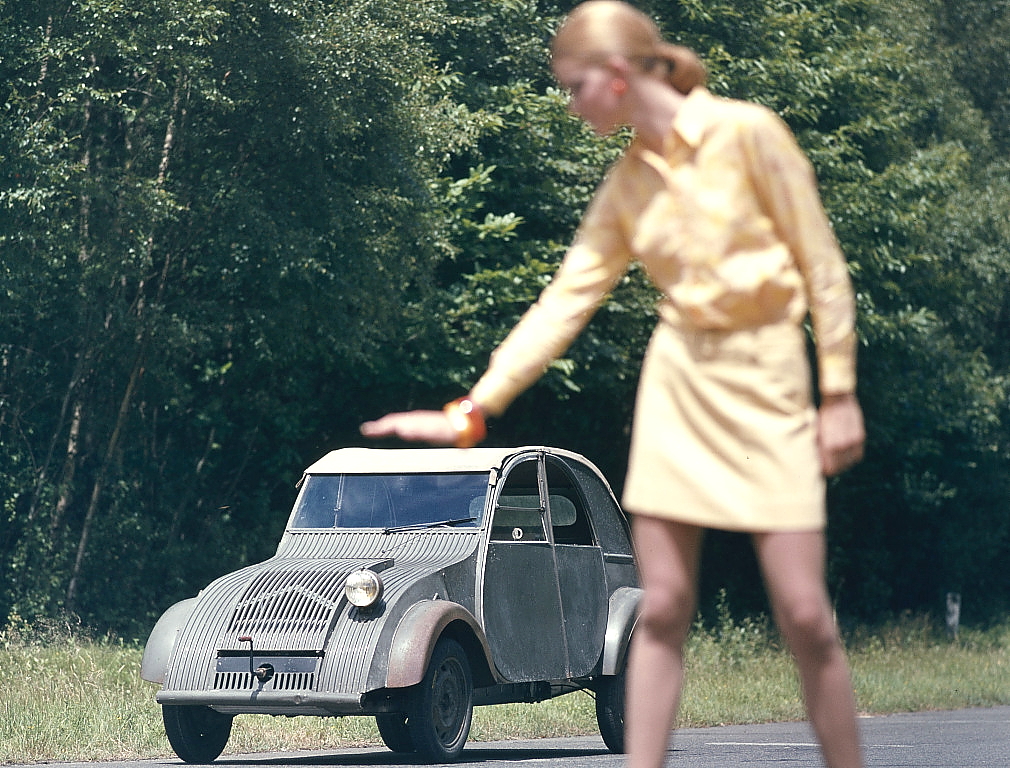
In 1936, Boulanger assembled the team that designed the company’s successful Traction Avant, led by the brilliant André Lefèbvre, who was also instrumental in the later DS. Working in secret at Michelin’s Clermont-Ferrand factory and Citröen’s Paris plant, it had completed 20 prototypes by 1937 of the new ‘Toute Petit Voiture’ – the ‘TPV’ or very small car.
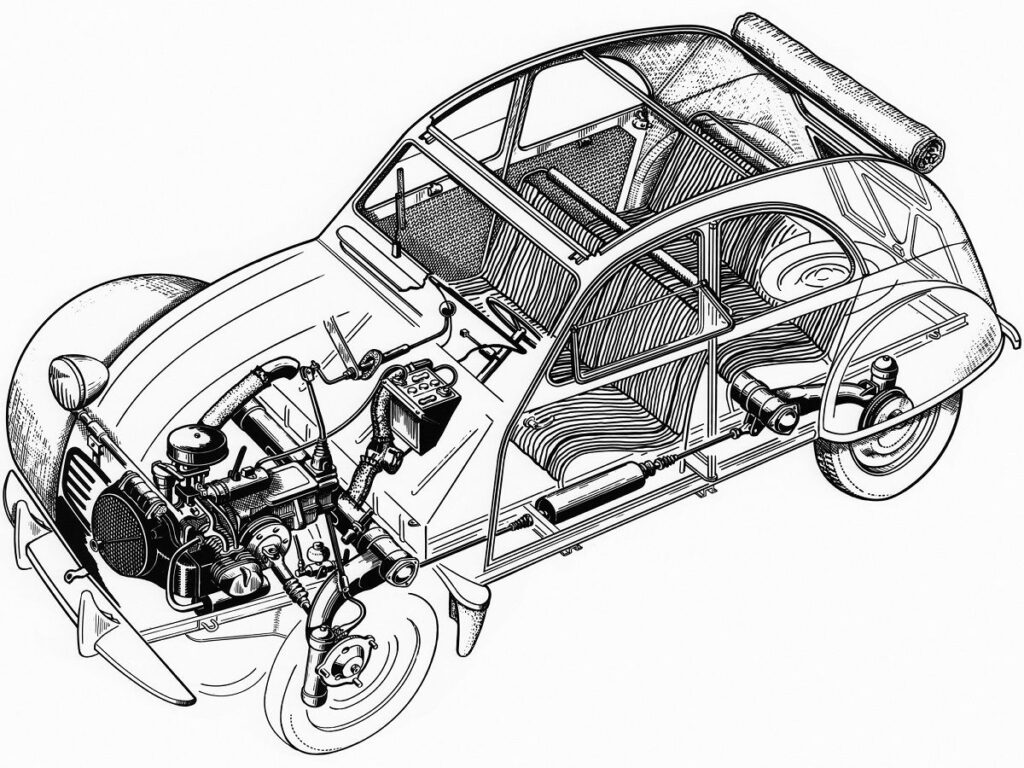
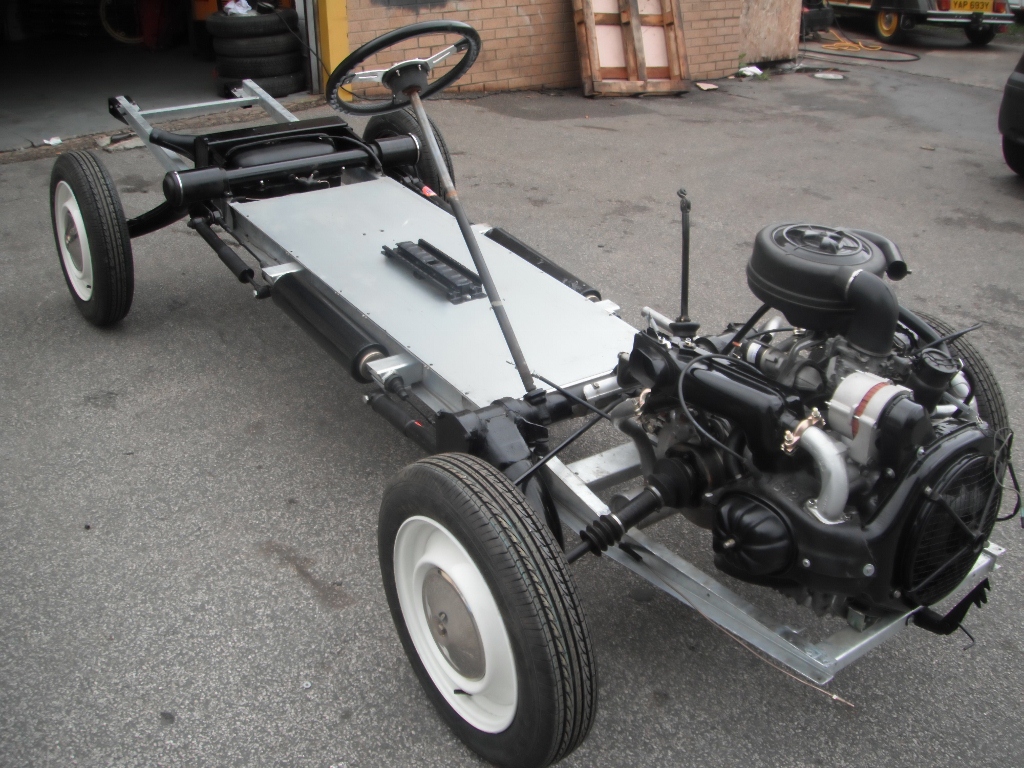
An ingenious design with a full-length roll-back canvas roof enabled awkward loads to be carried. The body was to be in aluminium to save weight and it was corrugated to create strength, and mounted on a platform chassis. Inside were four hammocks suspended by wires from the ceiling for seating. Up front was a robust water-cooled, flat-twin engine which put out just 9bhp (6.7kW) from its 375cc, driving the front wheels.
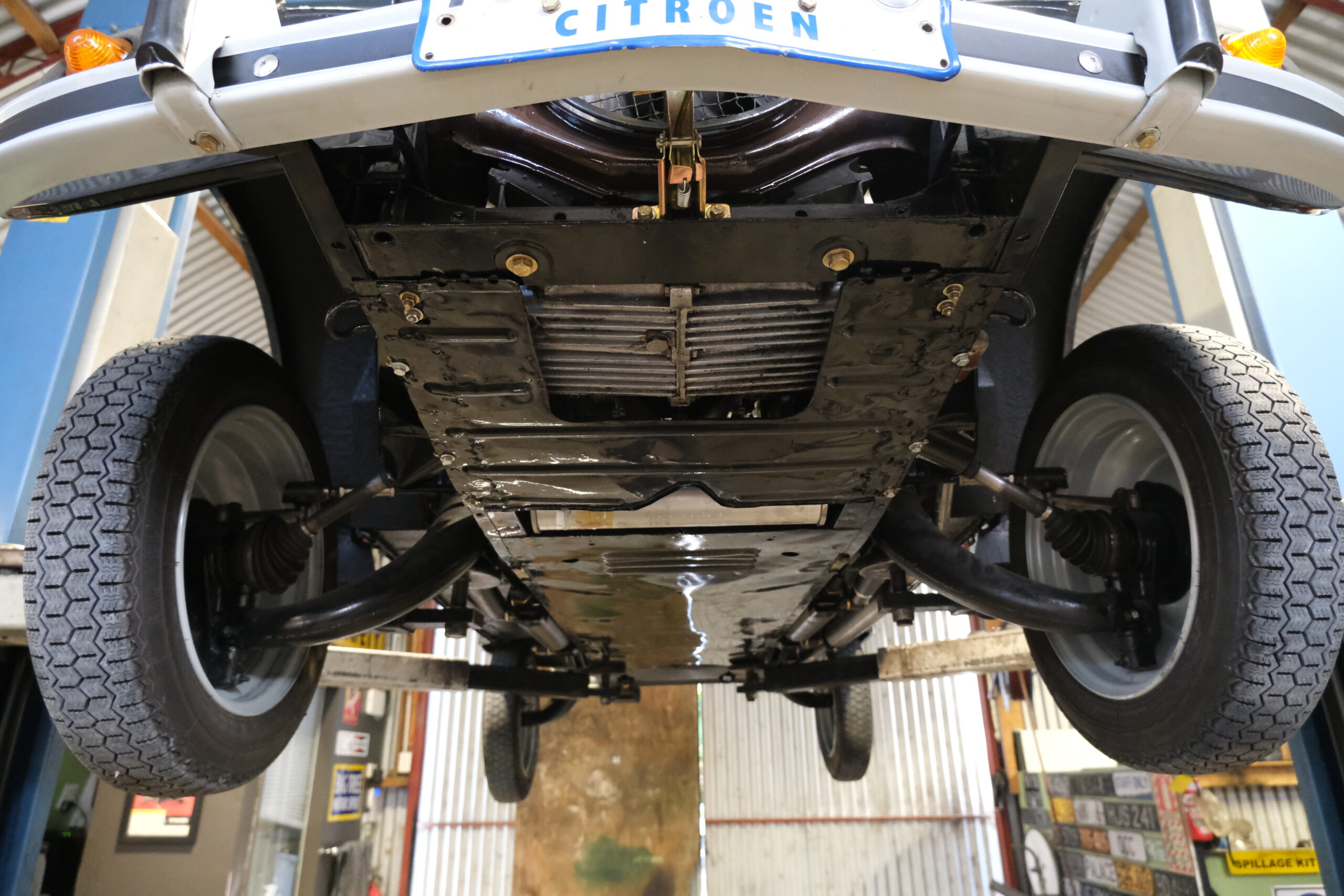
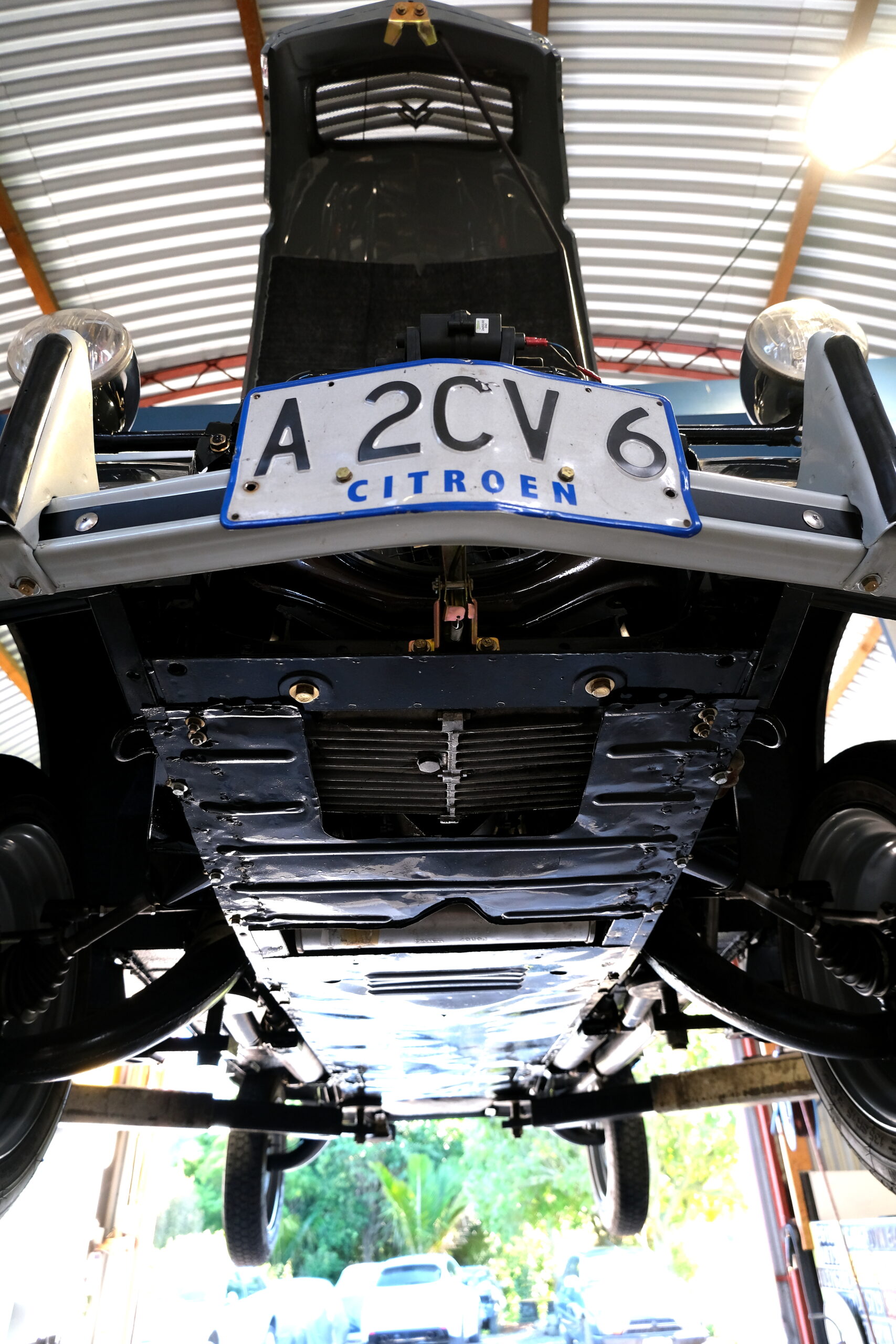
Alphonse Forceau designed the 2CV’s unique suspension system using two front leading arms, two trailing arms at the rear and a torsion bar for each axle. An intermediate bar and overload bar were added for each side, contributing to a total of eight torsion bars designed to come into play at varying loads. It was both simple and a brilliant way to achieve a supple ride over rough terrain. Michelin’s new radial-ply tyre would also be used for the first time on it.

War clouds
By 1939 a factory run of 250 cars was completed and approval for production was given. The ‘2CV’, or Deux Chevaux – two horsepower being its power rating for tax purposes – was set to be introduced at the Paris Motor Show in October 1939. In September, France declared war on Germany.
Boulanger refused to cooperate with the Germans so the 2CV launch was abandoned and the cars were broken up or hidden. It was feared it may be used by the Germans in a similar manner to the Volkswagen Kubbelwagen.
During the war years, Boulanger continued to ponder on modifications to the 2CV and at the conclusion of hostilities the body was changed to flat steel sheet as aluminium had become uneconomic. Another problem was that Citröen had also lost a lot of its machine tools. By redirecting trains with the help of the French resistance, Boulanger had cleverly hidden its big presses from the Nazis all over France, although finding them again was proving a mission.
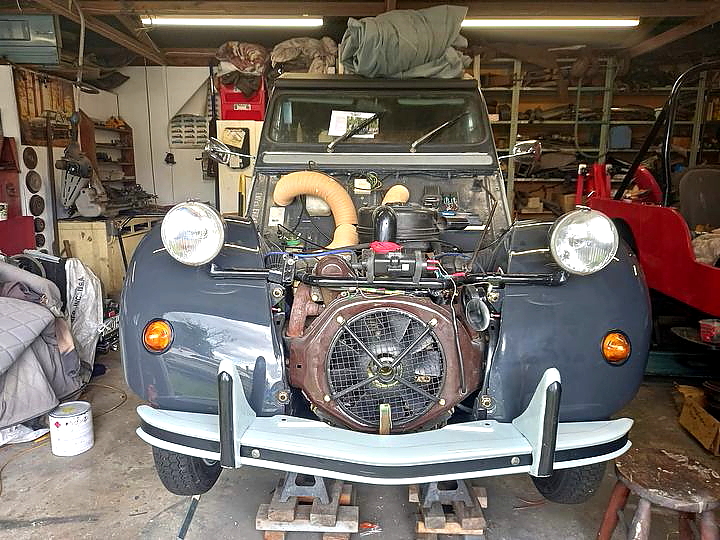
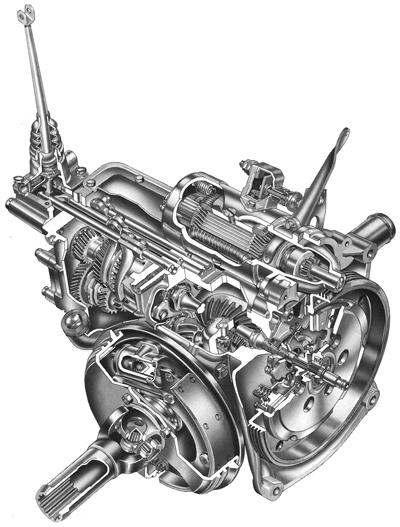
During 1944, Boulanger decided to simplify the flat-twin engine and engaged Walter Becchia to design an air-cooled flat-twin of 375cc. A four-speed gearbox also aided the Citröen’s meagre performance. Italian designer Flaminio Bertoni was called in to make the necessary styling changes.
The 2CV became a little more comfortable with a change to tubular steel frame seats attached to the floor, cloth covers over rubber bungee-cord type springing providing a measure of comfort. A new suspension with an even more ingenious arrangement of two longitudinal tubes containing springs and dampers linked the front and rear suspension arms and enabled that legendary supple ride.
The Paris Salon and success
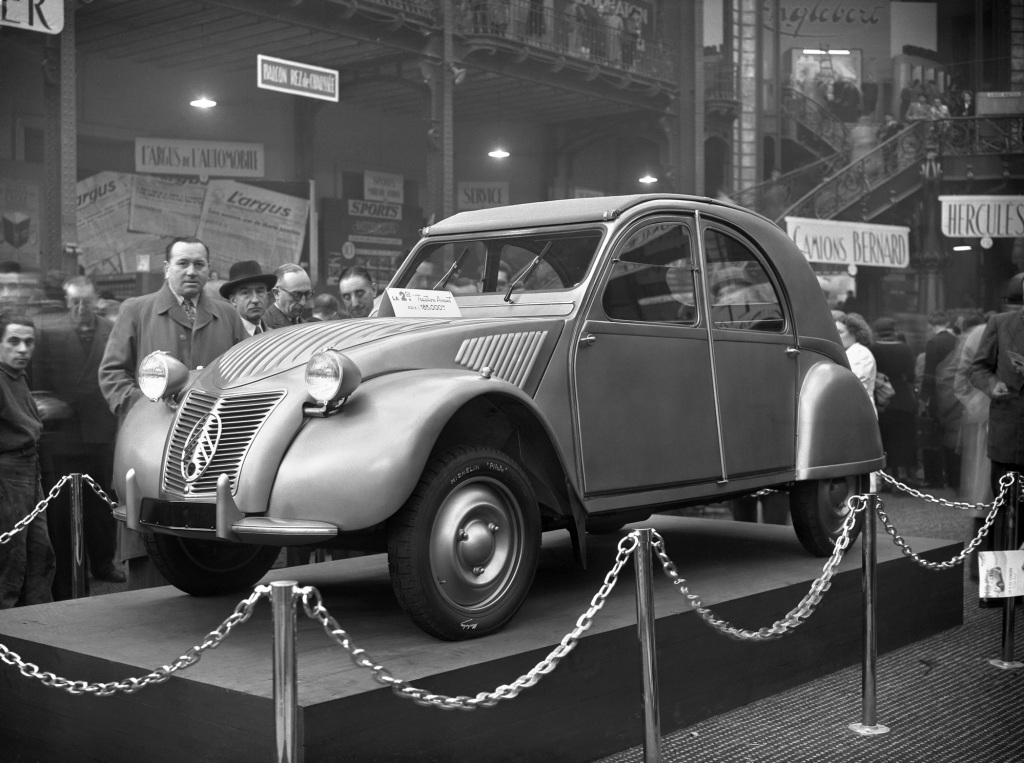
Post-war French government legislative restrictions and petrol shortages meant it was not until 1948 that the 2CV type A appeared at the Paris Salon, eventually going on sale in 1949. Like Ford’s Model T, it came only in one colour, initially grey.
A fuel tank dipstick was added, and a speedometer was attached to the windscreen pillar. The only other instrument was a dashboard ammeter. There was one tail light and one shaft-driven windscreen wiper.
This bare bones approach came as something of a culture shock after the sophistication of the company’s popular pre-war Traction Avant, which had been a hit with middle-class French society and the French gendarmerie. The press universally panned the 2CV, even French comedians got involved, giving it nicknames such as the ‘escargot metallique’. Britain’s Autocar magazine said the 2CV “…is the work of a designer who has kissed the lash of austerity with almost masochistic fervour.”
Yet the French public poo-poohed the pundits, and the 2CV won many hearts. The waiting list quickly grew to three years, even hitting five years. Boulanger would not see the success of his project as he was killed in a car accident near Paris in 1950, but fervour for the car continued and by 1952, production exceeded 21,000 cars. The sedan was now joined by a popular tradies’ 2CV, the Fourgonnette panel van.

More horses
The 2CV received many modifications during its four decades of production. From 1955 there was a 425cc engine, offering 12.5bhp (9.3kW) which, given sufficient run up, enabled it to reach 80kph.
Its roly-poly suspension allowed alarming body angles that belied its ability to cover ground with a remarkable agility. It suicide front doors remained until 1964 when it changed to front hinged. They have fold-down glass tops, avoiding the need for a winding mechanism, but even then Citröen couldn’t resist simplifying still further. The new doors are easily removed entirely but if you think you might need them later, they can be tied back against the front mudguards while you take in the breeze on the way to the beach.
The most radical 2CV came in 1960 with the introduction of the twin-engine and twin-gearbox Sahara model. It answered a call from the oil industry for a light vehicle to negotiate desert conditions. Twice the price of a standard 2CV, just 695 were produced until 1971, and today they remain the most highly prized model.
While the 2CV’s power was famously modest, it was the powerplant that Citröen carried over into its equally characterful Ami in 1961 although in 1963 it did get an increase in power to 18bhp (13.4kW), still air-cooled. The Dyane followed in 1967, and a Mehari off-roader, while 2CV production finally caught up with demand in the 1960s.
France’s little icon was produced overseas from 1965, using a 602cc engine, although the smaller 425cc and then a later 435cc engines were offered in France. Conventional front bucket seats and seatbelts were made standard from 1971.

A charmed life
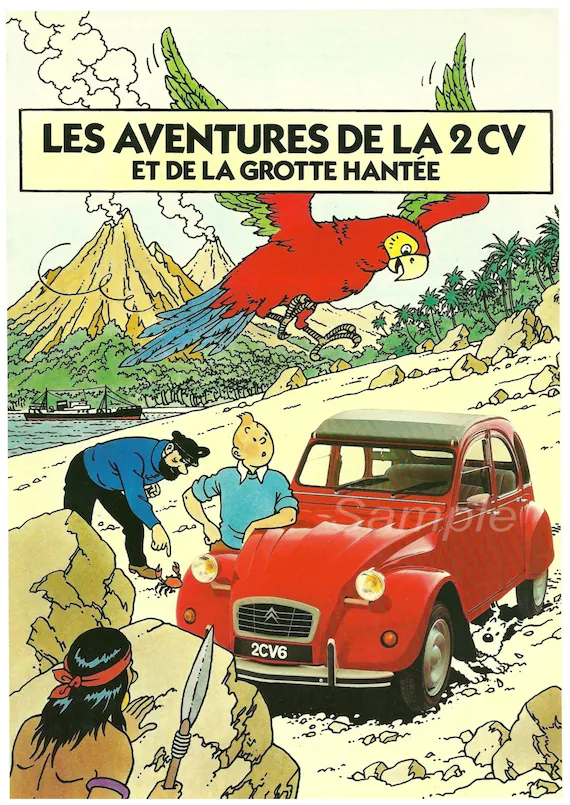
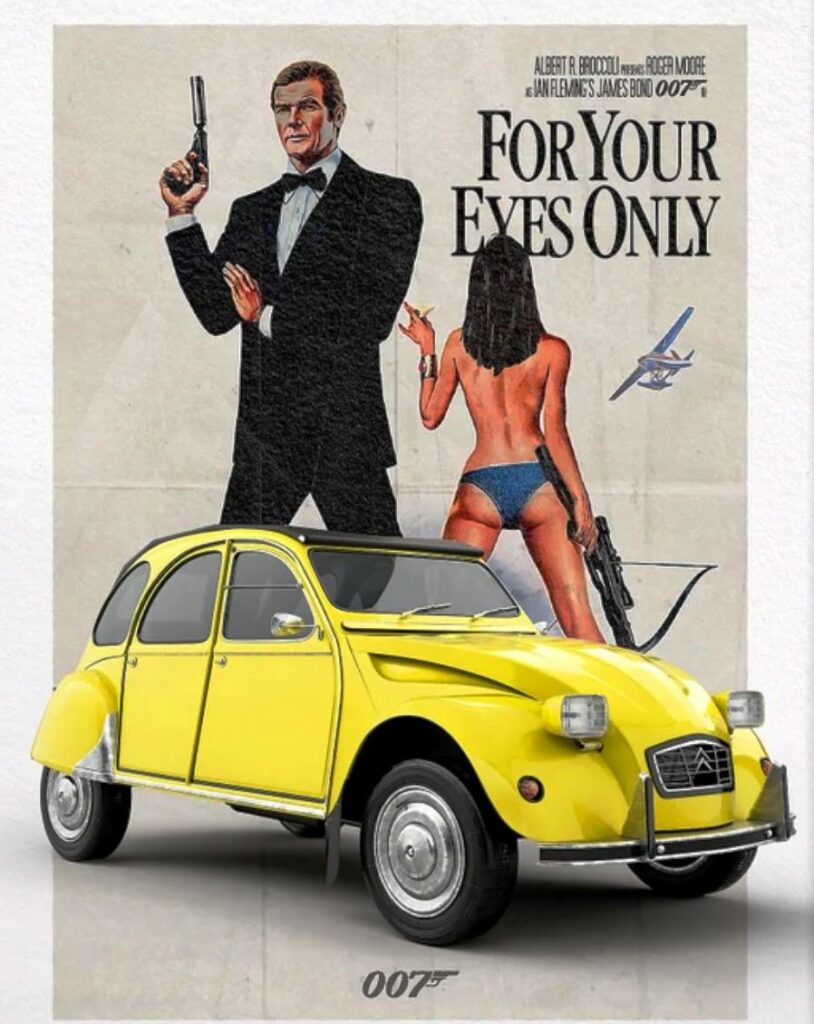
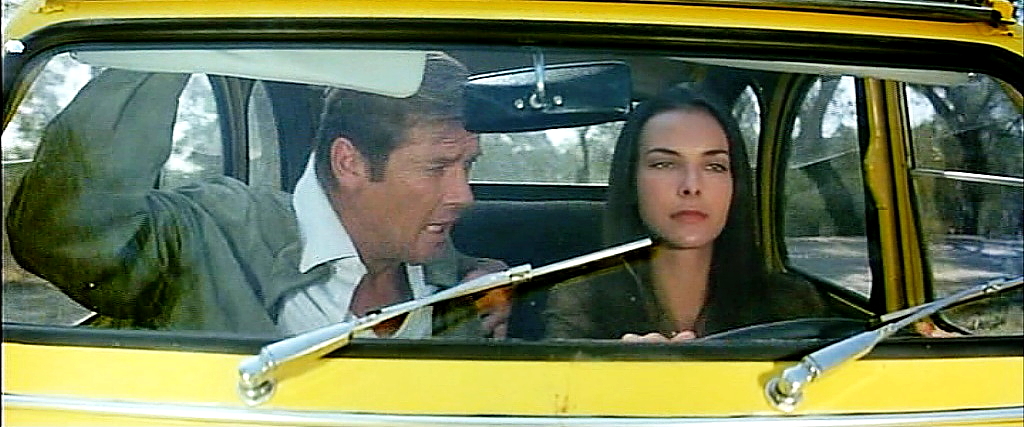
A myriad of models, colours and tweaks overlaid on its enduring charm, plus the odd fuel crisis, helped keep this little French car in production. Its star quality shone in Tin Tin comic books, cartoons and films. It even featured in the Bond film For Your Eyes Only’ when James Bond (Roger Moore) had to forsake his Aston Martin. Luckily, he and Melina Havelock (Carole Bouquet) were in one as they lurched and bounced their way down steep slopes through olive groves, over rocks and cliffs.
The plucky little 2CV eventually fell over, but it was quickly put back on its wheels and charged onwards. Happily, a flat-four air-cooled engine from a Citröen GS had been fitted to this particular car giving it unusually sprightly performance. Seizing an opportunity, Citröen introduced a bright yellow special edition to coincide with the release of the film. It didn’t get the GS engine, but it did get fake bullet holes.
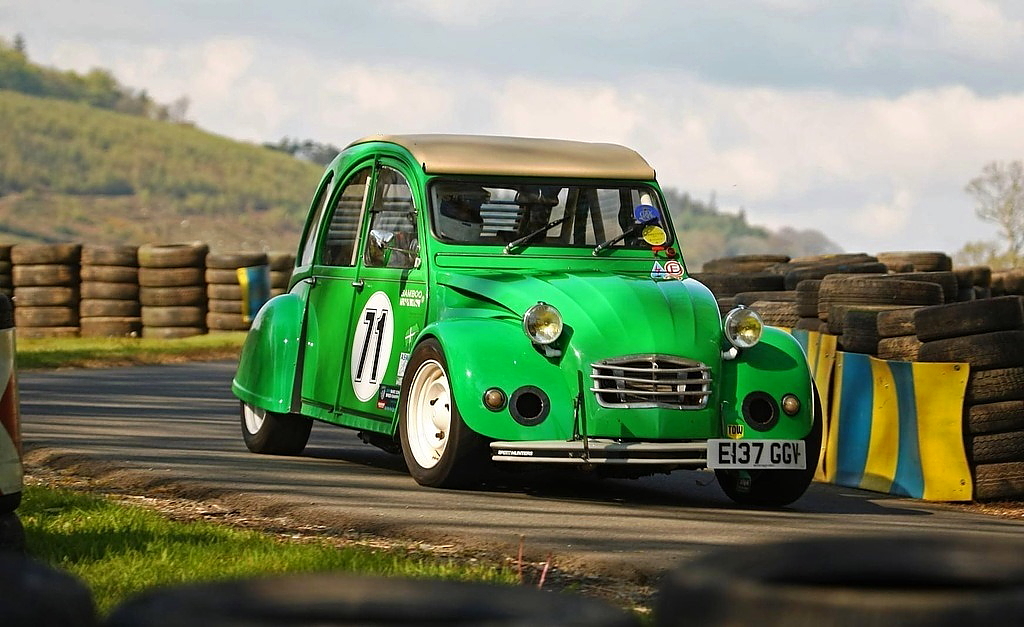
A 2CV won’t convince many as a performance car, so Alex De Vries’ searing green version has both shock value and real potential in European hill-climbs, powered by a BMW RG1100GS motorcycle powertrain.

A merry dance
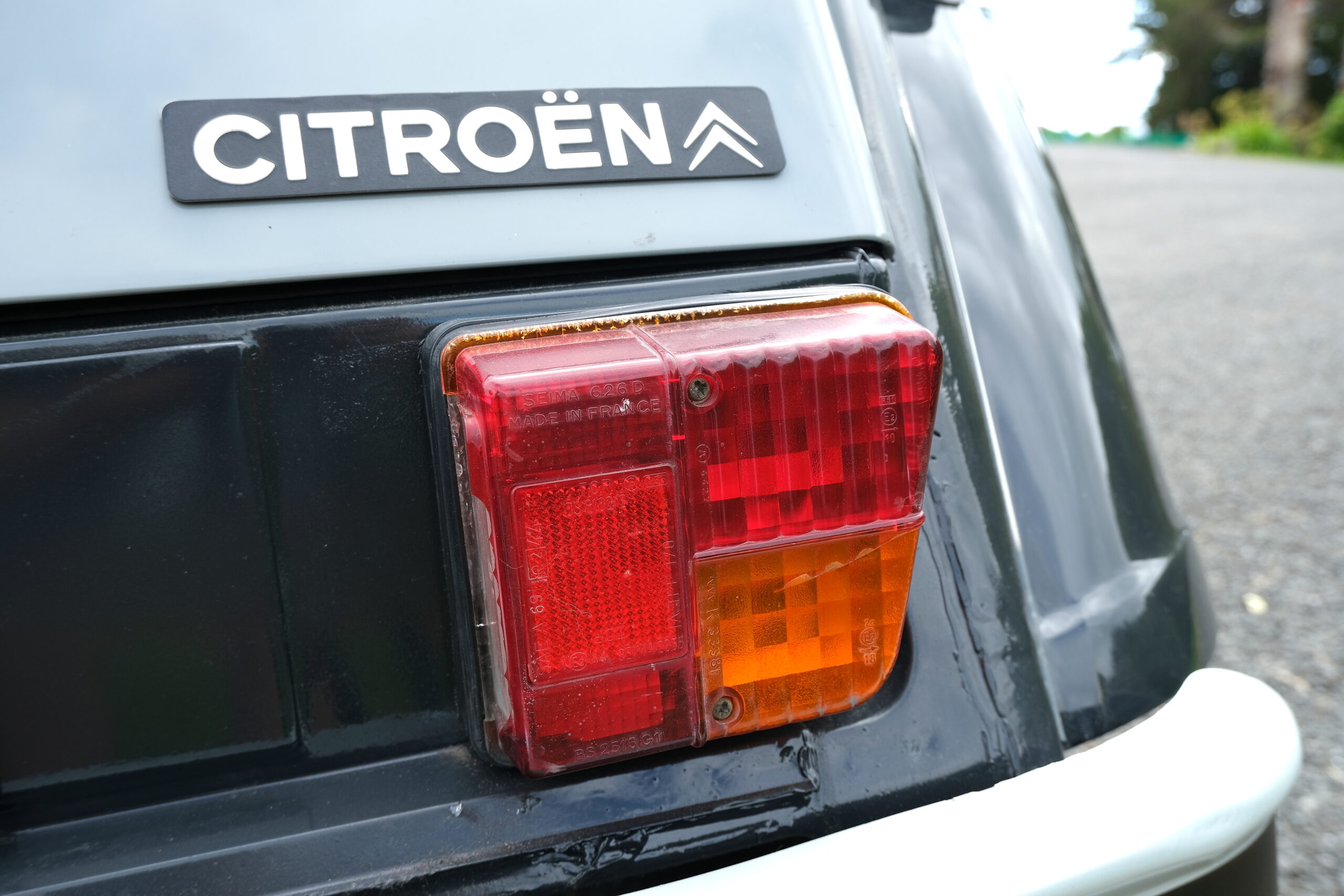
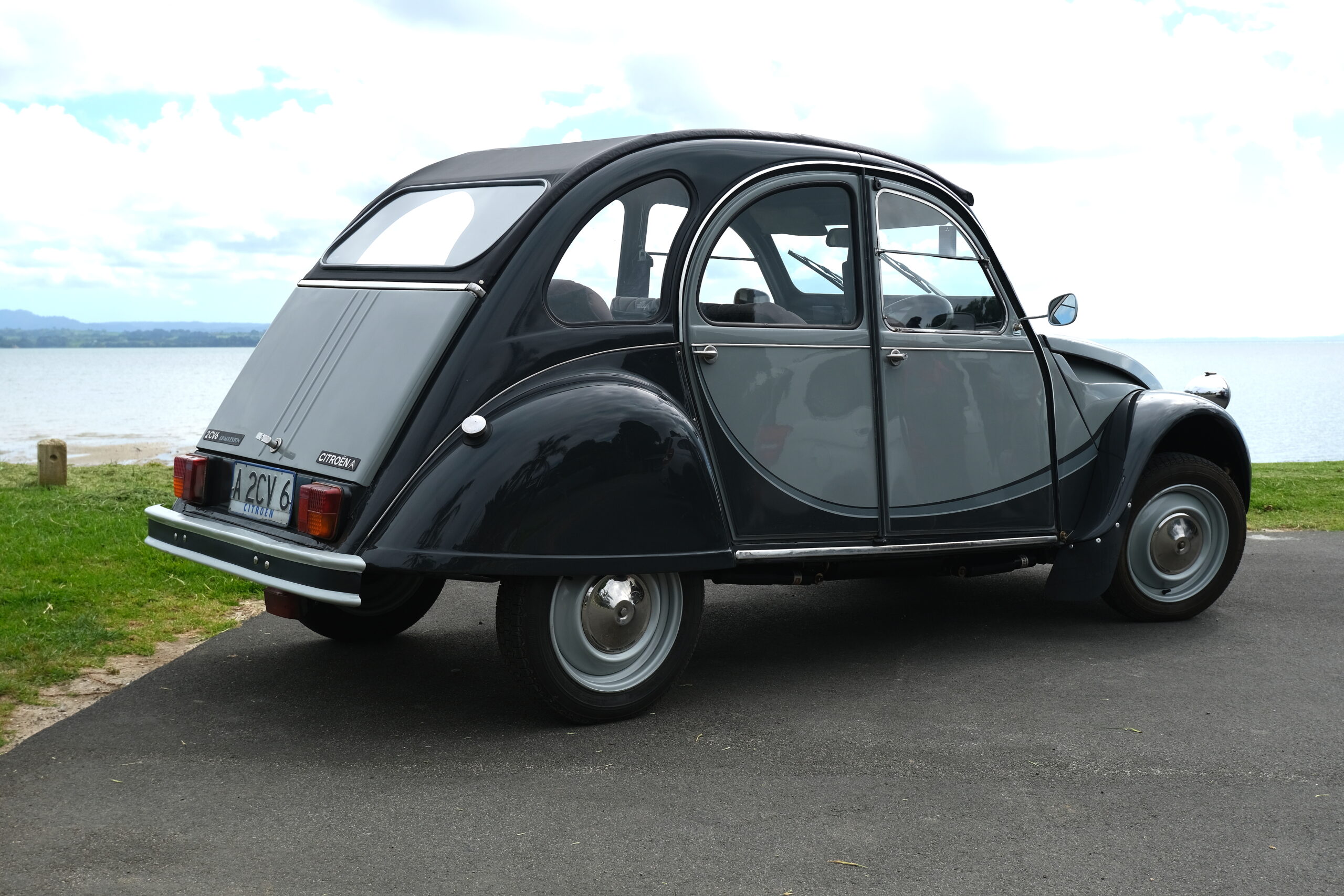
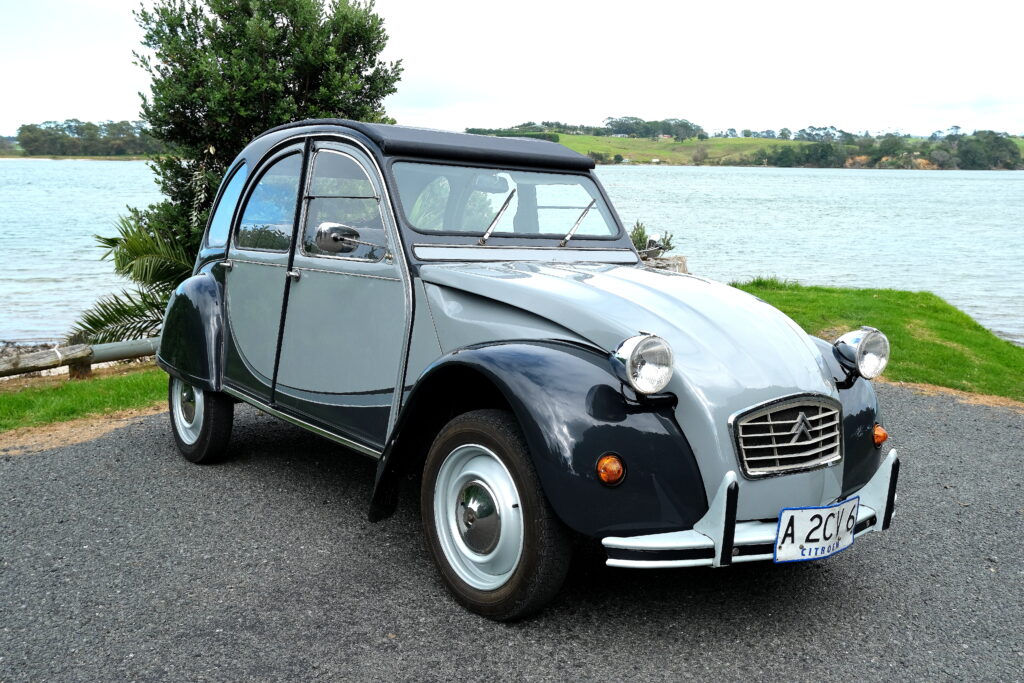
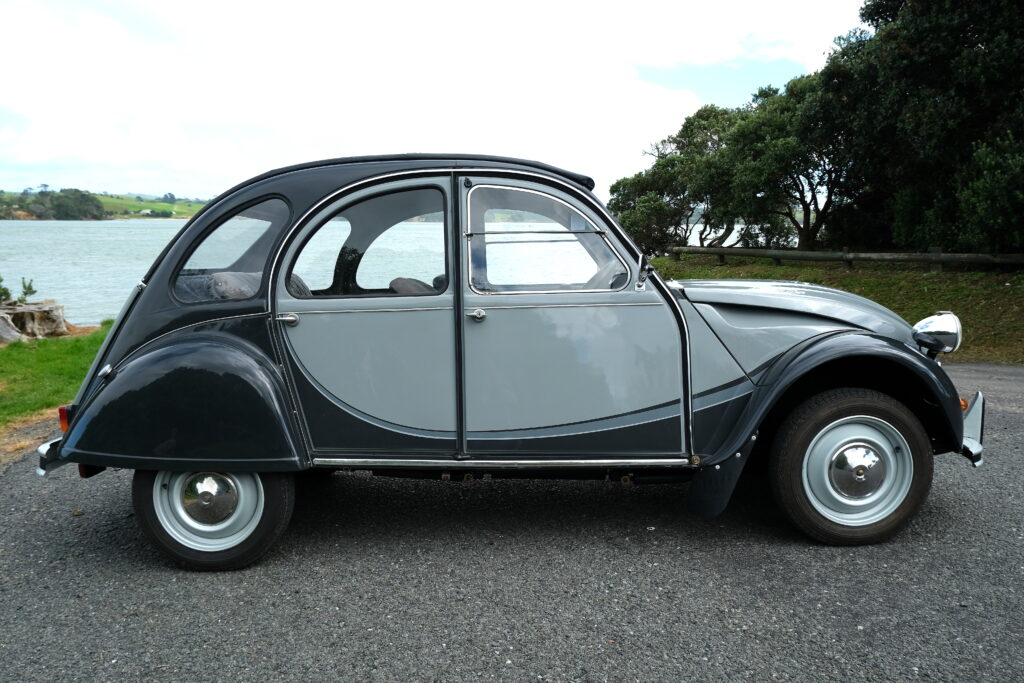
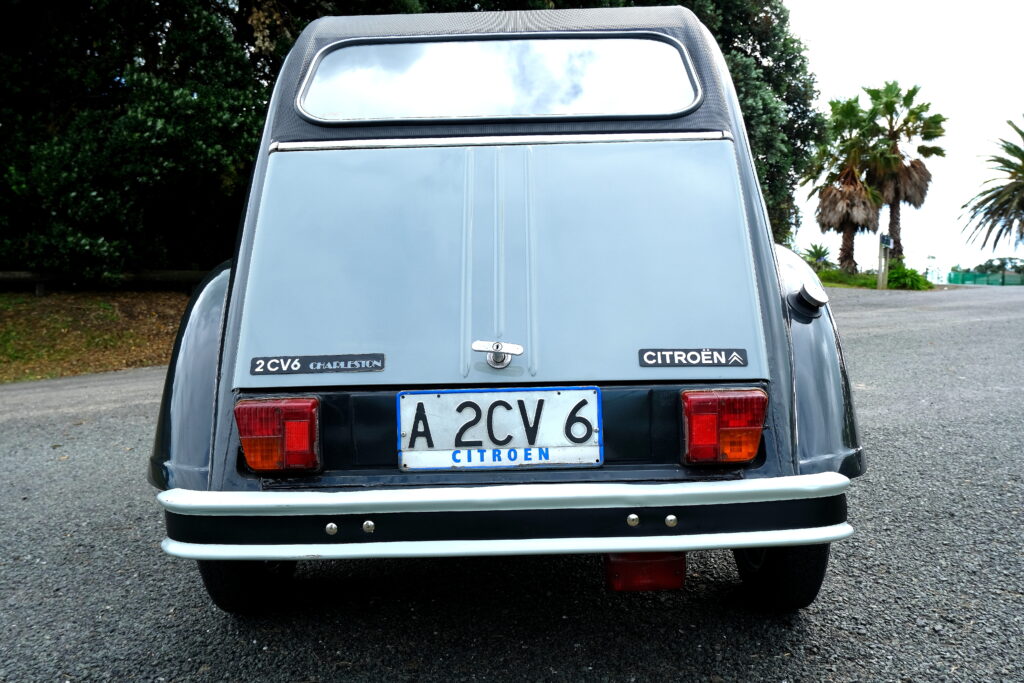
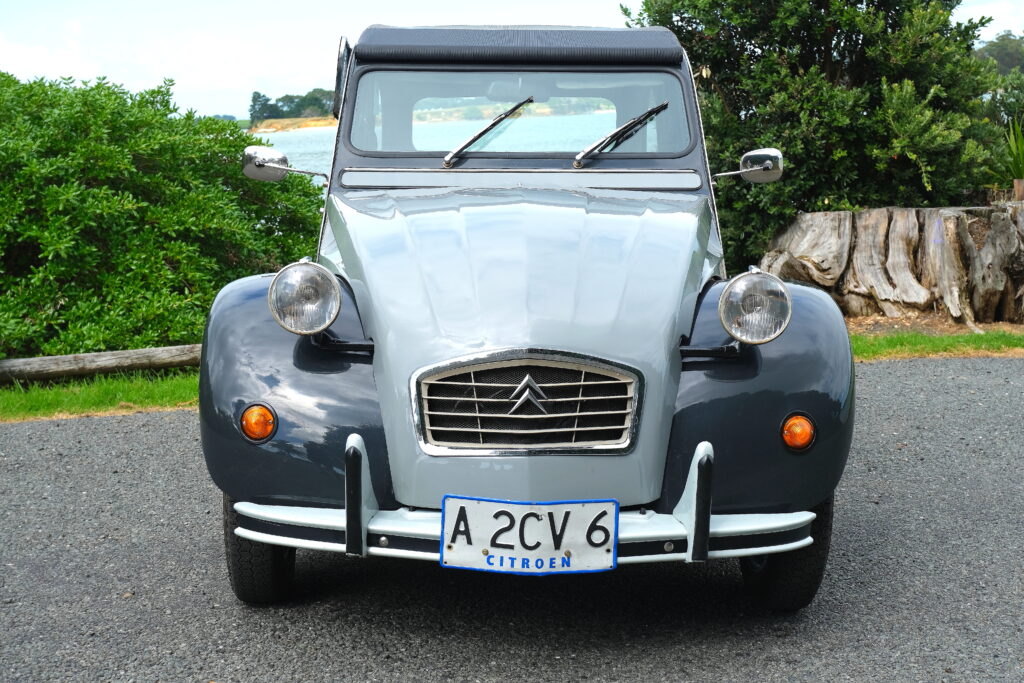
Special edition models were often created to celebrate a French sporting occasion, wine festival or other national event, or just because, and it is one of these gems that we are featuring in this issue, a 2CV6 Charleston. The last 2CV left the production line at PSA Mangualde, France, on 27 July 1990.
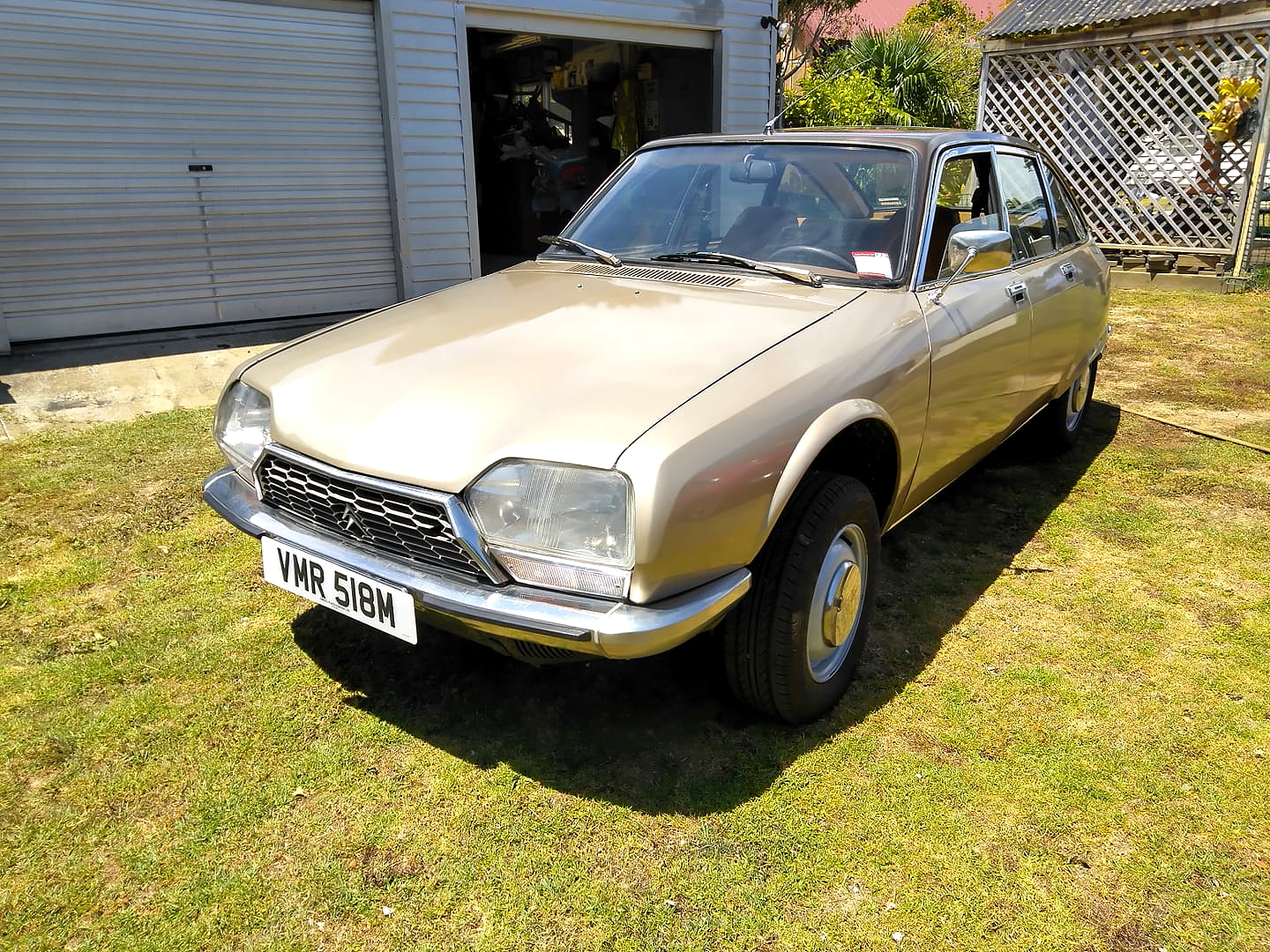
That last car was also a Charleston model, similar to the one Auckland Citröen Club enthusiast Kerry Bowman has recently restored. We have previously featured another of Kerry’s Citröens in New Zealand Classic Car, a very rare Wankel engine Citröen GS Birotor.
His daily driver is also a modern Citröen. His fascination with Citröens began with his father’s DS. His current fleet includes another GS with in excess of 300,000km recorded, but a 2CV wasn’t actually on his shopping list.
“A member of the Citröen Club in the Waikato called me to see if I was interested in this 2CV, and initially I wasn’t. However, the woman who owned it wanted it to go to someone in the club, so I decided to go to Hamilton and have a look at it.”
That was in 2021, and the 2CV6 looked good for a car with 101,000km on the clock. Kerry thought it was a worthwhile project and decided to take the Citröen home.
“I thought, okay, this is not going to be too bad once it’s cleaned up and made to look good. She had bought a few parts for it, like floor pans, door panels.”
A detailed inspection showed there was perhaps more work to do than anticipated.
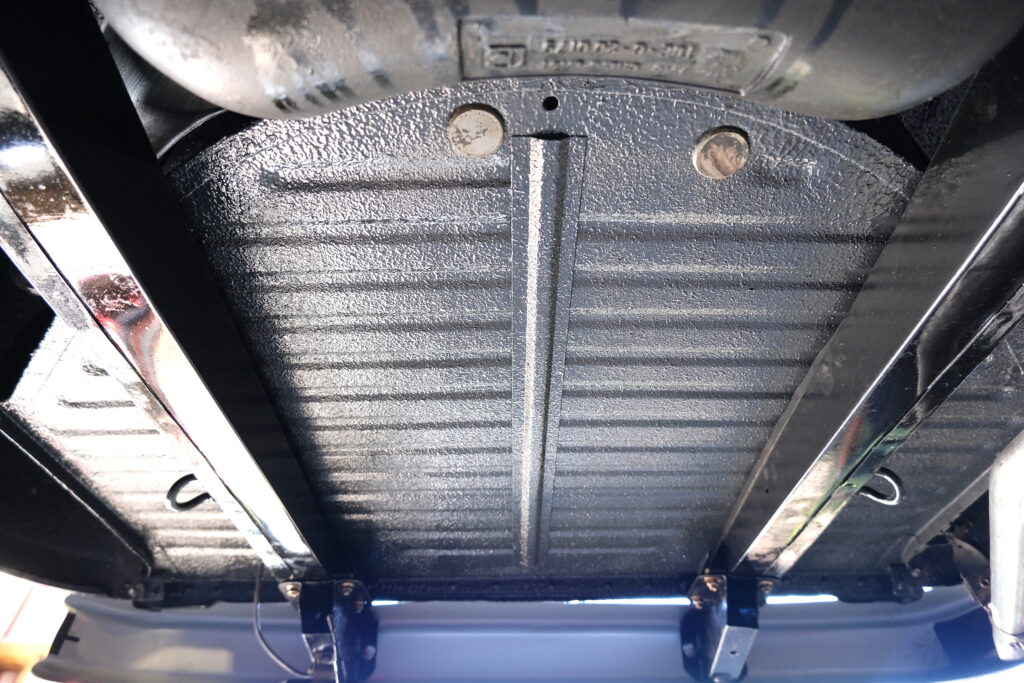
“The chassis had quite a bit of rust around the rear in the fuel tank area.”
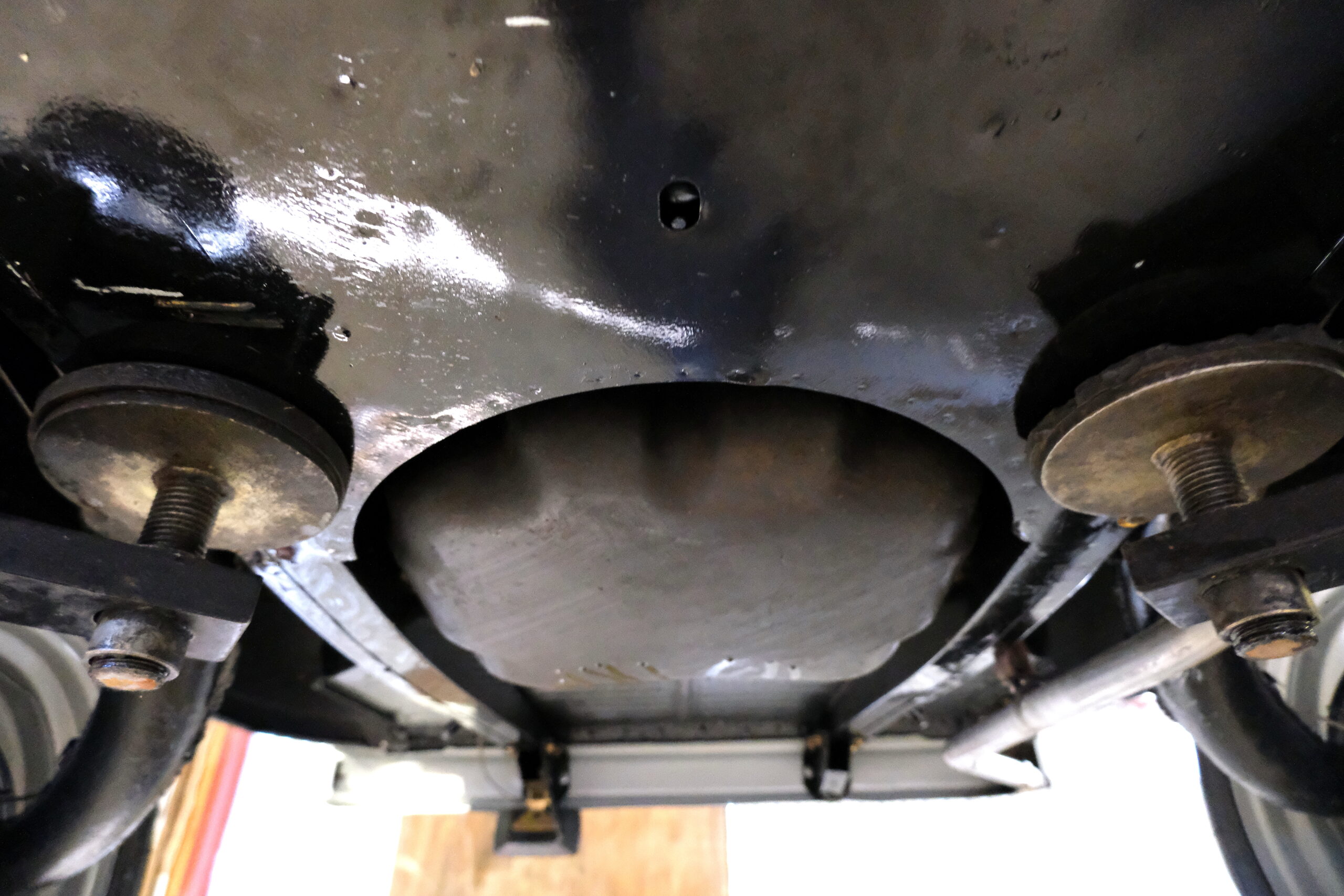
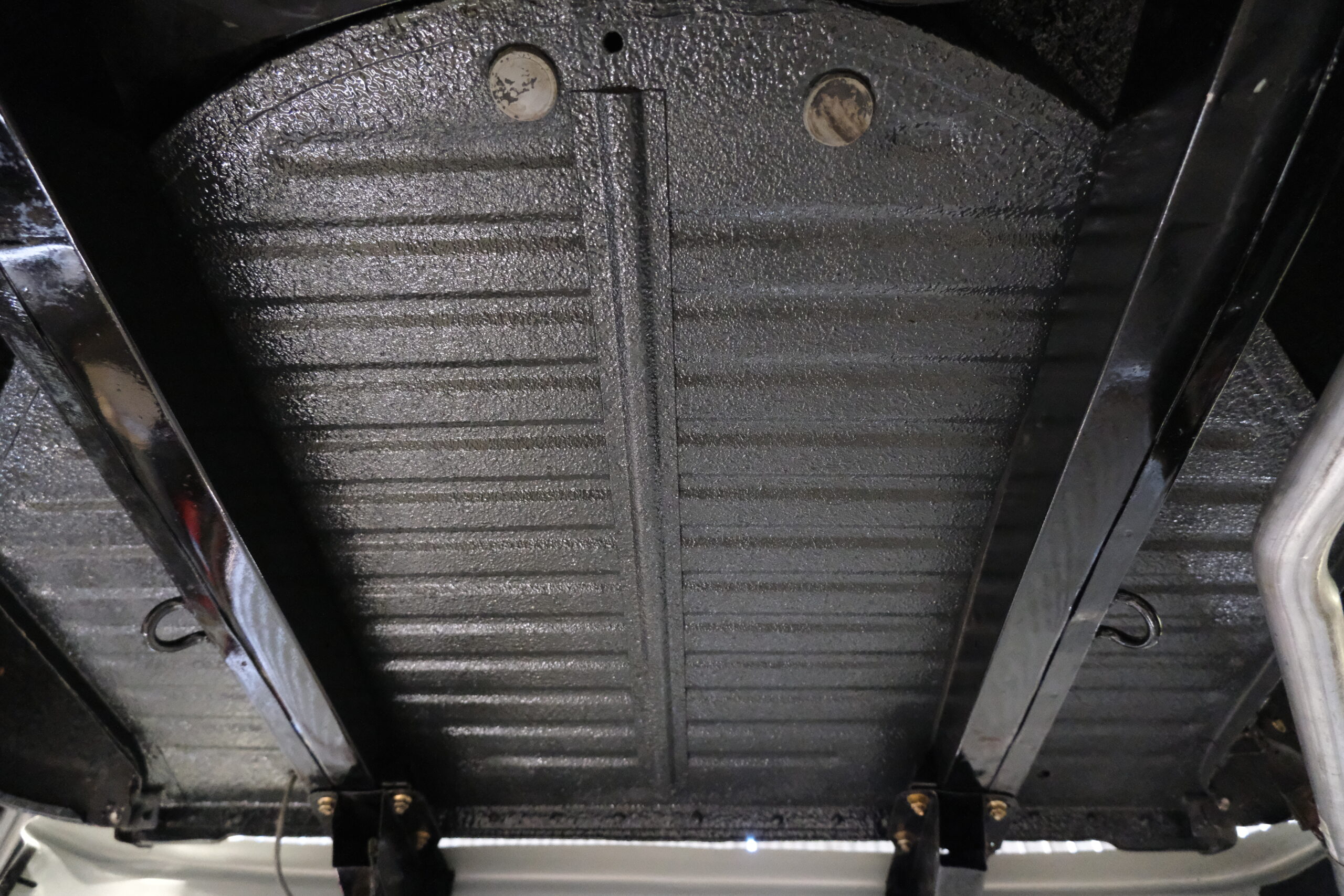
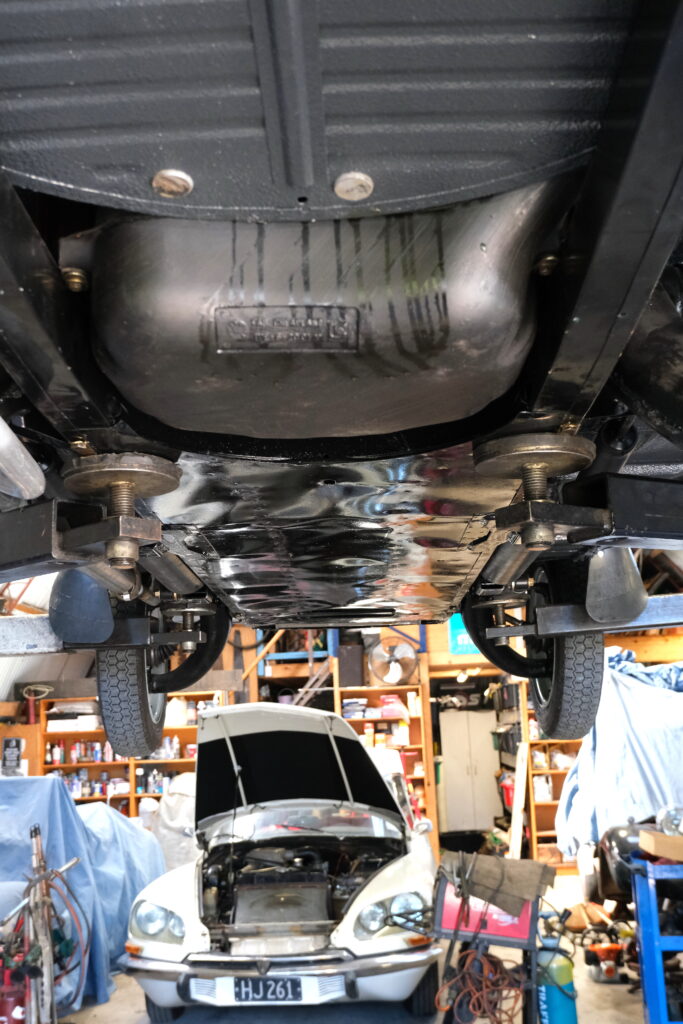
Kerry decided to buy a new galvanised chassis from Europe. He started rebuilding the car, replacing the floor panels and the windscreen surround.
“We then found a panel underneath the tow-board, just under the bulkhead, that had rusted so a new one of those went in along with a new boot floor and rear panel. We then painted the shell, which was stripped completely.”
The factory paint was in good order, so it was rubbed down and repainted in its original colours. It was time to reassemble the 2CV6 and spruce up some of the trim.
“I bought new seat covers for it along with a few other bits and pieces out of Europe,” says Kerry.
“I put the whole thing back together, aiming to make it look just as it had left the factory when new,” Kerry says Burton 2CV Parts in Holland supplies everything for 2CVs; you could even make a complete car from their catalogue.
“Dave Jones from Auto France [in Auckland] buys these parts for me so I buy them all through him. Dave also gave me a hand with some of the technical bits that I wasn’t sure of.”
Kerry decided it needed a good run and took it into Auto France for a warrant of fitness.
“Dave told me it had a cylinder head leaking. These engines have no gaskets. Everything is lapped in and clamped up. I took it for a decent run and found it hasn’t got the power it should have. They are not over-endowed with power, so every little bit counts.”
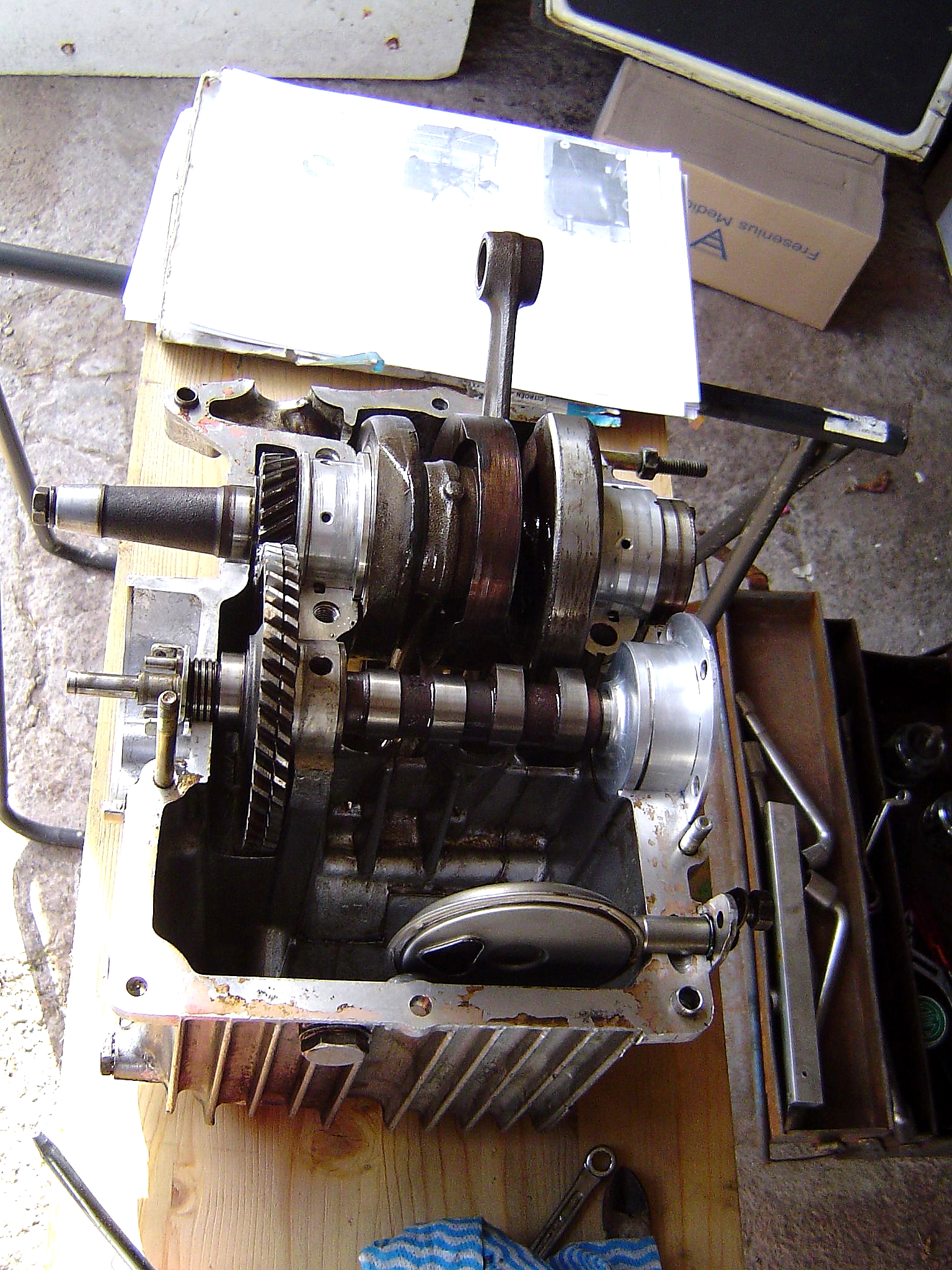
Back home, Kerry removed the heads and found the top piston rings were broken and the bores in the barrels were badly worn. It was time to buy more parts and the list included new pistons, rings and valves. The block was split in two, and the camshaft was removed to rectify wear on a couple of lobes.
“It’s been an interesting project. It’s quite a simple little car but very, very advanced for a small car built in the ’40s. It’s got an unusual suspension. One big coil spring operates on each side along with front and rear trailing arms. You can actually push them pretty hard into a corner and they lean but they just don’t seem to let go and don’t fall over. I suppose eventually they would.”
Despite its outwardly sound appearance, the 2CV6 needed a substantial amount of work to reach the finish line.
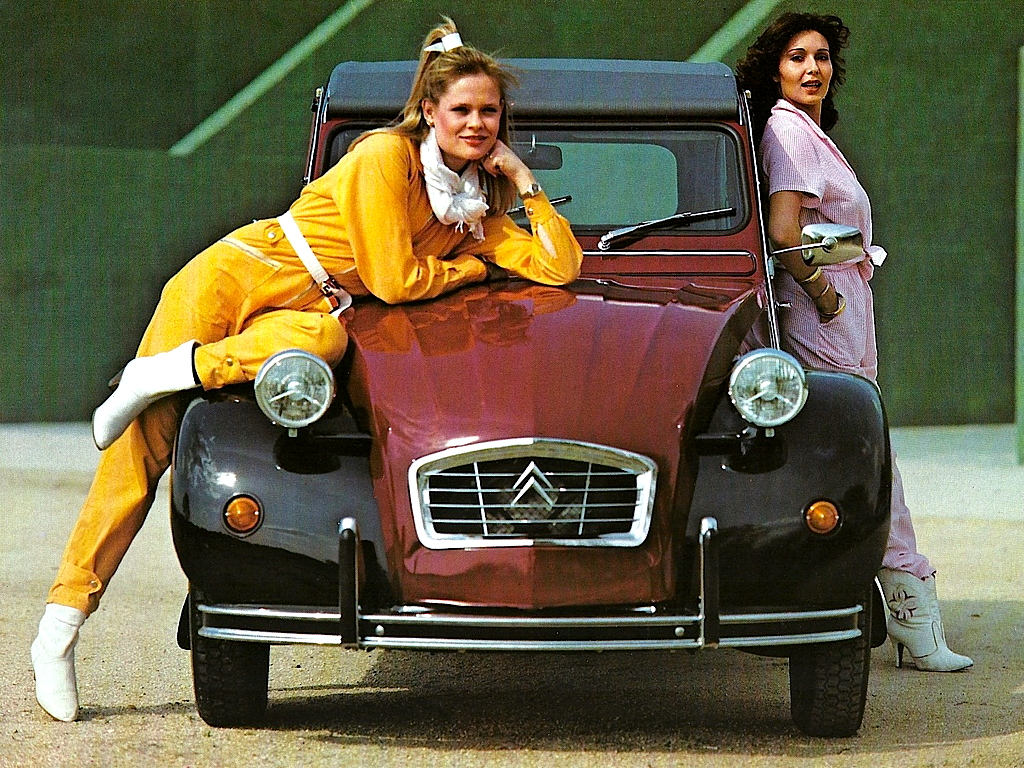
“Yes, it’s come up very well and I’m absolutely pleased with it. It is in its original 2CV6 Charleston form, which is the top of the range. They built several different versions, and they all had their characteristic paint jobs to identify them, but the Charleston had the two-tone grey, a burgundy and black and black and yellow. There were several different colours. This two-tone grey is quite common and the pieces on the doors are just stickers.”
Falling in love again
Kerry describes it as ‘a very simple car to do’. The suspension can be set to the required ride height. It is essential to weigh each corner to avoid too much weight difference from side to side. The four-speed gearbox was rebuilt. They are prone to getting a little water in them if not serviced correctly. Water etches into the bearings. The main shaft was also replaced.
But as it was a reasonably high-mileage car, Kerry expected a few mechanical issues.
“The lady I bought it off owned it from 900km after it had been sold new to a gentleman in Palmerston North. He found he couldn’t fit into it. This woman in Hamilton bought it, and she had run it to a total of 101,000 km. It was brand new in 1985, so it’s done quite a few kilometres for a little car.”
Not surprisingly, these little cars grow on their owners, and the previous lady owner is now interested in buying it back.
“I’ve spoken to her, but at this stage she hasn’t taken it any further. Once it is all back together and running correctly, I’ll take it down to her and catch up. She loved driving it. It was quite a fun thing, and everyone toots and waves at you when they pass you. They are totally unusual.”
Driving the 2CV on the open road was an involving experience, Kerry recalls.
“They just have to see a hill and they slow down, but they cruise along quite nicely. This one is quite good and you can easily cruise at 100kph with it. It’s air-cooled and they will rev. They have a very small flywheel, which is a very similar construction to a motorcycle. The GS has a similar four-cylinder engine, except it has overhead camshafts.
“My GS has over 300,000km on it, and it has still got the original crankshaft in it. I recently put new pistons and barrels on it, and from the history I have of the car, that engine had never been touched. I don’t believe this little 2CV has ever had much done to its engine, either.”
Despite its small capacity, the 2CV performs well.
“I was quite impressed with how it went,” Kerry says. “I’d done about 300km in it with the old engine and once I’ve done about 300-500km with this engine back in it then I’ll know its reliable and then I’ll give it a bit of a rest for a while.”
Kerry started full-time on the 2CV in 2022, but finishing his other cars seems harder in today’s classic environment, he said.
“It’s been very difficult getting things like painting done and things like that. Companies are so short of staff. Just getting supplies is a bit of a nightmare. It is actually easier to buy stuff out of Europe than to get it here. We ordered the pistons and valves for the 2CV and they were here within nine days, out of Belgium.”
A few 2CVs were brought into New Zealand over the years and, like the Mini, it is instantly recognised. It’s guaranteed to evoke grins from onlookers amused by its alarming cornering angles and that distinctive ‘chuff-chuff’ exhaust note. The 2CV remains an enduring expression of pure French joie de vivre.
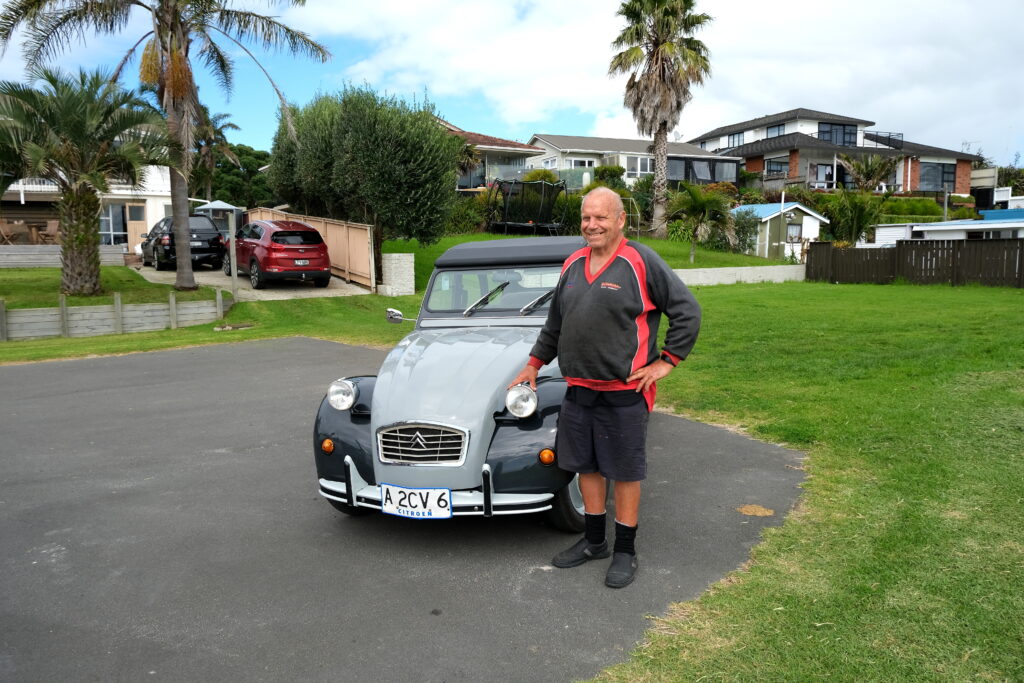
1985 Citröen 2CV6
Engine: Horizontally opposed, air-cooled flat twin
Capacity: 602cc
Fuel system: Carburettor Solex 26/35mm
Bore x stroke: 74 x 70mm
Compression ratio: 8.5:1
Valves: Two per cylinder
Power: (30bhp) @ 5500rpm
Torque: 38Nm @ 3500rpm
Transmission: Four-speed manual
Steering: Rack and pinion
Braking F/R: Inboard-mounted discs/drum
Suspension: Interconnected with tube dampers, coil springs, and rods connected to front leading arms and rear trailing arms
Wheelbase: 2400mm (94.5in)
Length: 3860mm (152.0in)
Width: 1,480mm (58.3in)
Height: 1600mm (63.0in)
Weight: 600kg (1323Ibs)
Designer: Andre Lefebvre
Performance: 100kph