data-animation-override>
“Published in NZV8 Issue No. 25”
In 1959 the American car manufacturing industry was pushing the boundaries of excess. These days Hamilton appears to be doing the same
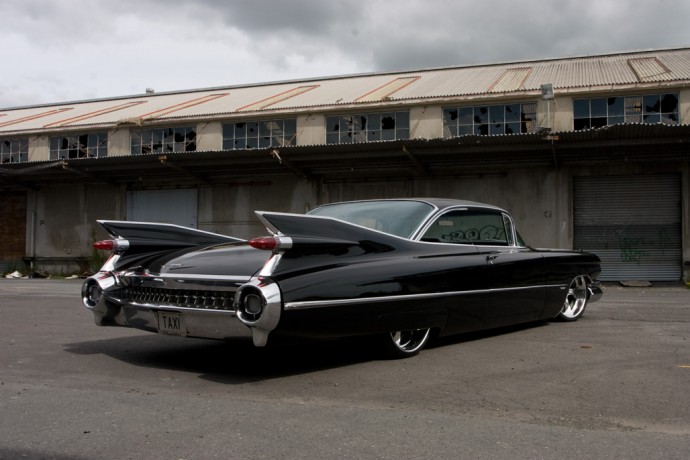
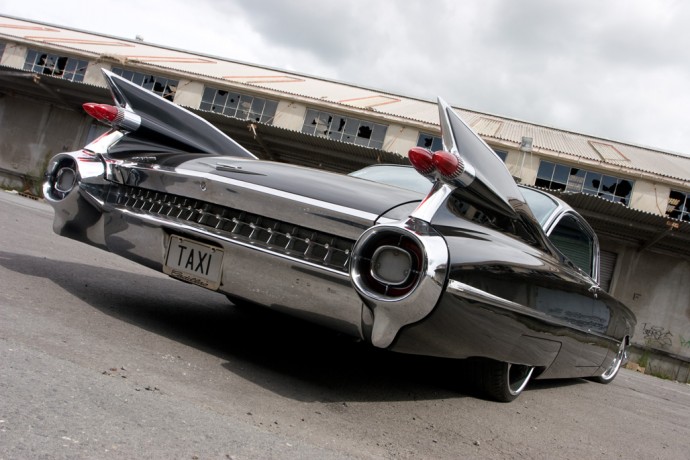
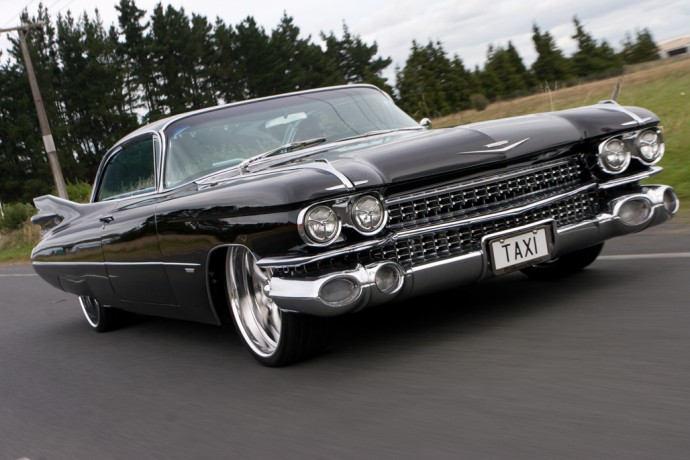
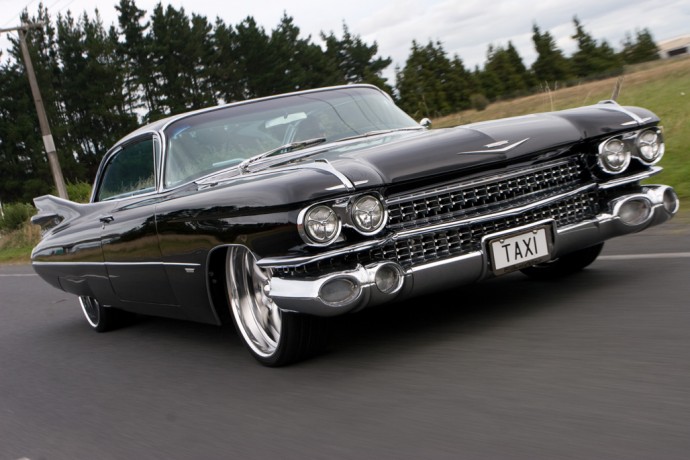
In the vast, flat expanse that is Hamilton City, it appears more and more car builders are attempting to stand out from the crowd. One of those caught up in an addiction to excessive modification is car dealer Mark Hayward, with his ’59 Cadillac Series 62.
Eagle-eyed readers will recognize this fine ’59 as being the same one featured way back in issue number four of NZV8. Since then it has come a long way in the never-ending quest to stay one step ahead of the crowd.
From the time Mark first purchased the 5.7 metre-long black beast from an American car dealer, he knew he wanted to make it just that little bit more special than any other ’59 in NZ. As the car had spent many years in a museum in St Louis, Missouri, it was in fantastic condition, and the panel and paintwork had already been completed. But little did the previous owners know what would become of the vehicle once it was shipped to the bottom of the world.
Recognizing that it looked like an old man’s car, Mark hunted around the internet for an airbag kit specifically designed for this model. After all, his car would come over in a container and it would be almost criminal not to fill the boot with parts. Despite the horror stories you hear about parts going missing in transit, the Air Ride Technologies gear turned up with no dramas.
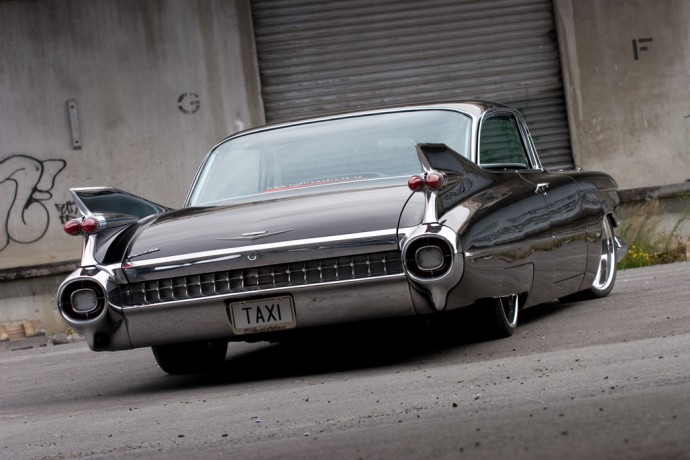
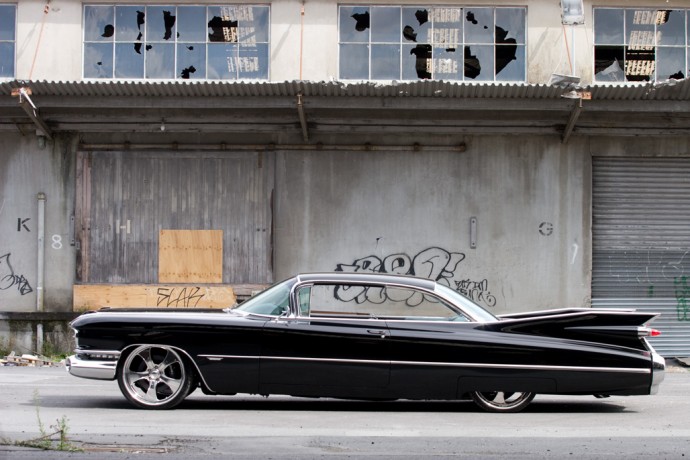
Once the car was landed and complied, its first stop was none other than Magoos Street Rods and Custom in Masterton, which was given the duty of installing air struts in each corner. The task of filling the bags is entrusted to two Viar compressors and 9.5mm lines. While some may say the suspension should have remained stock, the vehicle’s size meant access problems aplenty, and the adjustable ride height is the only way the car can get around town without running aground. Lifting the old girl off the ground now simply requires the push of a button attached to Mark’s key ring, or by using a digital controller mounted in the glove box. As you can see, when it’s down it’s really down, and although the car can still roll at this height, the steering cannot be turned. When fully up, the car develops the stance of a lanky teenager, looming far too tall above its massive feet.
Speaking of which, the wheels are themselves very impressive bits of gear. Measuring in at 22 inches tall and 10 inches wide both front and rear, the Intro billet wheels are shod with 265/30R22 and 295/25R22 tyres respectively. Amazingly enough, no major modifications were required to get the big-dollar rims under the guards and rolling freely. The change from the stock 15-inch rims to the 22s brought with it the addition of monster front brakes. Brett at Future Performance was given the honour of installing Wilwood four-pot callipers and 380mm discs where the front drums once resided. Down the rear the stock drums remain, not that it’s possible to see them thanks to the low ride height. Besides filling the rims, the reason for the brake upgrade was to ensure the 2100kg car would still haul up safely with the extra power planned from the new motor.
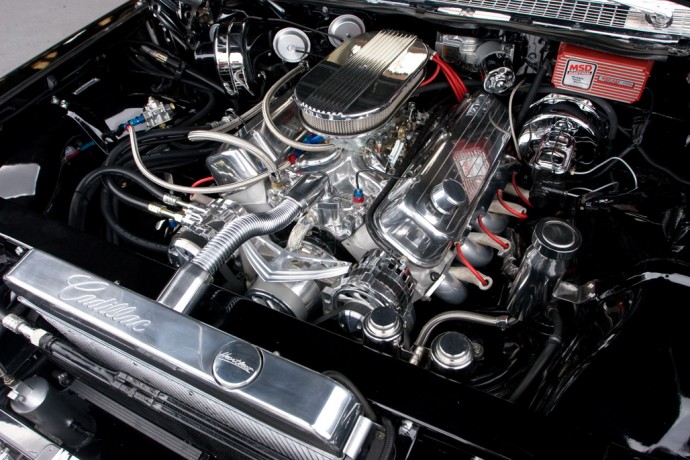
After getting bored of the stock engine remarkably quickly, Mark had a worked 454 (7440cc) dropped in the hole. But he grew tired of that quickly too, so he recently had one seriously angry 468ci (7669cc) big block built by Craig Hammond to a specification Mark will not tire of for a long time to come.
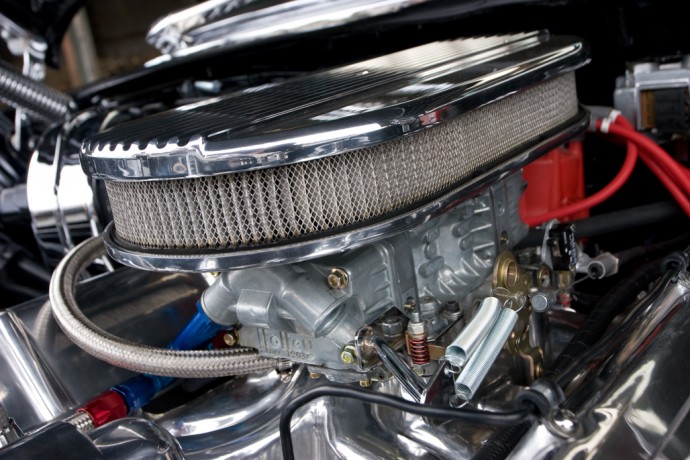
The balanced rotating assembly consists of flat-top Speed Pro pistons and forged rods to provide a 10.1:1 compression ratio. A Holley 850cfm double pumper carb feeds air and fuel through an Edelbrock Torker 2 manifold into 110cc Performer RPM aluminium heads. Here they are at the mercy of Manley stainless steel valves that receive orders from a Comp Cams 294-degree solid cam, Comp Cams pushrods and matching roller rockers. To close the 2.19- and 1.88-inch valves there’s a set of heavy-duty Comp Cams 924 double valve springs. Firing the big block into life are an MSD6AL ignition and MSD Pro billet distributor. If you were thinking this sounds more like a race engine than one for a cruiser, you would be correct. The combination is angry. Very angry. With 373kW (500hp) at the wheels, the big cruiser will deal to many unsuspecting and eager competitors at the traffic light grand prix.
Of course, turning the power into forward momentum in a heavy vehicle such as this requires a pretty tough trans. Thankfully Mark had Craig piece together a TH400 auto with a shift kit and Hughes 2500rpm stall converter.
Each year, the main event for the car is the Beach Hop, and this year Mark’s company, Tristram European VW, was a sponsor. Luckily for Hop visitors, this didn’t mean the car stayed at home to be replaced by a VW, as the Cadi is the ultimate lads’ cruiser. Despite his car being angry as all hell and thirsty on gas to say the least, Mark cruised the streets of Whangamata all weekend long for the third year in a row.
Due to business commitments the car isn’t used much these days, so for the right price it could be pried from Mark’s hands. But that doesn’t mean his days of owning cool Yankee steel are over, as he has his heart set on a ’57 or ’58 Buick LWB Limited. It took a long time to find the ’59 you see here, so we know once Mark has a goal in sight, he won’t give up until it’s a reality. When his Buick dream becomes one, you can be sure it will be even more impressive than the Cadi. And that is far from a small task.
Specs
1959 Cadillac Coupe Series 62
Engine: 468ci (7669ccc) big block Chev, Edelbrock 110cc Performer aluminium heads, Manley stainless steel valves, Holley 850cfm double pumper carb, Edelbrock Torker 2 manifold, Comp Cams 294 Magnum solid cam, Comp Cams roller rockers, Comp Cams valve springs, Comp Cams push rods, Speed Pro flat-top pistons, 10.1:1 compression ratio, balanced rotating assembly, March serpentine pulley system, MSD 6AL ignition, MSD Pro billet distributor, 2.5-inch headers.
Driveline: TH400 automatic, Hughes 2500rpm torque converter, de-loomed engine bay.
Suspension: Air Wave air struts, 2x Viar air compressors, 9.5mm (3/8th-inch) lines, wireless remote, digital pressure gauge, twin tanks.
Brakes: Wilwood four-pot front calipers, 380mm front rotors, stock drum rear.
Wheels/tyres: 22×10-inch Intro wheels, 295/25R22 rear tyres, 265/30R22 front tyres.
Exterior: Factory black respray.
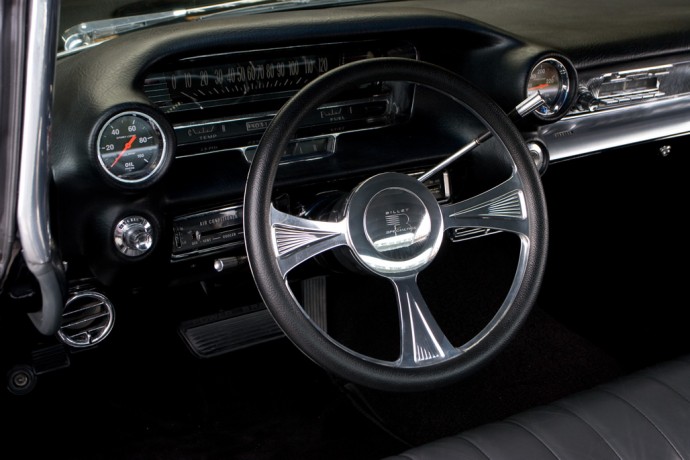
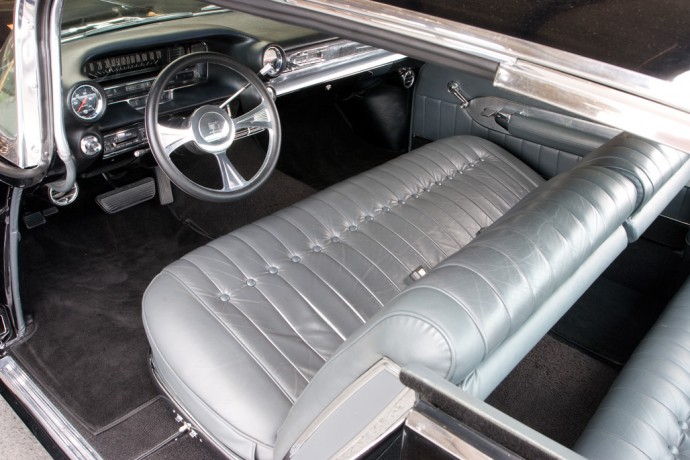
Interior: Grey leather re-trim, Auto Meter oil pressure gauge, Auto Meter water temp gauge, Recaro baby seat.
Performance: 500hp at the wheels.
Driver Profile
Mark Hayward
Age: To old to remember.
Occupation: Car dealer — Tristram European VW.
Previously owned cars: ’64 Impala station wagon, ’63 Caddy, ’62 Caddy, ’73 Plymouth Barracuda, ’58 Pontiac.
Dream car: Anything modern.
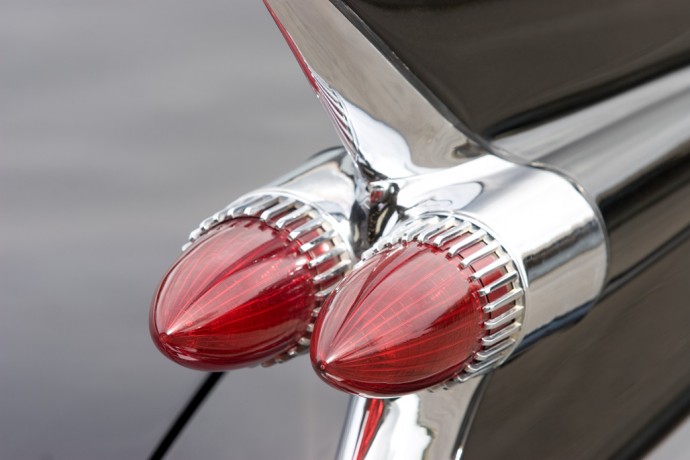
Why the ’59? Loved the ’59 model and the big wings, and always wanted a big engine.
Length of ownership: three years.
Mark thanks: Paula and our two boys Cruz and Austin, Betto at Future Performance, Waxy at Craig Hammond, Steve Crow Panel Beaters, Mark at Top Town, Dion at Coombes & Rennie Radiators, Marty at Collins Electrical, Ross at Furlong Massey Chrome Platers, Bryan at Audio Active.