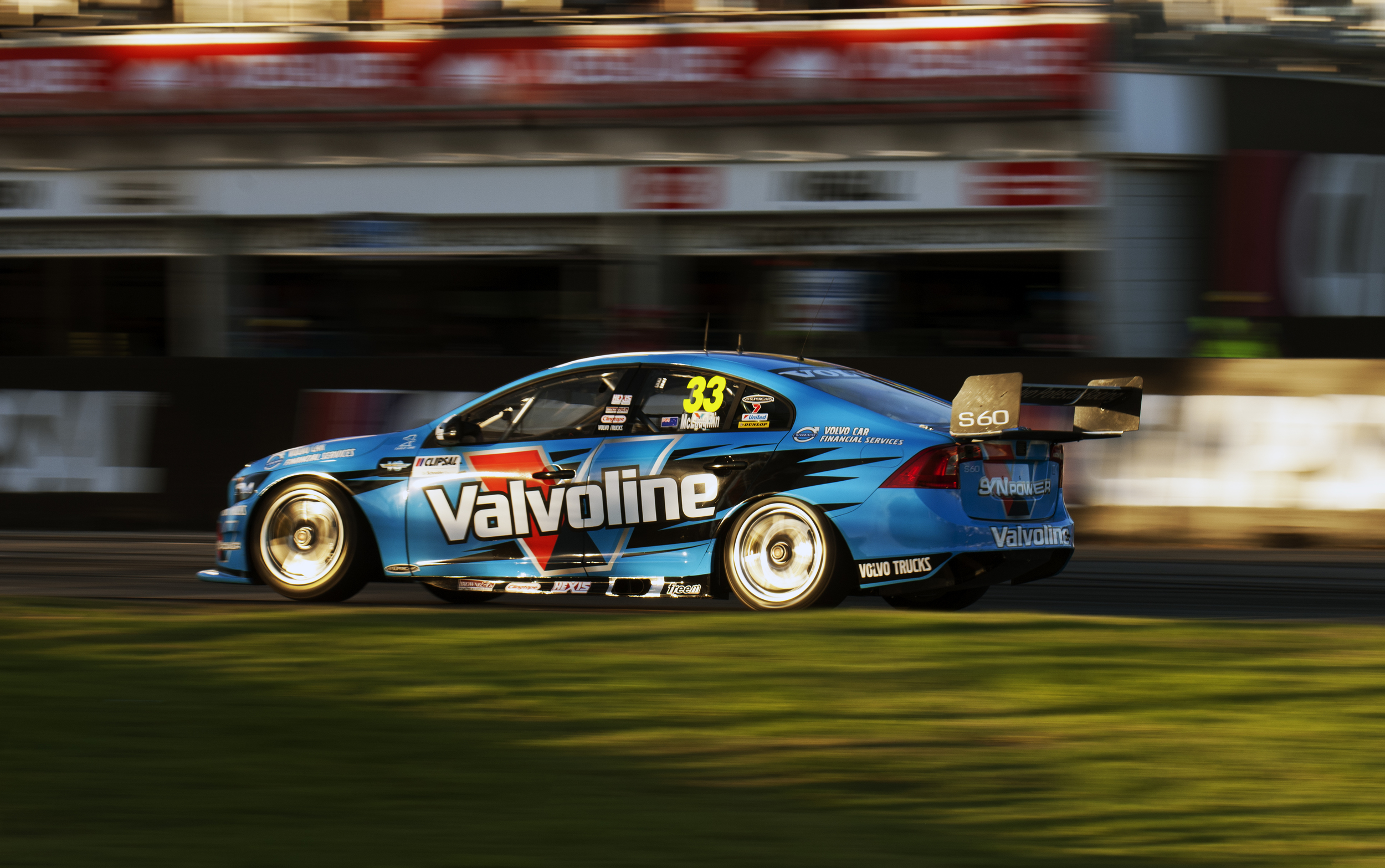
Kiwi Scott McLaughlin won the final race of the MSS Security Challenge at the Formula One Rolex Australian Grand Prix and became the first Volvo Australian Touring car winner in 17 years.
McLaughlin fully expects the ‘haters’ to scrutinize his continuing success.
Winning the final race meant double points also gave him the overall win. It followed his amazing second in an epic last lap battle with Jamie Whincup in Adelaide a fortnight ago.
He benefitted from Shane van Gisbergen, who won the first three races, who suffered a broken roll bar on the warm-up lap and went backwards through the field as a result. It left McLaughlin with the win from Red Bull Racing Australia’s Craig Lowndes and Beyond Blue Nissan pilot Michael Caruso.
The 20-year-old has been the star of Volvo’s re-entry to V8 Supercars this year with his Adelaide exploits and then his performance at the Melbourne weekend. He has made Volvo cool and jandals a household name.
But with success comes scrutiny from your competitors, something that McLaughlin expects.
“There are always going to be haters but bring it on,” he said. “I am driving the thing as hard as I can and that’s what happens; we are going good. There’s always going to be doubters.”
McLaughlin said the weekend demonstrated that team changes made a difference when he was left behind in Saturday’s two races before overnight changes today.
“You have only got to look at the third race yesterday,” he said.
“There were five cars out there all incredibly close. I couldn’t do anything, Michael couldn’t do anything and Craig, Shane, and Fabs (Fabian Coulthard) were out in front. That’s where you have to look at it.
“In regards to parity everyone has stepped up a lot over the off-season and I don’t think some of the other teams have. That’s what I reckon — but I’m just a driver.”
Many thought McLaughlin’s win in a Commodore at the ITM 400 Auckland was a one-off. But since the change to Volvo and the added Swedish support plenty reckon he is a Championship hope.
“A lot of people didn’t count our win last year but this one counts. For us as a team its morale building and something you never forget,” he said.
“I am only the guy between the steering wheel and the seat. I am just driving the car that they give me and its making me look good. I am trying to drive it, slide it and give it some jandal. So far it’s working pretty good.”
Van Gisbergen started from the front row of the grid once again in his quest for four in a row. Again he drifted to the inside line as a cover for the entry to turn one. The strategy worked as he leapt to an immediate lead, as he had done in the races prior.
With drops of rain falling, Van Gisbergen was pushed hard by Kiwi compatriots Coulthard and McLaughlin on the opening lap. Coulthard pounced with an amazing move at turn 13 when his brakes fully locked but he still managed to pass on the outside.
With Van Gisbergen suffering what appeared to be a major problem he was then swallowed up by McLaughlin, followed by Lowndes. Van Gisbergen continued to struggle and drift backwards, all the while his points gap kept decreasing with every lost position.
Amazingly, he ended up out of the top three for the weekend.
McLaughlin benefitted enormously from Van Gisbergen’s dramas and after four laps lost his points lead as double points for the final race came into effect. The young Kiwi’s lead just got bigger and bigger every lap, in the end giving him overall victory despite Van Gisbergen’s three race wins.
“We made a couple of changes overnight and the thing was an absolute jet. I couldn’t keep up with these guys in the last couple races so we needed something else,” said McLaughlin.
“I got a big enough gap that I was able to save the tyres if there was a safety car. I had a good battle with Lowndsey for a while there and I thought I was gone at one point.”
A safety car on lap eight and subsequent restart had McLaughlin under enormous pressure from Lowndes with a mistake at turn three. A big clash between an out of control Rick Kelly that took out Jamie Whincup and James Moffatt left all three in the gravel with three laps to go.
Officials left it as a local yellow rather than a safety car as Lowndes, with a weekend win in his sights, continued to range up on the back of McLaughlin.
“Scotty just had a little bit better drive than us through the corners,” Lowndes said. “My car wasn’t as nice as yesterday but they are the things you have got to understand and put in the memory bank.”
Coulthard faded with a flat spotted tyre while Caruso duelled with Holden Racing Team’s Garth Tander on the final corner, beating him for straight-line speed on the finish line by half a bumper bar.
“I have been whinging about straight line for the last 12 months, and to beat someone over the line was completely unexpected to be honest,” Caruso said.
“It was a bloody interesting race inside the car, I don’t know what it looked like on TV. It was on for young and old. The first handful of laps was unbelievable; you would swear it was for the V8 Supercar World championship.”
Coulthard ended the race fifth, with Erebus’ Will Davison, Ford’s Mark Winterbottom, James Courtney, Tim Slade, and Lee Holdsworth completing the top 10.
Others to note included Russell Ingall in 12th and Jason Bright after a delaminating tyre.
The V8 Supercar Champion moves to the Tyrepower Tasmania Challenge at Symmons Plains Raceway in Launceston in just under a fortnight.