The name’s Bond, James — well, actually, no
By Ben Selby
Say the word ‘bond’ to anyone in the street and around 80 per cent straight away think of pop culture’s least-secret secret agent. The other 20 per cent may think of the wad of cash required to secure a flat or hire equipment that one gets back providing the fixtures and fittings stay much as they were.
However, mention ‘bond’ in specialist classic car circles and people will spin a very different yarn. If you dig deep enough, you will find an eccentric British carmaker that, throughout its 23 years in business, spawned some quirky and charming little cars.
The company was founded by Paul Sharp in 1922 under the name of Sharp’s Commercials Limited. However, the company did not start producing cars until 1948. The first car to carry the Bond name was the Bond Minicar. A three-wheeled, soft-top, two-cylinder eco car, the Minicar was a big hit at the time as the desire for an economical urban runabout that didn’t attract four-wheel car tax was strong in post-war Britain. All in all, 34,285 Minicars were produced over 26 years in a variety of variants.
Bonded fibreglass
In 1963, Sharp Commercials changed its name to Bond Cars Limited and, thanks to the overall profits from Minicar sales, the decision was made to venture into the mainstream market. Company directors thought a low-slung, two-door coupé would be the smart move to announce Bond’s arrival in the world of producing cars with the usual number of wheels.
However, as Bond did not have the resources to build a bespoke platform for its new car, the company began to work closely with Triumph, which agreed to supply the underpinnings of its Herald. Power came from Triumph’s Spitfire 1.2-litre, four-cylinder engine with 63hp. Thanks to its Italian-esque ’60s coupé looks made from glass fibre, the new car could reach 90mph, which, for 1963, made it quite the performer.
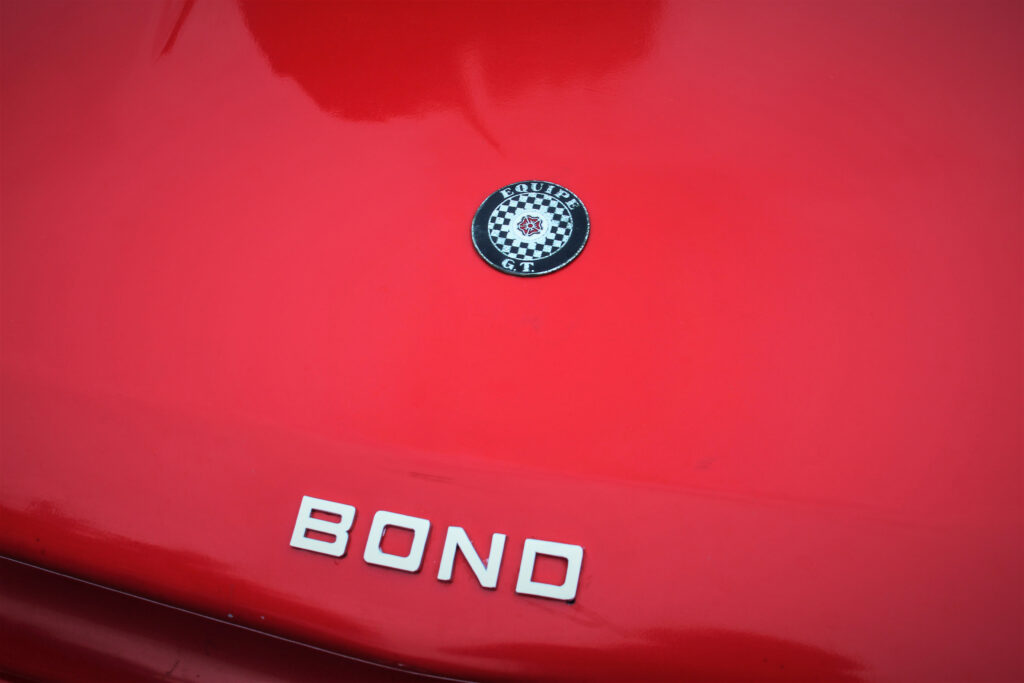
Called the Bond Equipe GT, the car was launched at the 1963 London Motor Show at Earls Court. Retailing at just £822, around 451 of the Equipes were produced within the car’s first and only year of production. That’s because the Bond’s designers already had their eyes set on bigger things, namely the new Triumph 2000’s two-litre straight-six and running gear.
The first refreshed car was the GT4S. While it featured the same Spitfire four-pot, which grew to 1300cc to match the uprated Spitfire, it sported a more aggressive-looking front end. It also seemed to share its headlights with that other quirky British coupé, the Reliant Scimitar GT.
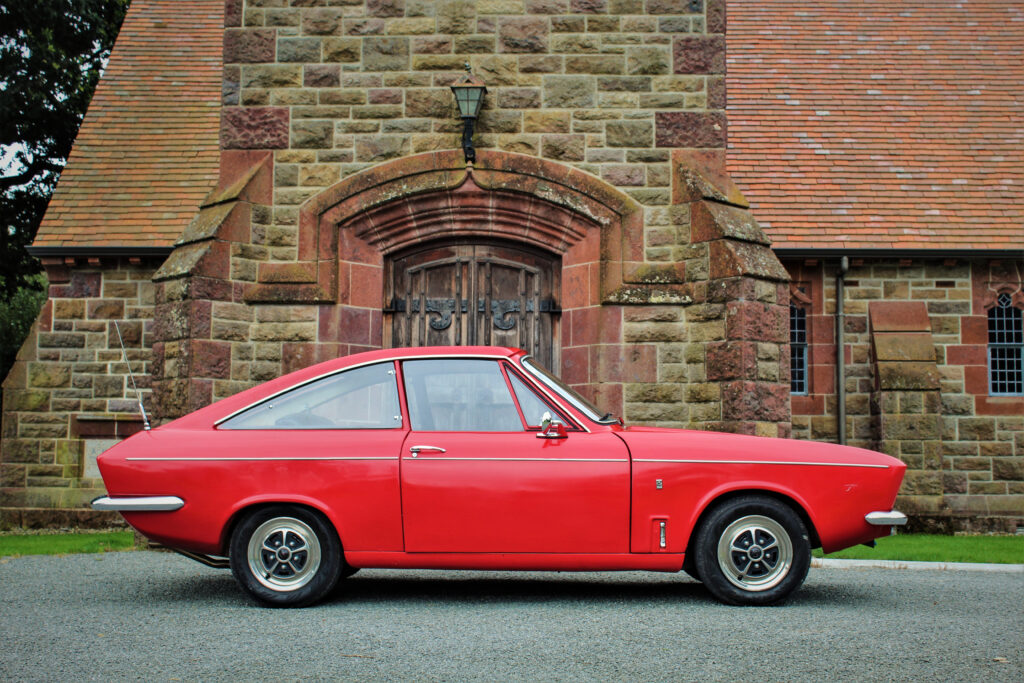
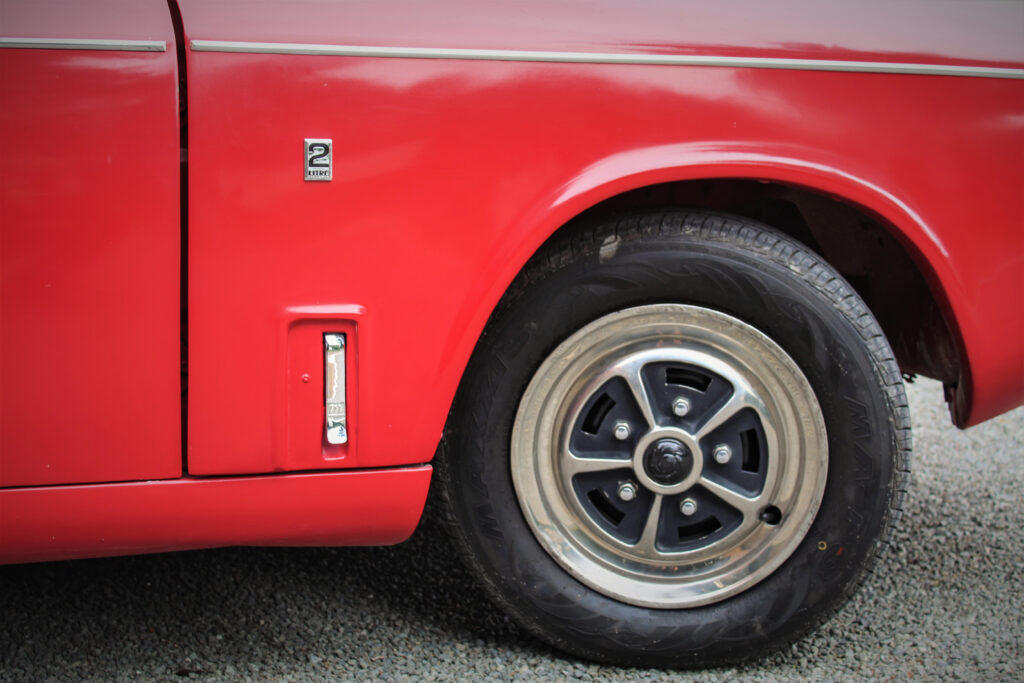
In 1967, the GT4S 1300 was joined in the range by the two-litre Equipe GT, which featured the underpinnings of the Triumph Vitesse plus its two-litre Triumph six-cylinder and four-speed manual gearbox. Only 591 were produced before it was replaced by the last hurrah, which you see here: the Equipe GT two-litre Mk II.
Bond Cars Limited was bought by Reliant in 1969, and in July 1970 stopped production and cancelled plans for a rumoured Mk III Equipe GT.
Despite a total of 4389 Equipes built throughout this period, actually seeing one on the road outside of the UK is a pretty darn rare occurrence. This example ventured to New Zealand in 1990, where it had two owners, one of whom held onto it for 20 years, before it was acquired by Christchurch-based Jeff and Faron Poulter. Dunedin-based car fanatic Glenn Scott bought it from them recently as a present for his partner, Kristie Pocklington. “We were on a trip around the South Island, and we saw it for sale,” she says. “We decided to have a look at it when we were passing through Christchurch. We did a deal and had the car trailered down to Dunedin.”
Since then, Kristie has begun to enjoy her time with her new quirky classic. “I have probably had a steer of it about two or three times since we got it,” she says. “It goes as good as gold and always attracts attention. People stare at it, wondering what it is. It’s a wee bit funny looking and just so different.”
Country gent
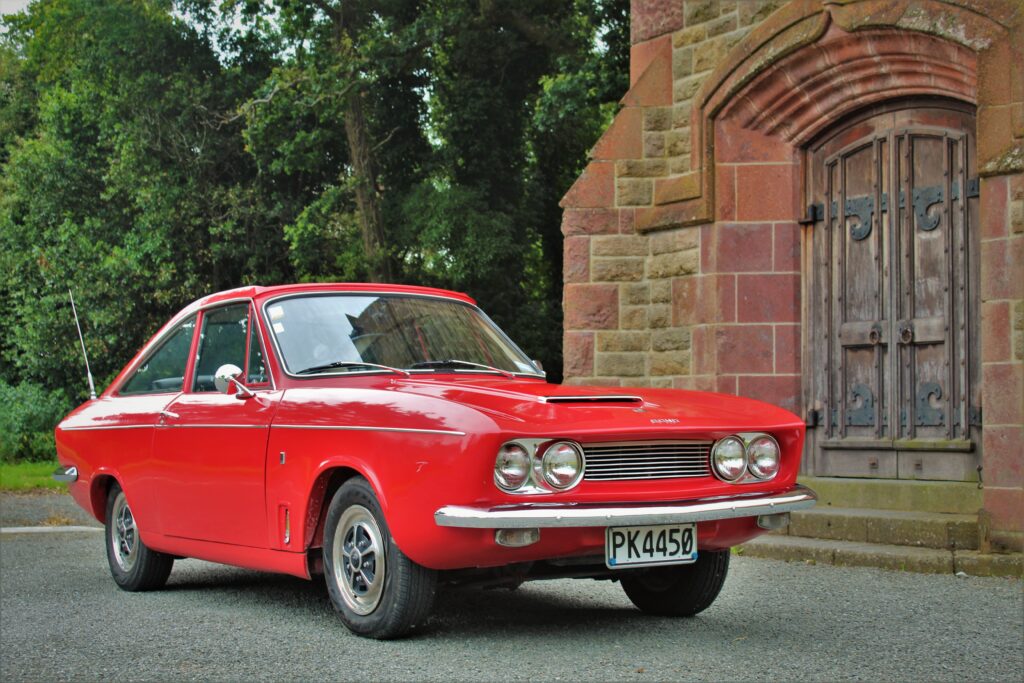
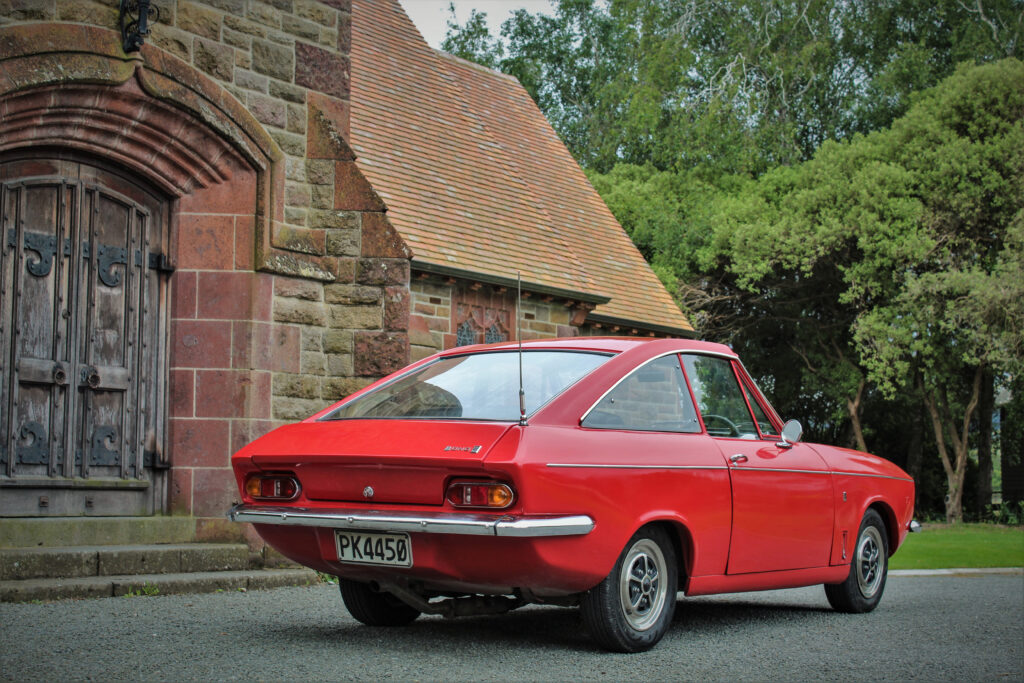
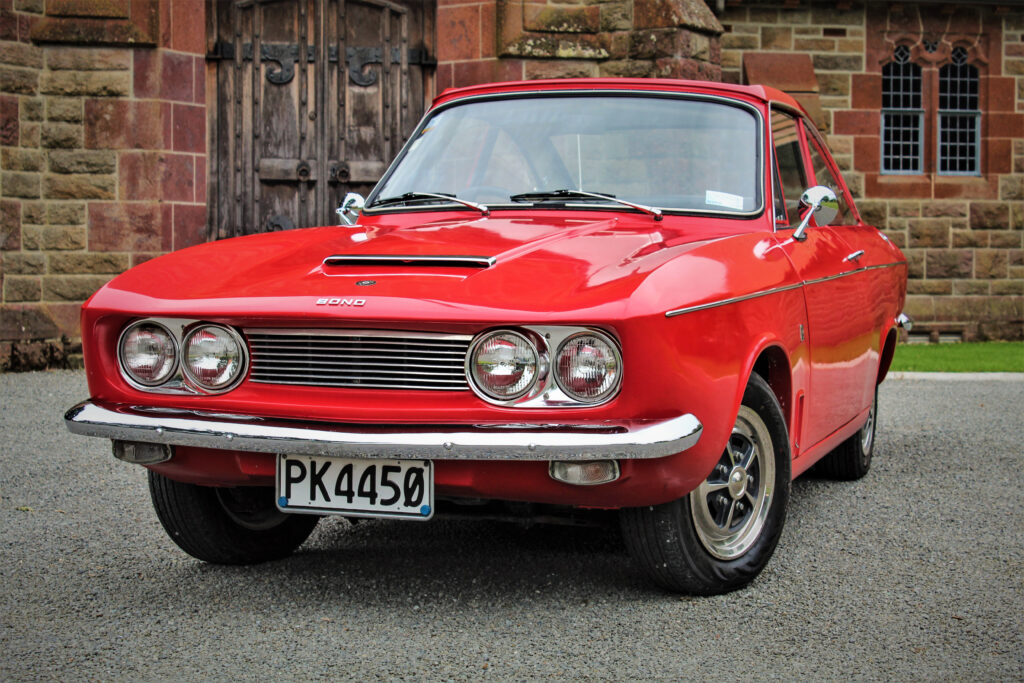
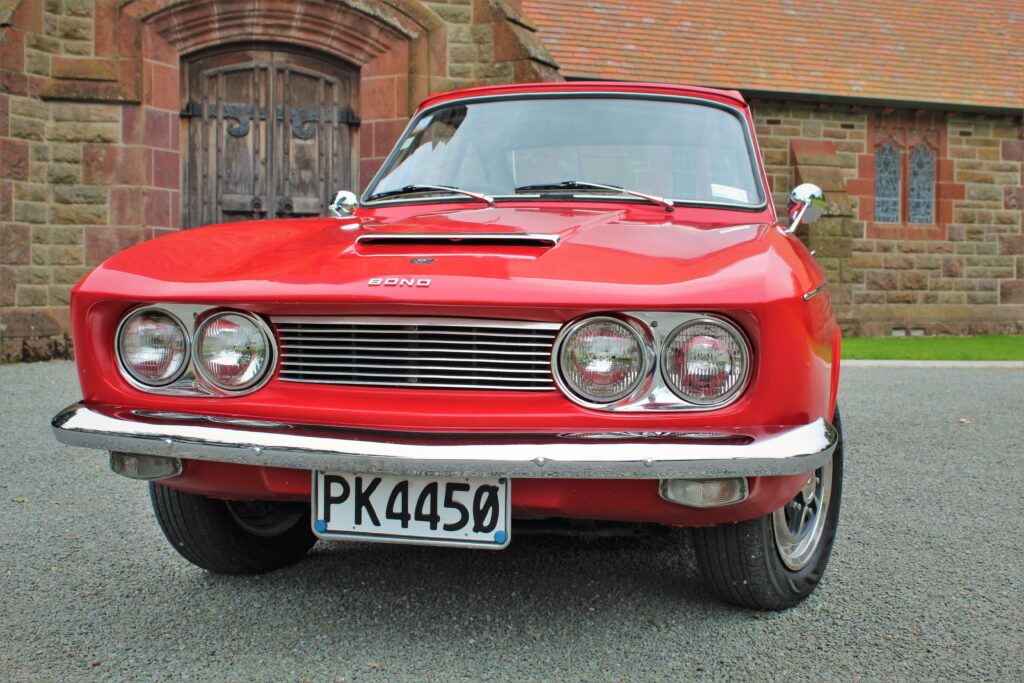
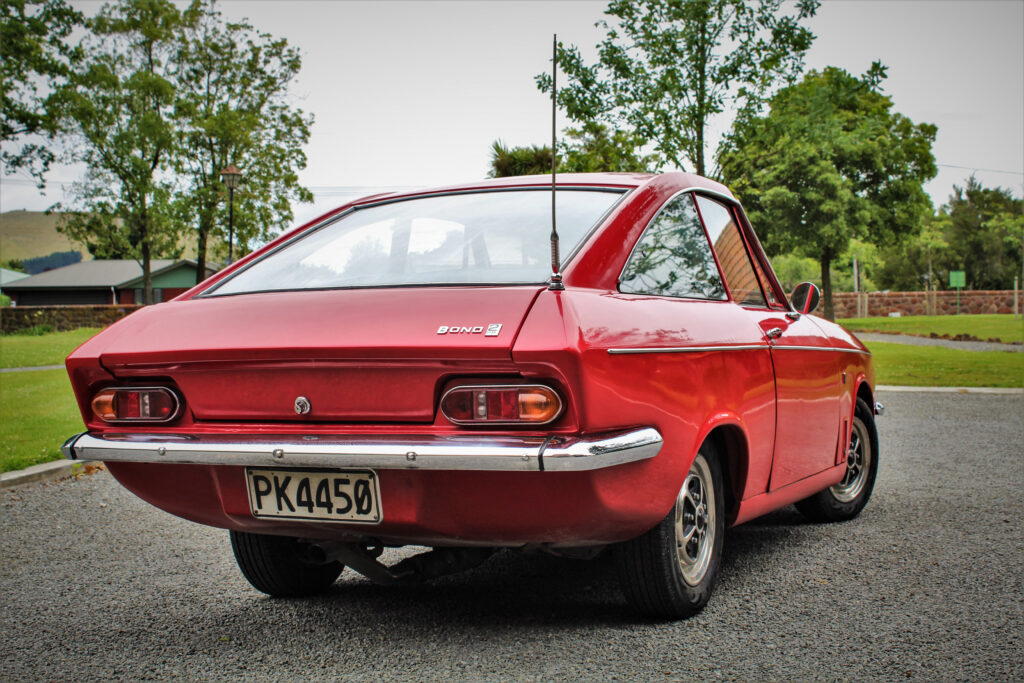
When you clap eyes on the Equipe GT Mk II for the first time, you can pick out design elements that seem to have been borrowed from other cars. The enclosed dual headlight cluster is very Reliant, and the rear has the faintest whiff of Lotus Elan about it. If you want an Aston Martin for tooling about the countryside on the weekend but your budget is more Triumph Herald, if you half-close your eyes — OK, three-quarter close your eyes — this could fit the bill.
Its coupé proportions, while textbook ’60s, look rather tall and a bit big for its tucked-under Triumph wheels and underpinnings — like a school boy who’s been told he’ll grow into his new school uniform (in a year or two). Some will love the styling dearly; others may be scornful.
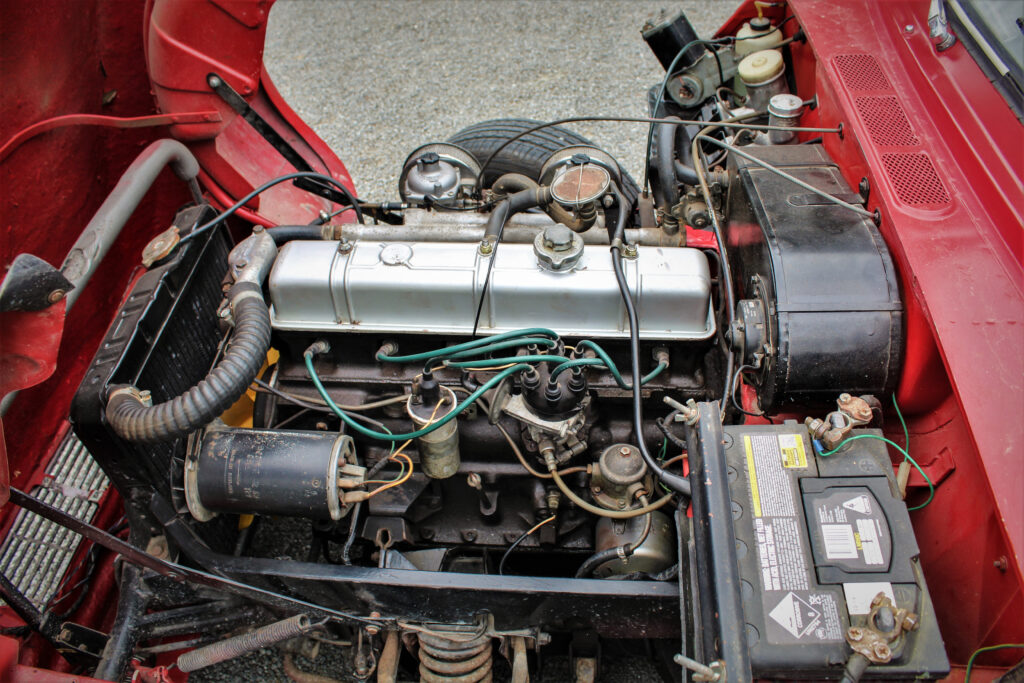
Opening the clamshell front to access the engine bay requires loosening two bonnet catches mounted on either side of the car, Herald style. Once undone, it’s a doddle to lift the entire front end up due to its light construction, revealing the mighty two-litre Triumph six-cylinder engine. Maintenance would be a doddle on the Bond — especially as it is essentially a Triumph Vitesse in a tracksuit; the supply of replacement parts and other mechanical bits and bobs is plentiful.
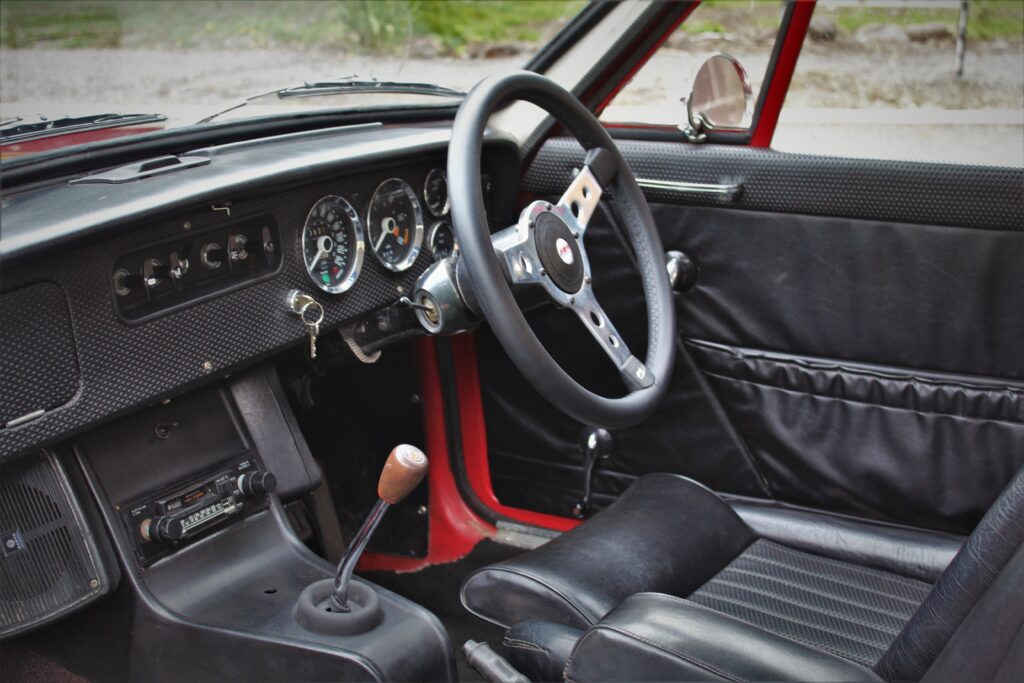
Inside, it’s a full-on throwback to all sports GTs of the ’60s, just on a much smaller scale. There are plenty of vinyl and black hard-plastic trim pieces. The instrument cluster stares at you like a pair of binoculars and, aside from a stereo tape deck, that is pretty much it as far as fripperies go. The three-spoke sports wheel comes out at you from a slight angle, but the bucket seats possess plenty of hip-hugging comfort.
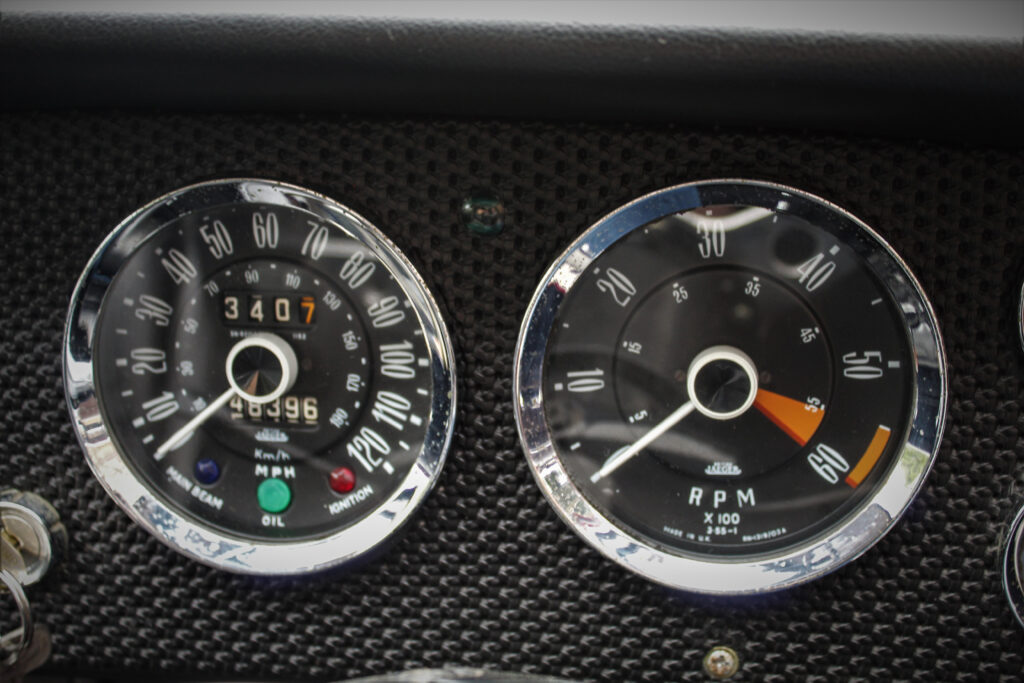
Crank it over, and you get a faint burble as those six Triumph cylinders wake up in unison. Most Triumph sixes of the era seem to have their six-pot soundtrack amplified, but this one is much more subdued, strangely. Blip the throttle and that classic white rev needle against the black rev counter fluctuates between 1500 and 3000rpm. It’s a bit like those boiler pressure gauges you get in pre-war steam locomotives.
’60s six-pot
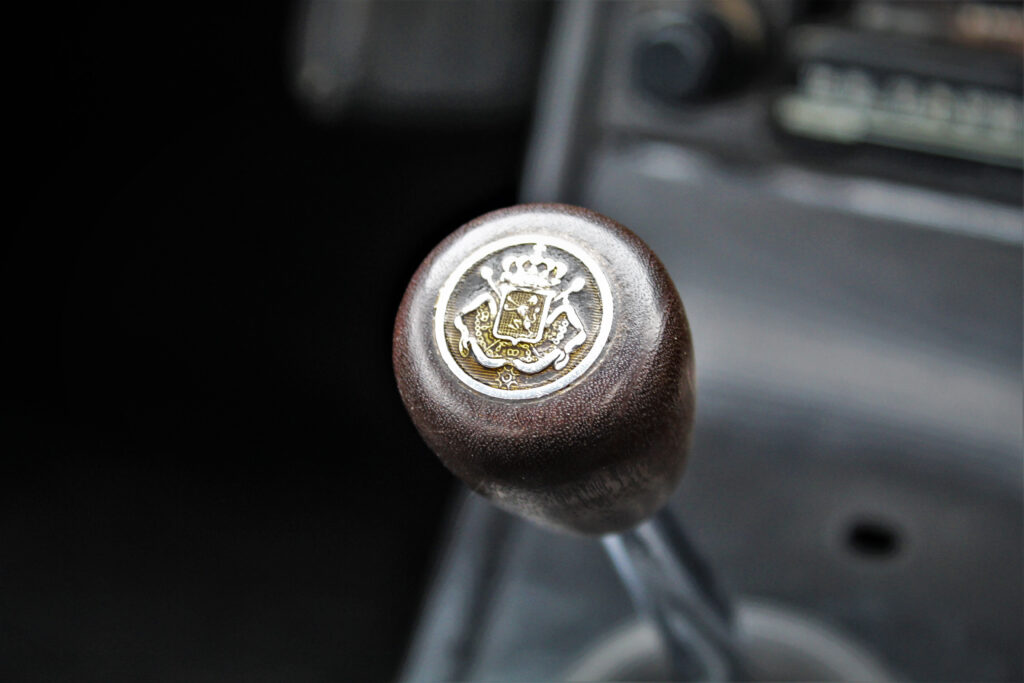
With everything ticking over nicely, it’s time to move off. The four-speed manual gearbox does require some getting used to. First and second are pretty straightforward, but third and fourth are positioned to the far right so you almost have to bring the gear lever towards you to engage third. However, once you get into a rhythm, this eccentric way of swapping cogs becomes second nature.
The two-litre Triumph six-pot is a strong puller. You certainly don’t get where you need to be rapidly, but it’s lively. Of course, this is largely down to the GT weighing less than a tonne. The Mk II Equipe GT also holds the distinction of being the only Equipe to see the far side of the ton. When you further apply pressure through your right shoe, it’s easy to see how this claim could be justified. It’s one very lively wee coupé.
It also manages to be a soft one. The bumps aren’t really a concern; the Equipe GT just soaks them up — well, the small ones, at least. However, the GT is not an out-and-out sports car when the tarmac starts to get twisty. Things get a bit wallowy if you try to take liberties, but there is still enough decent handling prowess to keep you out of that foreboding hedge.
The Equipe’s happy place is cruising around suburbia. It is here that you can stick it in third and just soak up those glances. Oh, and yes, you will be getting looked at — mostly by people who haven’t the faintest idea what it is you are driving.
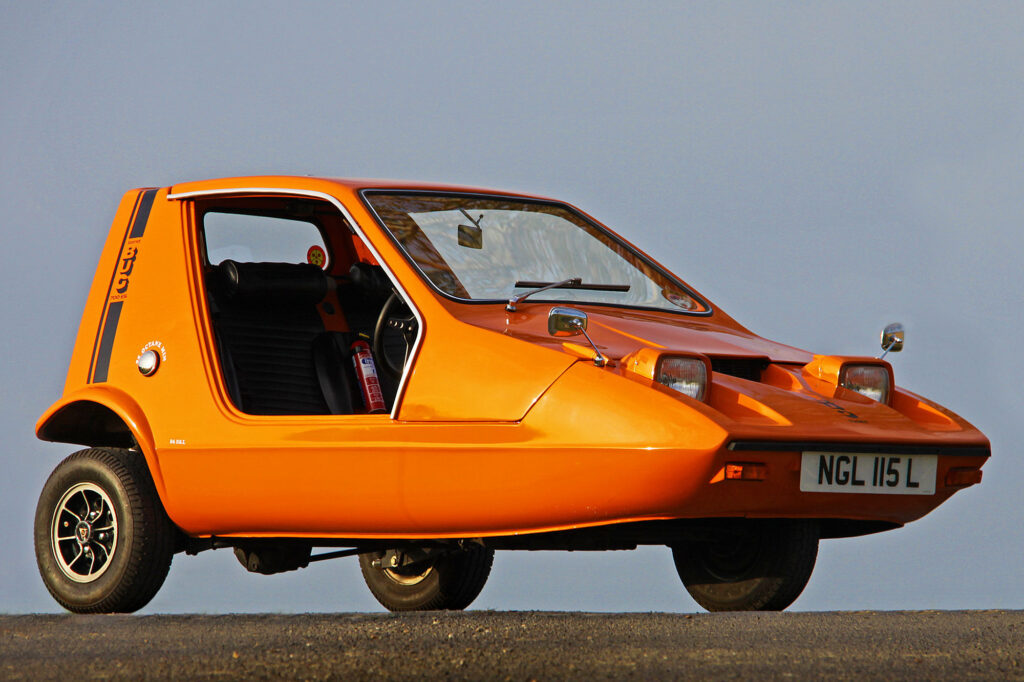
Despite Bond Cars Limited going to the wall in 1970, that wasn’t the end of the Bond name. Reliant still found time to produce another Bond called the Bug; it was a triangular, wedge-shaped, two-seater oddity built by Reliant at its Tamworth plant from 1970 to 1974 — but that’s another story entirely.
The Bond Equipe GT remains an oddity built by an eccentric company that wanted to showcase its own formula of what a sporting coupé should be. It’s a classic example of England’s ‘enthusiastic amateur’ output, where being the biggest, fastest, or brashest isn’t even on the horizon but they finish up with bucketloads of character and charm.
Those looking for treasure in the eddies of the golden era of motoring will find the Equipe GT ticks plenty of boxes.
As Kristie says, it is different. True, but an Equipe GT is also incredibly charming and a grand companion for those who want a rare car with a personality all its own.
1969 Bond Equipe GT Two-Litre Mk II
Engine – Triumph
Capacity – 1998cc six-cylinder
Bore/stroke – 74.7/76mm
Valves – Two valves per cylinder / OHV
C/R – 9.25:1
Max. power – 77.5kW @ 4000rpm
Max. torque – 158Nm @ 3000rpm
Fuel system – Twin carburettors
Transmission – Four-speed manual
Brakes F/R – Disc/drum
Dimensions:
Length – 4115mm
Width – 1560mm
Wheelbase – 2324mm
Kerb weight – 930kg
Performance:
Max. speed – 166kph
0–100kph – 12.5 seconds
Standing quarter-mile – 17.5 seconds