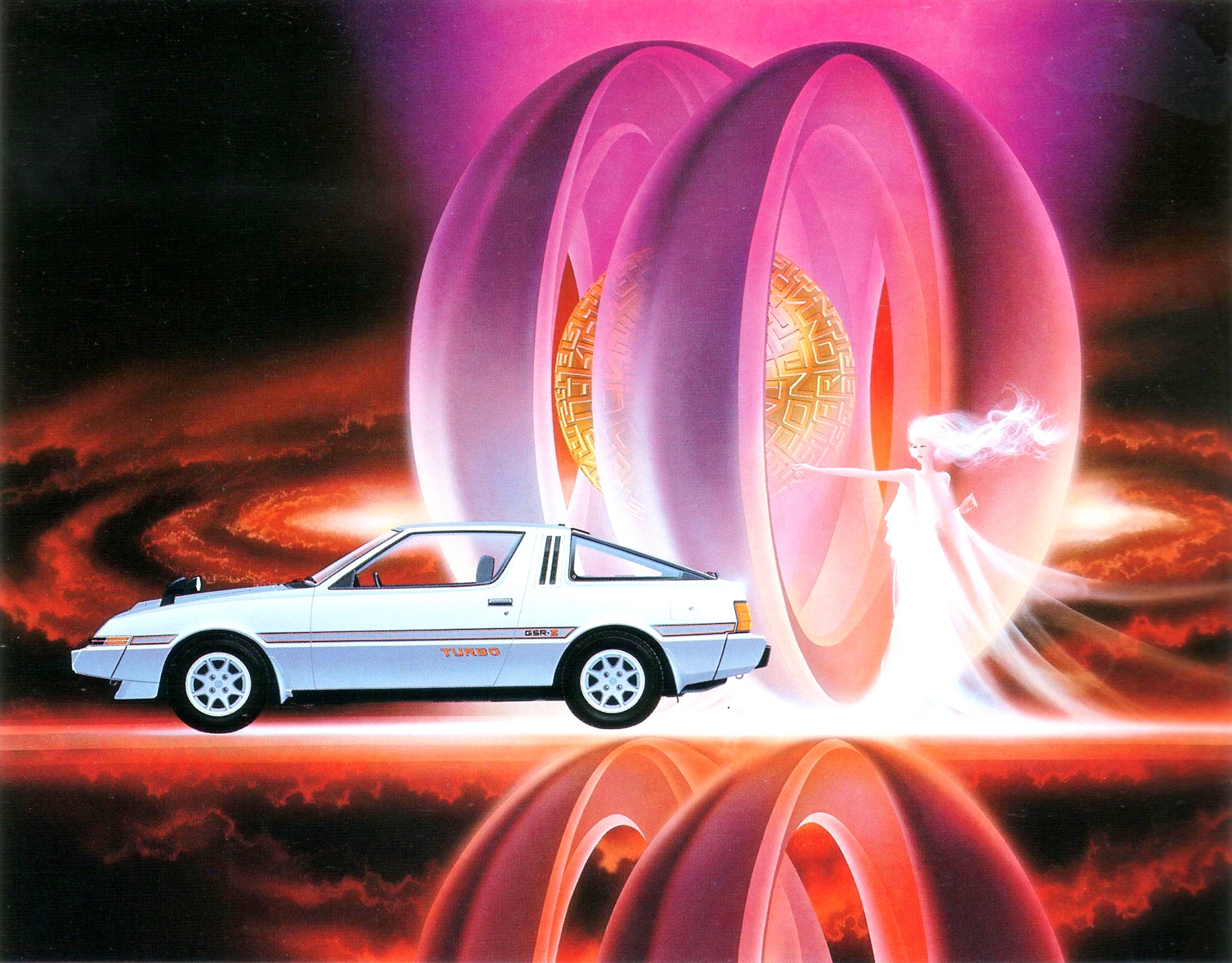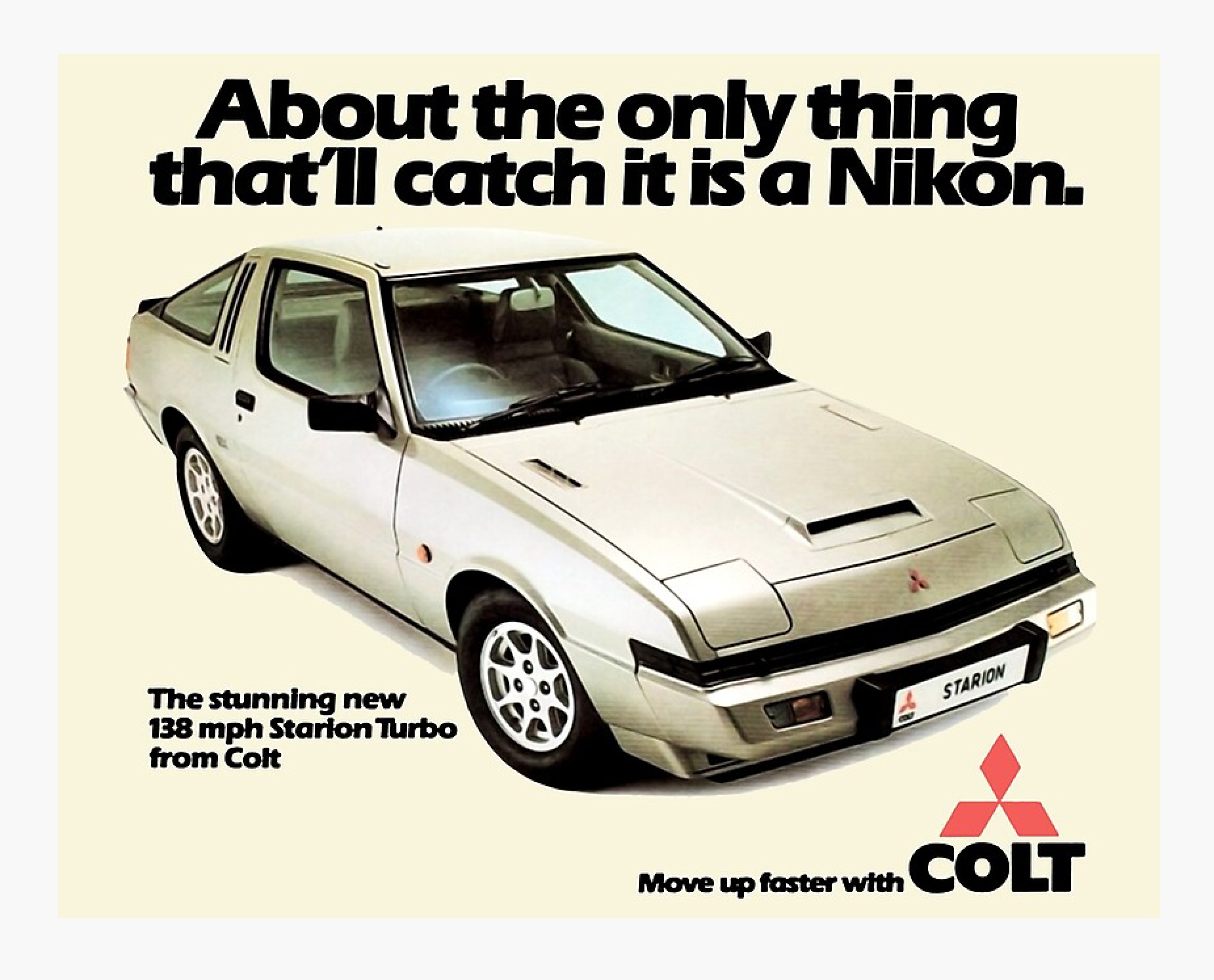
Early in 1981 Mitsubishi headquarters in Japan warned its subsidiaries around the world to expect something special in the sports car line to start turning up in February ahead of its launch in March. Code-named ‘YDC’ and with no forward information except for some early drawings of the car, anticipation was high
By Quinton Taylor
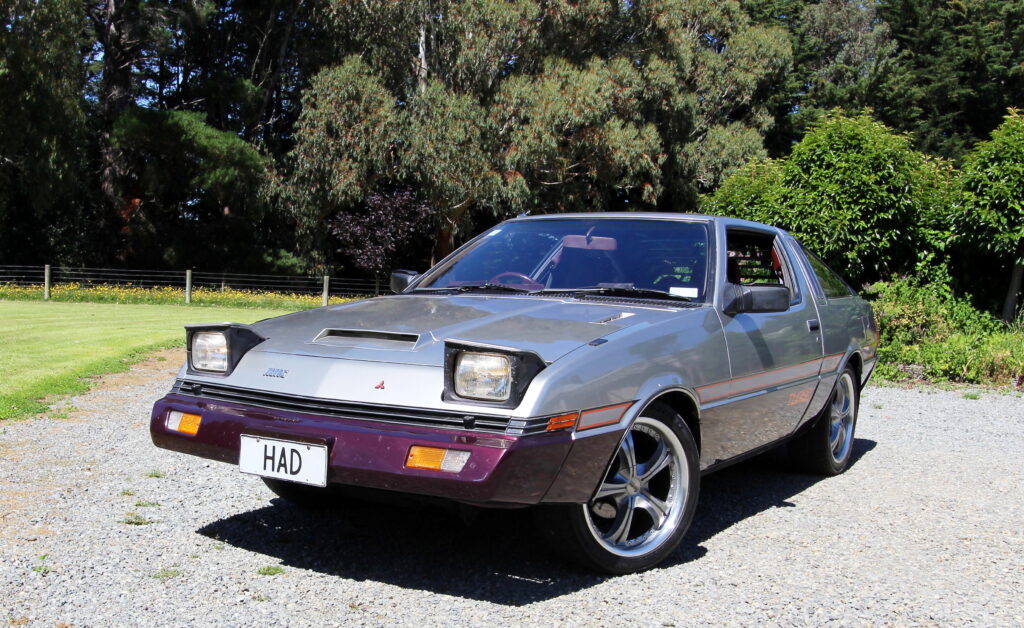
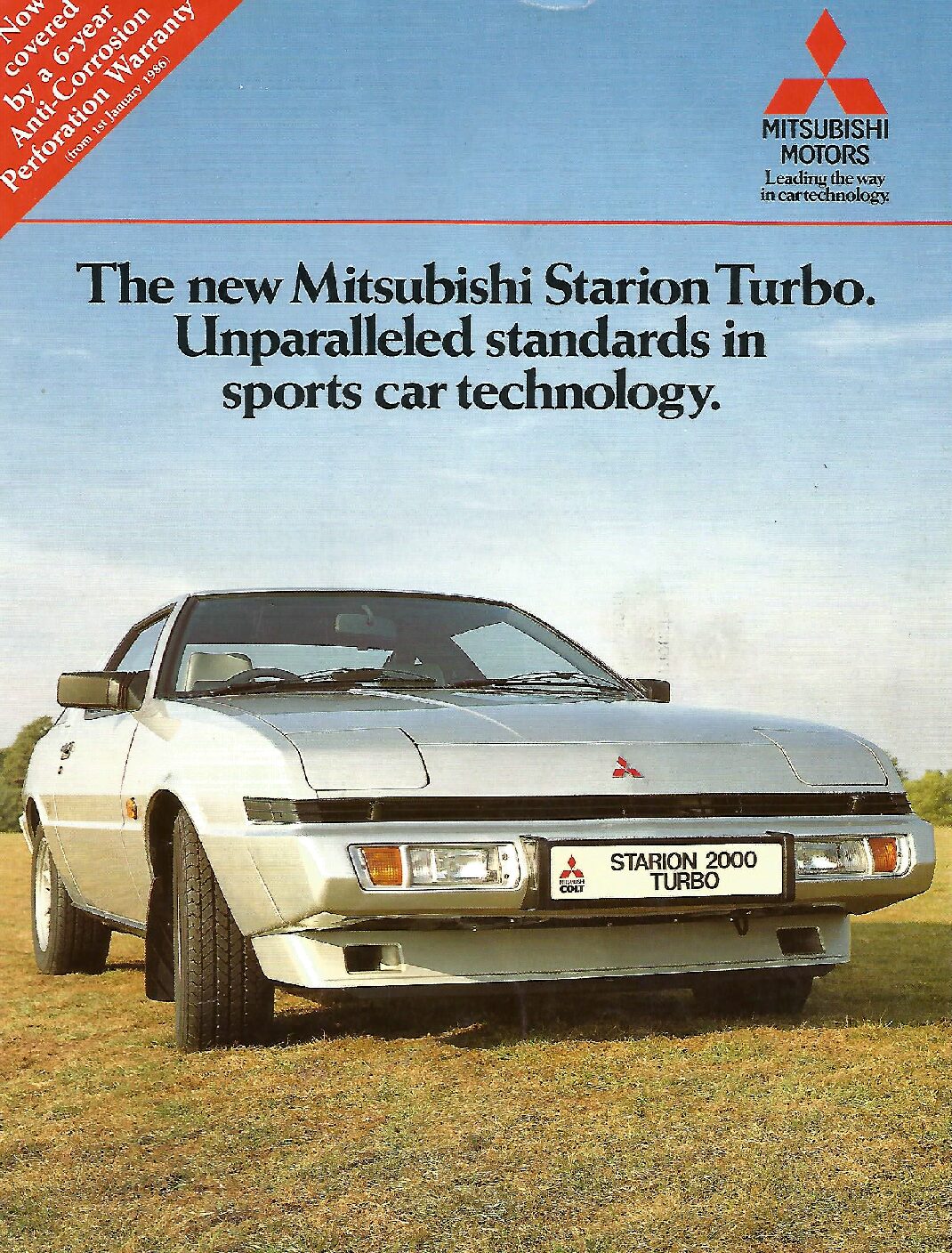
Mitsubishi’s enthusiasm for international motorsport resulted in the high-performing Starion, a sensational little gem of a sports car developed in great secrecy and launched at the 1981 Geneva show.
It was aimed squarely at top performers in the 2.0-2.5 litre category such as the Mazda RX7, Datsun 280ZX, Porsche 924, Alfa Romeo Alfetta GTV and BMW 3-series models, especially for the American market. The Starion, with a top speed of 225kph for the production models and punchy acceleration to match, all at a reasonable price, came as quite a shock to enthusiasts. Later models offered even greater performance. The Starion became the fastest mass-produced sports car available in Japan at the time.
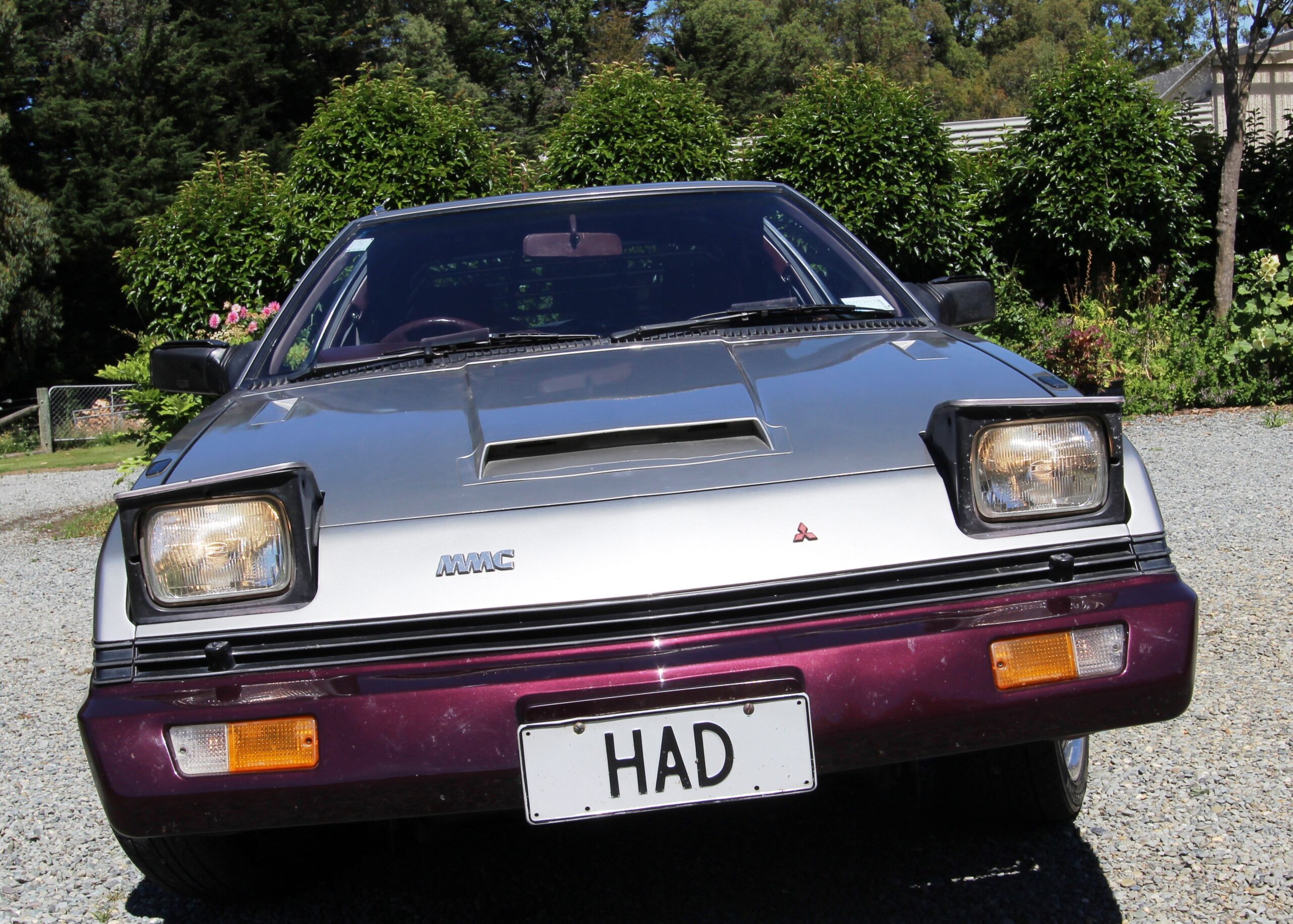
At just over AUD$22,000 when launched in Australia in April 1981, it came with leather or velour seats and vinyl-trimmed panels. The interior was well equipped, and the two front seats offered a surprising amount of comfort, grip and adjustment for the day. The back seat was a tight and uncomfortable squeeze not suited to long-distance travel, in the best sports car tradition. Its styling made it plain which cars it wanted to win sales from, with echoes of Mazda’s RX7 and a touch of Porsche 924. Where the Starion also excelled was in its wind-cheating wedge shape, resulting in excellent aerodynamics aided by pop-up headlights, crediting it with a class-leading Cd of 0.32.
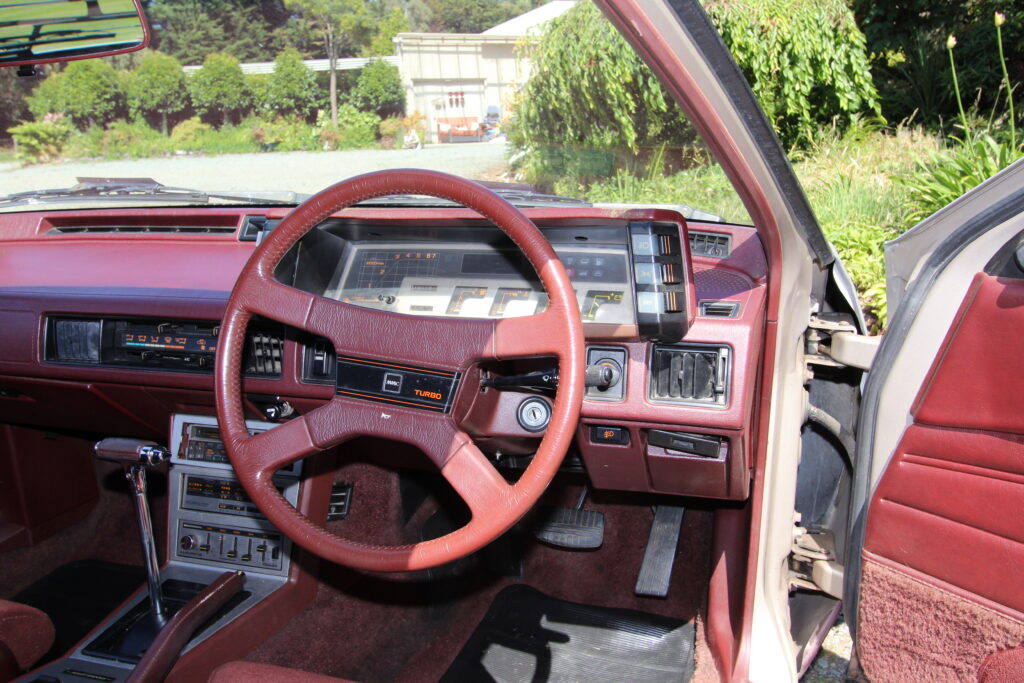
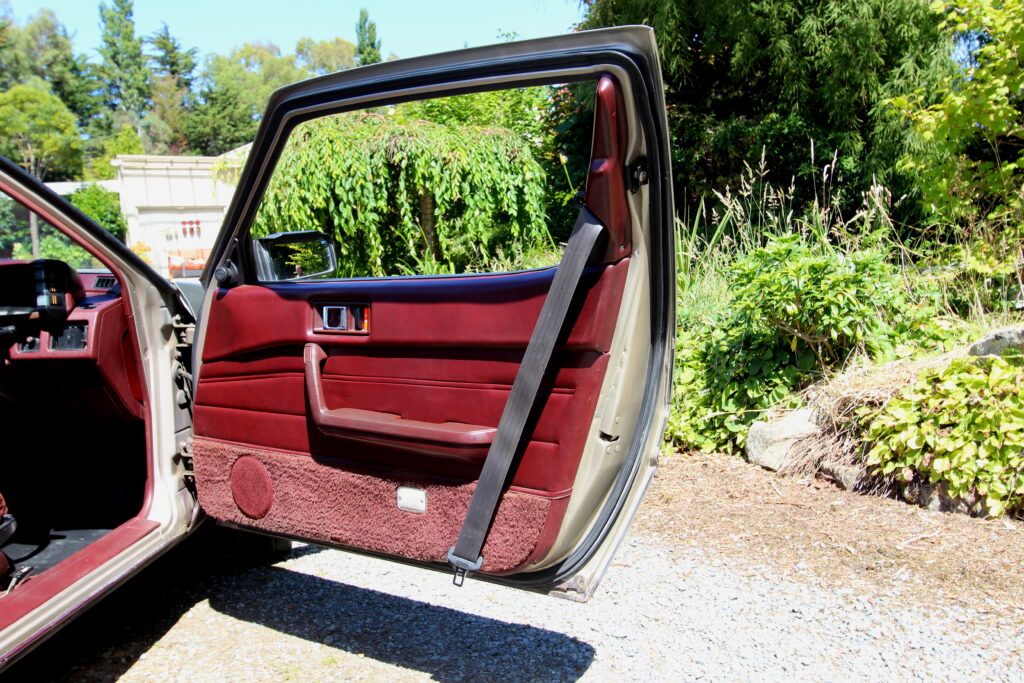
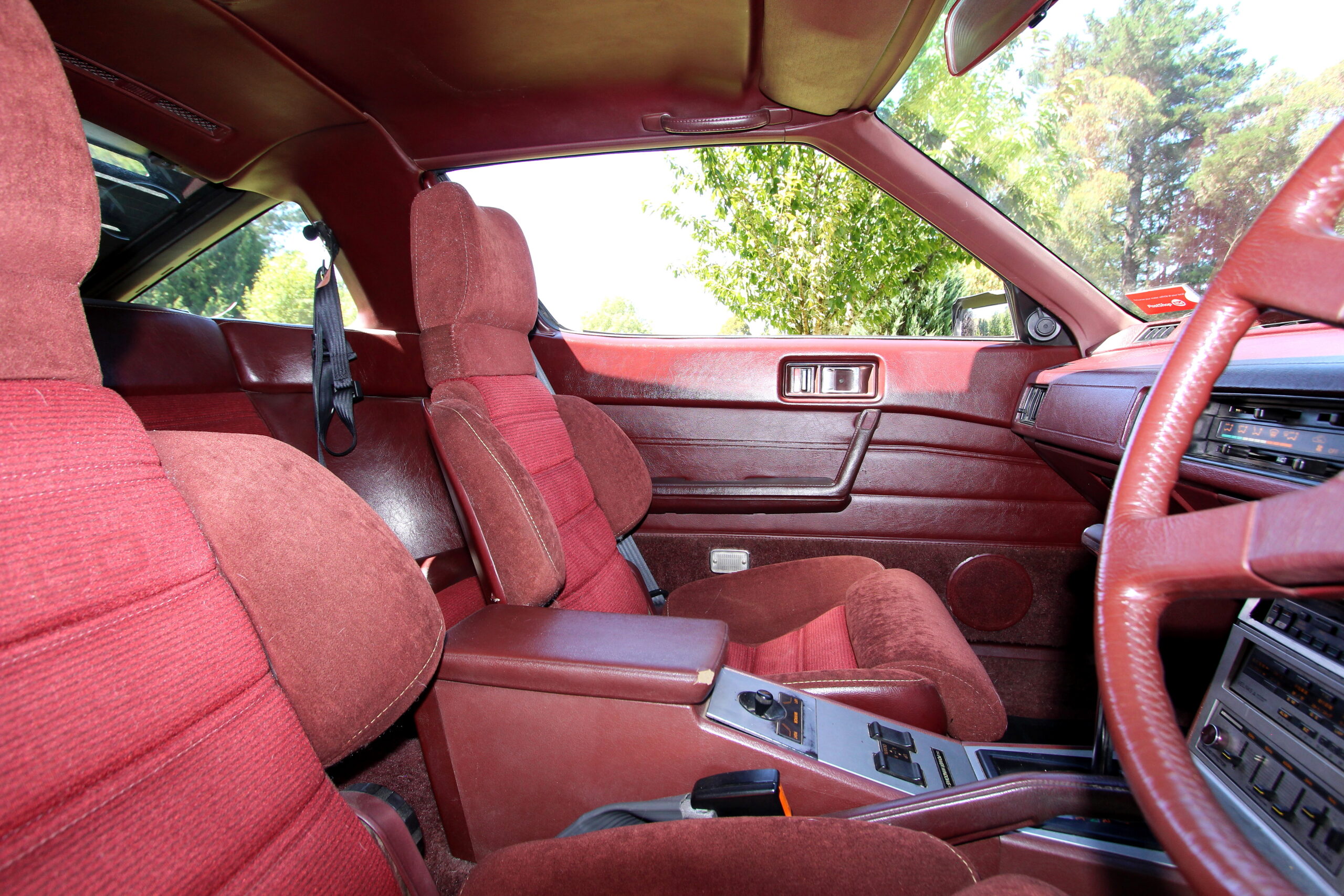
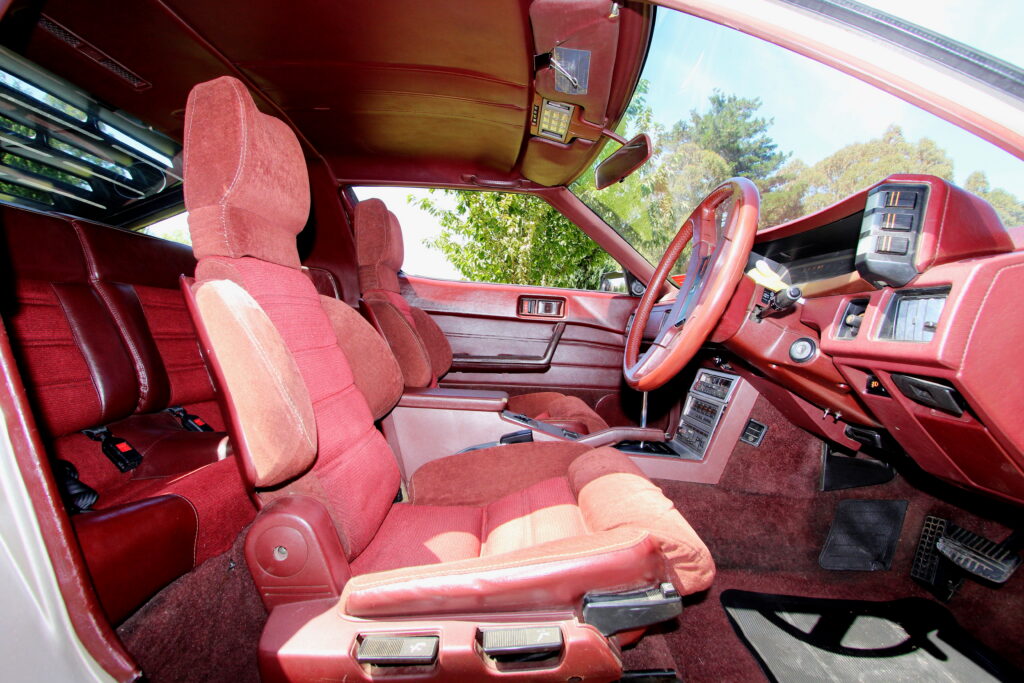
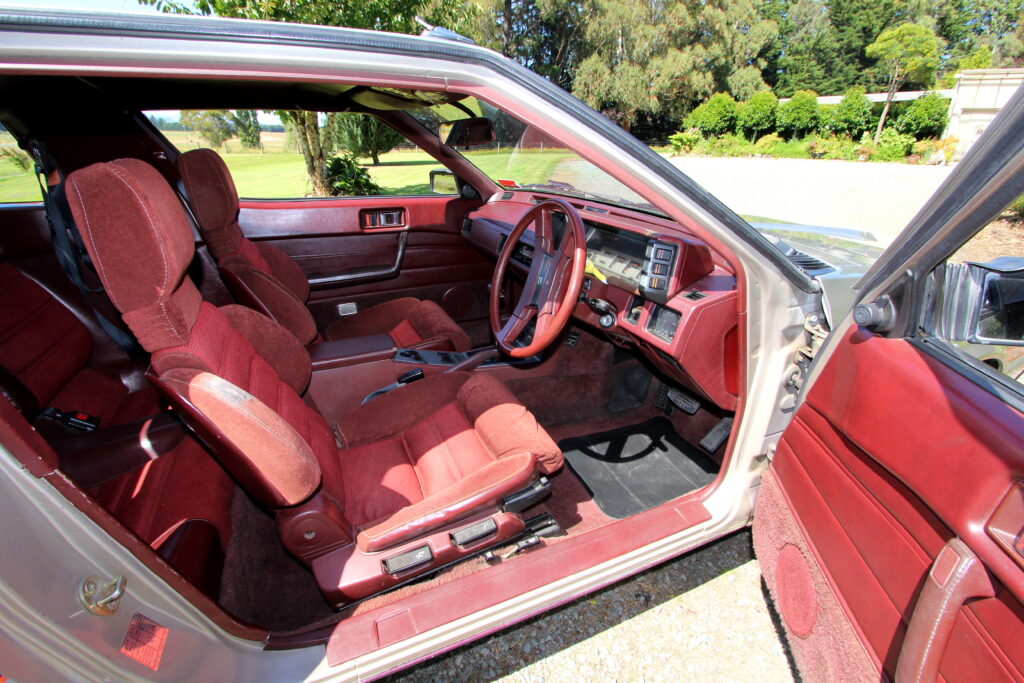
Both doors are quite long, offering easy access and double-hinged so the action swings them out from the body and forward of the mudguard trailing edge, making access easy, especially to the rear seats. The Starion came with a full set of instruments including a turbo boost gauge and next to the rev counter was a speedometer rolling round to a bold 240kph. Not bad. All other controls, especially an array of push buttons for main functions, are very much as expected while the overall impression is of a roomy and comfortable cabin. The rear hatch added practical access to a reasonable luggage capacity.
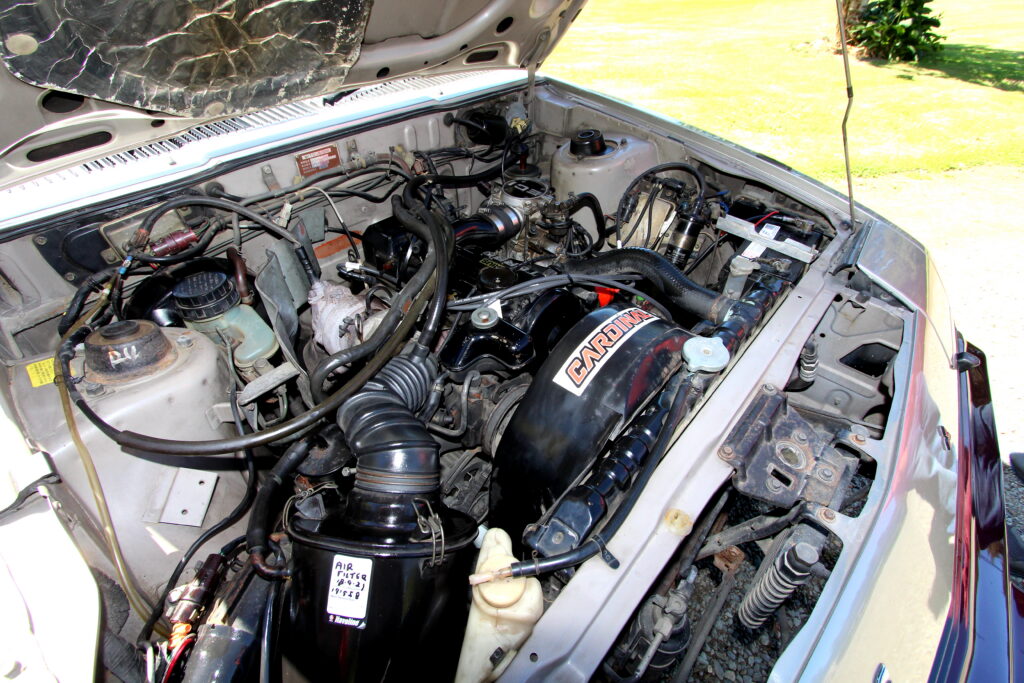
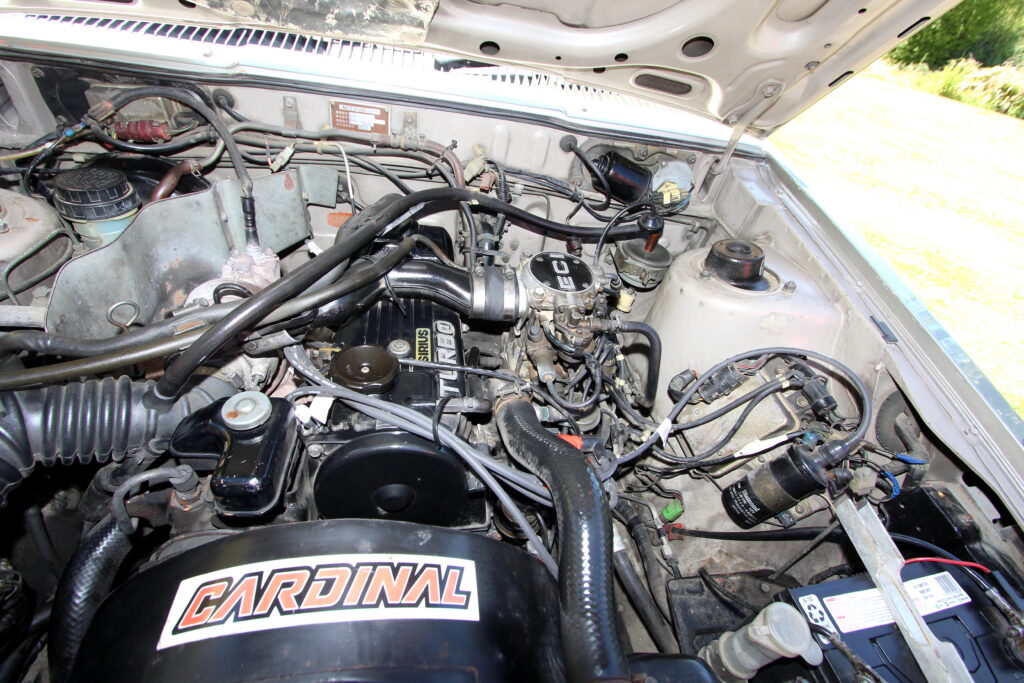
Under the bonnet is Mitsubishi’s 4G63-T (Sirius) 2.0-litre engine in single overhead camshaft form with eight valves (later to receive twin overhead camshaft cylinder heads in Mitsubishi’s sporting models such as the Lancer Evolution), which is fitted with single-point electronic fuel injection and a turbocharger. While many contemporary cars were changing to front-wheel drive, the Starion remained with rear-wheel drive. Despite a relatively modest overall production total, the range of Starion models offered in Japan was quite impressive. The top-of-the-range models added even more urge and power, ranging between 112-147kW depending on the model. Handling was apparently vice-free, according to a range of test reports, with much of the suspension geometry setup taken from the Lancer Turbo rally cars.
Motorsport success
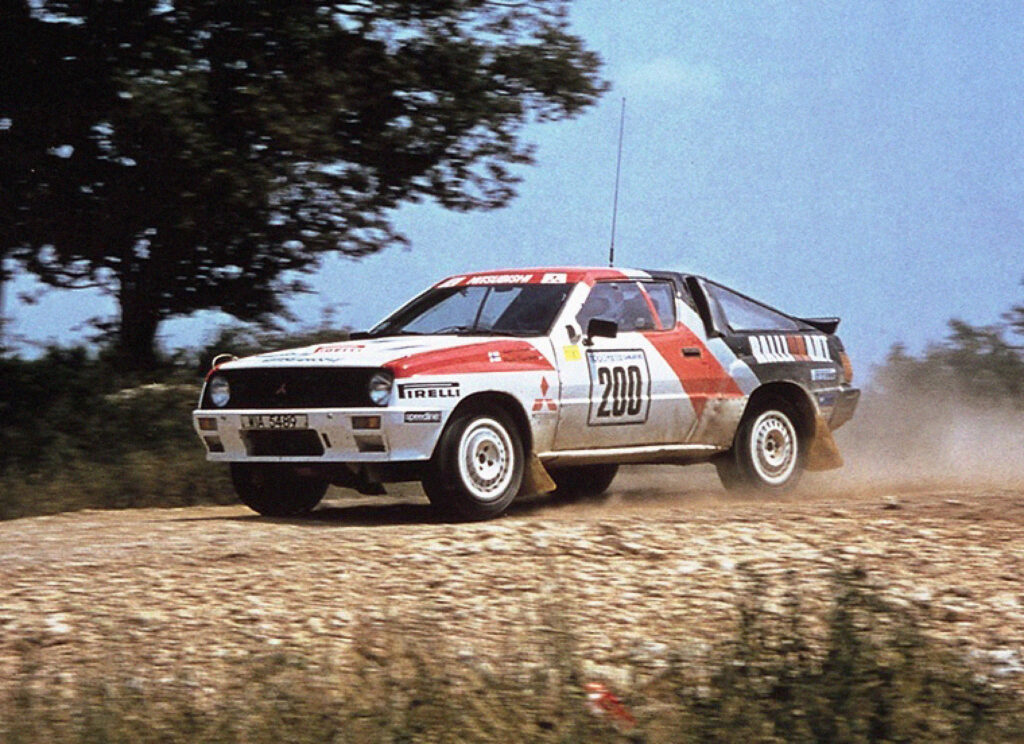
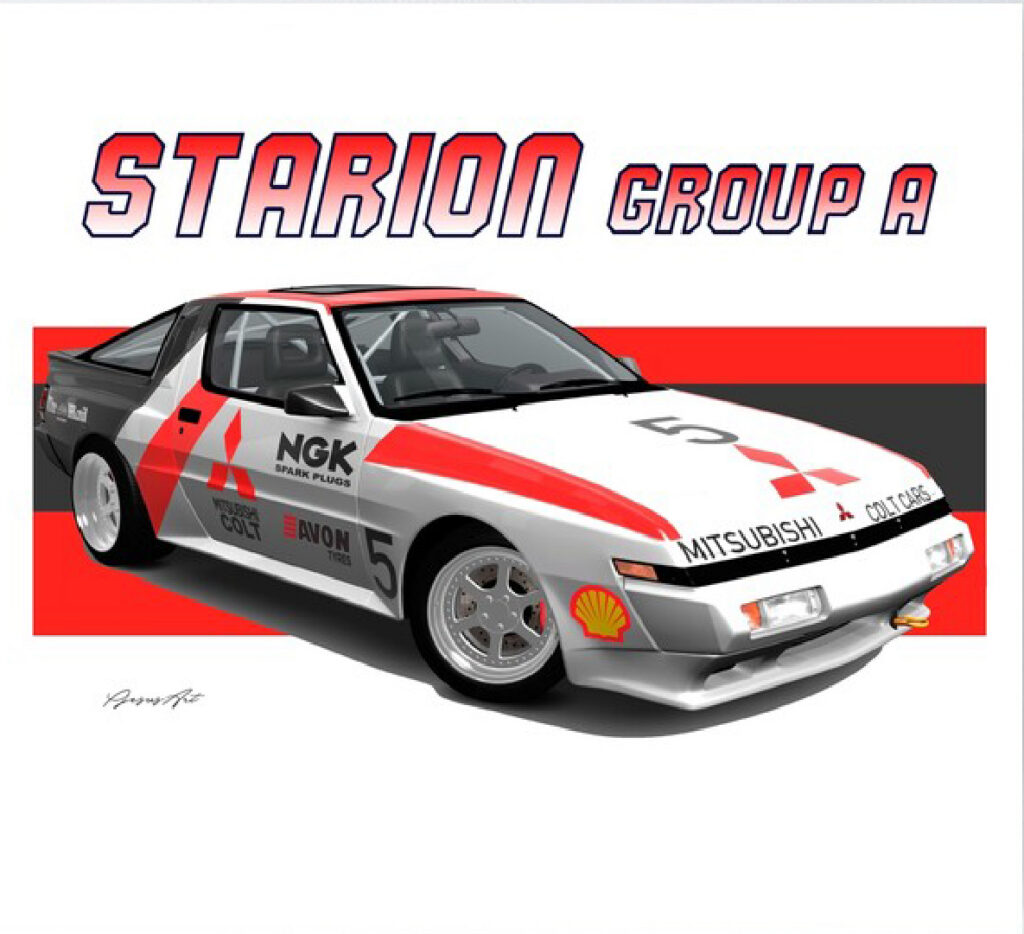
It didn’t reach the heights in world rally circles of its successor, the Lancer Evolution, but the Starion did acquit itself well in motorsport in Group-A and N classes in Europe and the US. It took first place in Touring Car Championships in Holland, Britain and Australia and a creditable fifth overall in the 1987 James Hardie 1000 at Bathurst driven by Gary Scott, Akihiko Nakaya and John French. It survived well in endurance races where its reliability and tough construction proved a winner, and a few still compete today. Car constructors Ralliart put together a formidable four-wheel drive version using a 261kW turbo-intercooled and fuel-injected 2.0-litre engine for Andrew Cowan and Alan Wilkinson for 1983, scoring a first in the experimental class in the Paris-Dakar Rally. A string of good performances ended in 1988 with a British Open Rally Championship title and first place in the hands of Pentti Airikkala and Ronan McNamee.
In 1989, its final year of production, the writing was on the wall for smaller-capacity two-seat sports cars, and just 1961 Starions were built. Available in standard or wide-body forms for the US, the last of the line from 1987 to 1989 used the 2.6-litre ‘Astron’ 4G54B 123kW four-cylinder engine. A special wide-body run of about 73 units was offered as a limited edition GSR-VR. The Starion received a number of trim and mechanical upgrades over its lifespan, including multi-point fuel injection and a sports-handling package. It helped spark the growth of high-performance sports cars of the 1990s, although in hot hatch or saloon form. Its replacement couldn’t have been more different in the form of Mitsubishi’s attempt at beating Ferrari — the 3-litre Mitsubishi GTO, also known as the 3000GT.
The Starion changed its character once the rev counter hit 3500rpm – coincidentally, the point at which its prodigious torque was maximised. Like many early turbo systems, the lag in boost was something to be wary of as it usually resulted in tyre-smoking oversteer. Many commentators agree it was well built and it showed in long-distance event results with acknowledged reliability.
Rumour has it the Starion name came about by accident because of the Japanese difficulty with the pronunciation of English names, and it was actually meant to be ‘Stallion’ in line with the car’s advertising emblem and the other horsey name in the stable, the Mitsubishi Colt. That might just be a joke, but the car itself certainly had to be taken seriously when given its head. Few now survive, and they are sought after, with good examples fetching in excess of US$20,000.
A couple of local stars
Starions were exported fully assembled to New Zealand, while around the same time Mitsubishi also launched local assembly at Todd Motors of the Cordia (three-door) and Tredia (four-door) models, offering a choice of 1.6 and 1.8 litre engine versions along with a 1600cc turbo-charged version. Transmission options included a dual-range (Super Shift) gearbox, while later on a standardised five-speed gearbox was offered alongside the Super Shift models, or a three-speed automatic was available on normally aspirated engines. The two smaller cars proved to be popular performance sellers locally, slotting in alongside the Galant and Lancer models.
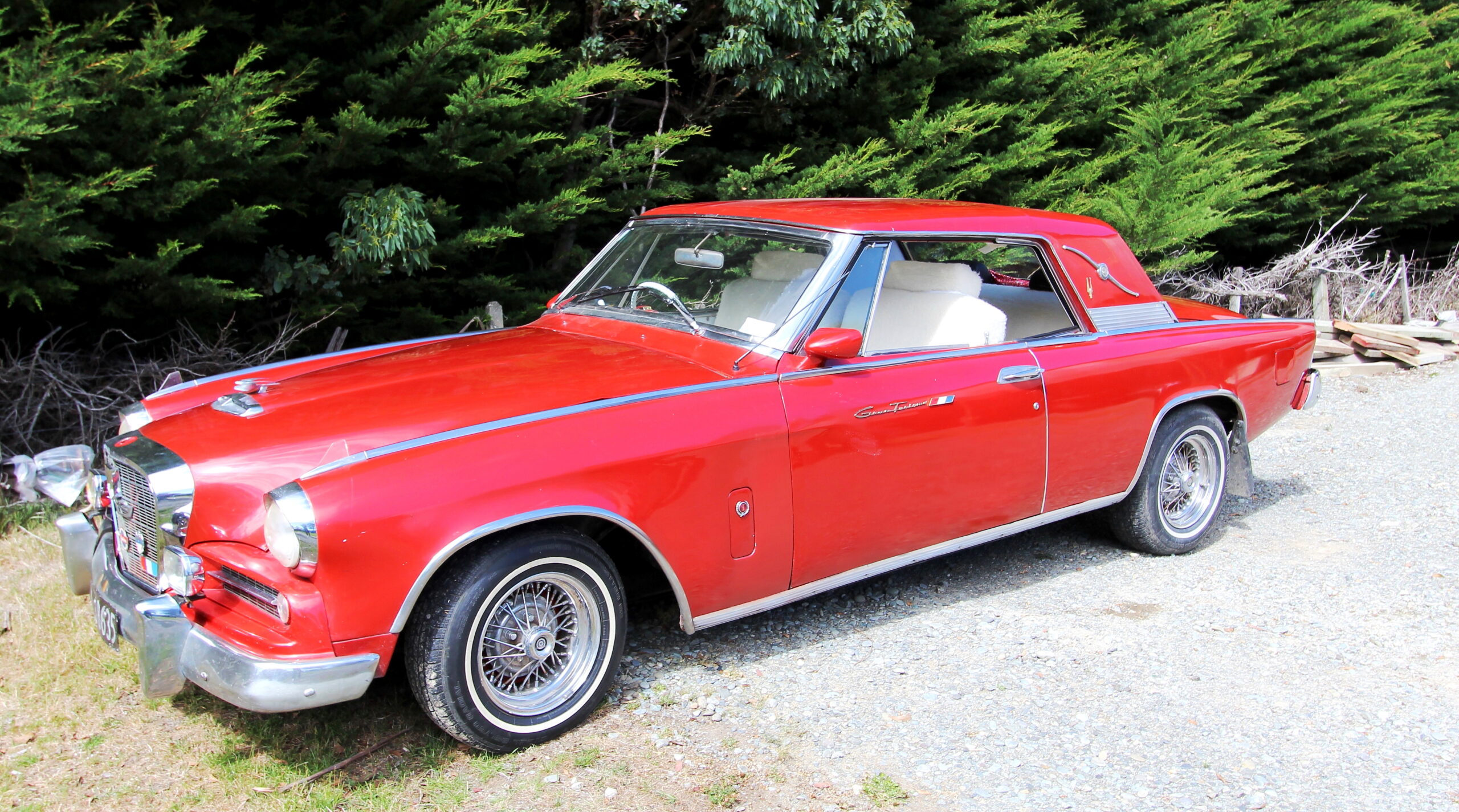
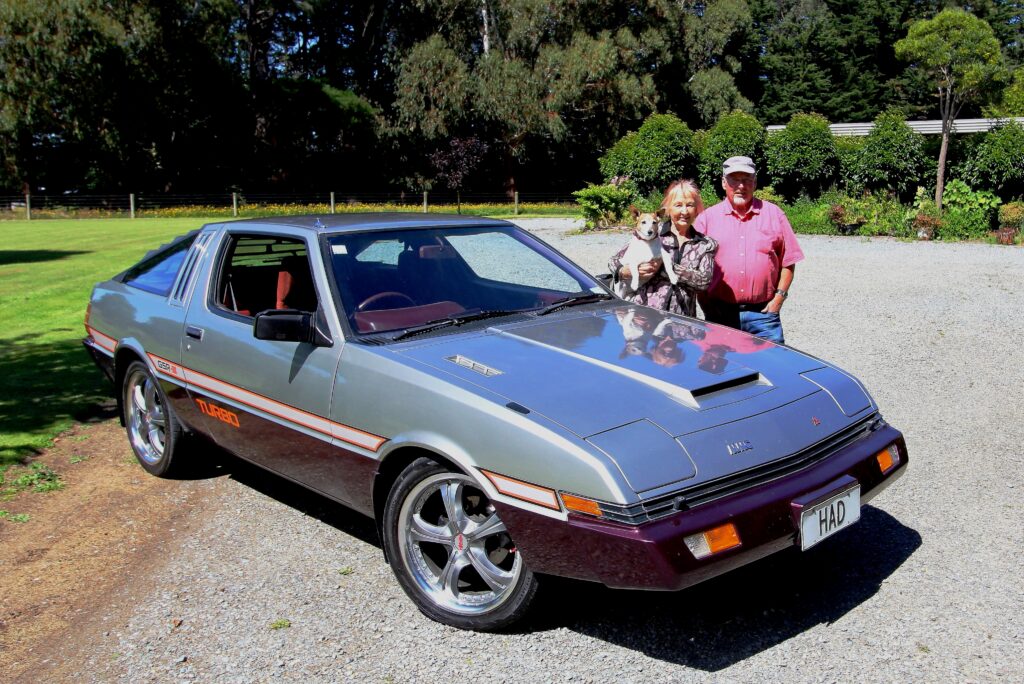
Heather and Ewen Dunnage are classic car enthusiasts in every sense of the word. Their cars include later model Jaguars, P76 Leyland sedans, and Rover SD1s, including a dark blue Rover SE in amazing condition that Ewen bought, minus transmission, for just $100. He now has this looking and running like new alongside a very original SD1 with about 300K on the odometer, which starts and runs perfectly. A standout in their collection is the bright red 1961 Studebaker Gran Turismo Hawk fitted with a Chevrolet 350cu in V8 keeping the others company. An exceptional Ford Zephyr Mark IV and a Morris Minor pickup complete the list. Northern Southland’s country climate seems to agree with them as all their cars are in going order along with a couple of modern daily drivers.
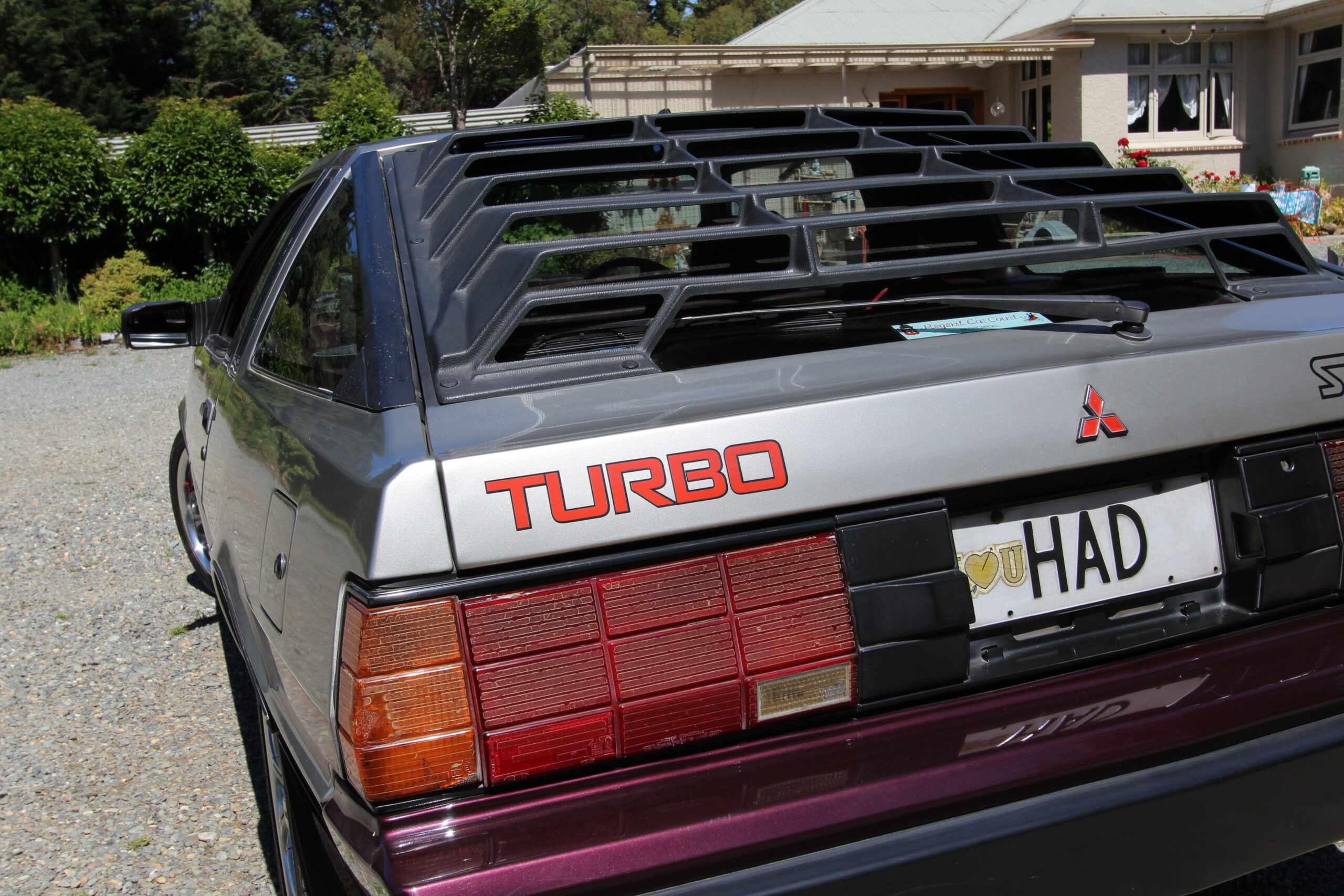
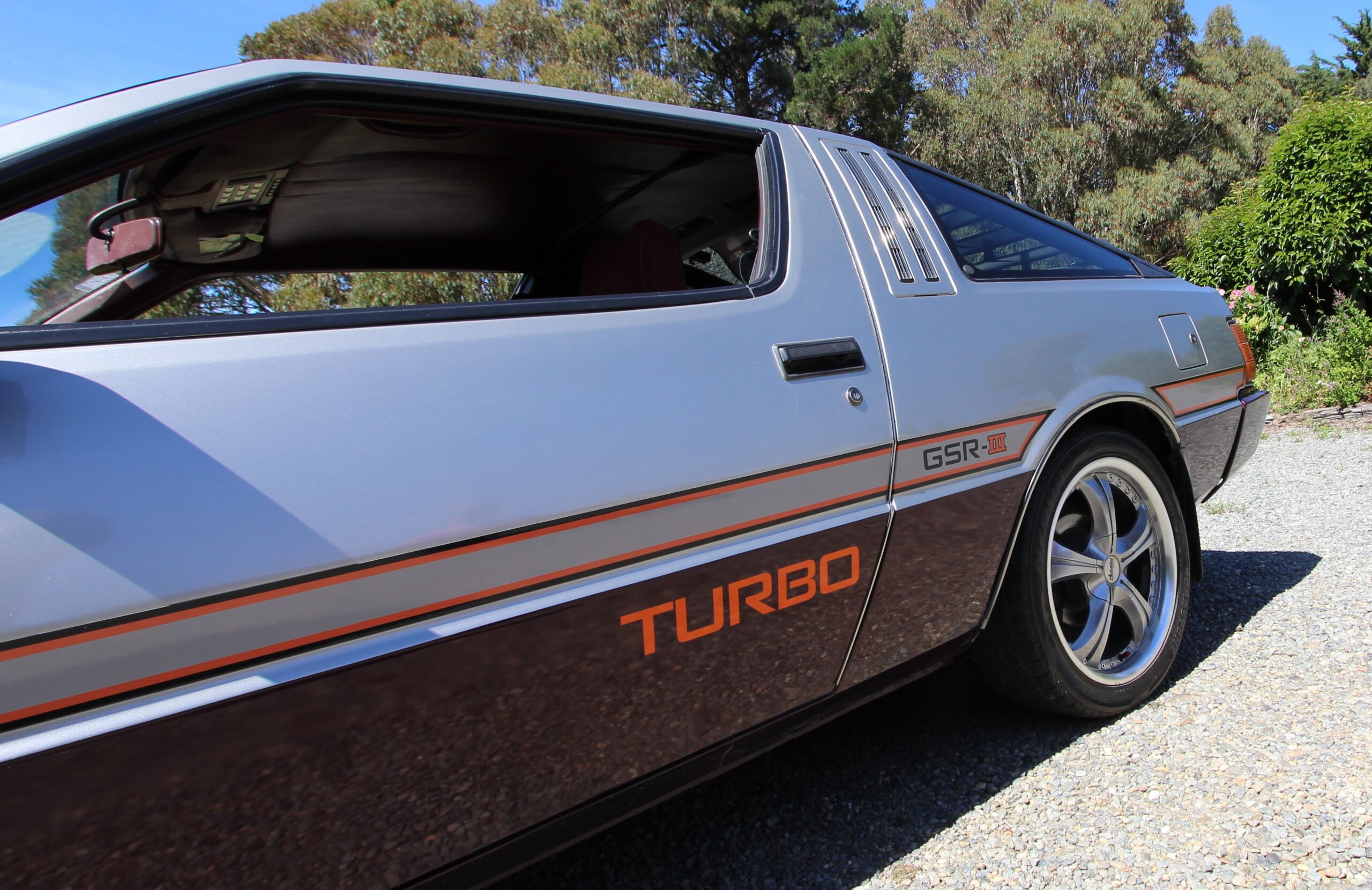
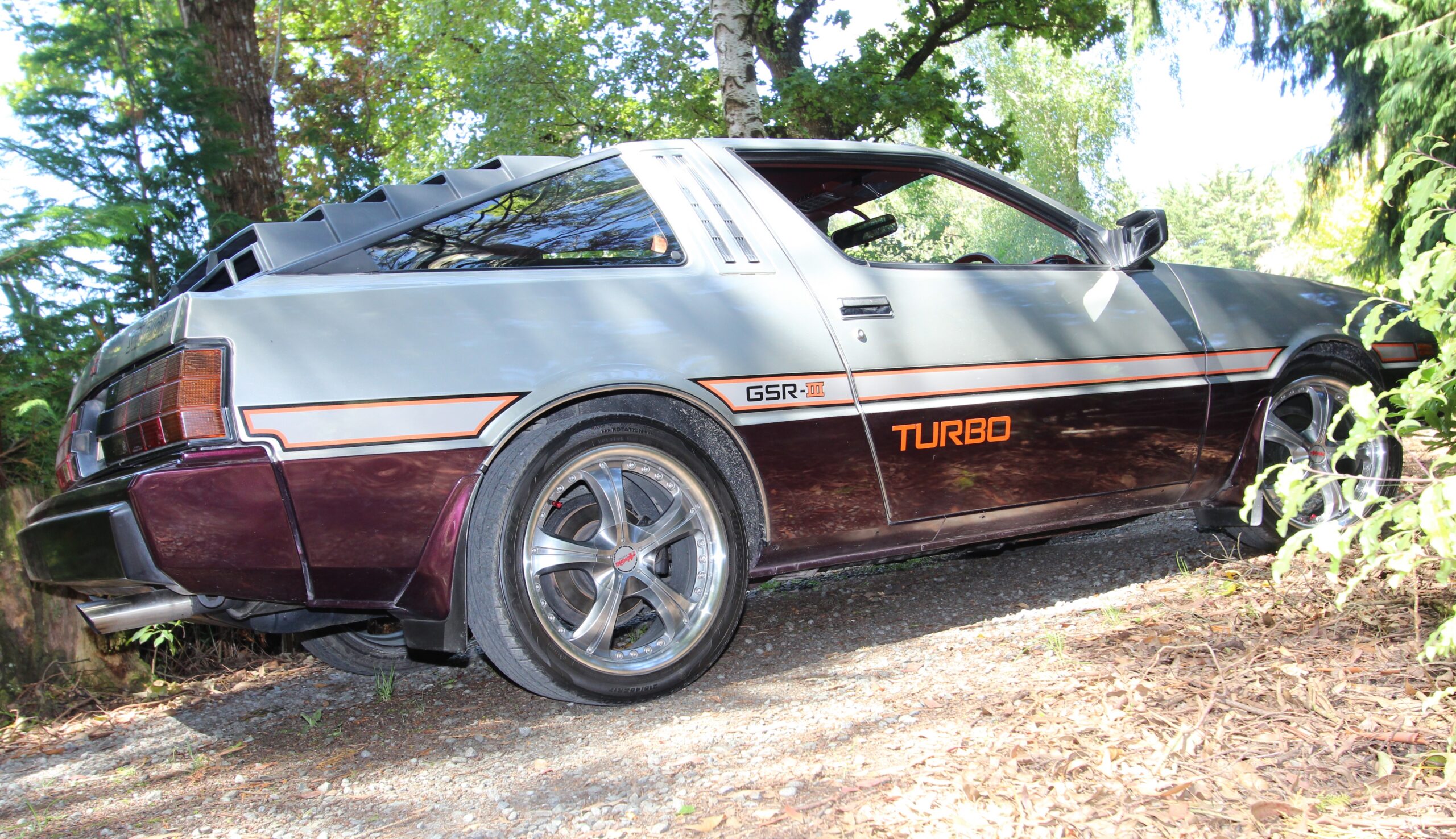
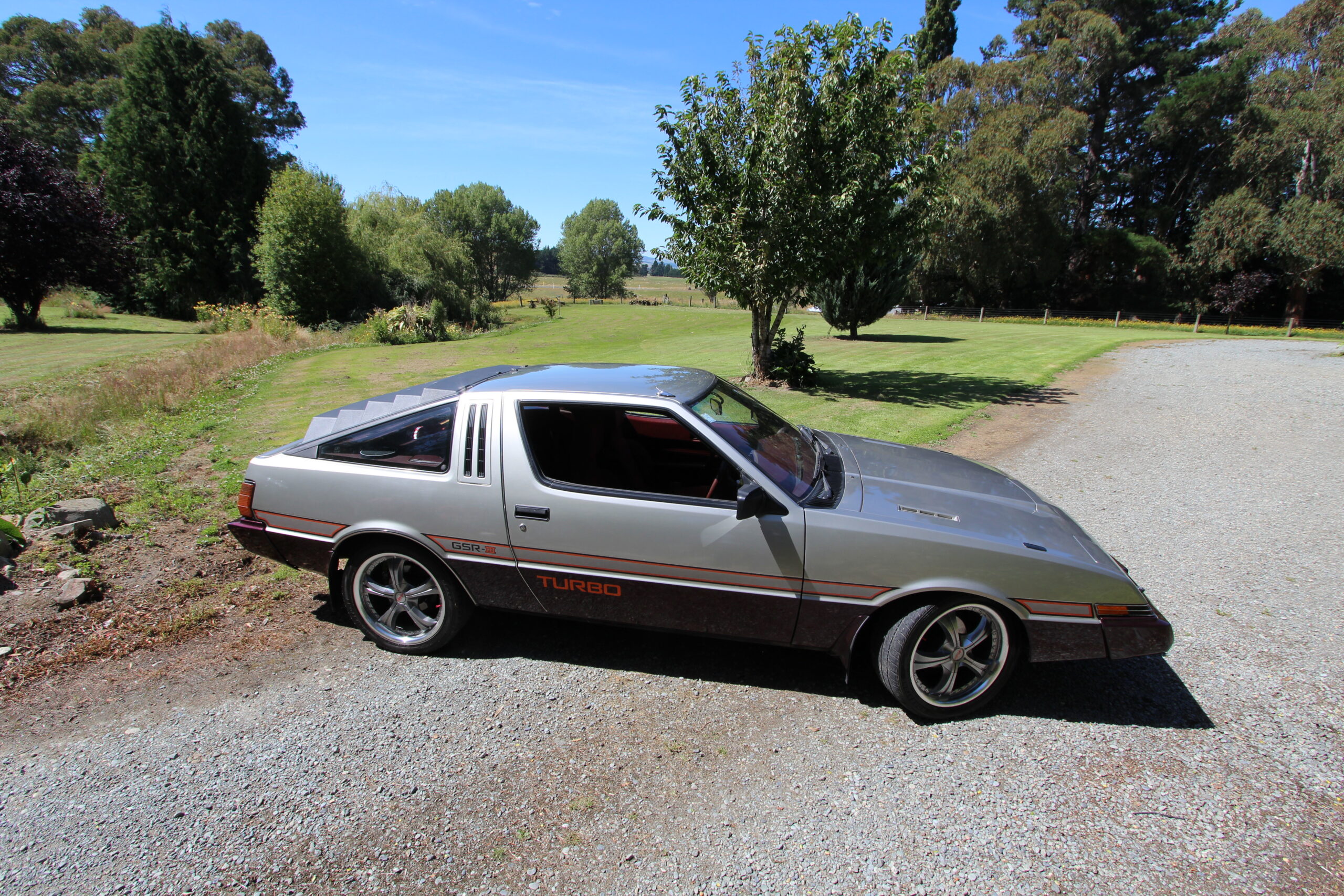
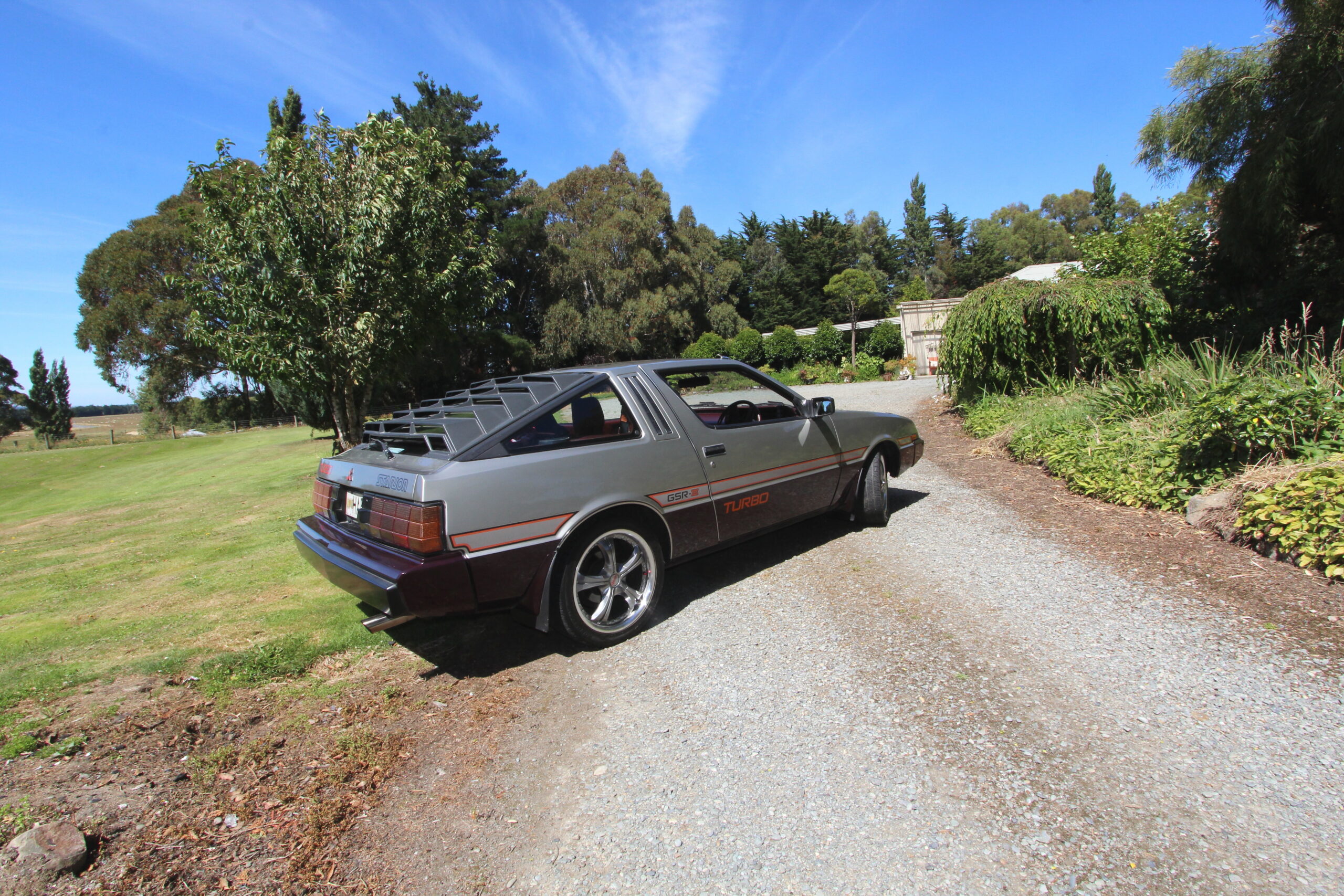
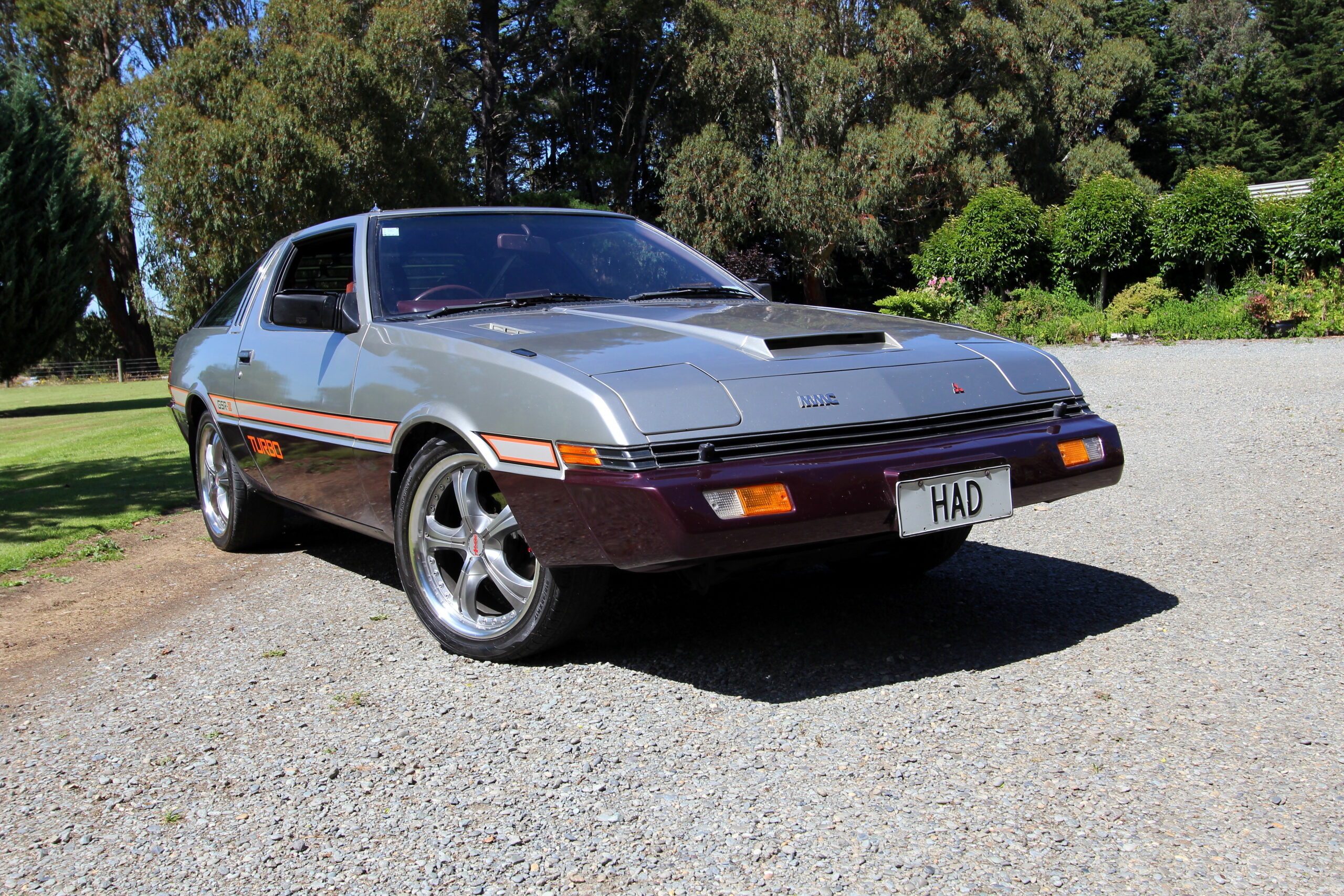
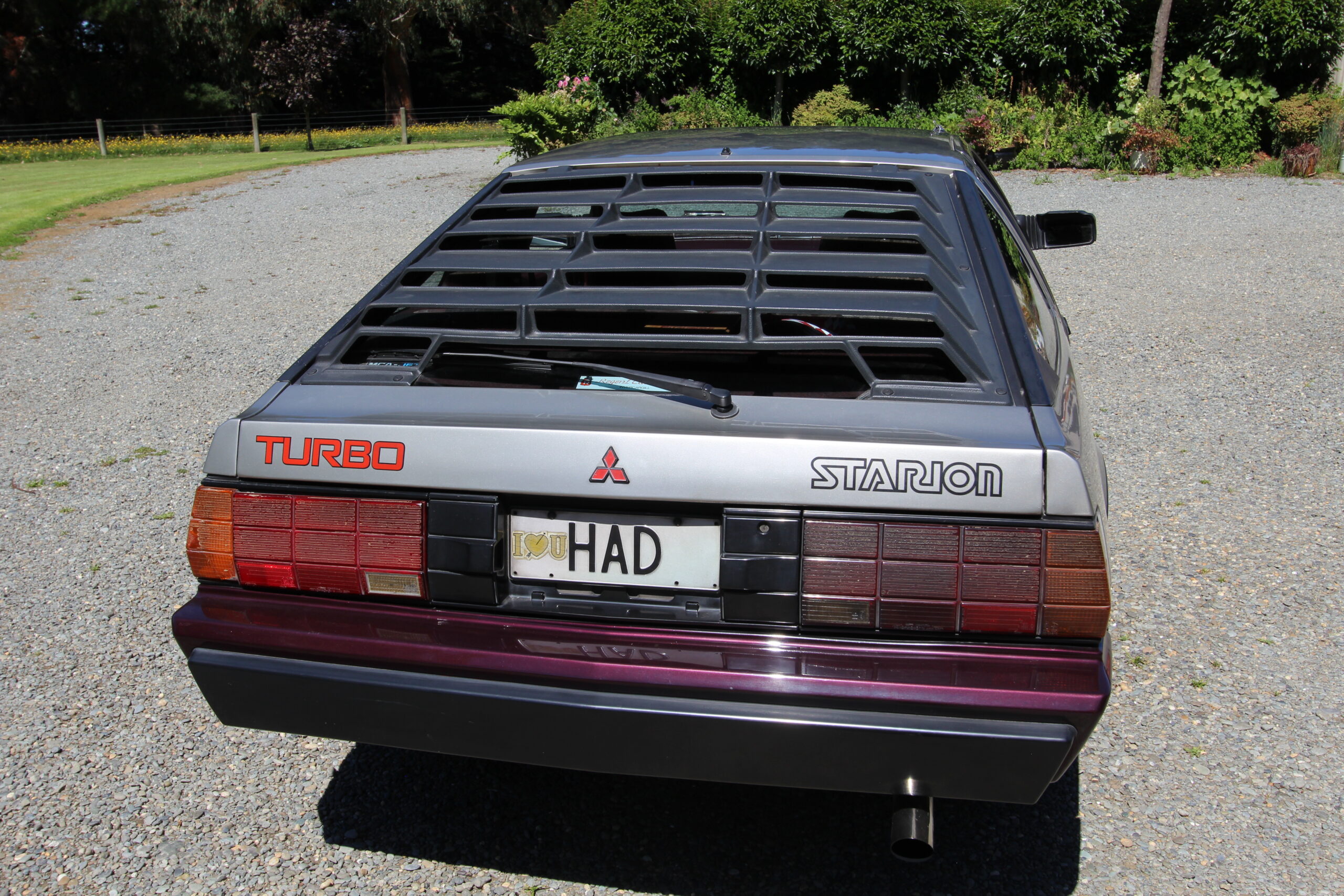
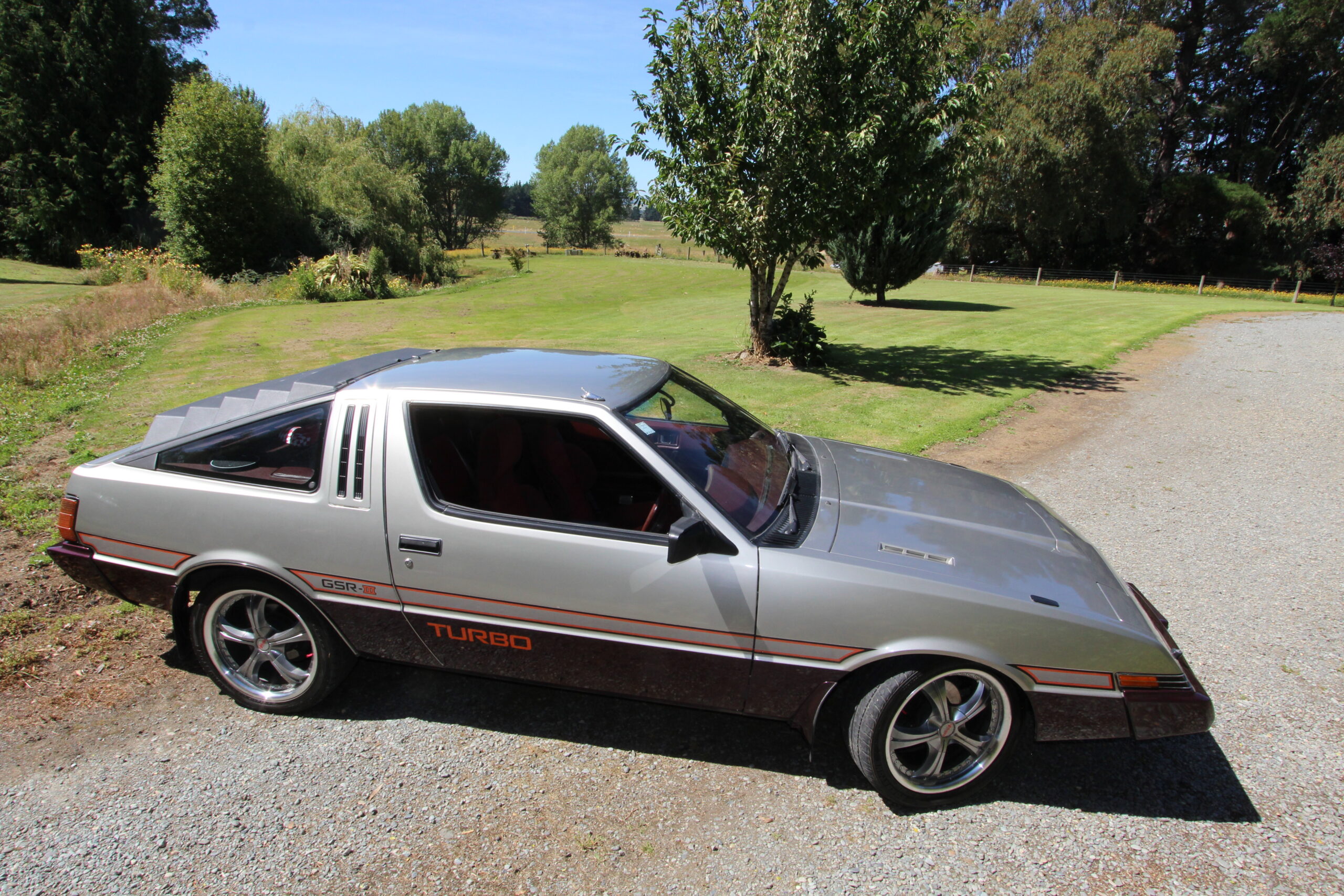
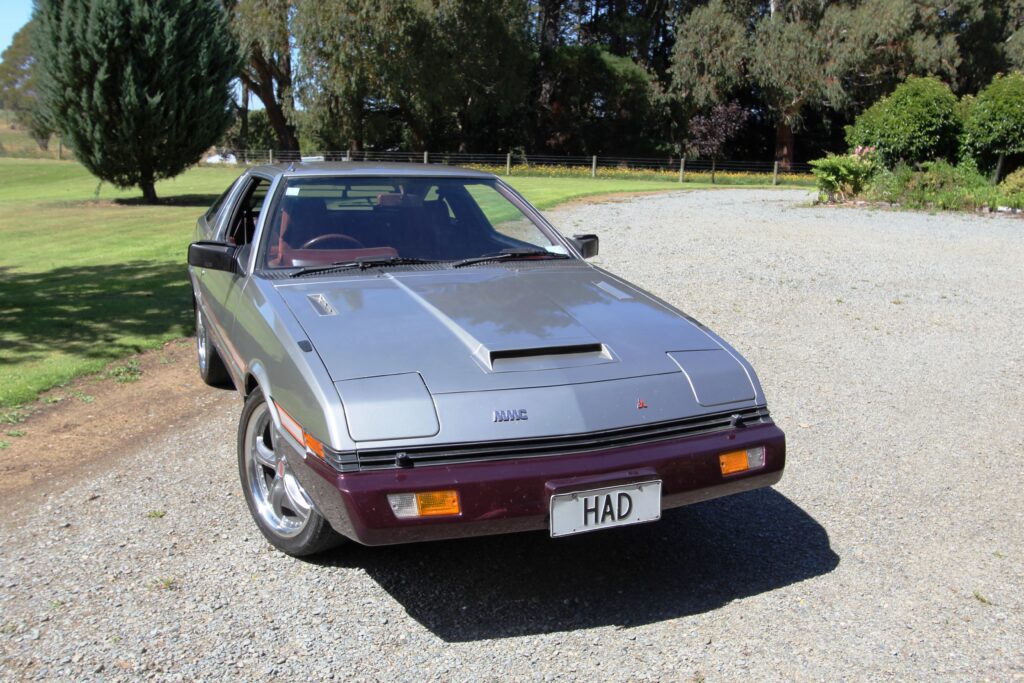
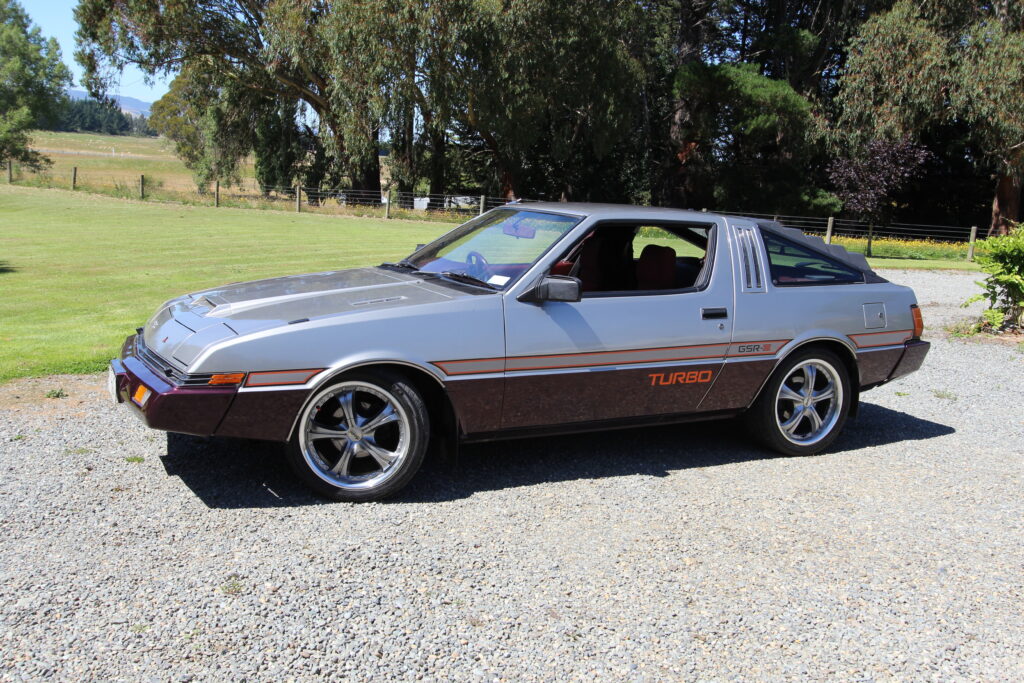
Heather’s car is the featured 1982 silver and maroon model with her own personalised number plate ‘HAD’ — Heather’s initials. Ewen delivered it as a Christmas present after its restoration. It comes with all the bells and whistles of Japanese cars of the period, including two-tone paint and vivid decals, but it’s the eye-catching red velour seats and an interior trimmed with red vinyl and red carpet that really impresses. It was driven regularly although it languished for some 10 years in a shed until Ewen made the decision to tidy it up.
“I really enjoy driving it, and I don’t drive it enough. It’s a very comfortable and an easy car to drive, and it gets along quite nicely.”
Heather’s car was found at an Invercargill car dealer’s yard in 1994, and it has been trouble-free since then despite its sporting nature, as Ewen explains.
“We bought it off Regent Car Court. It’s had just three owners and is coming up to 190,000km. About 20 years ago I had it re-sprayed at RoadRunner Panel & Paint in Invercargill, and it’s had a new head gasket fitted, a new hand-brake cable and a front-wheel bearing replaced so it’s been a very reliable car really.”
Fuel-injected and fitted with a turbocharger, Heather’s car also has a four-speed automatic gearbox adding to its smooth progress. The car is in exceptional condition for its age with an almost blemish-free bodywork and a well-cared-for patina. They have kept the original wheels and fitted aftermarket alloy ones, resulting in a striking-looking little car, which must have made quite an impression when new. The red interior has very little wear, with just a little fading here and there. Those massive doors open to reveal Mitsubishi’s neat idea of mounting the seat belt retractor on the trailing edge of the door frame. Those seats don’t just look comfortable; they offer good lateral support. There’s plenty of life left in this Starion.
Found in a paddock
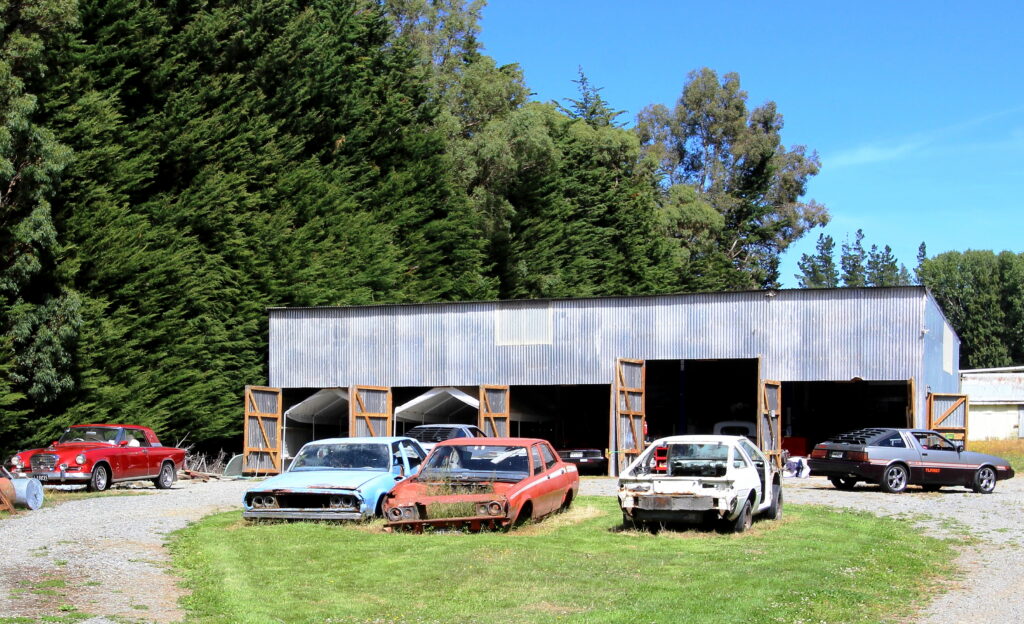
Ewen’s Starion is a little different and special. He saved this one – literally ‘found in a paddock’ — just in time, as he relates.
“Mine is a 1983 Starion. I’ve had it about five years. I first saw it in a paddock at Ryal Bush [north of Invercargill], and I went past it three times. The third time I went back and knocked at the door, but the owner didn’t want to sell. He rang up a year later, and put a price on it, which we accepted. Only thing wrong was the motor was totally dismantled.”
Ewen then set about getting the car back to its current state.
“It took me six months to find somebody suitable to refurbish it back then. Simon Bradley at Midas in Invercargill offered to do it and he did a great job on it. The head was badly damaged around the valves, and Simon said you could get generic cylinder heads now, so he installed one, and it cost $800. It’s made such a difference to the car. Mine is an intercooled, fuel-injected turbo model, fitted with a five-speed manual gearbox. It’s a great car to drive too.”
Except for a small patch of surface rust, Ewen’s car was in surprisingly good condition despite its paddock life and, like Heather’s car, it had an original interior.
“I had two steering joints replaced for a WOF, and there was very little body rust — just a little spot on the left side. It’s quite surprising really. I said to Brett if it had been left there much longer in the paddock it would not have been worth doing.”
Japanese market cars of the ’80s were often easily identifiable by one standout feature.
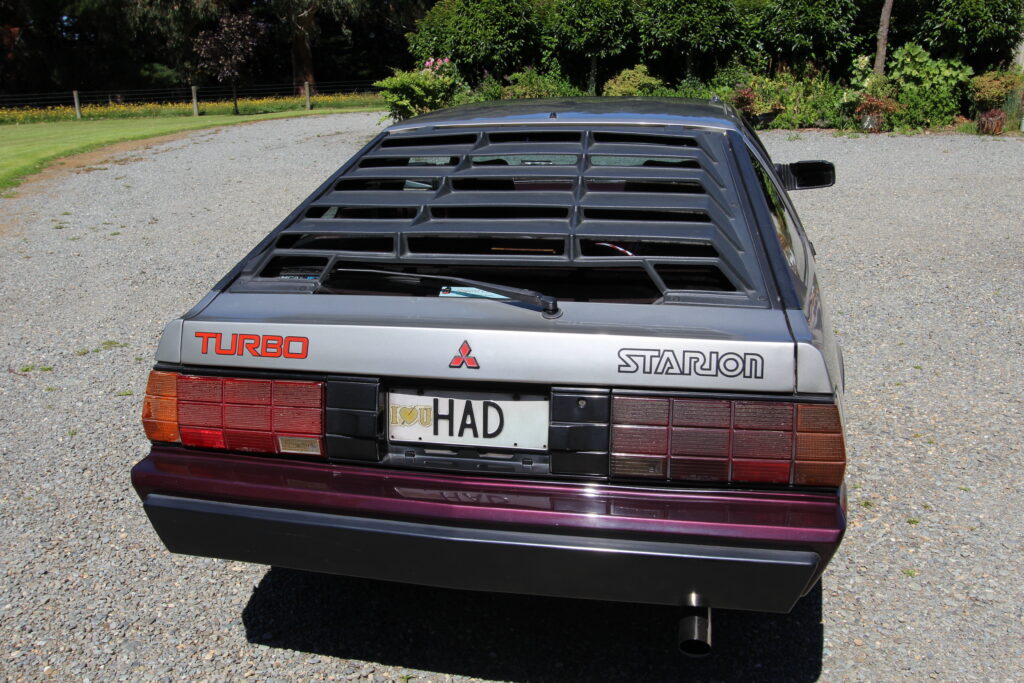
“The previous owner, Brett Hamill, reckons it is the only one in New Zealand with mirrors on the outside — hockey-stick-type on the mudguard. He’s quite a brilliant guy to talk to, and he also gave me the two louvres for the two cars, which I didn’t have prior to that.”
Ewen is slowing the pace of restoring the cars he has collected and is enjoying driving them more, especially on car club outings with their XJS V12 convertible. A very nice P76 sitting in the shed has been promised to his grandson — “if he behaves himself”, Ewen laughs. A welcome development is the increasing interest in Japanese cars and increasing values. Heather and Ewen have saved two worthwhile cars from the scrapheap or becoming speedway cars, as many ended their days.
SPECIFICATIONS
Mitsubishi 2.0L, Starion Turbo
Engine: Iron block 4G63-T, four-cylinder petrol engine. Water-cooled, alloy 8-valve, SOHC cylinder head. Compression ratio: 7.6:1. (US markets received SOHC ‘Astron’ 2.6L, 4G54B engine. Other markets received the 2.0L ‘Sirius’ G63B engine. A 12-valve version of the latter was available in Japan from 1984 to 1987)
Capacity: 2.0L
Bore/stroke: 85.0/88.0mm
Fuel system: Single-point electronic fuel injection and turbocharger (intercooled, depending on the model)
Power: 125kW @ 5500rpm
Torque: 245Nm (180Ib·ft) @ 3500rpm
Transmission: Five-speed manual gearbox, rear-wheel drive to limited slip differential. Heather’s feature car is a four-speed automatic with overdrive. Ewen’s Starion is a five-speed manual gearbox version
Suspension: Front: Independent MacPherson struts and coils with stabiliser bar. Rear: Torsion bar with coil springs and anti-roll bar
Brakes: Ventilated disc brakes on all four wheels with ABS
Wheelbase: 2440mm
Length: 4420mm
Width: 1680mm
Height: 1320mm
Weight: 1260kg
Performance:
Top speed: 225kph (140mph)
0-100kph: 7 seconds