Mustang magic was made on New Zealand racetracks, long before the car became plentiful on our roads. Donn Anderson pays tribute to a legendary American car whose star shines ever brighter
By Donn Anderson
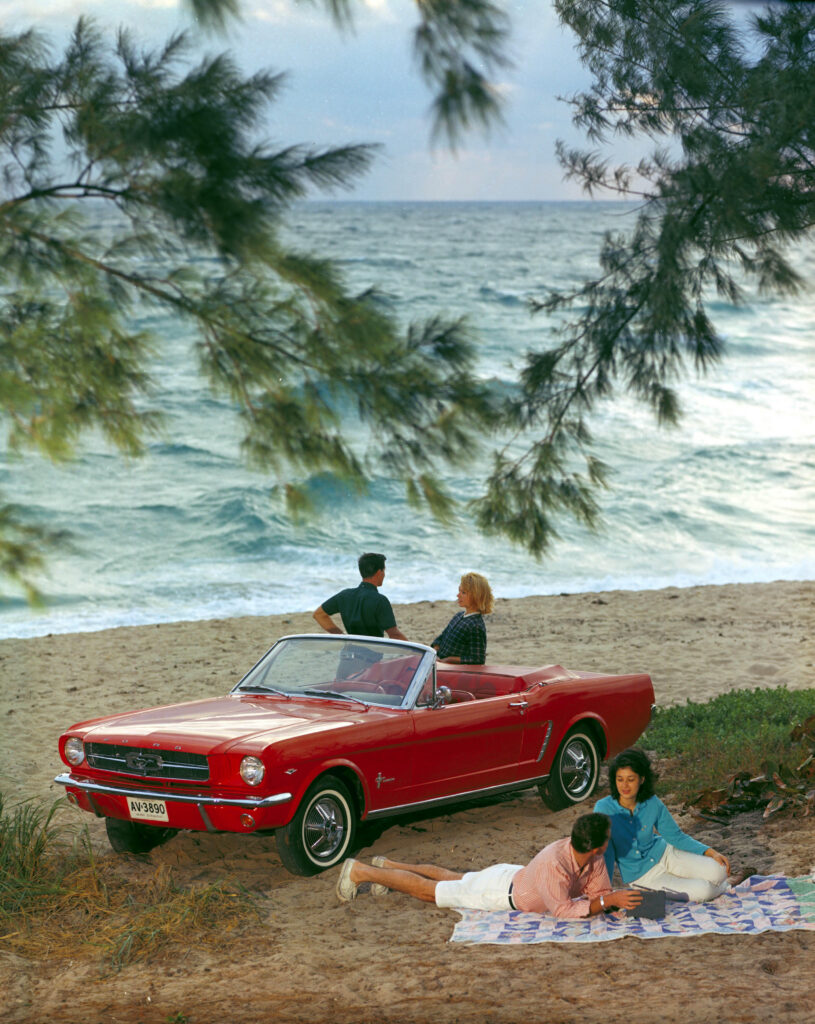
Fifty or so years ago, the only place in New Zealand to see a Ford Mustang was on the racetrack. In a local market severely constrained by a lack of new motor vehicles, the new North American Ford was a dreamy icon boosted by considerable motorsport success.
Import licences for cars were limited, and if Kiwis travelled abroad, the amount of currency they could take with them was restricted. What’s more, those funds could not be used to buy a car for importation back home. Yet it was OK to spend the money on heavy drinking at a London pub, Gucci shoes, sable fur coats, and excessive stays at the Hôtel Martinez at Cannes in France.
However, any rare Mustang that landed on our shores would not be destined to pose around Auckland’s then trendy Queen Street on a Friday night but would more likely be found in the care of well-known racing drivers on the starting grid at local motor racing tracks.
The original ‘pony’ car was born on 17 April 1964 in the USA, where 22,000 were sold on the first day. By the end of that first year, more than 400,000 were in the hands of happy owners, making the two-door the fastest-selling car of all time.
The sales reality far exceeded the initial projected volumes of 100,000 a year for Ford’s new ‘personal’ car that Americans now recognise as the greatest single automotive success of the ’60s. Inexpensive to produce, relatively cheap to buy, and embodying a touch of European thinking, the original Mustang 1, deemed the best by most enthusiasts, enjoyed a nine-year model cycle.
Despite huge early demand, Ford’s general manager and engineer-turned-salesman, Lee Iacocca, was concerned the Mustang lacked a performance image. Iacocca, who died in 2019 at the age of 94, was the driving force behind the car, and he contacted Carroll Shelby with his perceived dilemma. The result was the 1965 Mustang GT350 and the beginning of a great performance profile. The Mustang dominated North American saloon racing, and Ford added the more powerful GT500 in 1967, with a big block V8, running the model until 1970.
Getting in on the act
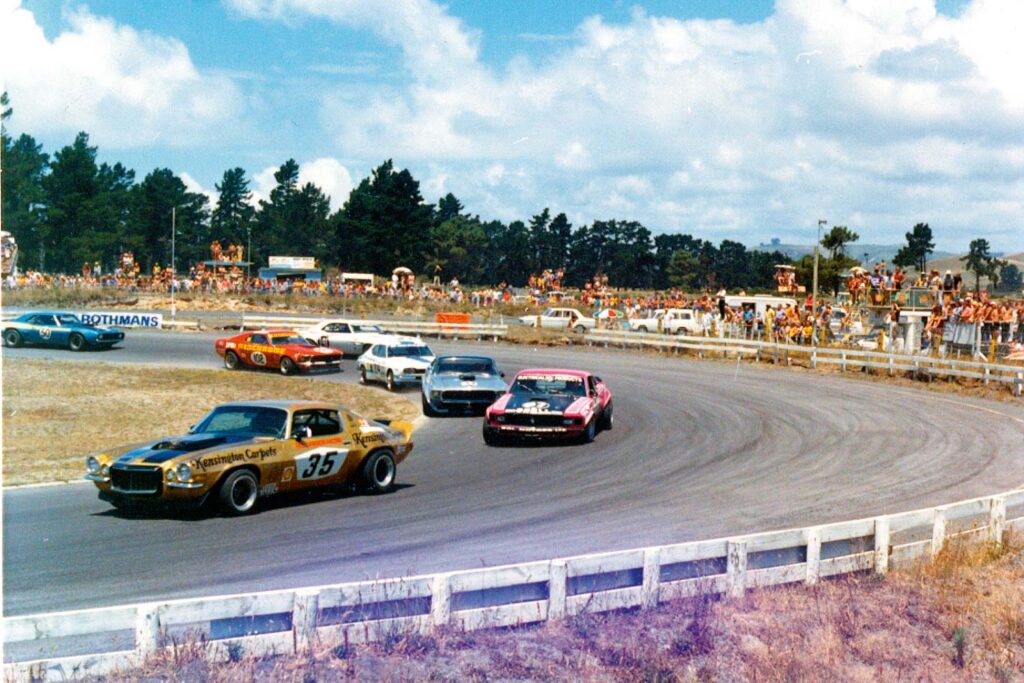
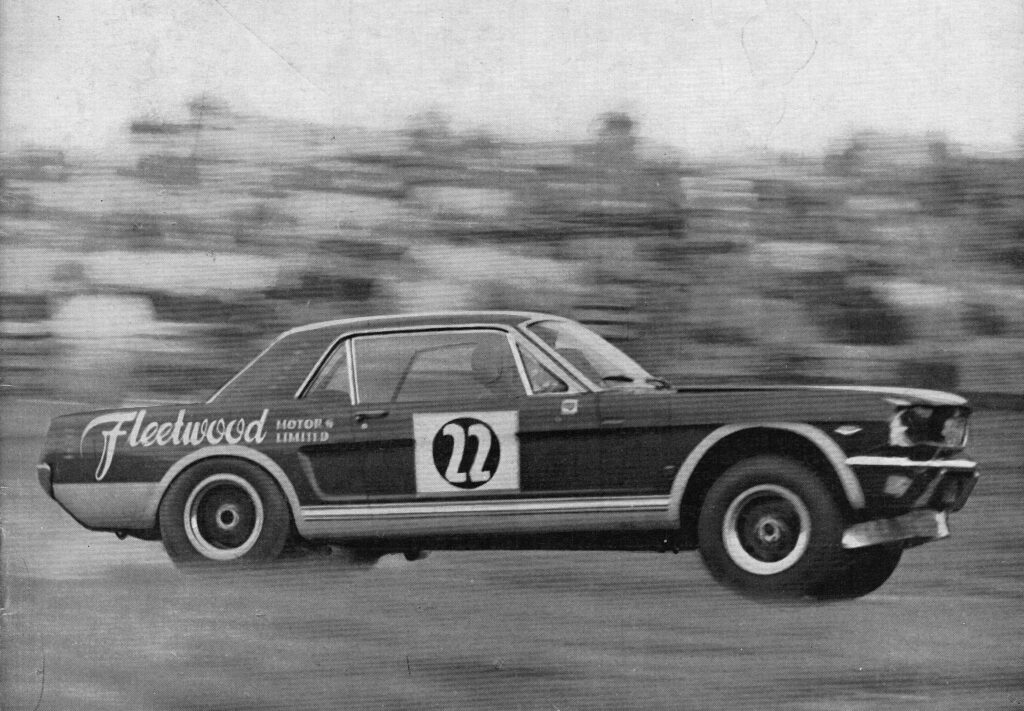
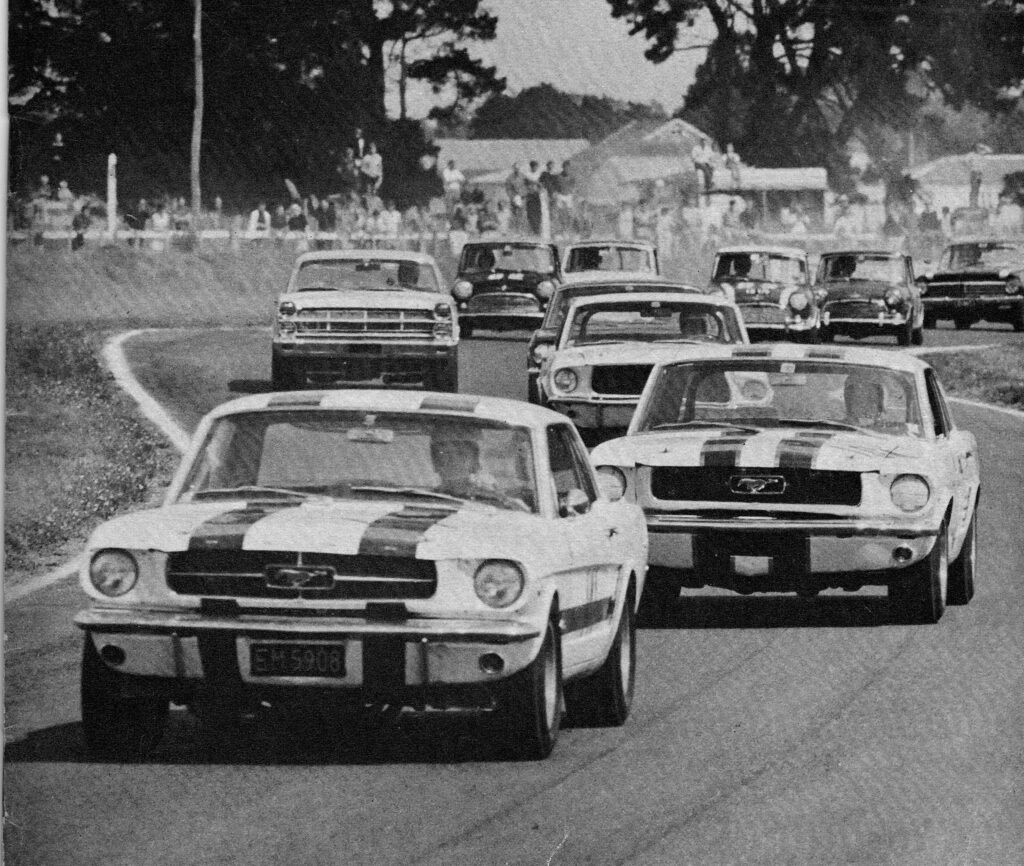
Suffice to say, this early competition record cemented the reputation of the two-door Ford in New Zealand, led by the Hamilton-based 1965 Fleetwood Motors K-Code Mustang of Ivan Segedin and Dennis Simmons in the 1965 Gold Leaf Three-Hour Challenge race at Pukekohe. There was no storybook completion for this debut; however, after storming into the lead, braking troubles eventually relegated the car to a fourth-place finish. However, the season improved substantially, with Segedin taking the Mustang to victory in the unlimited-class New Zealand saloon car championship for the 1965–66 season.
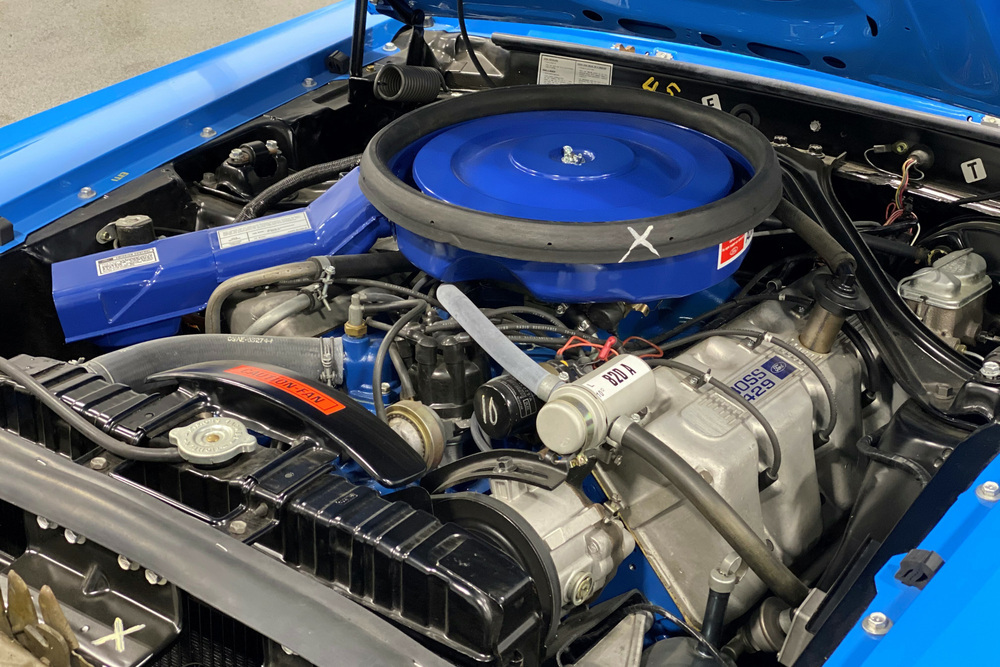
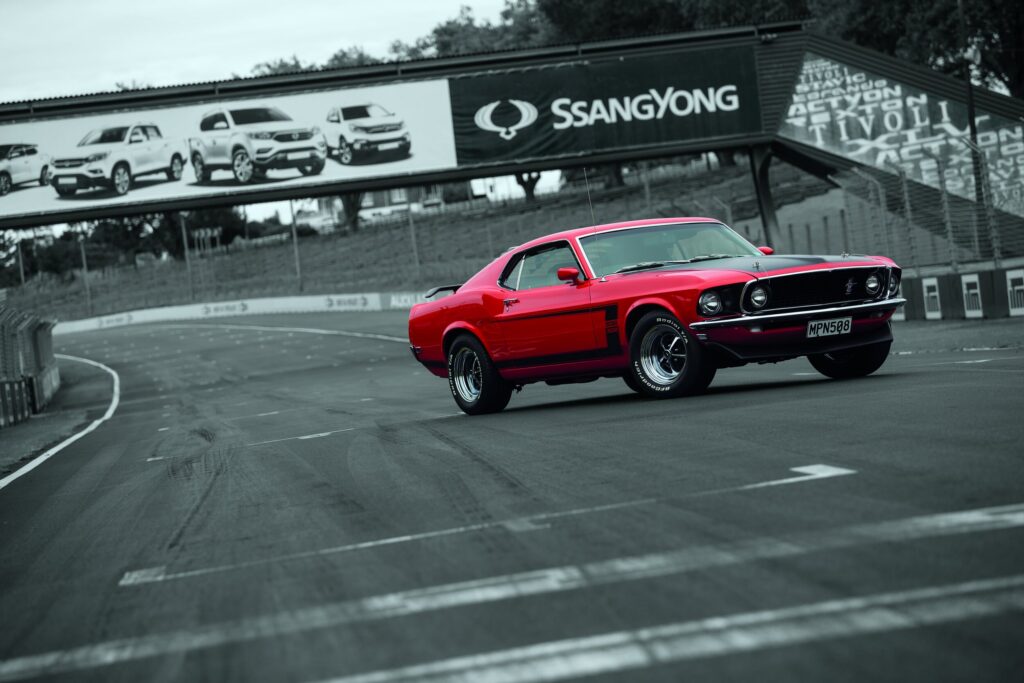
Mustangs won our premier saloon championships four years in succession. Paul Fahey’s superb Shelby GT350 arrived here in 1966 and straight out of the box won the Gold Leaf Three-Hour, the Citrus Productions Allcomer event, and the Auckland Chassis Straighteners invitation race. In 1968, Fahey won the championship ahead of Frank Bryan and Rod Coppins, all three Mustang-mounted. Fahey won the following season again, and Red Dawson’s Mustang was runner-up. In 1970, Red shared championship laurels with the Coppins Camaro. Jim Richards steered the 1969 Boss 302 Sidchrome Mustang to victory in the 1974 NZ saloon car championship, and the 1970 model Boss 429 PDL Mustang was a significant performer in the hands of Fahey and Graham Baker. Other prominent New Zealand Mustang racers included John Riley, Leo Leonard, and Bruce and Wayne Anderson.
My LA convertible journey
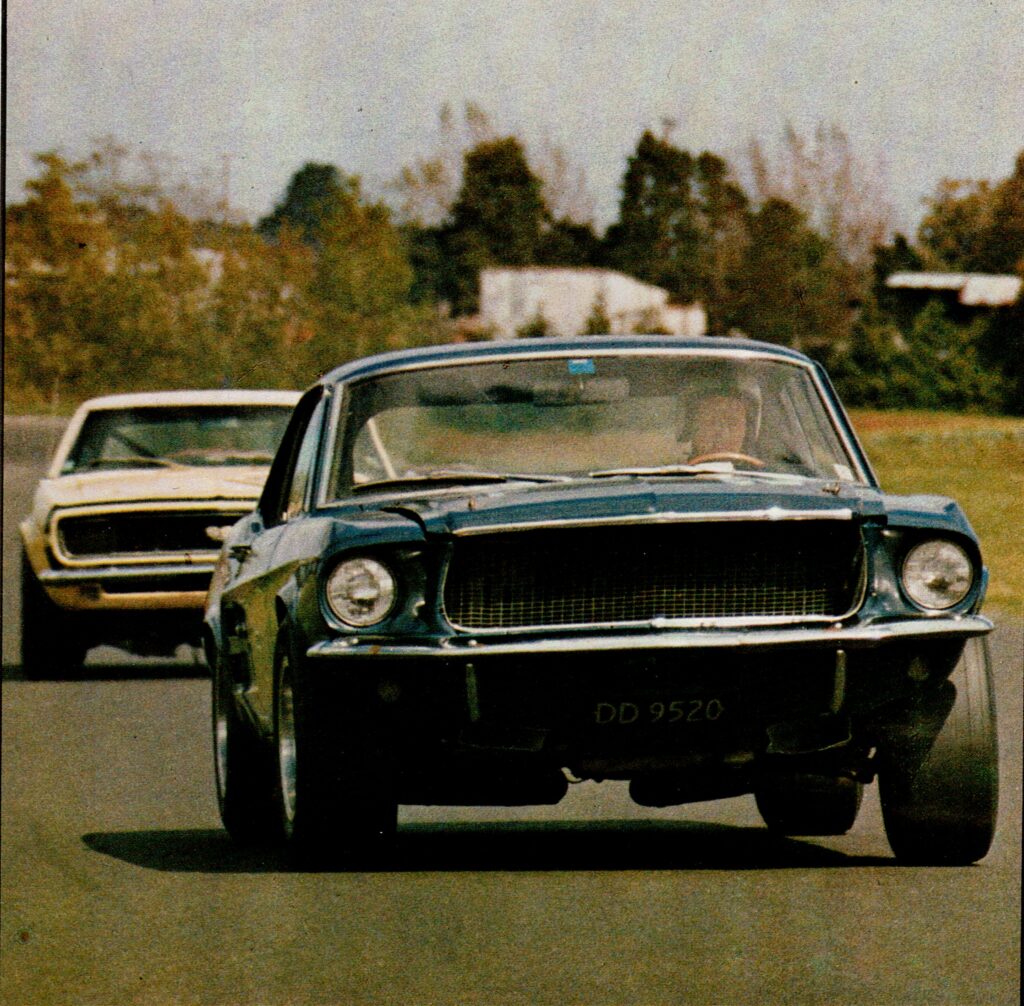
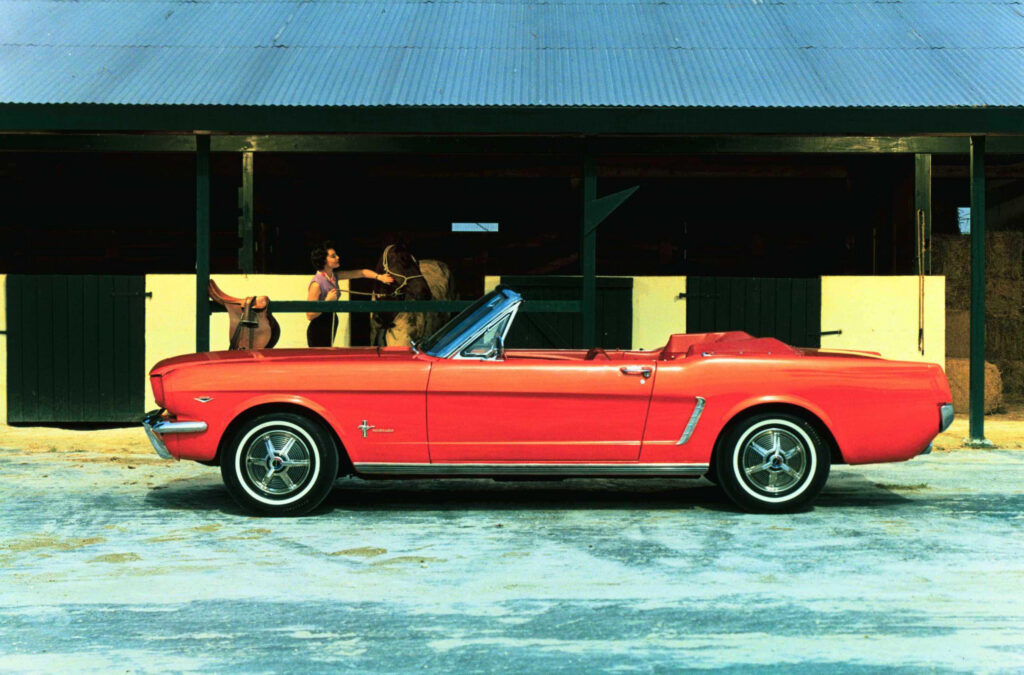
How appropriate, as a young bloke on my first visit to Los Angeles in 1968, that I should be driven about in a 1966 Mustang convertible. Ford built 101,000 convertible versions in the model’s first full year, but the hardtop would consistently comprise the majority of sales. In 1966, Mustang production amounted to 607,568, of which hardtops accounted for 82 per cent, with convertibles taking 12 per cent of the built and fastbacks a mere 6 per cent.
In the US, entry-level cars came with a modest US$2400 price tag and a 110bhp straight-six that was quickly uprated to 120bhp, but the car really came to life with the popular 289cu. in. (4.7-litre), 210bhp small block V8 and single four-barrel Holley carburettor. K-Code refers to the 289 V8 engine code on the VIN number. Meanwhile, the optional 428cu in (7-litre) boasted two four-barrel Holleys and hydraulic lifters; it turned out 306bhp and, later, 355bhp.
Shelby production may have been relatively small, but the impact on the car’s image was substantial. In 1965, 525 Shelby GT350s were made alongside 37 GT350R models, but this leapt to 2380 the following year and included a Shelby-modified convertible. The number of Shelby Mustangs rose to 3225 in 1967 and on to a record 4450 in 1968 before falling back as the Mach 1 sports variant arrived in 1970, with sales of 40,970 and just 601 Shelby GT350s.
The GT500 was added in 1967 for a three-year production cycle after Ford enlarged the engine bay to hold the big block 428cu.in. V8. Hertz acquired 1000 Shelbys for its US fleet, leasing them for $17 a day, provided you were over 25. The rental car giant said the promotion did not make any money but was great for the Hertz image and also for the Mustang.
Mustangs sally forth
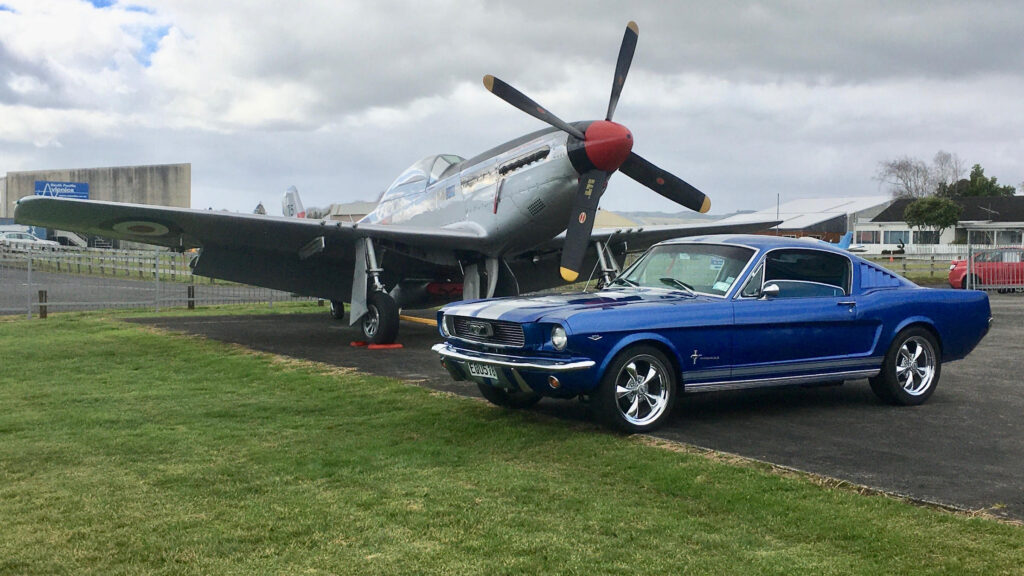
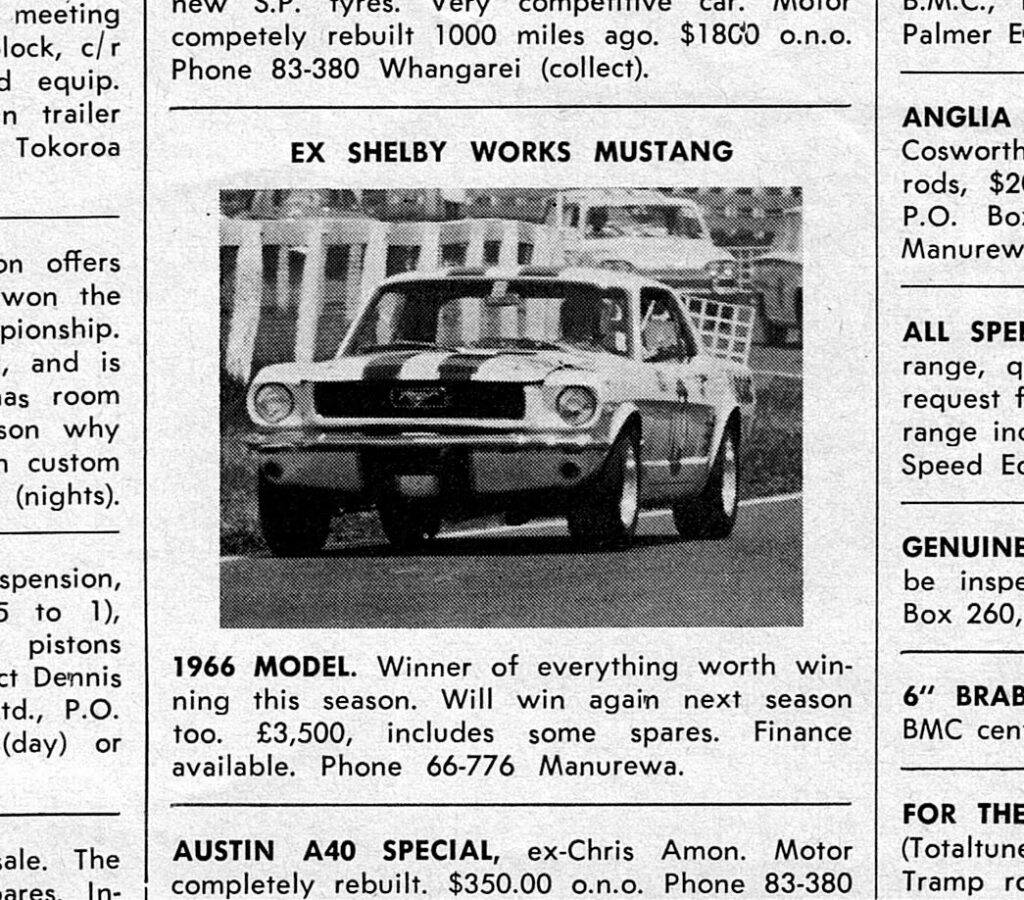
Those early racing Mustangs that made such an impact on Kiwi circuits were all hardtop versions, but the model also came in fastback form, which has since proved more valuable, prompting classic car experts to reason the notchback or hardtop is today’s affordable route into Mustang ownership. As a flow-on from the racing, Mustangs were soon seen as highly desirable road cars. After working as a panel beater in Seattle, Washington state, Wellingtonian Bob Kennett imported a 1967 Shelby Mustang GT350 into New Zealand. It figured on the cover of Motorman magazine in March 1969, along with model Vicki Overton bursting out of an Auckland swimming pool.
Fast forward to 2021, and there are at least 2000 Mustangs resident in New Zealand and no fewer than seven Mustang owners clubs, led by the Taranaki Mustang Club, which was formed in May 1975 with just six cars. With a healthy 373 members at the last count, the Auckland club is the largest. Its members own at least 430 Mustangs, confirming some enthusiasts reckon one is not enough. Significantly, 163 Mustangs in the Auckland club are first-generation cars made from 1964 to 1973. The second most popular are 121 current models, produced since 2015. There are five third-generation Mustangs (1979–93), 23 fourth-generation (1994–04), and 118 fifth-generation examples. Yet, perhaps understandably, the club has no second-generation cars, made between 1974 and 1978, as the Mustang 2 is regarded as somewhat bland.
Mustangs enjoy an enviable reputation at the annual Ellerslie Intermarque Concours in Auckland, winning the team prize in 2001, 2006, 2011, and 2013 with superb examples such as the 1965 K-Code Mustang of Shane McCallum and Paul Melia’s 1970 Mach 1 Cobra Jet. To mark the car’s 50th anniversary, the 35th New Zealand Mustang Convention, held in Christchurch in 2014, drew a remarkable 225 cars.
Buying a Mustang today
Today, there’s a busy trade in the famous Ford, and a recent survey of Mustangs for sale locally revealed 116 results, with one ambitious vendor placing a $150K reserve and $250K ‘Buy now’ on a 1968 seven-litre Shelby Cobra GT. Then there was $200K for a well-equipped six-speed manual 1967 model, $150K for a 1970 302 Boss, and two similarly aged manuals each priced at $110K. The least expensive was a $35K asking price for a 1965 hardtop with drum brakes, manual steering, and no air conditioning. For genuine Shelby examples compared to standard Mustangs of the same age, simply double the price.
However, as so many Mustangs have been manufactured, prospective buyers do not need to pay the world, and there are usually several good cars in the offing for around $50K. An Auckland used car dealer recently had three 2007–2008 Mustang GT convertibles in stock, all priced between $37K and $38K. In the past year, Mustangs have been listed 1249 times on the Trade Me platform, with an average local asking price of $61,422.
Simple but effective formula
Iacocca specified the Mustang must be a relatively compact four-seater yet big enough for a small block V8. It needed a sports car look, prompting most buyers to choose beefy bent-eight engines over inline sixes. Stylists Joe Oros and Dave Ash got the appearance of all three versions of the initial generation Mustang just right — and how they have weathered after more than 50 years! Styling became more aggressive in the revised 1967 model, with a full fastback roofline and concave tail panel.
Based on the strong US Falcon platform, the Mustang was always going to be about simple and conventional mechanicals, inexpensive manufacture, and value for money, yet the car turned out to have more personality and appeal than even its makers could ever imagine. A trim overall body length of 4610mm — increasing to 4815mm for later, albeit still first-generation examples — appeals to enthusiasts who hanker for an American classic that is not too big. Remember, however, the newer versions of the original pony car grew bigger and, for many, less appealing.
While enthusiasts usually hanker for factory-original parts, American cars are the exception, and ostentatious aftermarket alloy wheels are not only acceptable but common to many Mustangs. Parts are plentiful and inexpensive, and the cars are easy to maintain. Watch for bulkhead rust caused by poor drainage around the windscreen, a new radiator will likely rectify overheating, and squeaking or popping during cornering can usually be traced to worn tie rods — a cheap fix.
Sure, the handling is a little agricultural, and the brakes are not always up to spirited driving, but the ride is good and the V8 response memorable. Who could forget the 10-minute chase in the ’68 movie Bullitt with Steve McQueen hustling a GT Mustang around San Francisco?
To match GM’s Chevy Camaro Z28, the Mustang styling took a fresh change in 1969 with the manual-only Boss 302, still a first-generation model, albeit slightly longer and wider than its predecessors. By now, the list of performance options was bewildering, but the Mustang dream never looked like waning, especially with the smooth-looking Mach 1 that saw out the original series in 1973. With their ram induction, header-type exhaust manifolds, and four-speed manual gearboxes, the Boss Mustangs were built for the NASCAR series and did not disappoint.
Forget mechanical sophistication, the iconic Mustang is a motoring legend, and a genuine classic car admired even when resting silently in the garage. Maybe we should all own one, even if briefly, to savour the experience?