
Motorsport Flashback –The right racing recipes, and cake

17 September, 2025

Celebrating Formula Fords, Adelaide’s grands prix, a return to racing, and Tauranac and telephone technologies
by Michael Clark

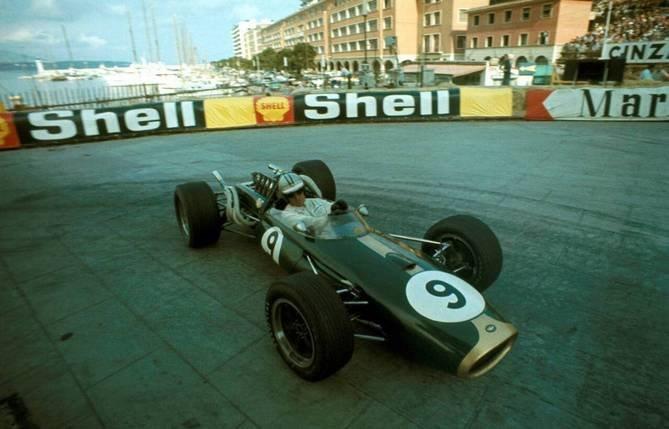
Denny Hulme’s 1967 Monaco winning BT20 was one of 592 Brabhams

The right formula for 50 years
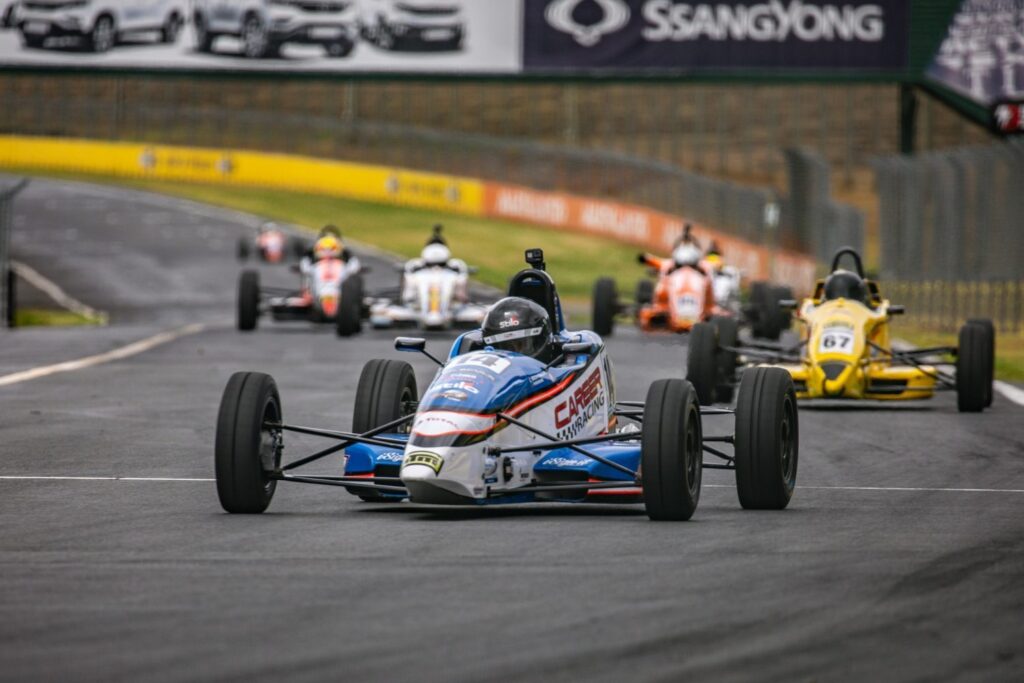
If a top-fuel dragster sits atop the horsepower list of open-wheel racing cars, then cars designed for the massively successful Formula Ford category are close to the opposite end. Invented in the mid-1960s as a cheap alternative to F3 for racing schools, the concept was staggeringly simple: introduce the Ford Kent pushrod to a spaceframe chassis; keep engine modifications to a minimum; same tyres for all; ban aerodynamic appendages; and you get the most phenomenally successful single-seater class of racing car the world has ever seen. 
The first-ever race for these 1600cc mini-GP cars took place in England in July 1967, but it quickly took off. The US and Australia were among the earliest adopters. It took us a little longer because we had the much-loved National Formula, comprising predominantly Brabhams, Ken Smith’s Lotus, and Graham McRae’s gorgeous self-built cars, all powered by the Lotus-Ford twin-cam. After a memorable championship in 1968/69 the class was nearly on its knees a year later. The quality was still there with Smith winning his national title, just, from McRae, but the numbers had fallen. Formula Ford was the obvious replacement and was introduced for the 1970/71 season as ‘Formula C’. 
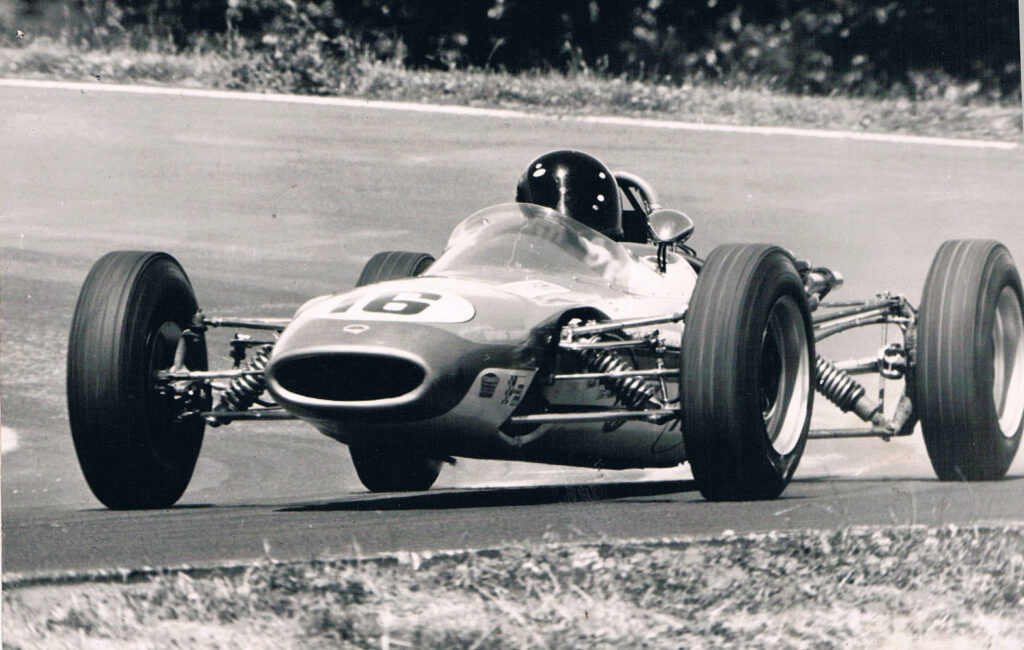
Some, like Pete Hughes, converted a National Formula car, while other contenders brought in cars from overseas, such as the Australian Elfin imported by Steve and David Oxton, or from England in the form of Jim Murdoch’s Titan or Dauntsey Teagle’s Merlyn. In the deep south George Begg built a car for his business partner Rob Allen while other young hopefuls converted old Formula Juniors from the early 1960s — cars today worth a medium-sized fortune, especially if they have the words Brabham or Lotus on the nose. In 1970, they were almost worthless antiques. 
The first standalone race in New Zealand was at Pukekohe on 4 October 1970, a date that resonated when the combined committees of the FF Association (previously Historic FF) and North Island FF sat down to plan their combined 2020/21 race calendar. A date was available at Pukekohe on the first Sunday of October and coincidentally also the fourth. The winner that day in 1970 was Oxton — these days the patron of the FF Association, while runner-up Hughes has recently joined the club. It is hoped that they and as many other FF racers from the half century of FF in New Zealand can be at Pukekohe this October 4 to see that the category is still as pure and the racing still as hard-fought as it always was.

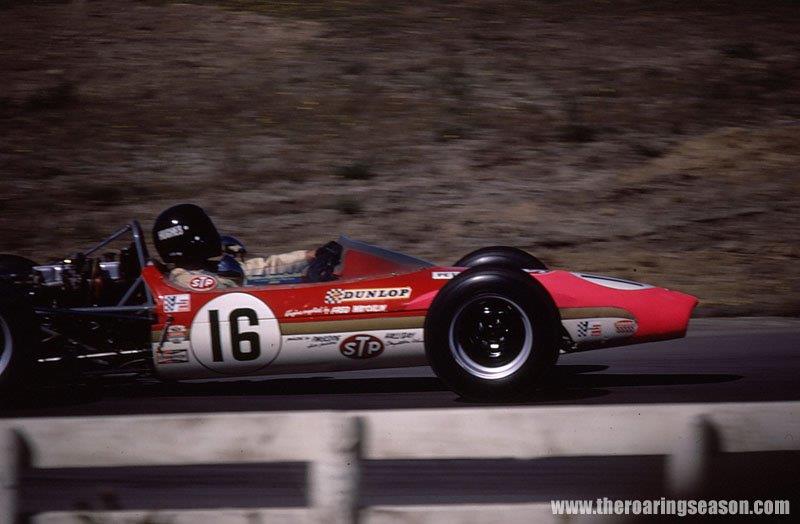
Pete Hughes in the ex-Kenny Smith Lotus 41 was at the sharp end of Formula C in 1970/71

Never too late
I got to know Ian Arburthnott a decade or so ago and it became an unwritten arrangement that, when he could, he’d help me with my belts, and other jobs required between races for an old Formula Ford. We knew Ian had raced in the mid to late sixties finishing up with what was by then an elderly Lotus 20. After the 1966/67 season he sold the car and went off and did normal things but he never lost the passion for motor racing. In recent years Ian has wound down his involvement on the farm and despite being north of 70, decided to have a go at the ‘Targa Tour’. He was enjoying himself so much I suggested, tongue in cheek ‘what you need is a historic Formula Ford’. I told him of a lovely 1973 Lola that had just come on the market in Waiuku. He left the farm in Paihiatua and headed north. The good news is that Ian will be back behind the wheel of an open-wheeler after a cheeky 53 year break. The bad news is I need someone new to do my belts. 

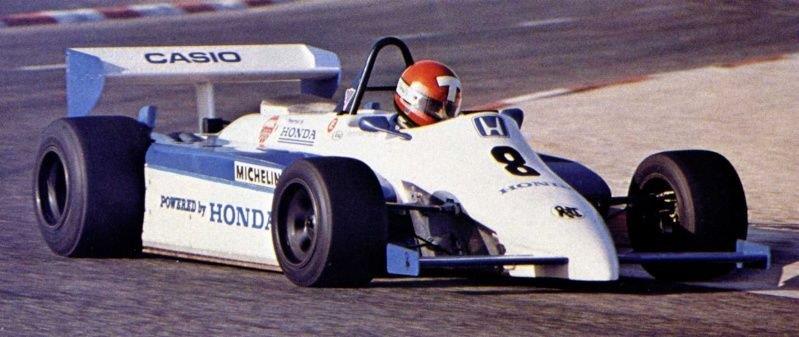
Papakura-born Mike Thackwell in his 1984 European F2 Championship winning RH6 — one of 1051 Ralts
Adelaide comes alive!

The grand prize goes to Adelaide
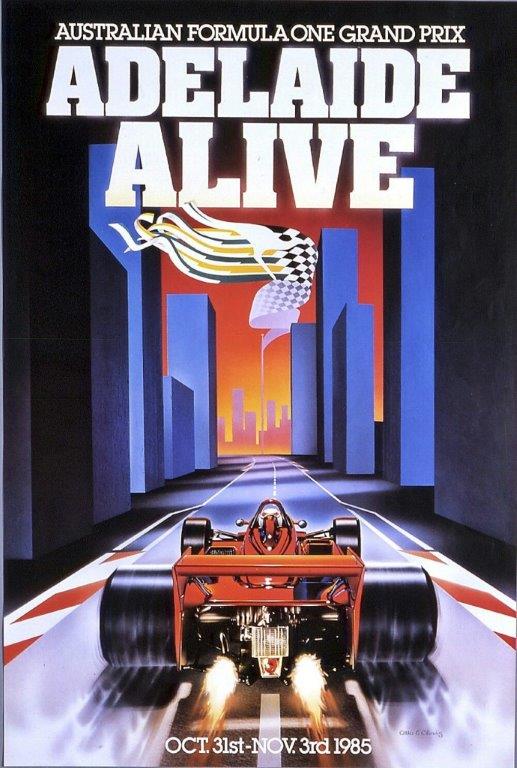
October once meant ‘nearly time to pack’ because from the first time Australia joined the world championship in 1985, I — like many other Kiwi F1 fans — made a pilgrimage to South Australia’s capital. Given that the world championship started in 1950, and that by the end of that decade had an Australian world champion, it is remarkable that it took so long for a round to be granted, especially given their healthy car culture and that, via the Tasman Series, the world was well aware of the scene Down Under. When the possibility of Australia joining the big time looked likely, it was inevitable that either Melbourne or Sydney would host it. A distant third would have been the Gold Coast. Adelaide’s chances were just ahead of Tasmania, and probably not by much. But in a classic case of never underestimate the underdog, South Australia’s capital got the nod and, man, did they do it well! I have never seen a city embrace a sporting event with an enthusiasm to match that of Adelaide. The passion was still as great in 1995 as it had been a decade earlier, even when it was known that the event had been lost to Melbourne for the 1996 Australian GP.
Yes, Melbourne is easier for Kiwis to get to, and yes, Albert Park is a better circuit than the rather ‘stop-go’ series of right-hand corners at Adelaide, but that is about where the positives end. I well remember one taxi ride from Adelaide airport to my hotel. “Who do you fancy for the race mate?” and “How about Ferrari?” I asked the conductor of this Commodore if he was a fan. “Nah mate – but we’re encouraged to chat to race fans and make ’em feel welcome.” 
I thought back to that cabbie in March 1996 for the first race in Melbourne. The elderly driver was Italian, and so I assumed, incorrectly as it emerged, he would be a fan — or at least want to discuss Ferrari. Instead, we got a tirade of profanities about what the GP had done to the already overloaded roads and fuel prices. He was an angry man and before Formula 1 got the blame for other crimes, I changed the subject and asked how many kilometres his Falcon had done — 850,000 as I recall — and the unforgettable line, “I retire it at a million…” 
I still recall, as late as 1988/89 ‘out of state’ Australians in the media room referring to Adelaide as “just a big country town” and “How could bloody Adelaide be our face on the international stage?” Pretty damn well, as it turned out! I have returned many times since 1995 — in fact holding a GP in a big country town was a huge part of the appeal and my happy memories.

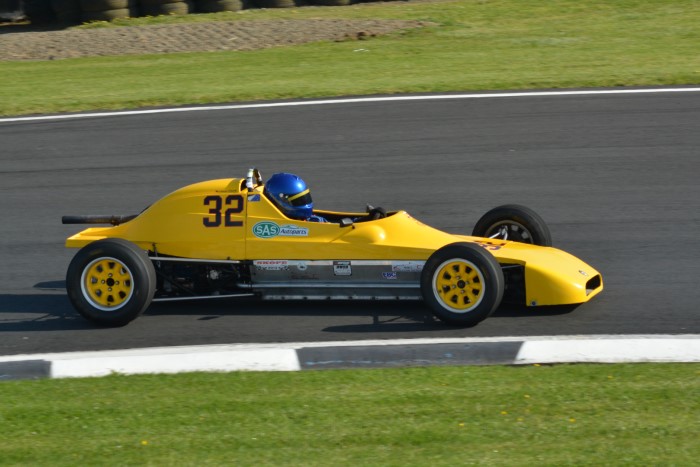
Our Motorsport Flashback columnist pilots a 1978 FF
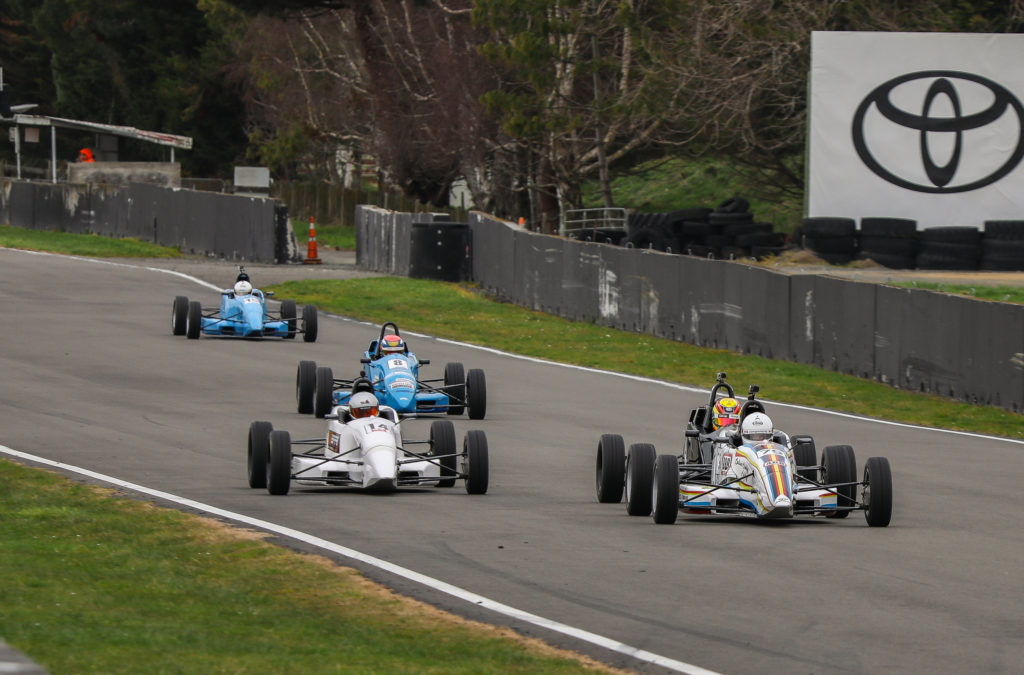
Modern Formula Fords at work

Where’s that camera?
I learnt a valuable lesson at the final GP meeting at Adelaide. For anyone under about 40 reading this, prepare for a shock. There was a time when mobile phones only made calls. If you wanted to take pictures you had to take along a  separate, cumbersome device – and selfies had a completely different connotation. Decent cameras wouldn’t fit in your pocket and shot selection was measured against the number of rolls of film you had.
A media pass gave me access to a lot of interesting places offering contact with famous motor racing faces. For me the GP was a once a year treat that I soaked up to saturation point hoping I’d qualify for accreditation again in twelve months time. 
As it was time to head to the hotel on the Saturday, I packed my camera away in the locker. I had walked up and down pit road so many times, I was sure there couldn’t be anything new worth photographing. No sooner had I reached the bottom of the stairs than I heard my name being called .I turned to see young Greg Murphy. “I was hoping to bump into you,” he said. “ I’ve borrowed this pass – let’s look at some Eff-One cars.” I could hardly say no so started on another sweep of pit road. At the Jordan pit, Murf spotted a Kiwi mechanic, Dennis Marwood’s son, who gave Greg a much closer look at a GP car than I could have got. In no time Murphy had been invited to ‘try it out’ and had slid into the cockpit. My camera, needed right now to capture this momentous occasion, was almost directly above the Jordan pit, safely tucked up in a locker.
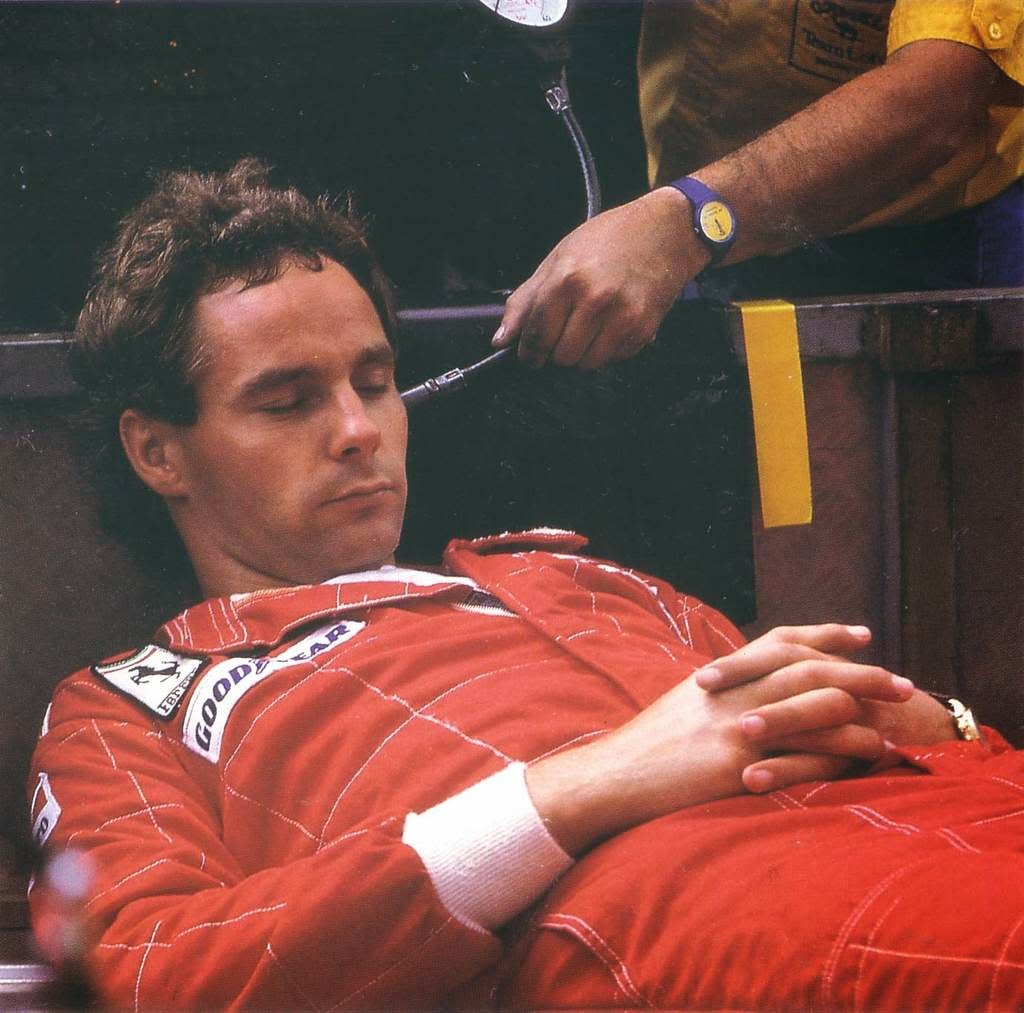
Eventually Greg needed to get the pass back so I headed for the facilities behind the pits. I spotted Gerhard Berger and Martin Brundle deep in conversation, leaning on a green wheelie bin. An hour or so earlier we’d been invited to a slice of Eddie Irvine’s birthday cake celebrating his 30th. The uneaten remains sat on a table perhaps five metres from Berger’s back. Irvine, frivolous even when it wasn’t his birthday, spotted the residual cake, and Berger. I read his mind. Sure enough, Irvine grabbed a handful of cake, snuck up on the Austrian and slammed it, icing first, into the back of his head. The Irishman turned and picked up his pace but Berger was after him, his longer legs at full stretch and gaining. Irvine turned left behind the toilets and then left again to run back the way he had come. Berger took him in a tackle worthy of a loose forward and in one fluid movement, began the process of transferring chocolate cake from the back of his head to Irvine’s face.
If there was anyone else other than Martin Brundle and me seeing this, I cannot recall, but for the second time in the space of about ten minutes, I was cursing not having a camera, especially as the cake migration was taking place was on the ramp to the paraplegic toilet installed for Sir Frank Williams, providing a nice authentic background. Having a camera on a modern phone, along with a torch, garage door opener and toasted sandwich maker saves these sorts of regrets.

Formula Fords fight on at Pukekohe
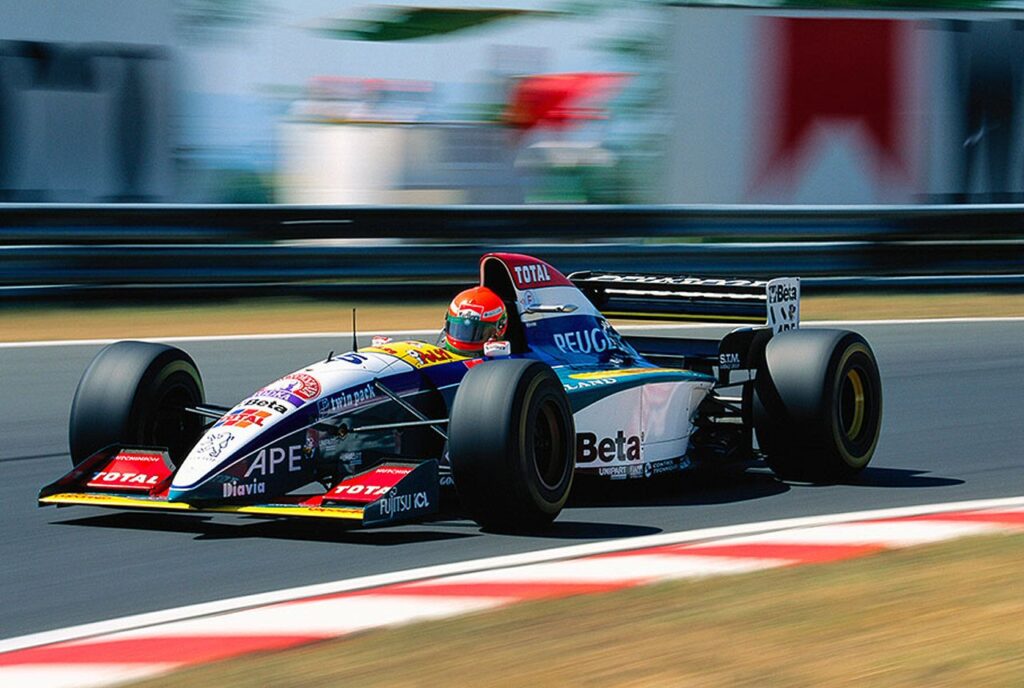
Irvine in 1995

Tauranac numbers
Emails following the Ron Tauranac tribute in last month’s issue have asked just how prolific he was. If we forget the run of motorbike-engined Ralts and his Lynx design before leaving for England, and his consultancy work for such as Williams, Trojan, and Theodore, then we have 592 Brabhams and 1051 Ralts. The Brabhams were built in the decade from 1961 — so an average of close to 60 a year — which is remarkably close to the Ralt output over nearly twice the timeframe, the first ones rolling out of the factory in 1975. The numbers will be right. While many in motor racing are liberal with the truth, Tauranac’s honesty was legendary. I’ve been told by a former employee who later did some out-sourced work he got “a bollocking for not getting my invoice to him quickly enough. Most people I dealt with had to be chased for payment — Ron paid instantly!”

Eddie Irvine
Gerhard Berger, also famously a prankster, without cake

Luxury by design

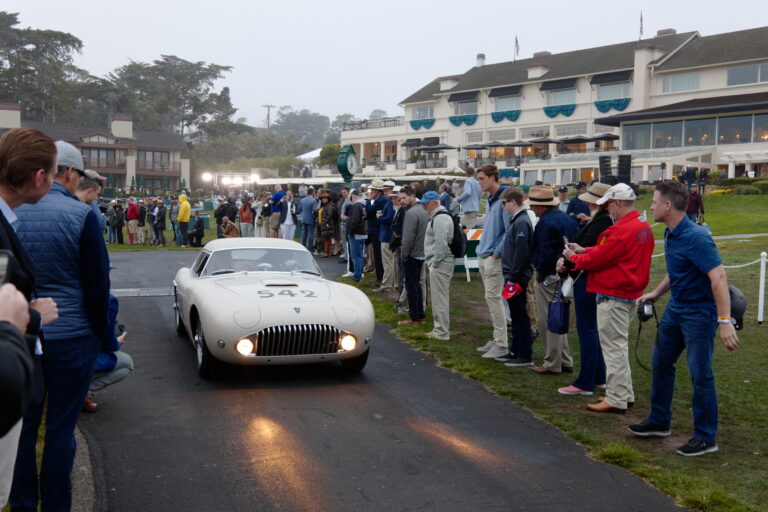
How do you define luxury? To some it is being blinded with all manner of technological wizardry, from massaging heated seats to being able to activate everything with your voice, be it the driver’s side window or the next track on Spotify. To others, the most exorbitant price tag will dictate how luxurious a car is.
For me, true automotive luxury comes from being transported in unparalleled comfort, refinement, and smoothness of power under complete control. Forget millions of technological toys; if one can be transported here and there without the sensation of moving at all, that is luxury — something that is perfectly encapsulated by the original Lexus LS400. It was the first truly global luxury car from Toyota, and one that made the big luxury brands take notice.

NZ Classic Car magazine, January/February 2026 issue 403, on sale now

Morris’ ground-breaking, world-beating, Minor
It was Britain’s biggest small car, and it got Britain mobile again.       Morris Motors celebrated its millionth Minor in December 1960, a car that defined the British motor industry, and was in production for 10 years alongside the iconic Mini of 1959.
Whakatane dentist John Twaddle has a passion for Morris Minors going back to 1982, and he still has his first example. There are now three ‘Morries’ in his garage. One, however, is quite special, a rare ‘Minor-Million’. 
One of just 350 made commemorating the millionth Morris Minor produced, the first British car to hit a million units, the well-rounded little Brit’ would end production in 1971with a tally of over 1.6 million units.
John finished his Minor Million six years ago, resplendent in lilac, its official factory colour. He calls it his ‘Minor Resurrection’, and it has won numerous awards.
This summer edition also comes with our annual FREE classic car calendar, a must for every garage wall.
Every issue comes with our FREE huge wall poster; this issue, our poster is of a couple of garage mates, a 1957 Ford Ranchero and a 1968 Lincoln Continental.