Monza, Pukekohe, and encounters with the masters of motorsport
By Michael Clark
[This article was first published in the September 2022 issue of the magazine]
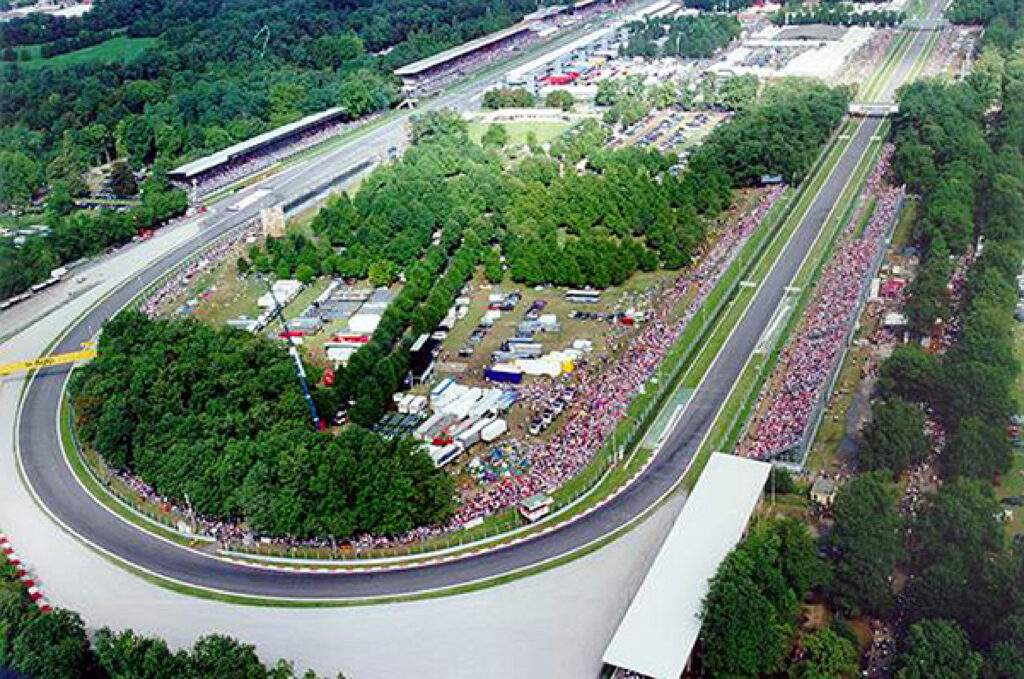
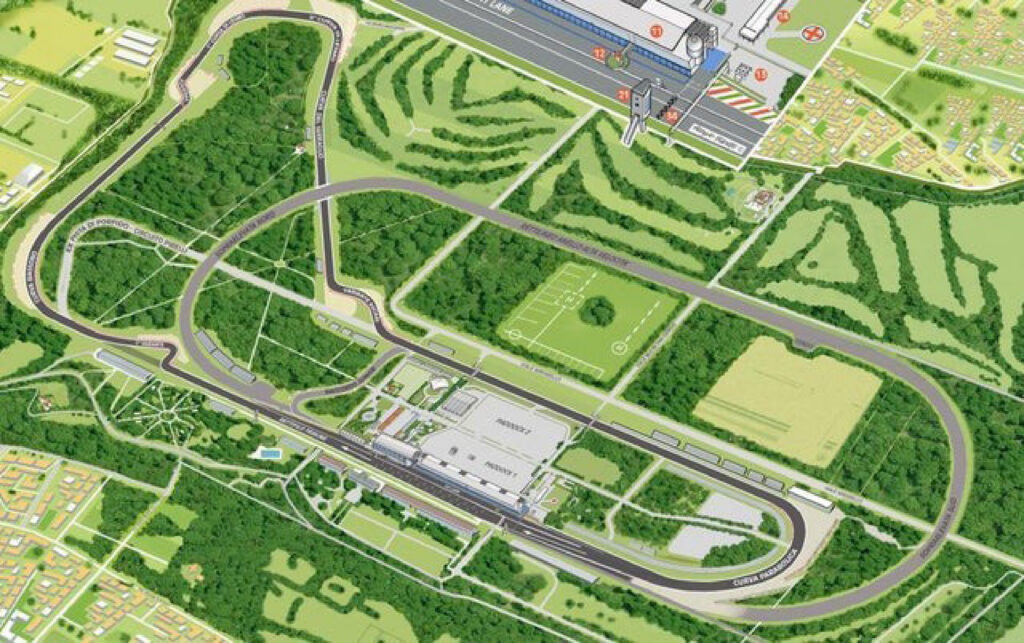
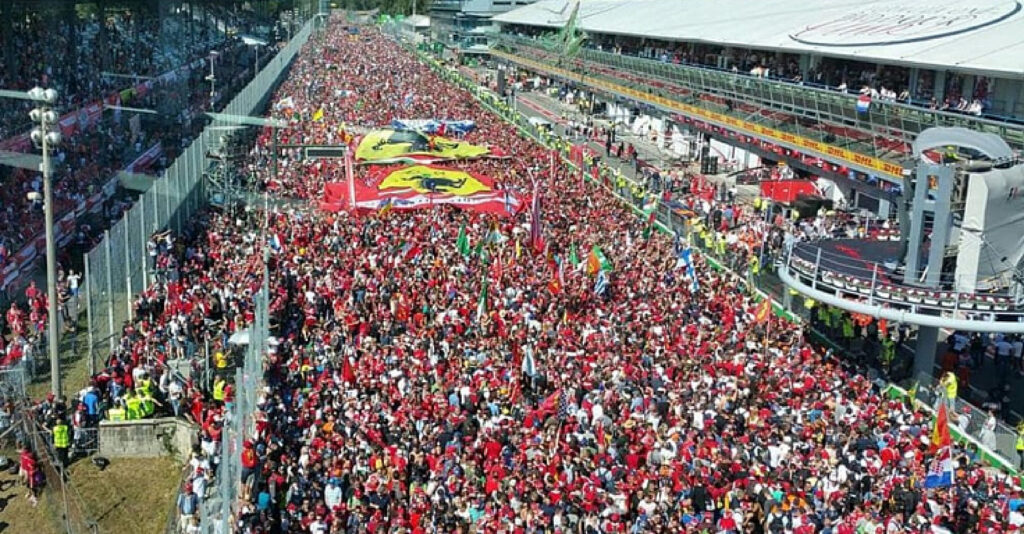
On the banks of the Lambro River is Europe’s largest enclosed park, all 688 hectares of it. Parco di Monza was commissioned by the son of an Austrian empress as a summer retreat in the late 1700s, but it would be for another century and a half before ground was broken on what would become Italy’s famous theatre of speed at the park’s northern end. One hundred years ago on 3 September, less than four months after work started, Autodromo Nazionale di Monza was officially opened and the first race – appropriately, the Italian Grand Prix – was run a week later. Monza was the world’s third purpose-built circuit, after Brooklands and Indianapolis, and was the result of the Milan Automobile Club financing the 3500 workers who created the super-quick, and consequently dangerous, track that made the word ‘Monza’ synonymous for speed.
Over the past century there have been multiple configurations of the track – which is shaped like a deformed paper clip – including a steeply banked ‘oval’, the Grand Prix track, and a junior circuit. For English speakers, the corners and curves sounded wildly evocative and romantic: Curva Grande, the Parabolica, the Lesmos; and if they’re not enough, what about the front straight: Rettifilo Tribune? The banking is still there, but until about a decade ago it sat as a decaying memorial to bravery – or something.
It isn’t the demanding challenge of tracks like Spa or the old Nürburgring – construction of which started a few years after Monza was finished – in any of its configurations, but, for a pure adrenaline tsunami, there’s never been anything to touch it.
Slipstream Paradise
Until 1971 it was paradise for slipstreaming; indeed, the last F1 race there in that configuration may well have been the greatest example of the art, with the first five cars covered by a thin piece of fabric intended for personal nasal hygiene. Kiwi Howden Ganley was so close to the winning BRM of his teammate Peter Gethin that he could read his rev counter, but was only fifth. Gethin’s average speed of 242.615kph stood as an F1 record until 2003 because, in the interest of safety, two chicanes were added to slow the cars down. With that came an end to streamlining as we’d known it and, some would say, an end to super-exciting Italian GPs.
Fifty years ago, the first GP with the loathed chicanes in place saw three Kiwis in the field. Howden qualified back in 17th, Denny Hulme’s McLaren was 5th, and Chris Amon’s Matra shared the front row with the pole-sitting Ferrari of Jacky Ickx – much to the delight of the tifosi. A year earlier it had been Amon on pole, when he looked destined for victory – his pole time then was a record of 1m 22.4s, but a year later the chicanes had done their job, and Ickx had taken an extra 13.2 seconds to be fastest. Denny was the only Kiwi in the points and completed the rostrum with world champion-elect Emerson Fittipaldi and multiple motorcycle world champion Mike Hailwood, achieving the best result of his F1 career.
Vale Pukekohe
Last month I wrote about the upcoming 60th anniversary of the opening of Pukekohe. Shortly after the August issue had gone off to the printers, news came through that our own ‘temple of speed’ was to close its doors for motor racing in April 2023 – for good. The announcement prompted reflection on how much of my life I’d spent watching, anticipating, helping, and, in more recent years, competing there. In fact, in the mid ’90s I managed a transition between owners for about a year. It was where I first saw racing cars (the 1965 Gold Leaf 500), where I first saw a GP (1967), and where I, extremely nervously and cautiously, ventured out onto a racetrack in an open-wheeler for the first time (2007). A few years later I even managed my first win there.
A few better-known local drivers have also competed there over the years – Bruce McLaren, Denny Hulme, Chris Amon, of course – as well as other international stars such as Stirling Moss, and world champions Mike Hailwood, Jim Clark, Jackie Stewart, Graham Hill, Jack Brabham, Jochen Rindt, Keke Rosberg, Phil Hill, and John Surtees, and sports car champions Pedro Rodriguez and Derek Bell, and future Indy 500 winners like Danny Sullivan, Bobby Rahal, and Scott Dixon.
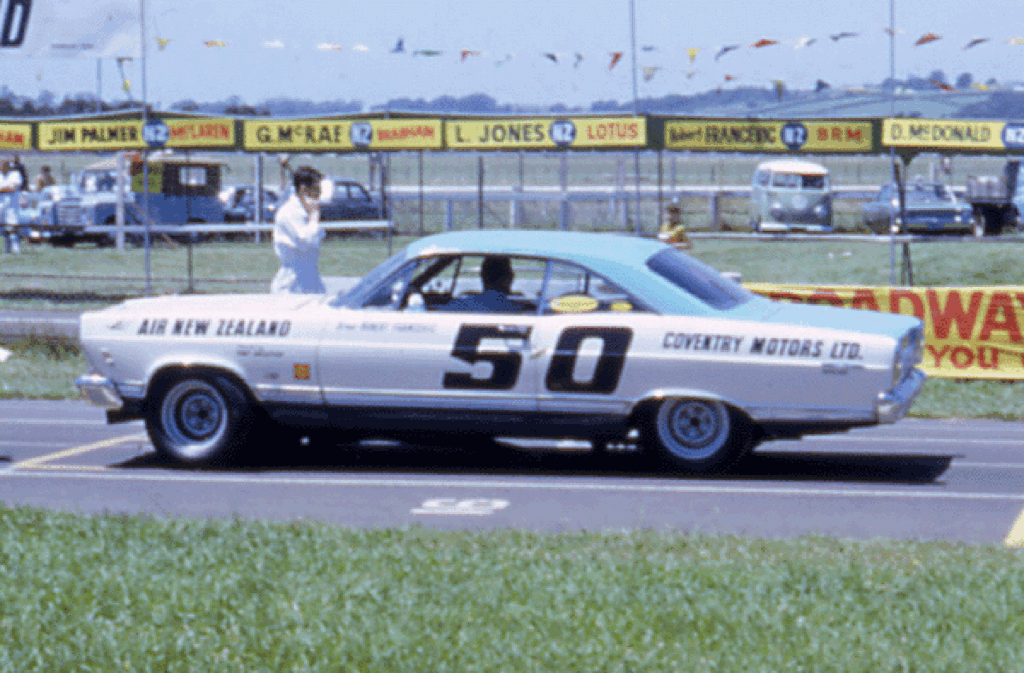
In a radio interview in late July, I was asked for my favourite Pukekohe memory. Where do I start? Kenny Smith and David Oxton winning the GPs of 1976 and 1983 respectively for starters, watching brake discs glow at the elbow as B&Hs drew to a close, seeing a Ferrari for the first time in 1967, the high-wing Lotus 49s in 1969, willing on Jim Murdoch’s Begg 018 during the damp ’75 GP, or Steve Millen’s move on Roberto Moreno down the front straight in 1982. Then there was the final round of the 2018–19 Formula Ford championship, which I watched from the central commentary position and witnessed the come-from-nowhere title-winning drive of Invercargill’s Jordan Michels. What about the Group A racing, especially the early years with the Volvo, the Rovers, and BMW 635 CSIs adding to the familiar sound of the Aussie V8s? My favourite ever New Zealand racing saloon, the Robbie Francevic–chauffeured 427ci Ford Fairlane 500, wasn’t a success on track but, while getting Robbie’s autograph in 1968, I at least got close enough to nearly touch it and see, first-hand, its magnificent immenseness.
My favourite year – 1968
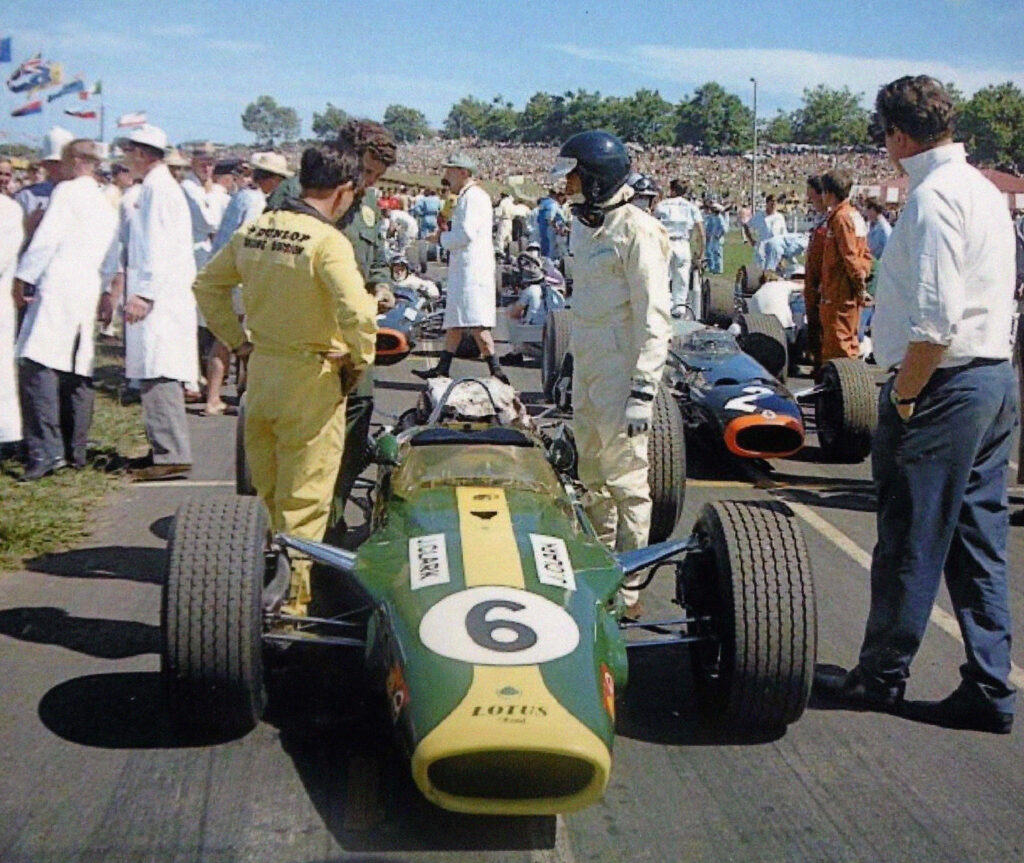
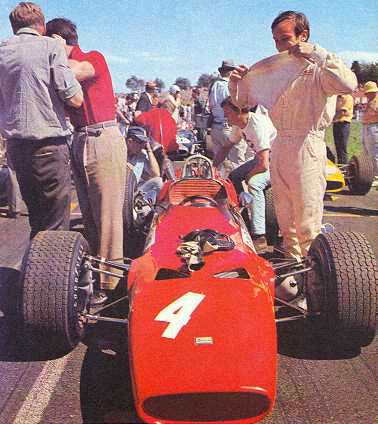
For me, that’s the year that tops everything else – January 1968, when the nine-year-old me was smuggled into the paddock before the GP, brand-new autograph book and a pen at the ready. I look at that little green book now and try to just imagine how that day influenced a shy wee lad’s life. I’d secured Denny’s signature early – so at least I had a run on the board – then came Robbie, Jim Palmer, Frank Gardner, and Piers Courage in quick succession. The BRM boys, Bruce McLaren and Pedro Rodriguez, were elusive for a start and then I saw a queue forming alongside the most achingly beautiful thing my young eyes had yet seen: the Dino Ferrari. Chris Amon sat on a tyre signing autographs – who could have imagined the closeness of the friendship that would occur decades into the future? Panic set in when I realised I needed to return the pass, but I still hadn’t found Jim Clark. I’d resigned myself to getting it ‘next year’ as I trudged back to the gate – then I saw him and, with trembling hands, offered the book and pen, which were returned in a flash as he continued his chat.
A few hours later, a Kiwi-driven Ferrari had won the race after Clark dropped out while leading. People sometimes confuse coincidence with irony. There, in one sentence, is an example of the latter: Chris, in a fully functioning Ferrari, winning a GP and benefiting from another driver’s bad luck. Of course, Jim Clark would never return, losing his life in an F2 race at Hockenheim a mere 91 days later – and not in a ‘meaningless race’ as some people try to paint it. How could any race that one of the greatest of all time was in ever be meaningless?
Autographs
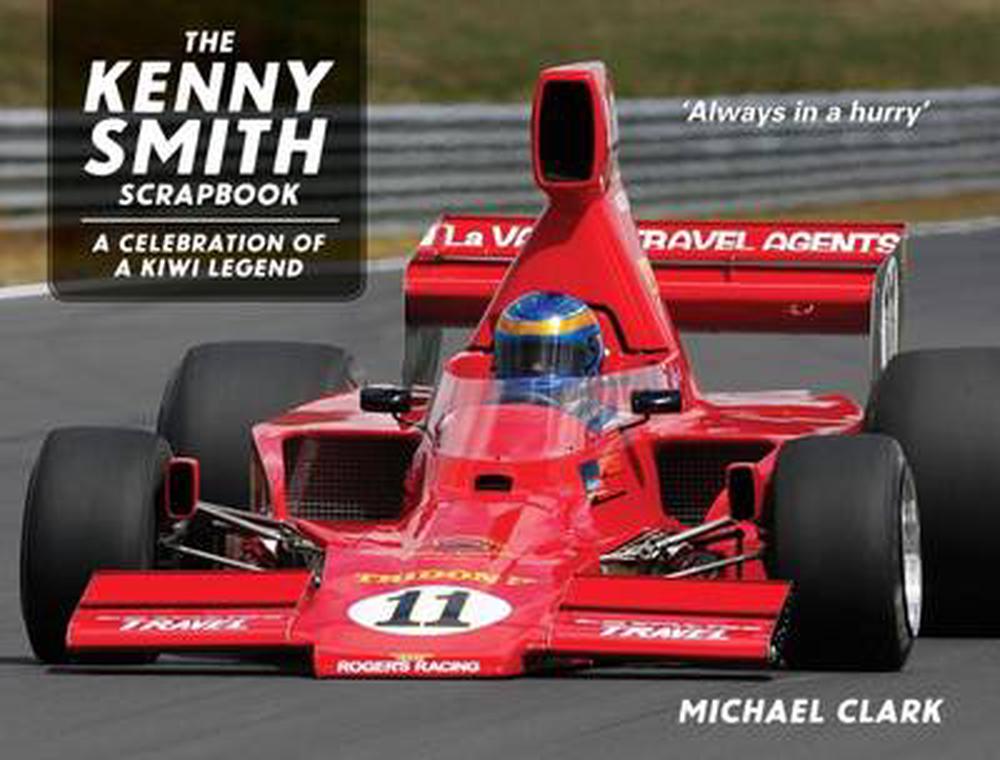
On the subject of autograph hunting, I’m reminded of a story I told at the launch of my book on Kenny Smith. A year or two after the above trophy hunt, I approached the Smith équipe tent for the wee man’s signature. He was trying to release the reluctant wheel nuts on his Lotus, and I heard words being shouted that I’d never before heard – but I was fairly sure they indicated at least mild annoyance and frustration. I hadn’t seen his mum at that point but she, clearly used to such colourful language, spotted me and broke the silence with the unforgettable, “He’s a bit of a hard case, isn’t he?”
That was a possible title for the book. So, I told this story to the gathering at the book launch in December 2016, and added, “Kenny, I backed away that day. It’s taken another 45 or so years, and I’ve had to write a book in order to now ask you: ‘Can I please have your autograph?’
Catching up with Andy
I’d been telling Andy Buchanan that we wanted to spend a few days in the Wairarapa for so long that I’m sure he assumed it was just hot air. The day after the Austrian GP wasn’t the greatest weather-wise, but the welcome at Andy’s comfortable modern home about 15 minutes from Masterton was as warm as the fire. After lunch our wives got down to the serious business of discussing art and antiques while Andy and I analysed the state of F1, how Marcus and Liam were doing in F2, the fortunes of the two Kiwi Scotts in IndyCars, the All Blacks, and politics – oh, and dogs: their twin black labs and our chocolate border collie.
Perhaps because we had agreement on virtually every topic, the conversation flowed easily – Andy’s one of those guys you could wish you’d find yourself sitting next to on a long-haul flight; unlike Mr Hyper-Nervous, whom I had the misfortune to be alongside the last time I left the country.
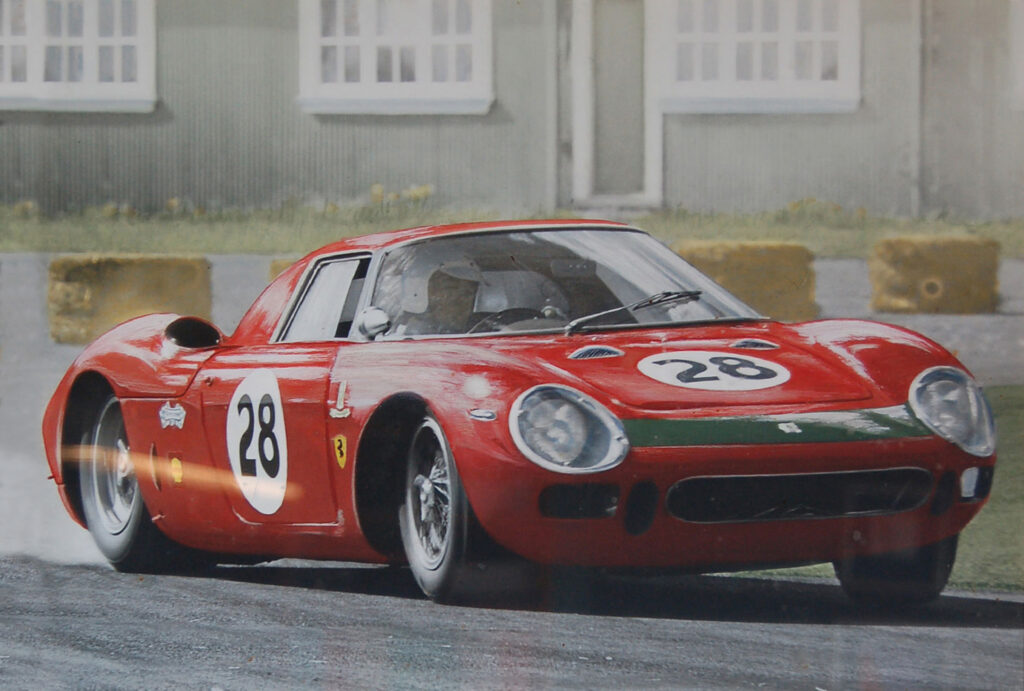
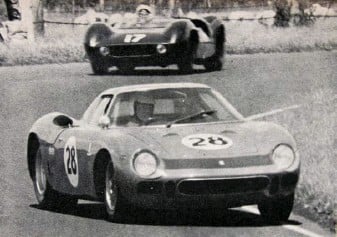
I mentioned before seeing a Ferrari for the first time at Pukekohe in 1967; it was in fact piloted by Andy to victory in the support race for sports cars on the way to the first of his back-to-back sports car titles. It wasn’t just any Ferrari; it was a purpose-built racing model – one of 32 – widely known as the 250LM (for Le Mans) but, as Andy will say, “Really a 275; I think Enzo thought 250 sounded better”. For pedants, the answer comes from dividing the cubic capacity by the 12 cylinders. As Andy’s LM, now owned by Ralph Lauren and worth maybe US$25 million, was a 3.3-litre, it was technically a 275.
By the time you read this, Andy will have just turned 80, and he’s still as funny and entertaining as ever.
Racing news
In 1971, a Herald delivery boy got a whopping $2.60 a week. Out of that, I had monthly commitments to Donn Anderson’s Motorman and Allan Dick’s AutoNEWS, while the English newspaper Motoring News was weekly, so it was also essential to provide results and race reports on the wider world – albeit three months late. I could take in NZ Hot Rod magazine in the newsagent’s before heading out with the newspapers, so I had all bases covered.
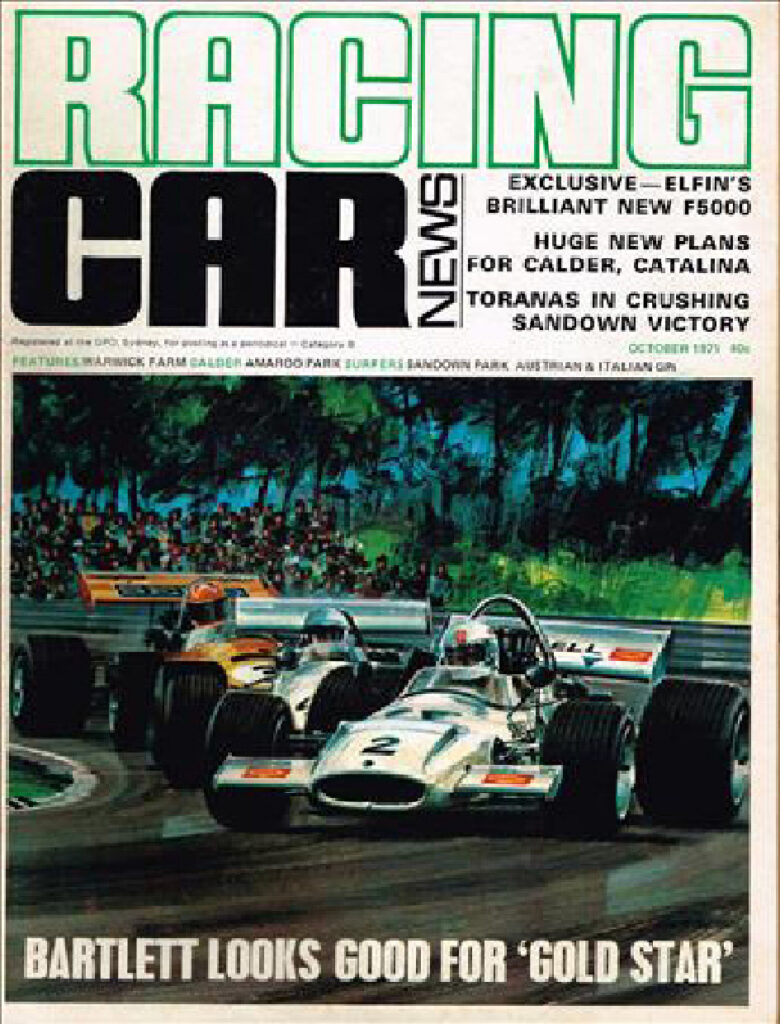
At the end of the year our pay rocketed to $3.00 a week, so an Australian magazine that I’d been inhaling at the magazine stand also became affordable. Racing Car News became a staple of my magazine pile, and I still have a near-complete collection because, after I became consumed by it, I started accumulating issues prior to the October 1971 edition – my first.
Why am I telling you this? Because long-time editor Max Stahl passed away in July at the age of 87. Although his name is unlikely to be known beyond the smattering of other Kiwis who purchased RCN for their monthly dose of motor racing – as the Aussies saw it – his and his magazine’s contribution to the education and enjoyment of a generation deserves to be recognised and remembered.