The originals – the Ledgerwood Collection

14 February, 2025

American automotive styling has influenced car designers around the world with signature contributions such as tail fins and Coke bottle body lines. Jim and Daphne Ledgerwood have gone for the originals
By Quinton Taylor
Photographs: Jim and Daphne Ledgerwood, Mark Price and Quinton Taylor

America turned the coupe into a true trendsetter with sporty and chic styles to impress and even seduce. The car symbolised fun times and the American dream—if you were driving a coupe, you had arrived. In 1963, the Beach Boys had a hit with Little Deuce Coupe, which celebrated the favourite of West Coast hot rod culture—the ’32 Ford Coupe. Then in 1973, the classic car was again celebrated in American Graffiti, directed by George Lucas, where it was the star of the show.
An obvious passion for coupes can be seen at any local car show. They are often American, powered by large audible V8s, lovingly restored, and colourful and chromed – all part of the booming Restomod culture.

The Originals
Thanks to Central Otago’s dry climate, it’s no surprise to find that Wanaka couple Jim and Daphne Ledgerwood are steadily developing an incredible collection of amazing coupes. ‘The Originals’ they have are, as per factory-new condition, and their aim is to keep them for everyone to see how it was done back in the day—pure nostalgia.
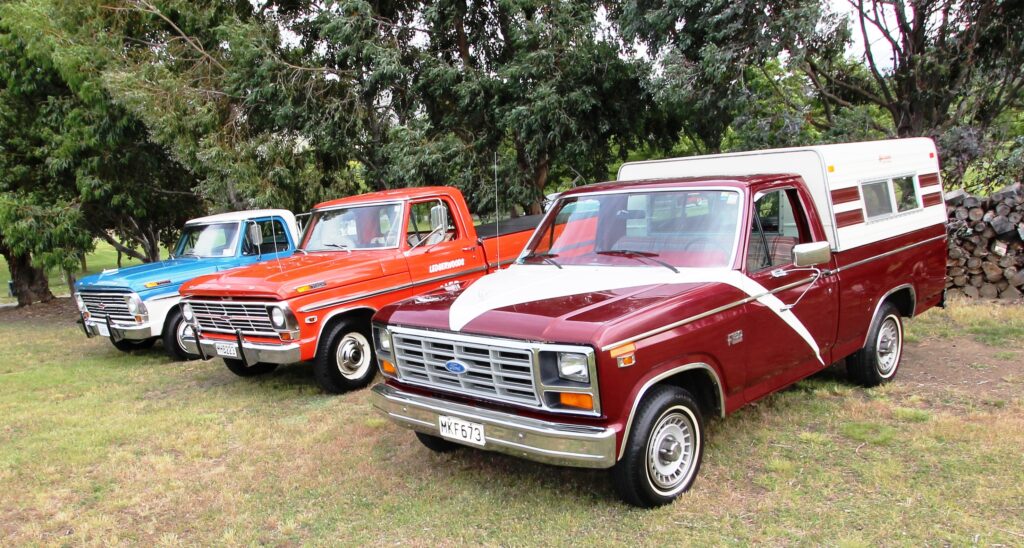
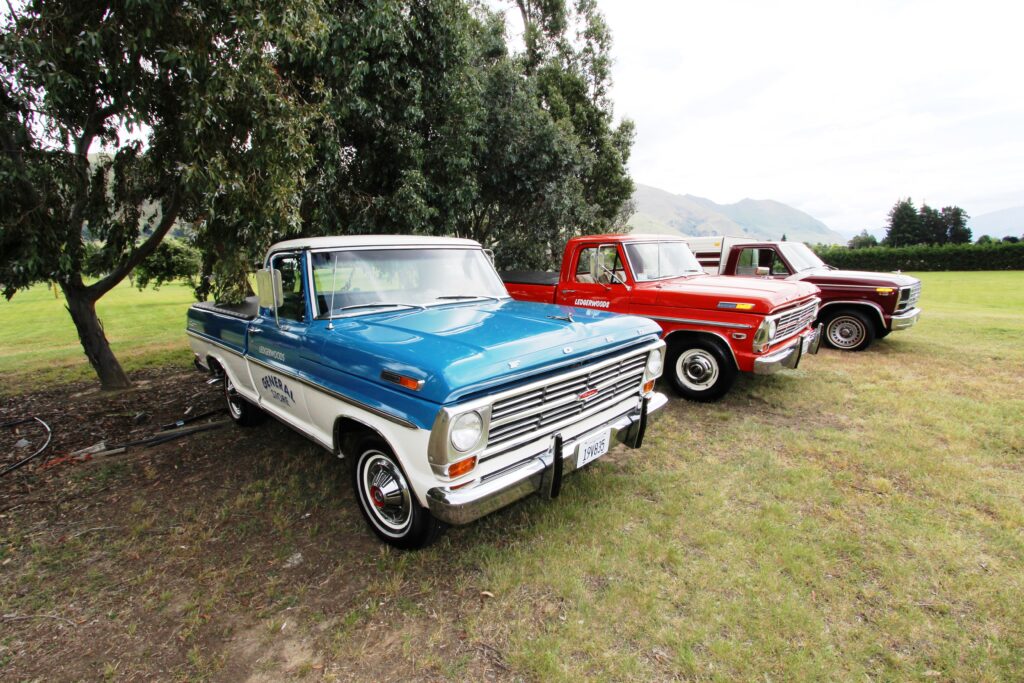
An occasional email from Jim usually reveals another gleaming addition. The collectors also have an impressive display of American pickups. It’s our gain and US enthusiasts’ loss, as car agent’s adverts proclaim, “Sorry you missed out. Gone to New Zealand!” Some of Jim and Daphne’s cars are almost part of the family, hence their nicknames.

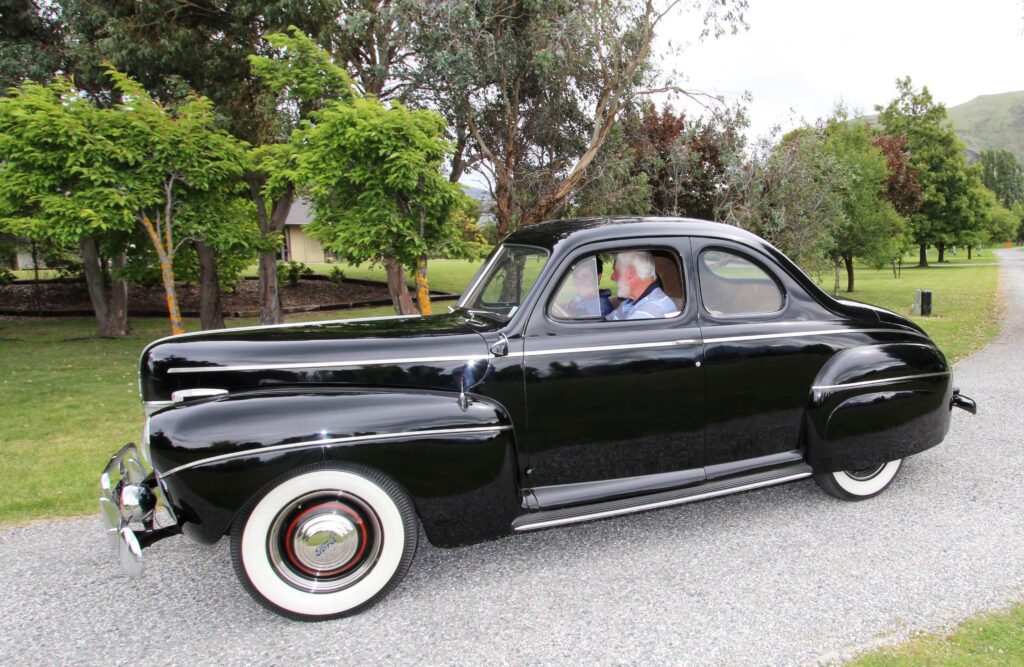
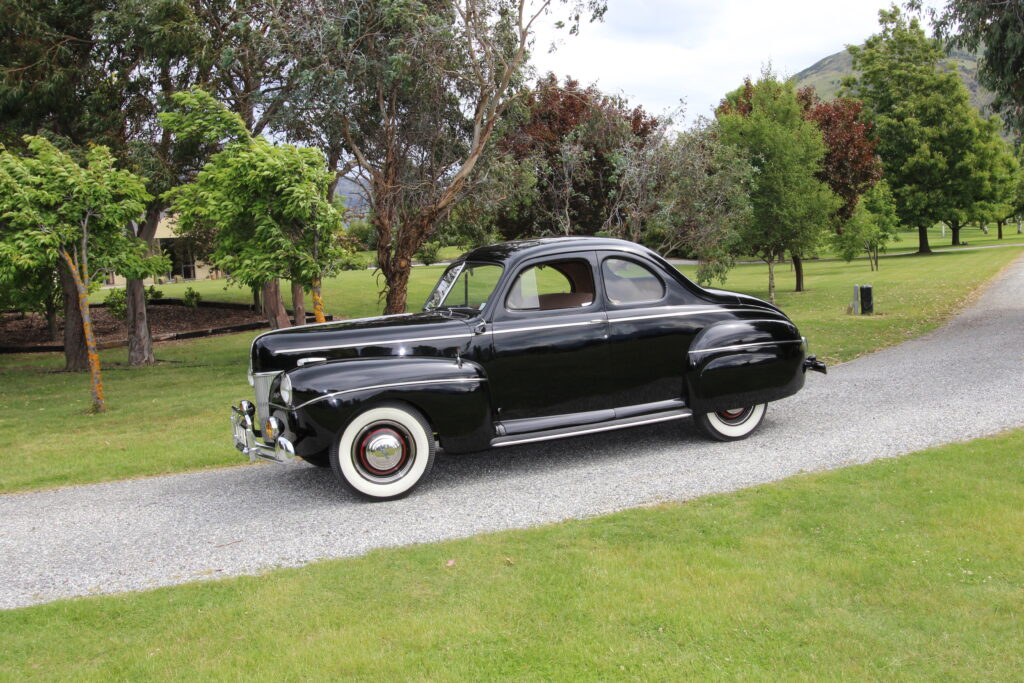
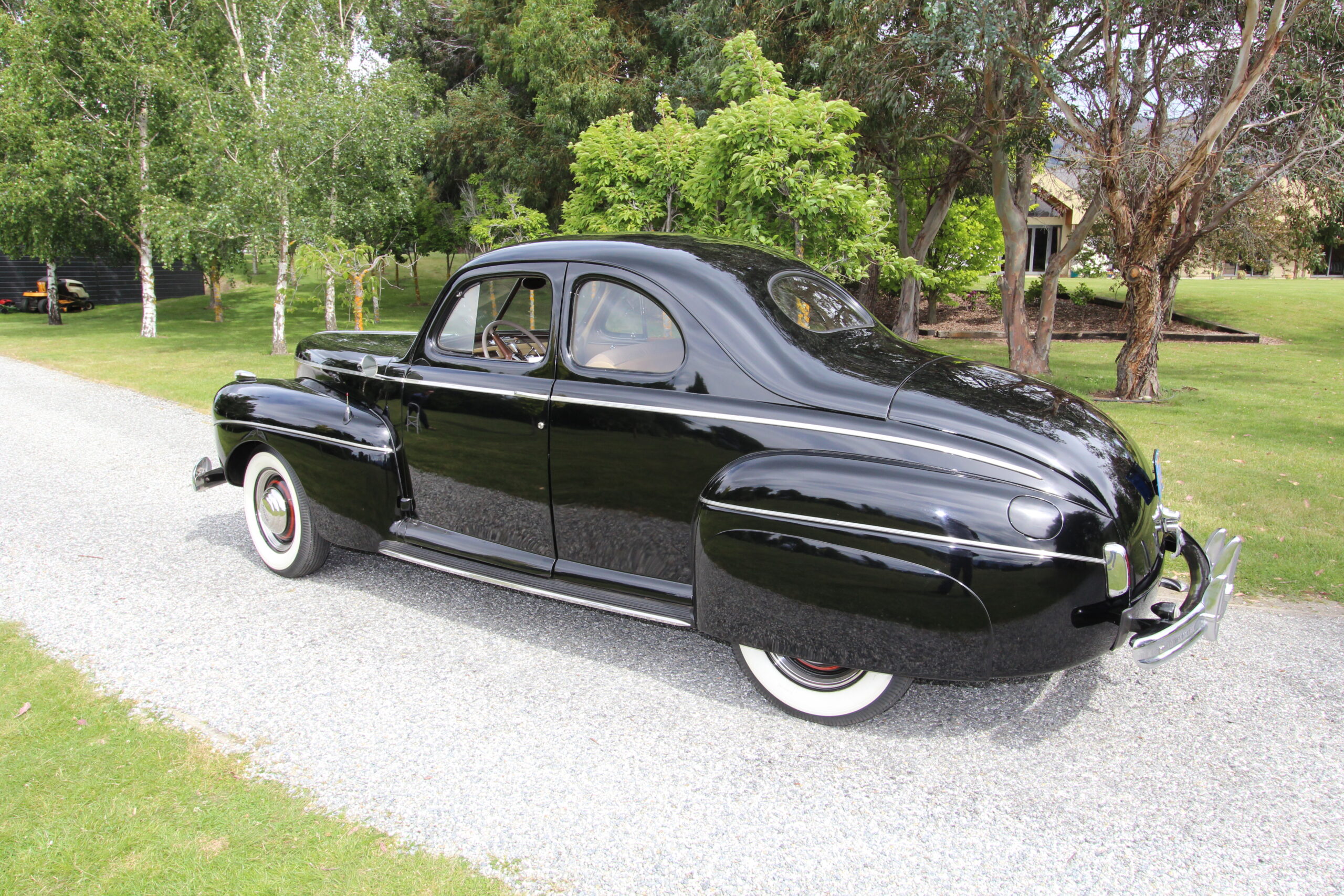
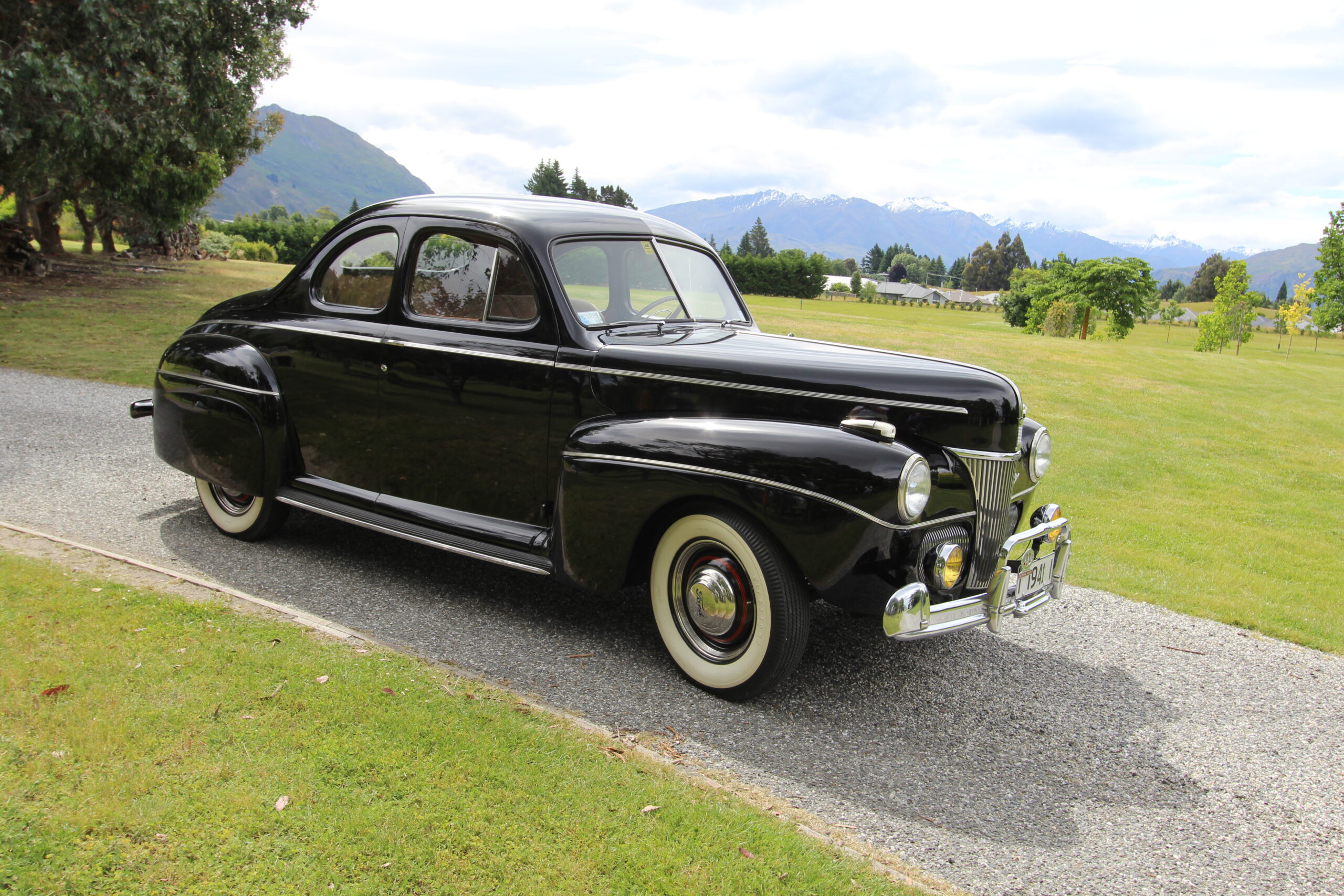
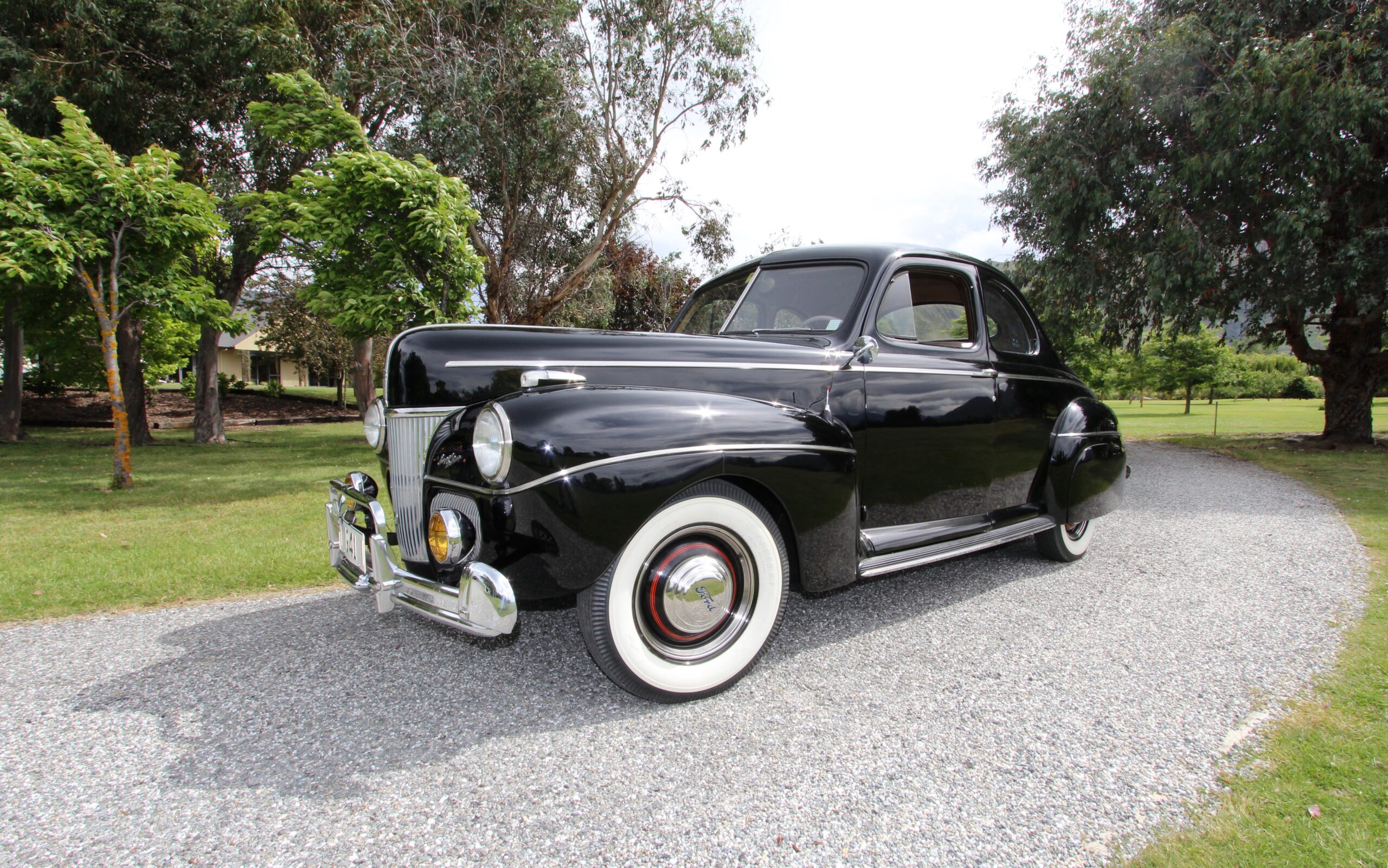
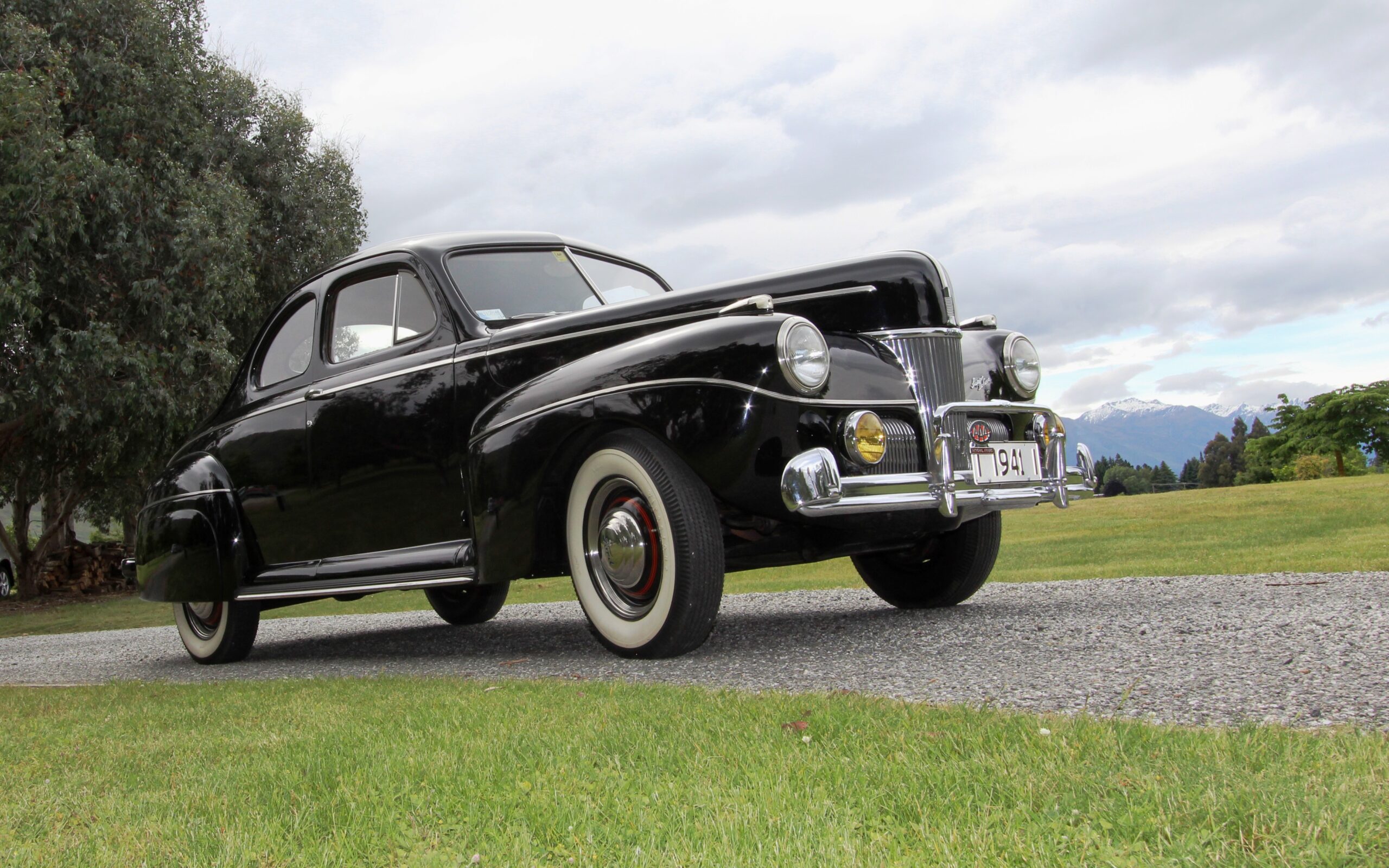
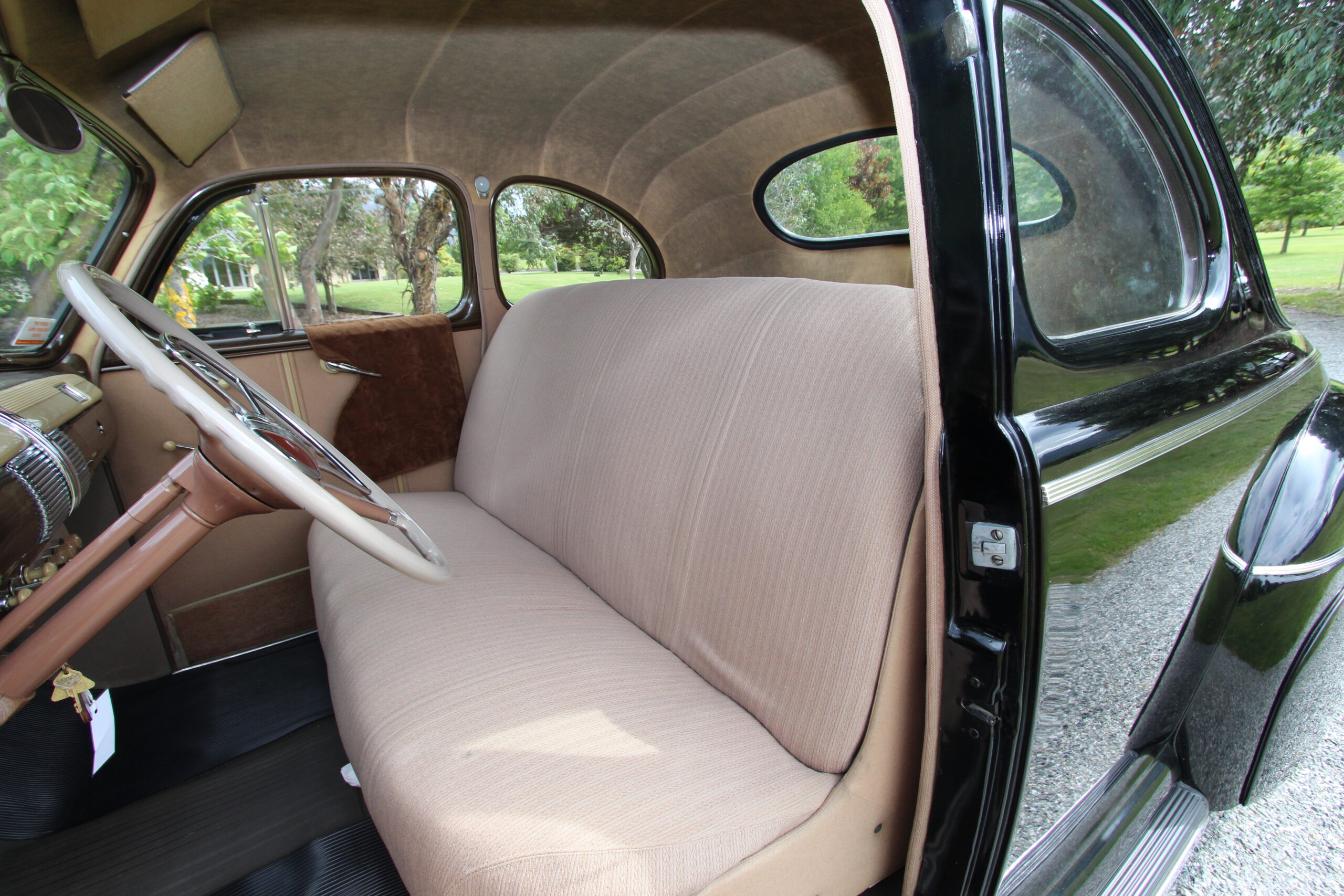
Ford Super Deluxe Coupe, 1941, ‘Claire’ 
This amazing 1941 Ford Super Deluxe Coupe was featured in New Zealand Classic Car magazine in June 2021.
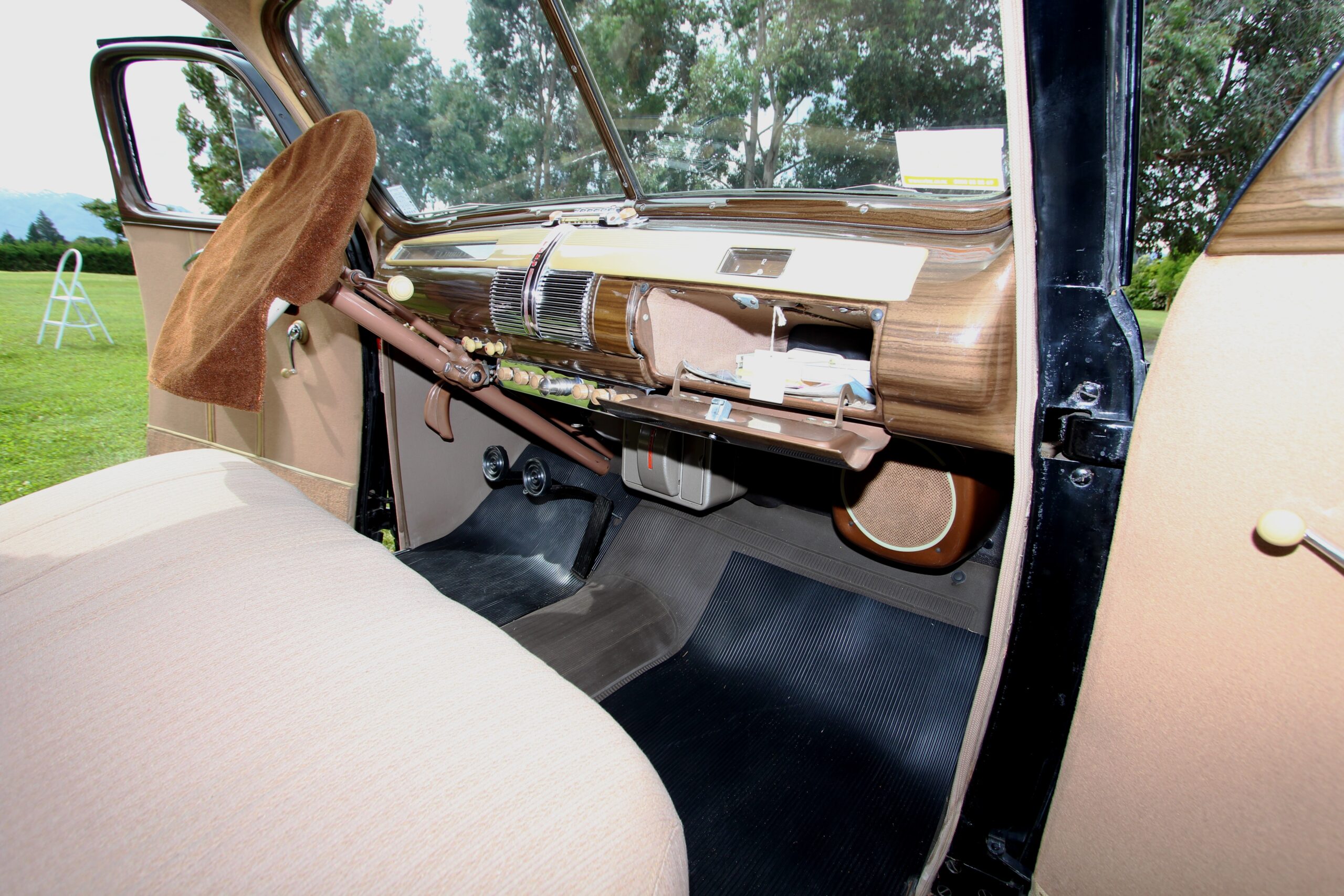
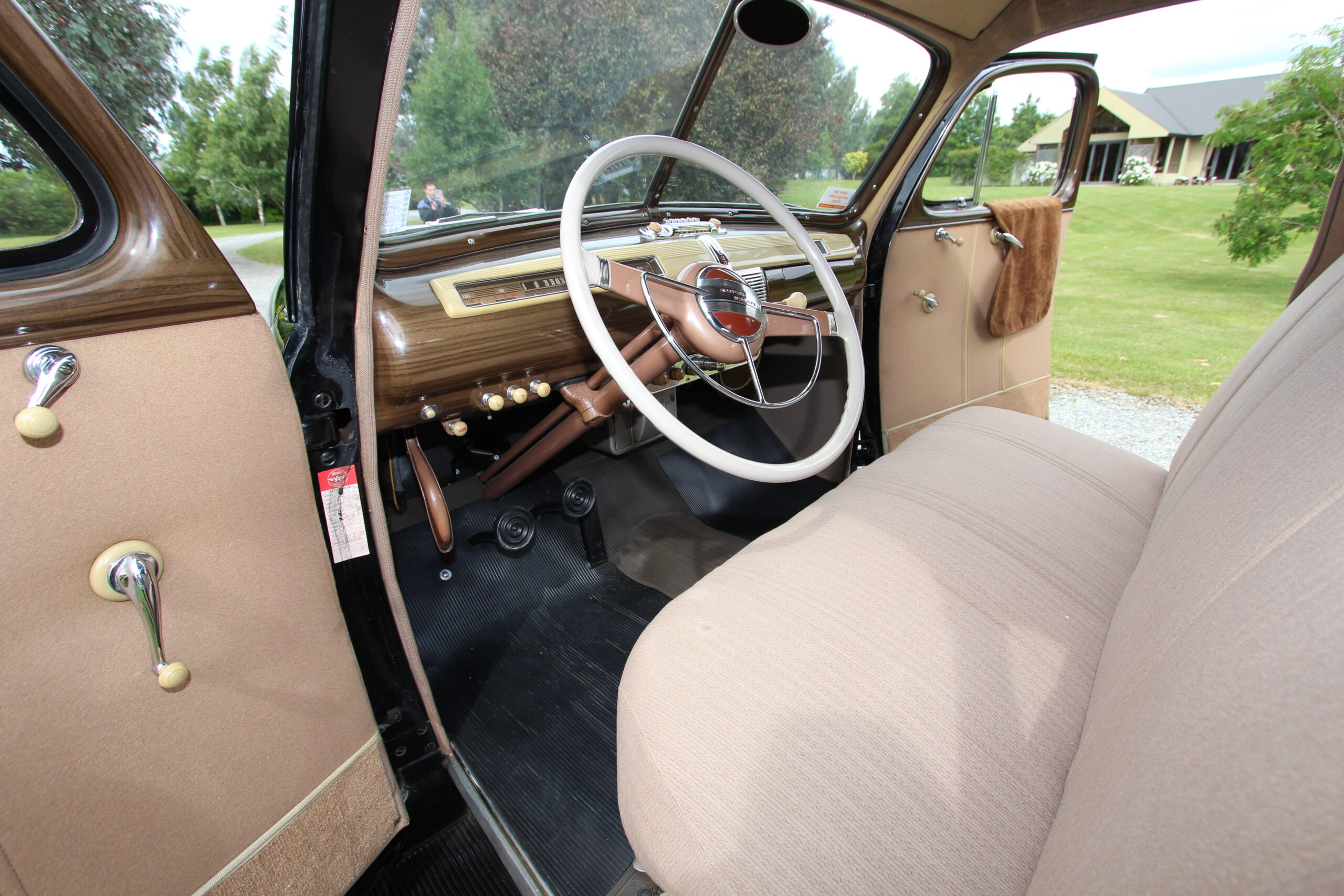
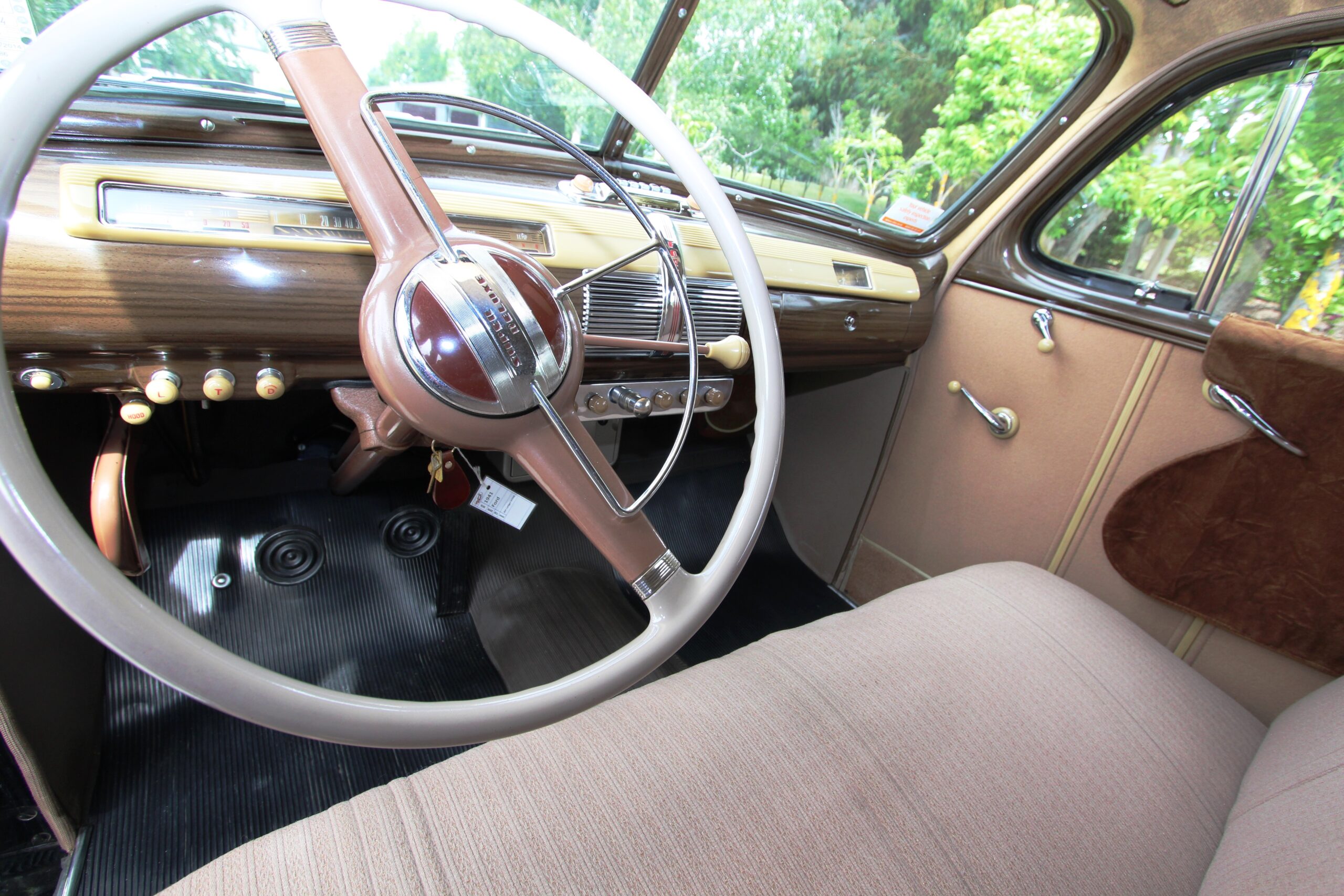
Stunning is the only word that can rightfully describe this glorious machine. Powered by the legendary Ford flathead V8, it starts on the button and ticks over with an uncanny quietness belying its 80 plus years. At 65,000 miles on the speedometer this time machine out of the 1940s impresses with its unmarked condition, along with a wealth of interior memorabilia, which includes chalk notations made by assembly workers inside the body panels.
As Jim says, “They are only original once.” His passion for putting together a collection of authentic and original cars has led to some serious searching in the USA to get the right one. Not only Fords, but there are a few Chevrolets included, and way back there was even the occasional Jaguar sitting amongst the Americans. Each one is in top running condition.
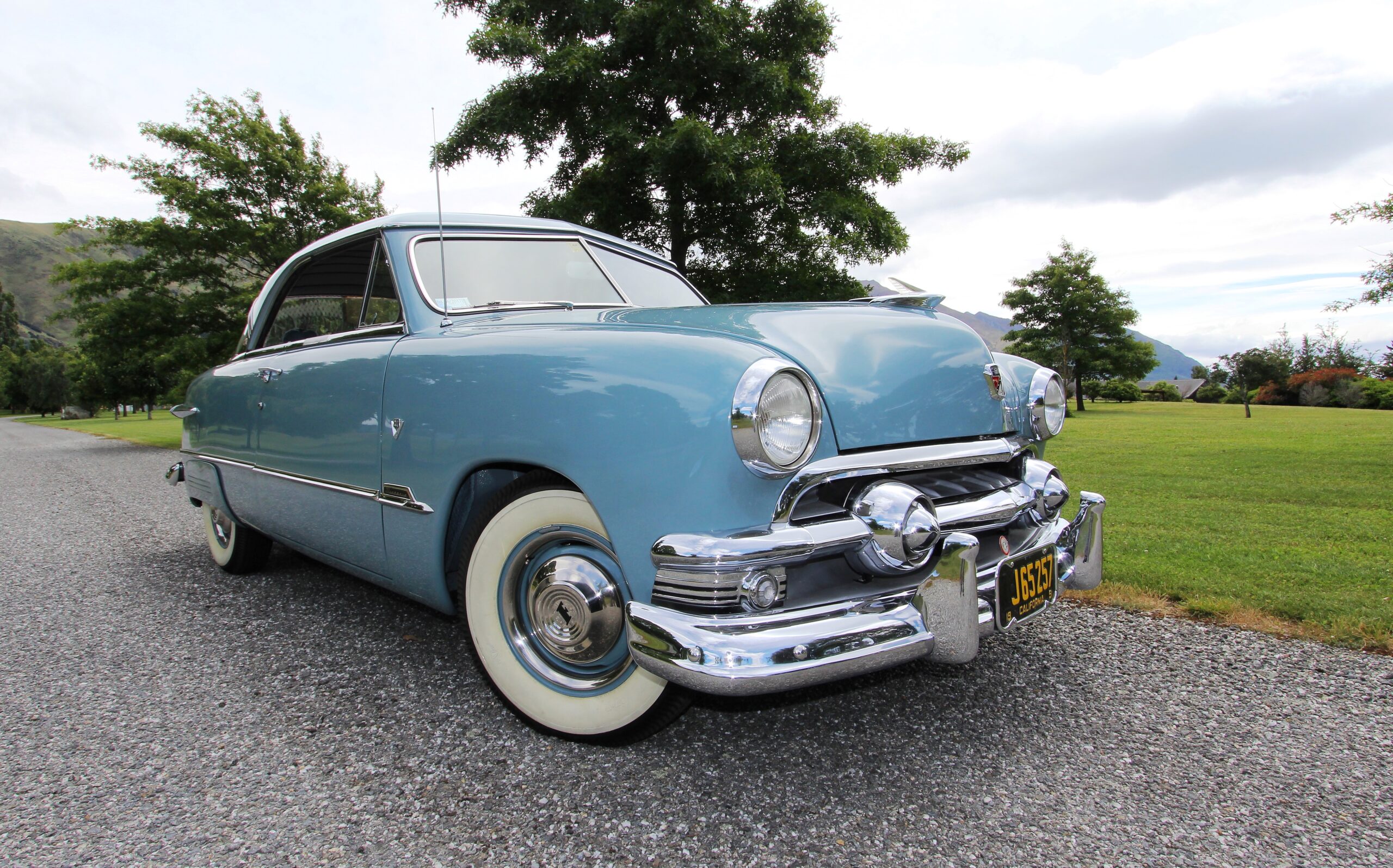
Daphne’s favourite in the collection is a replica 1984 Ford Mustang Cobra Pace Car from the 78th Indianapolis 500 of that year, as well as a Ford pickup. Enthusiasts will get to see Claire along with their 1951 Ford Victoria Hardtop Coupe on display at the coming Autospectacular car show in Dunedin this September.
The cars are low mileage and low ownership, and Jim doesn’t mind a little restoration where it is needed, but he prefers to get his cars as originals. The 1965 Ford Falcon Sprint Hardtop includes a number of unique, one-of-a kind features. All are quite different to the cars Jim grew up with in Dunedin as a founding member of Hurricane Rodders, and while over the years his taste in cars may have changed a little, he still appreciates a well-executed hot rod. 
While in Elwin Soalfelt’s ownership in California from 1941 to 1981, Claire was known as ‘Black Beauty’. It was always the Soalfelt family’s go-to for the Sunday drive, although it was never driven in the rain. Every factory option was included: bumper splash guard, boot light, spare wheel lock, and exhaust extension. As an engineer for the Lockheed Aircraft Company in California, Elwin appreciated detail and craftsmanship, so much so he created a tidy under-dash panel to house the Golden Voice radio that replaced the Ford unit.
The Soalfelts would drive the Ford to Elwin’s parent’s farm in Montana for summer holidays, which was 1250 miles—2013 kilometres—away, and while there, it was stored in a nearby town as Elwin refused to drive it on dusty shingle roads around his parent’s farm. A detailed log was kept throughout its life and Mrs Soalfelt added touches that are still with the car today, such as the protective cloth covers for the car window trim when the glass was wound down. 
In 1958, following his parents’ passing, Elwin inherited the farm, and the couple moved there with the Ford stored in a barn, where it remained for 20 years, only given an occasional run. By 1981, it had accumulated just 50,027 miles—80,500 kilometres—according to Elwin’s log.
Its next owner was Marshall Lewis of Modesto, California—a Ford collector and past president of the Model A Ford Club of America. It still ran just as good as had done in 1941, and it was no surprise when the car collected serious trophies at Ford national rallies, from the Dearborn Award for the most original pre-1950 Ford coupe in the US. Jim now has this trophy.
In 1993, the Ford changed hands to a new owner. Daphne and Jim had attended Ford rallies in the US for more than 40 years and knew the car well, so when it came up for sale in 2013, they snapped it up. as the coupe sits sparkling in the Wanaka sun, Jim’s face says it all.
“It’s an amazing-condition car. I don’t think you will see another Ford of this age in as original condition as this one.”
It’s quite a coup to get this car in New Zealand. “I was so lucky to find this car. We are fortunate to have such a car here in New Zealand and to be able to see how it was done in the US back in the day,” Jim tells us.

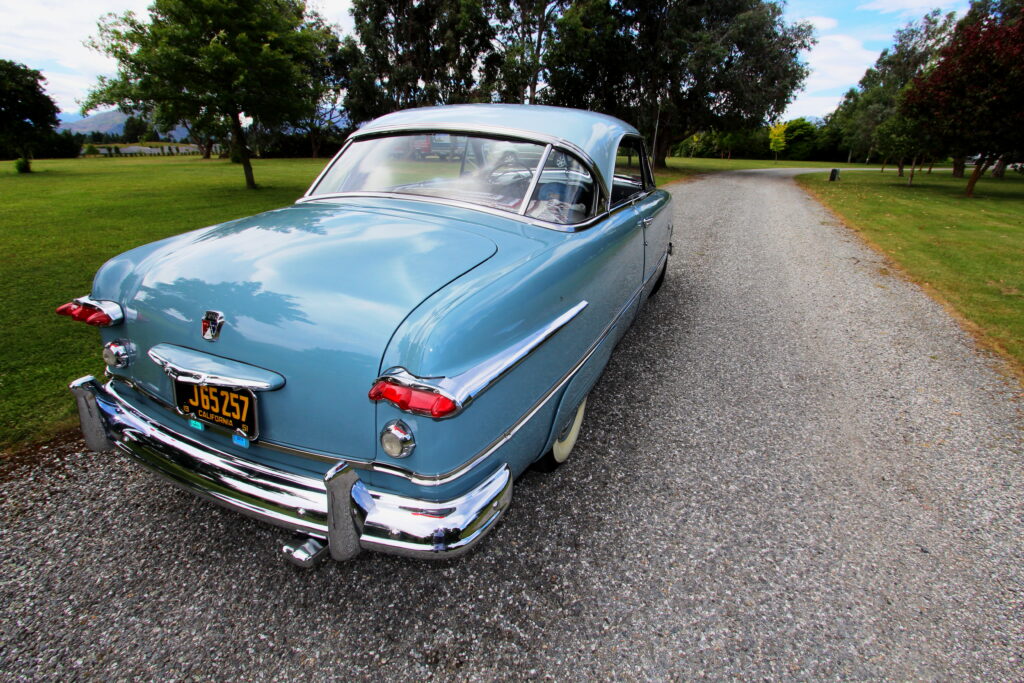
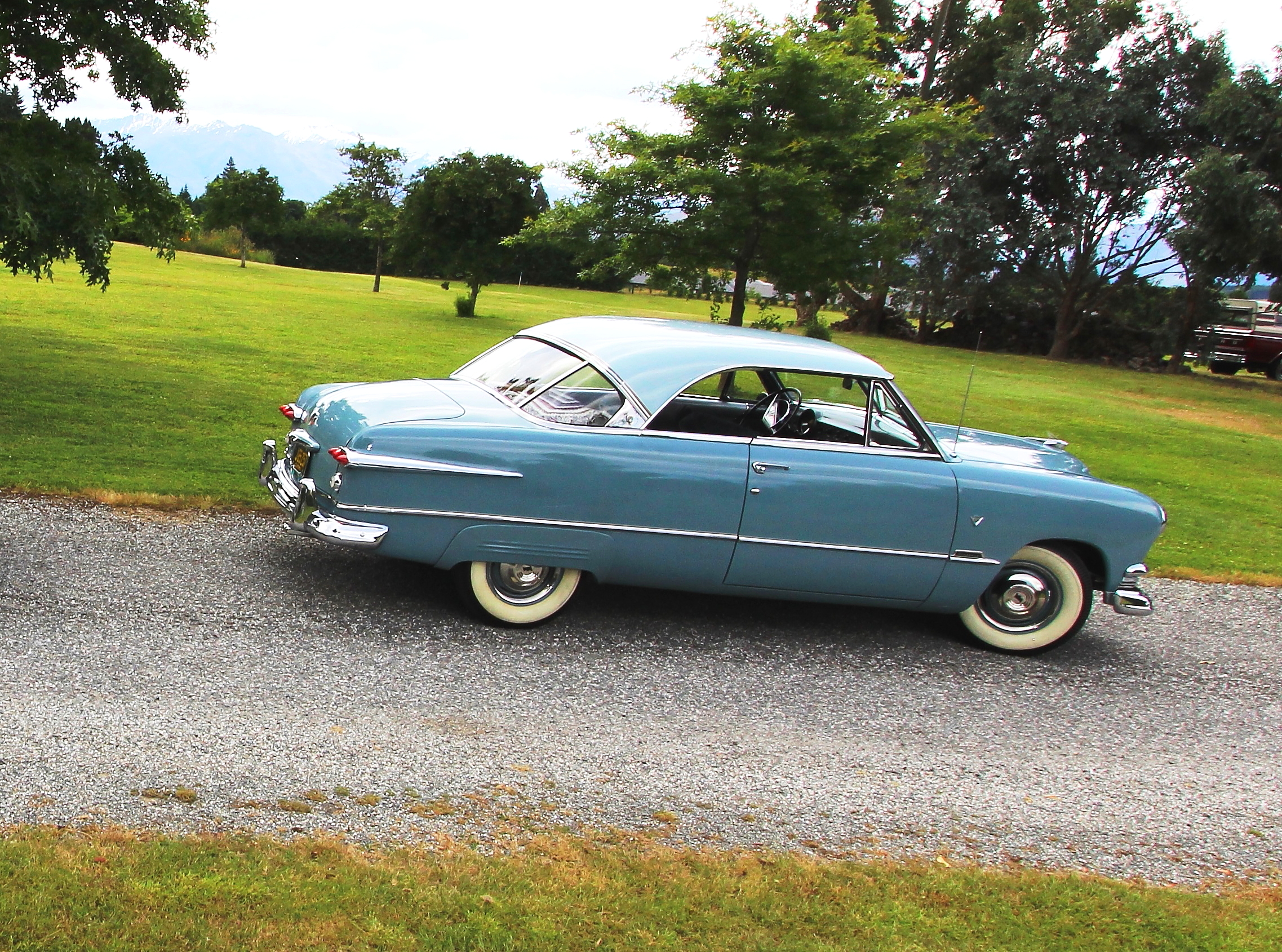
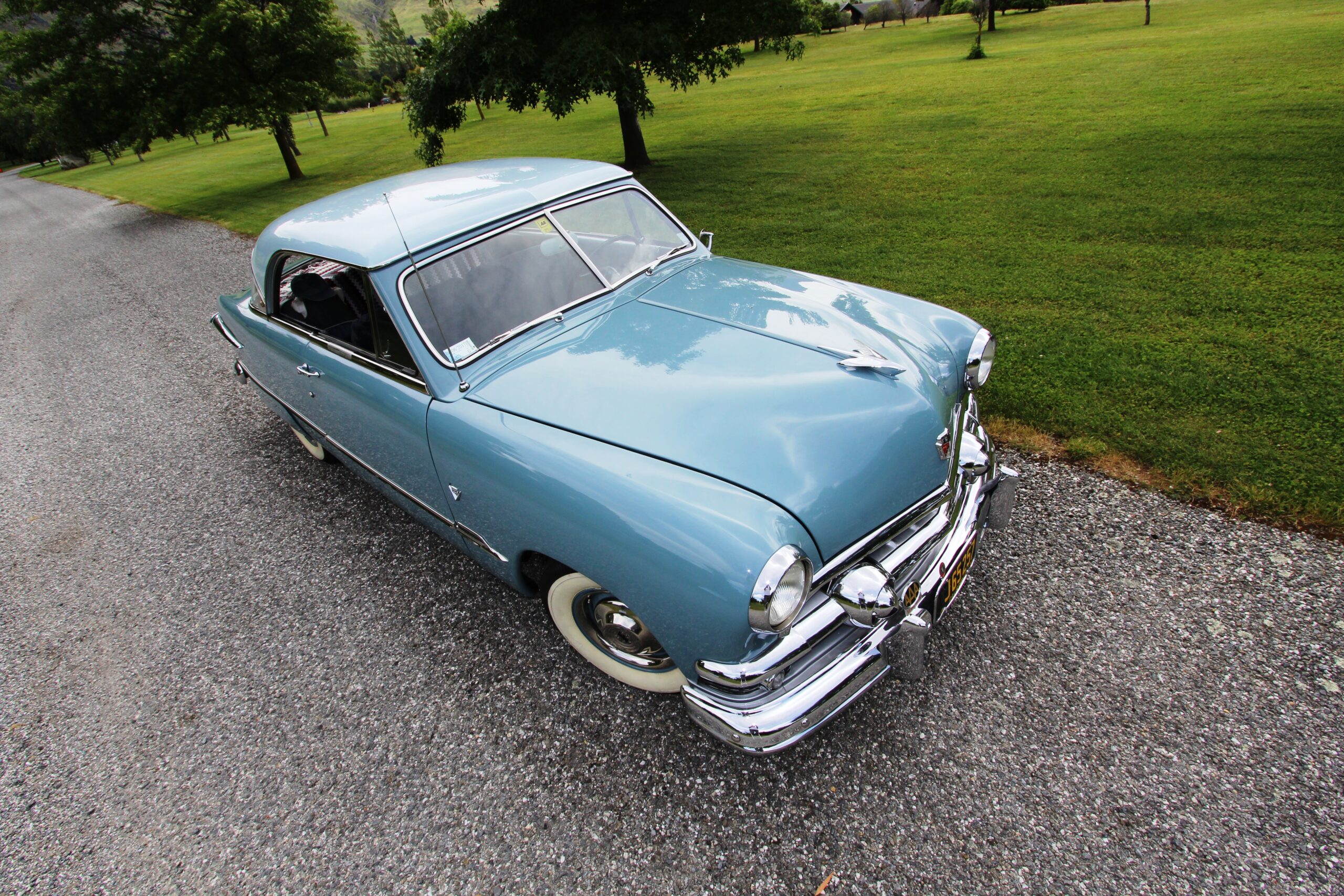
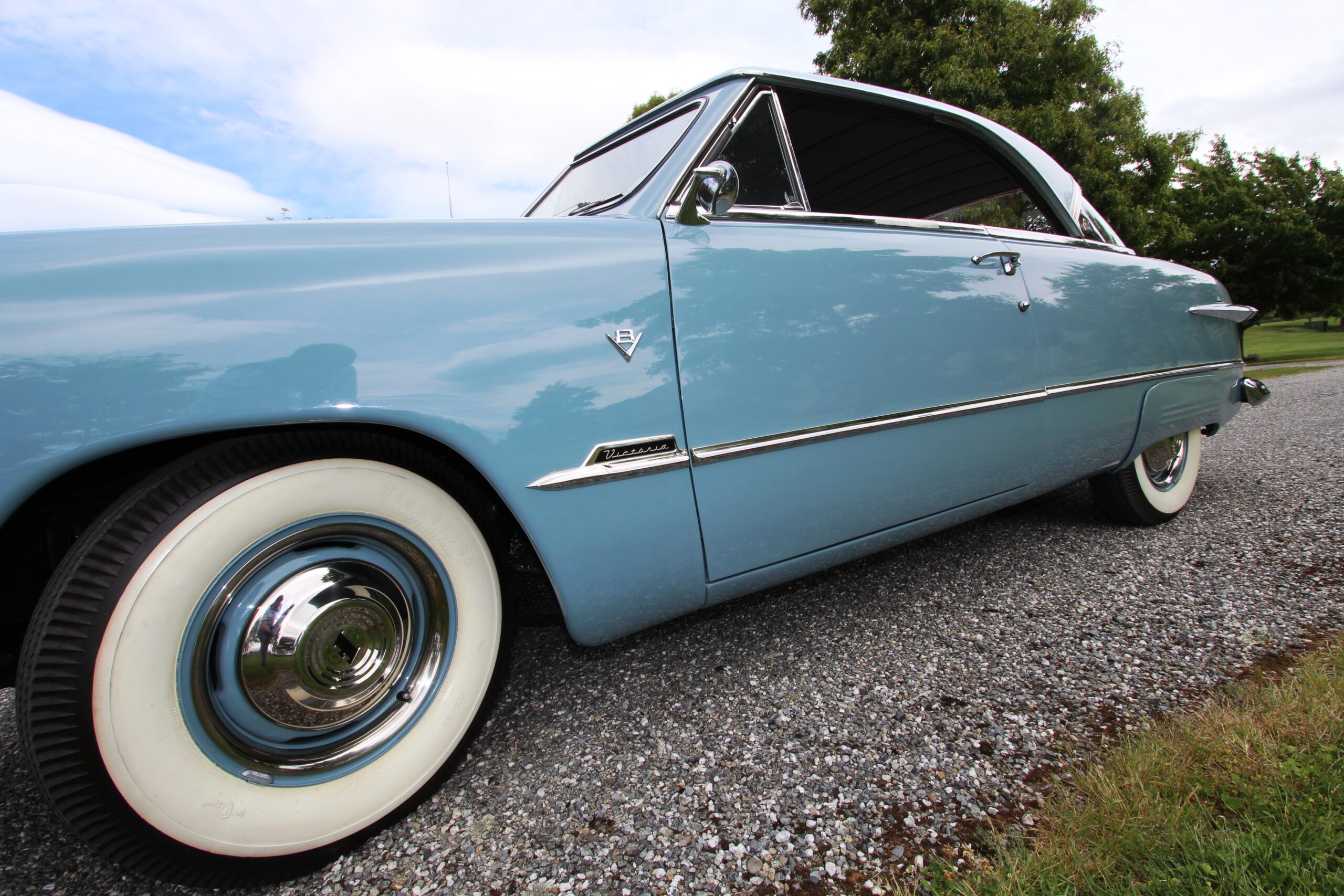
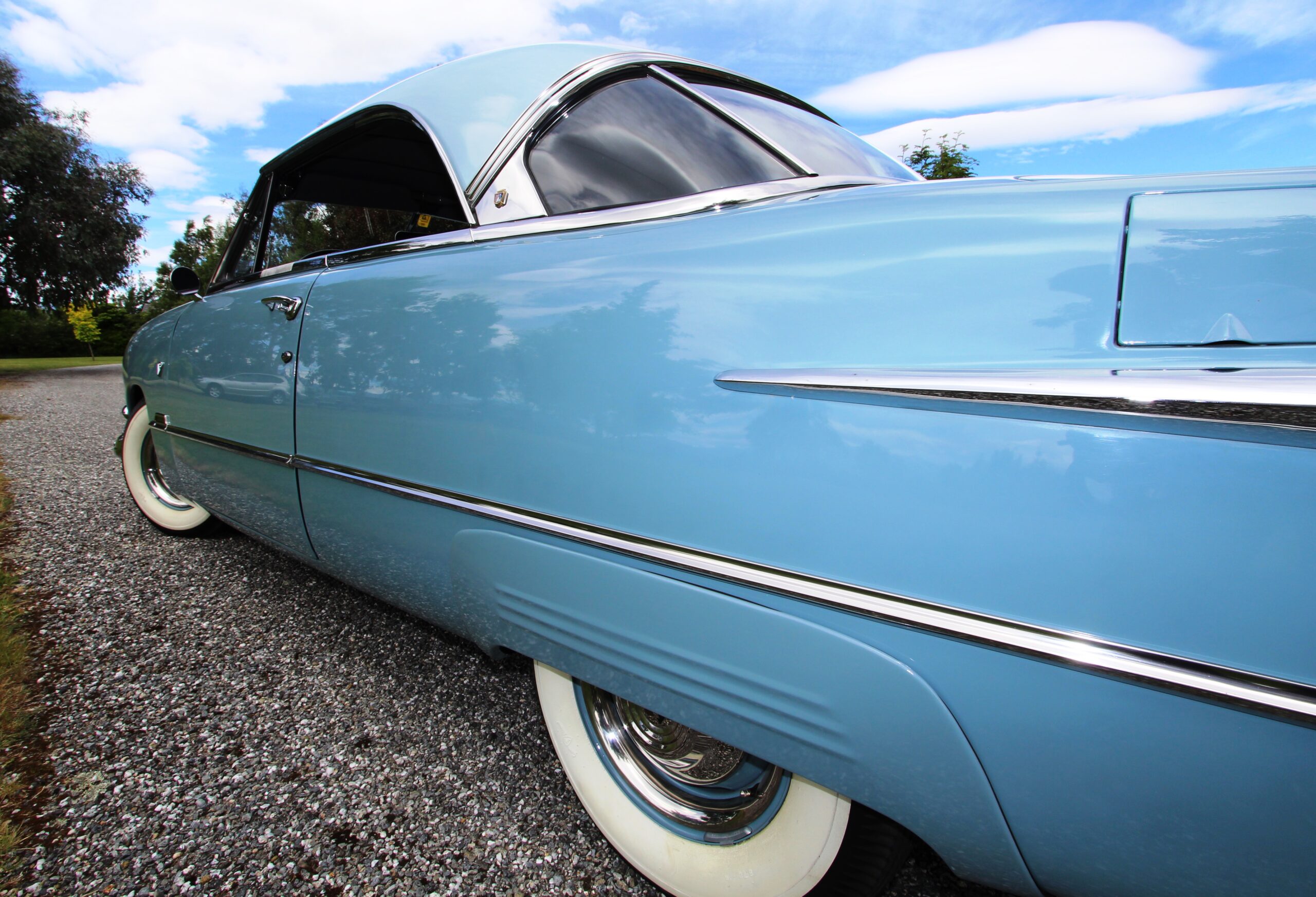
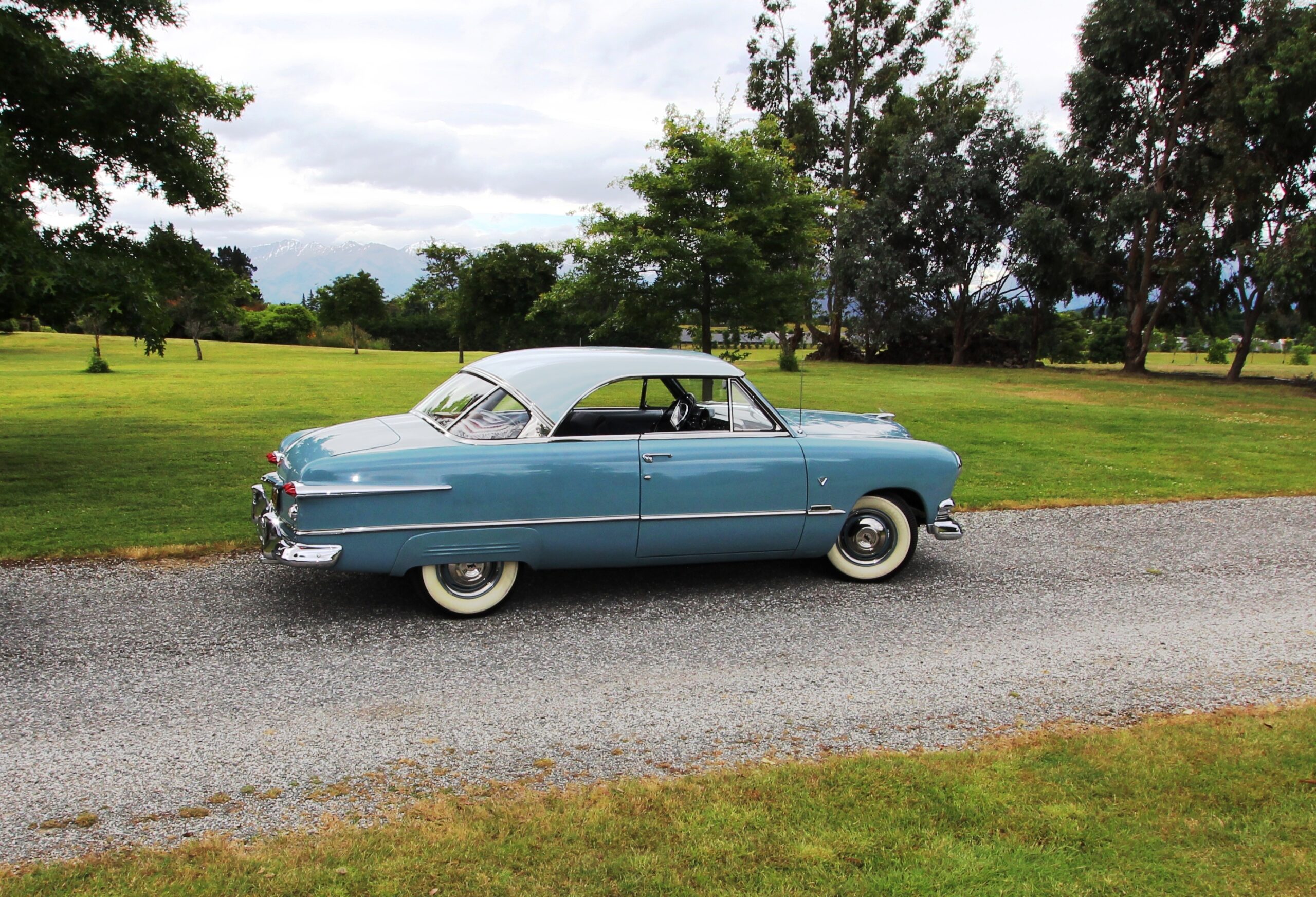
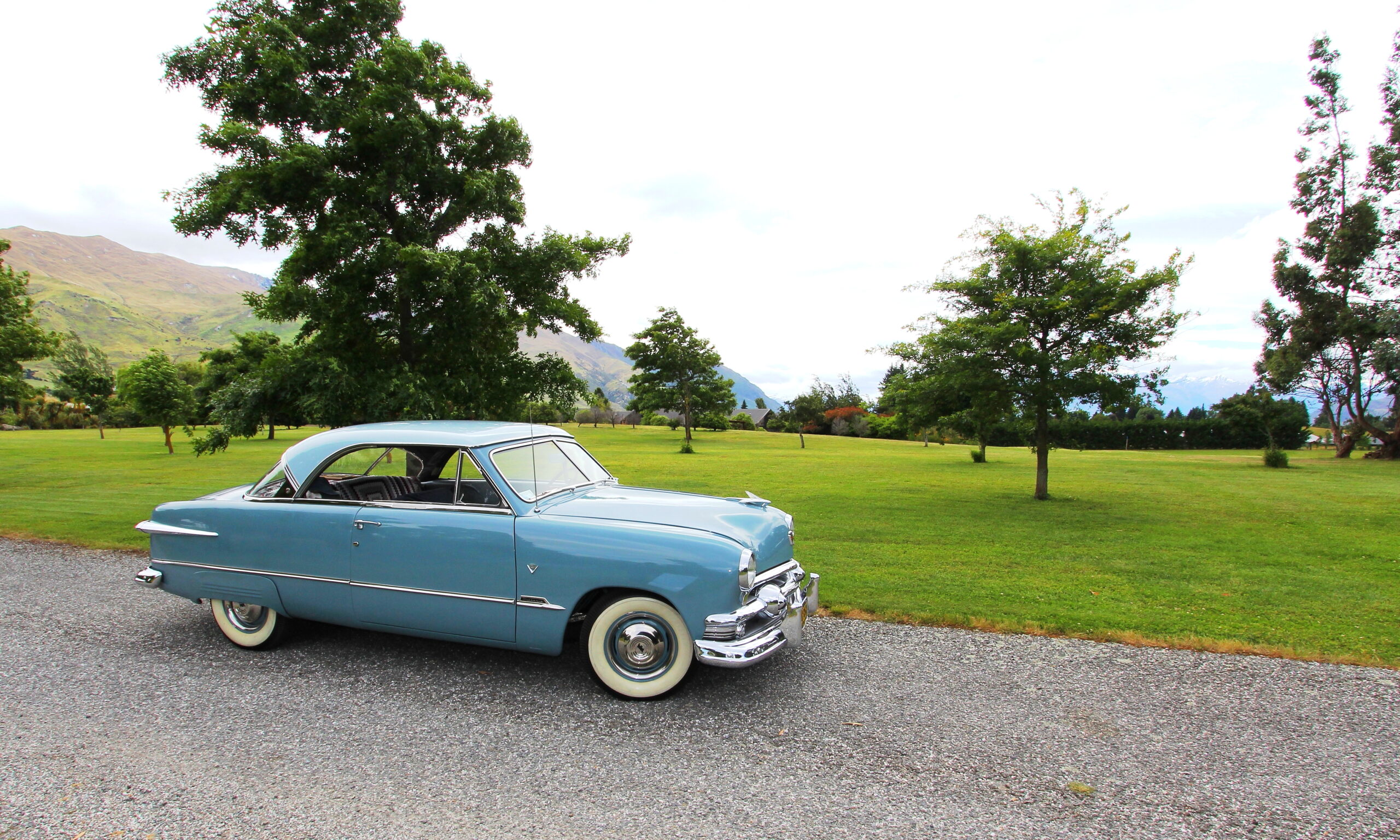
1951 Ford Victoria Hardtop Coupe, ‘Vicky’
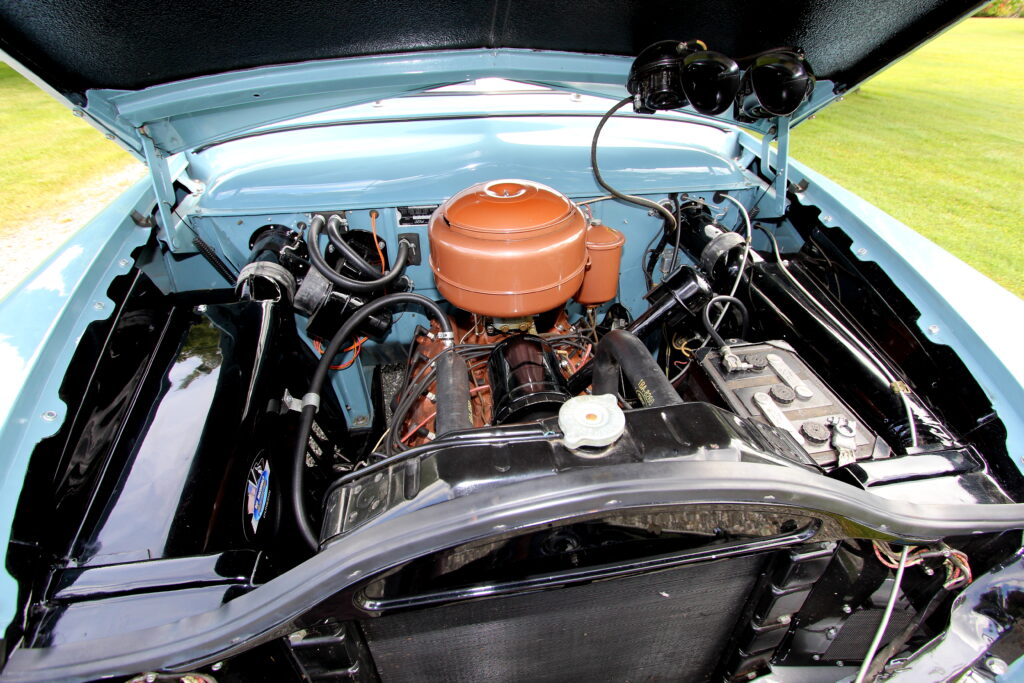
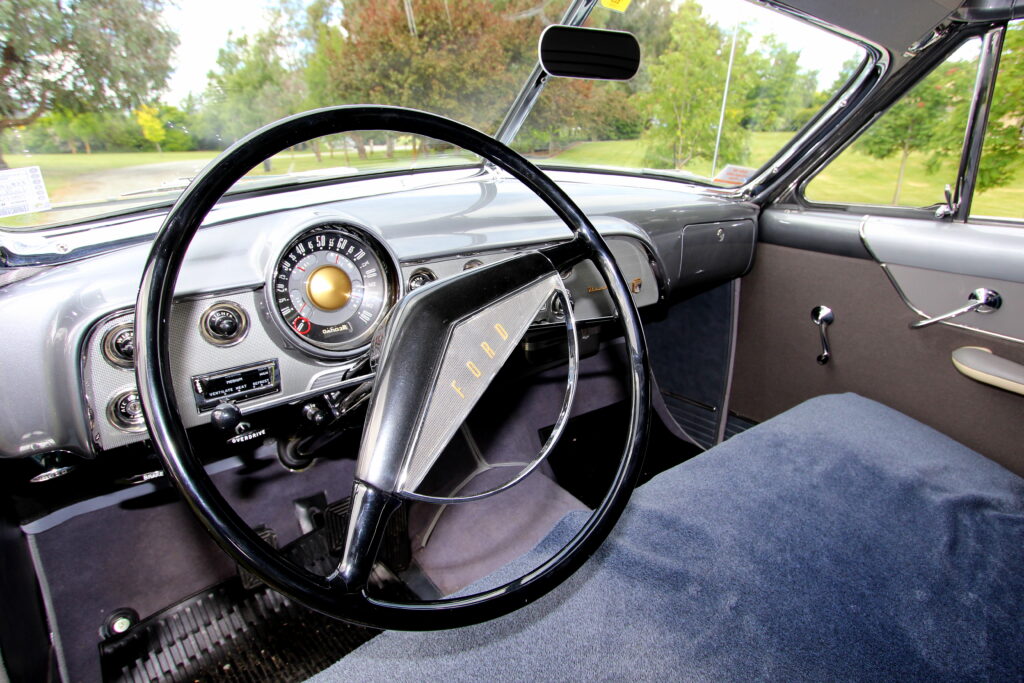
Known as the ‘Shoebox Ford’, because of its slab-sided body design or ‘Twin Spinner’ because of the front grille, the design was a big step away from the earlier Ford designs. A host of new innovations included: a radio, a clock, a heater, fancy wheel trims, exterior mirrors, and an oil filter. This was also the year Ford introduced the Ford-O-Matic, automatic transmission, and key-start ignition. The popular ‘flattie’ V8 was now 239cu in (3,916cc) and 100bhp (74.57KW), taking its top speed up to 83mph (135kph)—110,286 were produced. 
This car was professionally brought back to its original condition in California, and the attention to detail was truly impressive. It won first place awards at the Early Ford V8 Club of America in 2010 and 2012, and a Grand National first place in 2013, Jim explains.
“It scored 988 out of 1000 points. The chief judge at the Lake Tahoe Grand Nationals considered this Victoria to ‘one of, if not the best example in the EFV8 Club’. She has ‘Dearborn Awards’ and walk around status. Most of the Ford dealer accessories available when new were fitted to this car.”

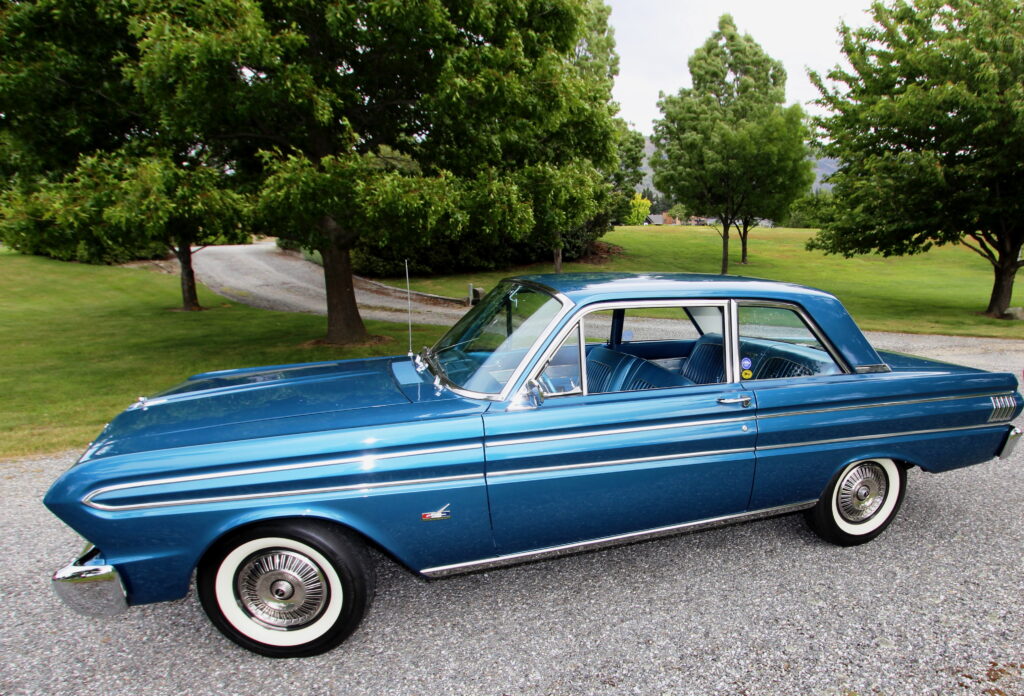
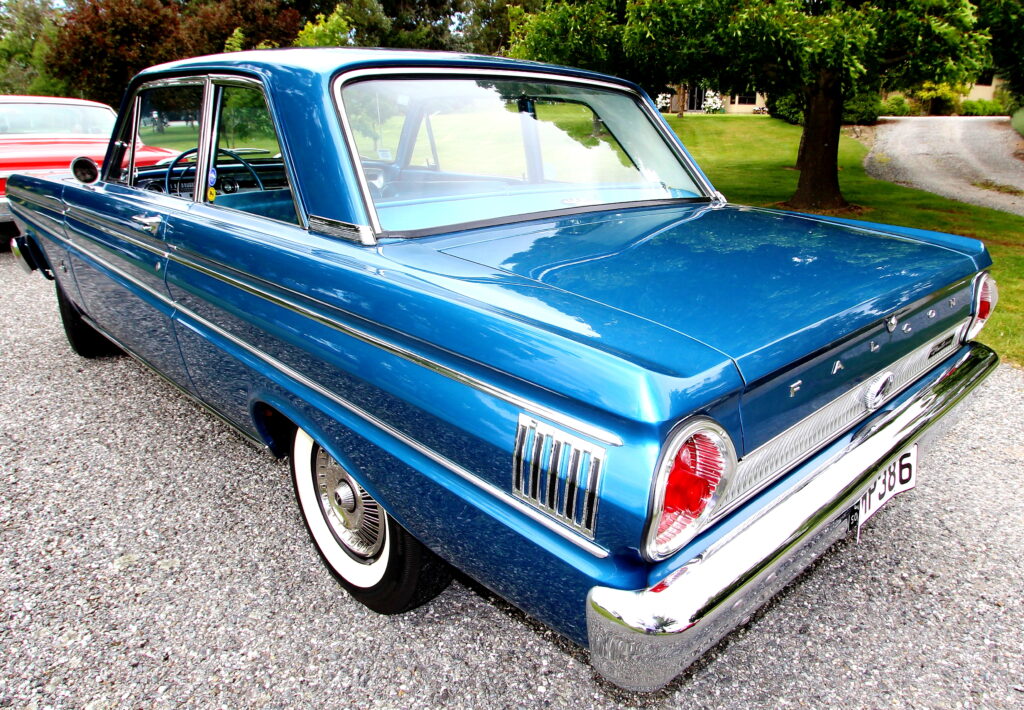
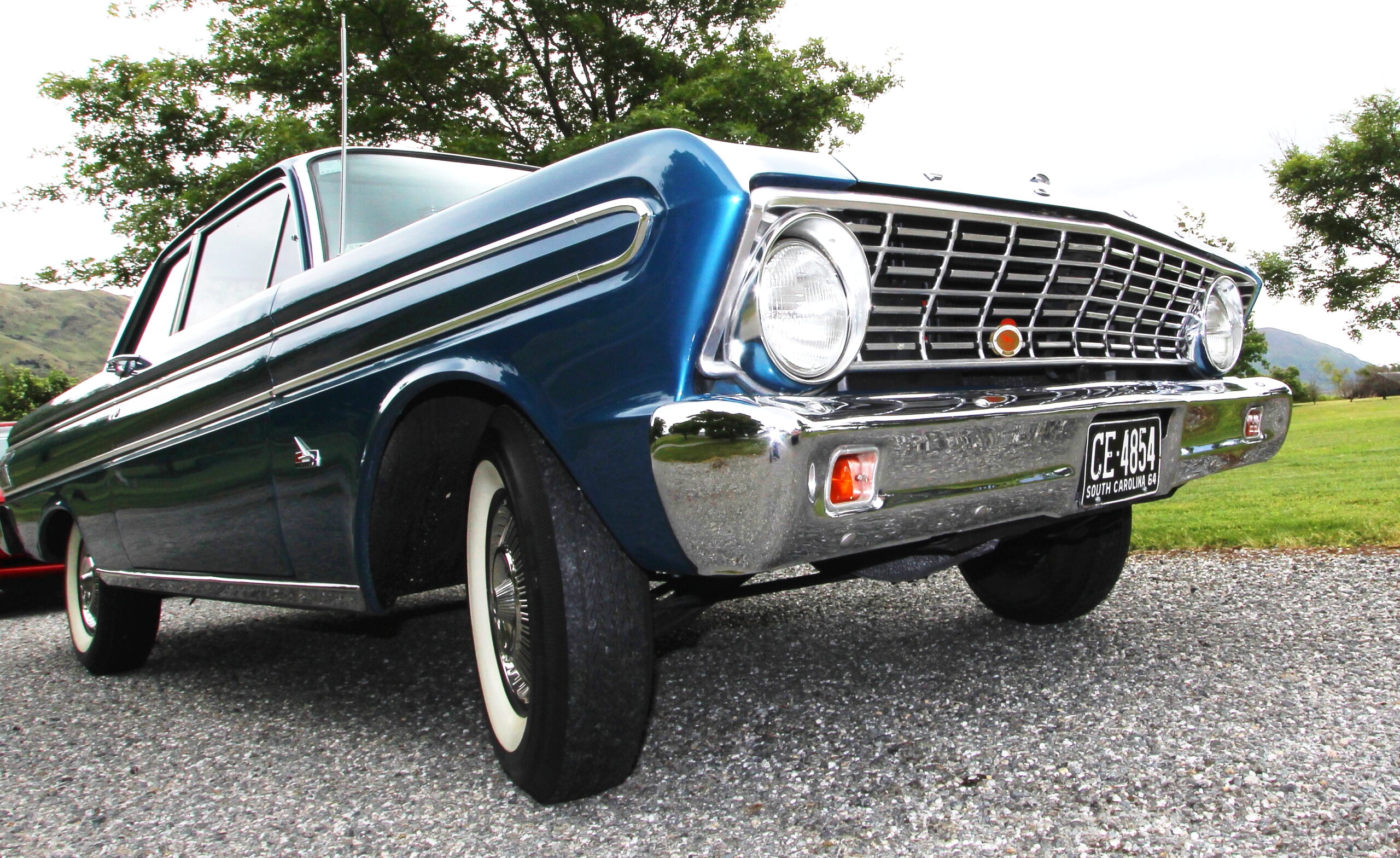
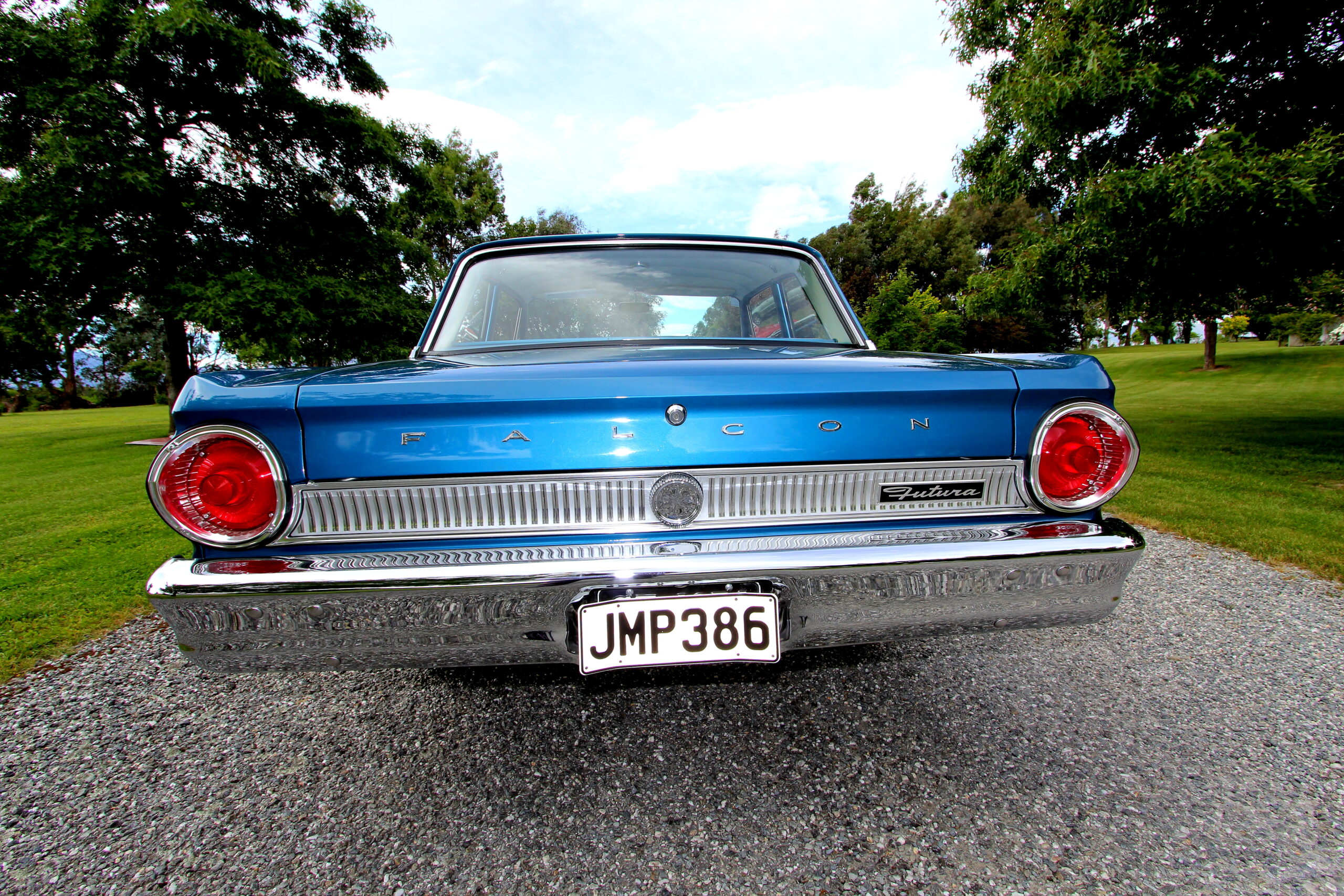
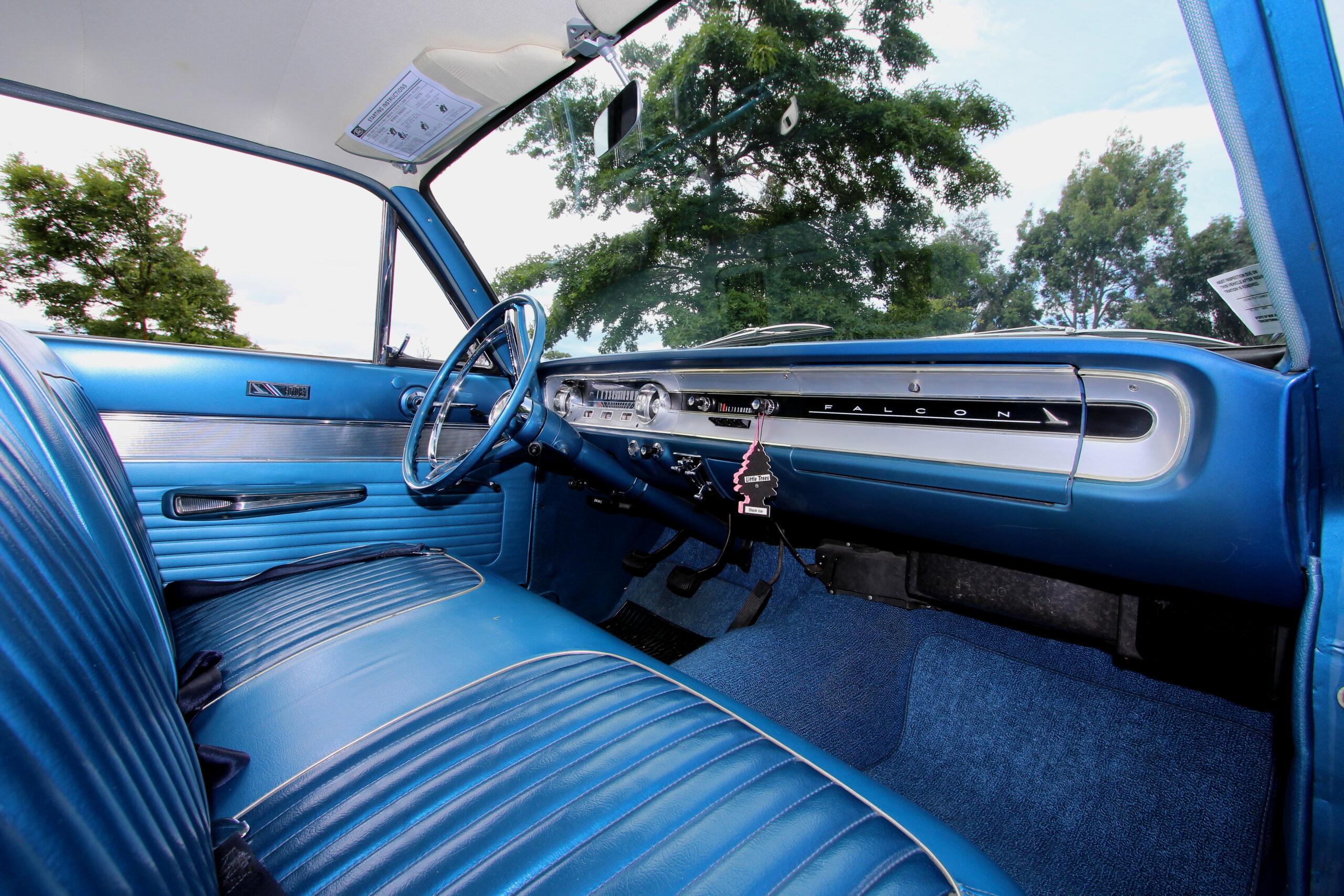
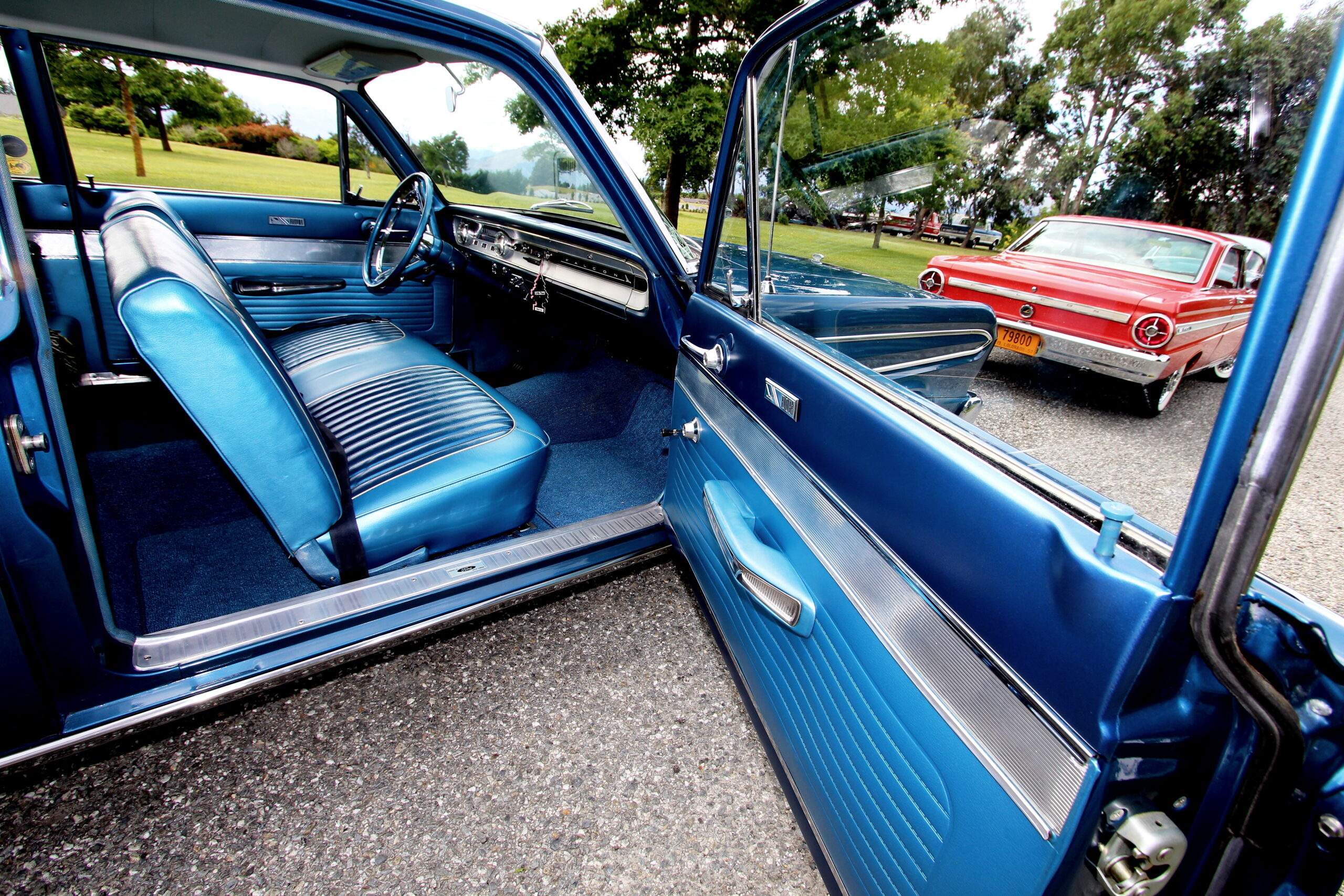
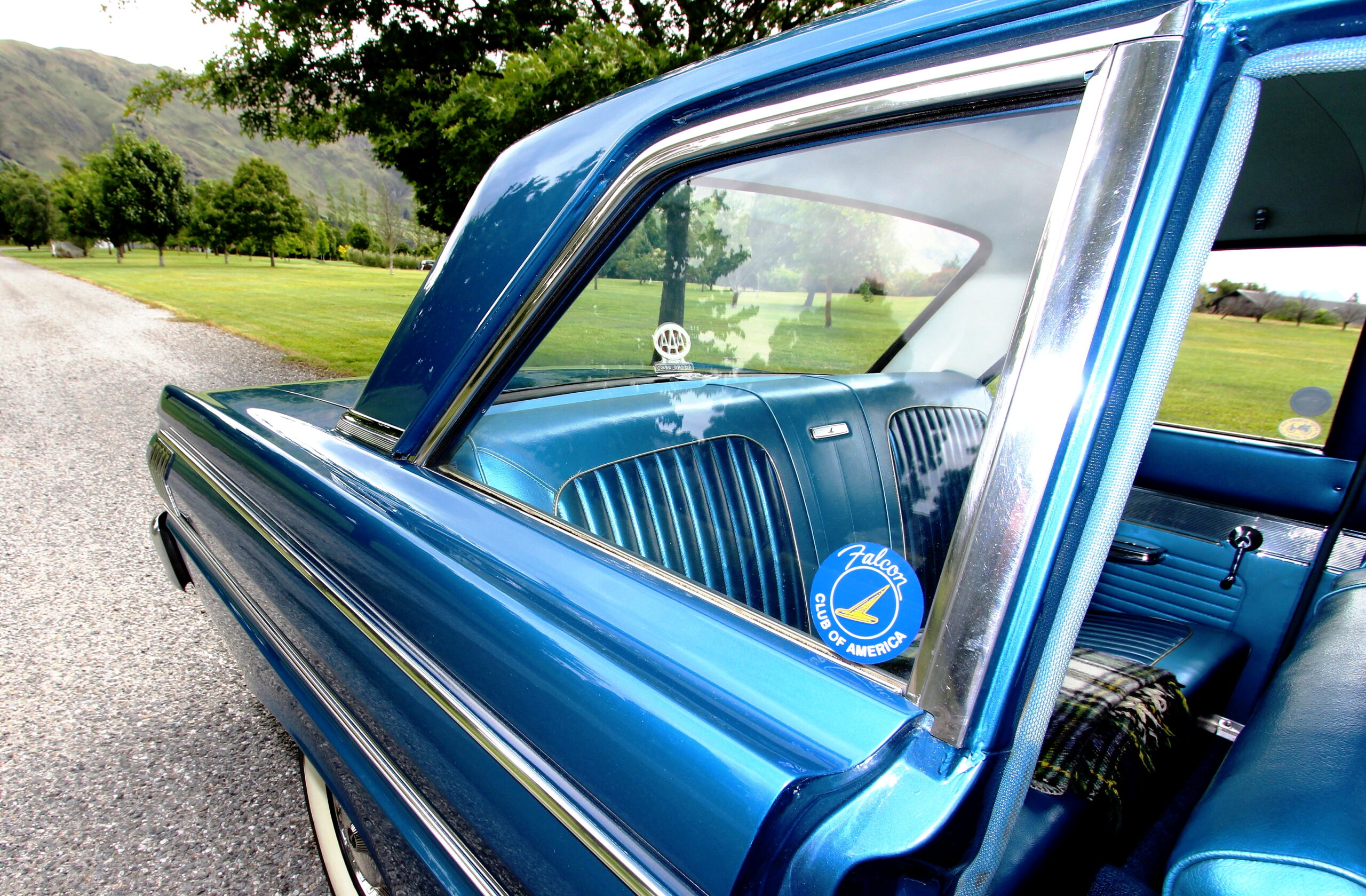
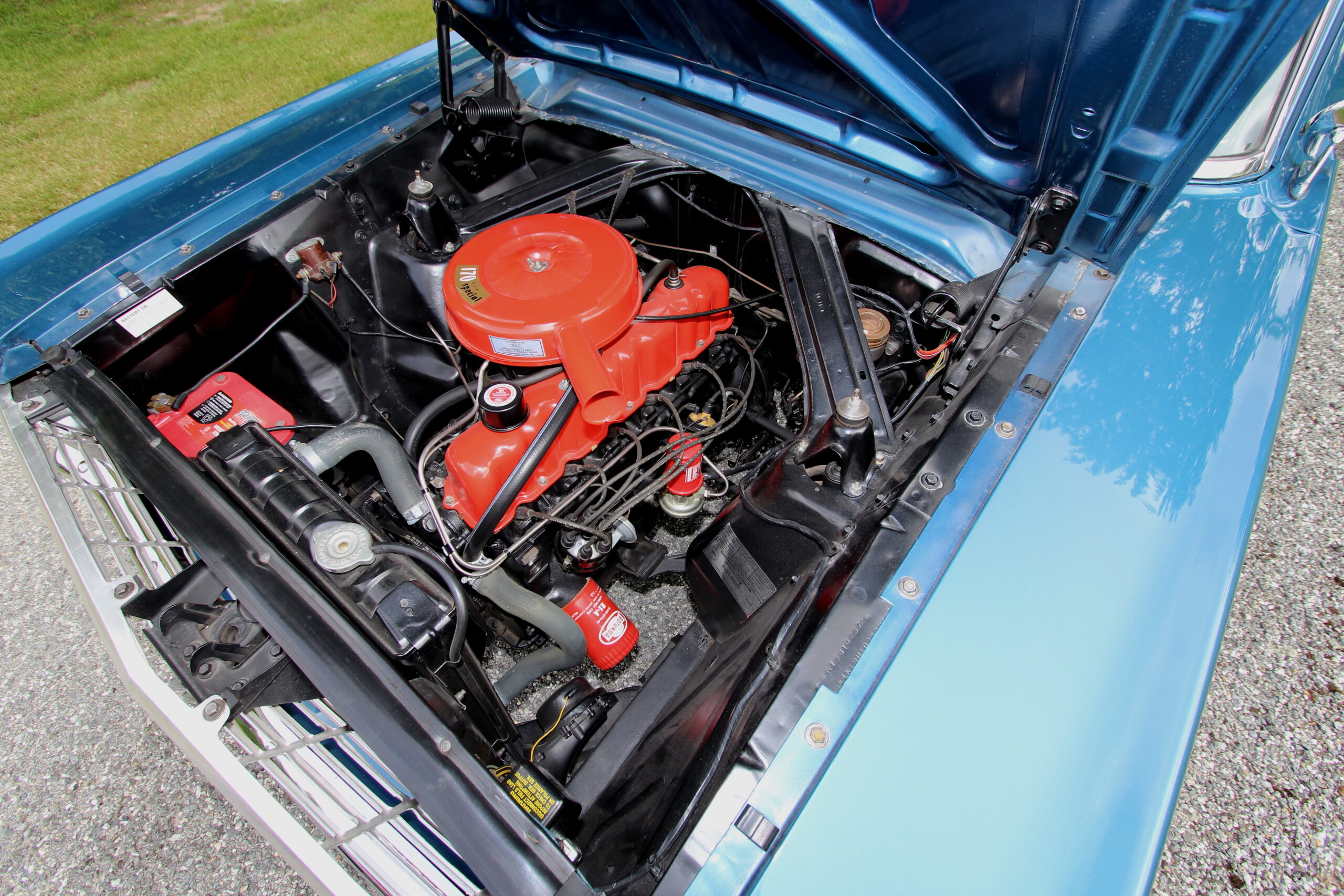
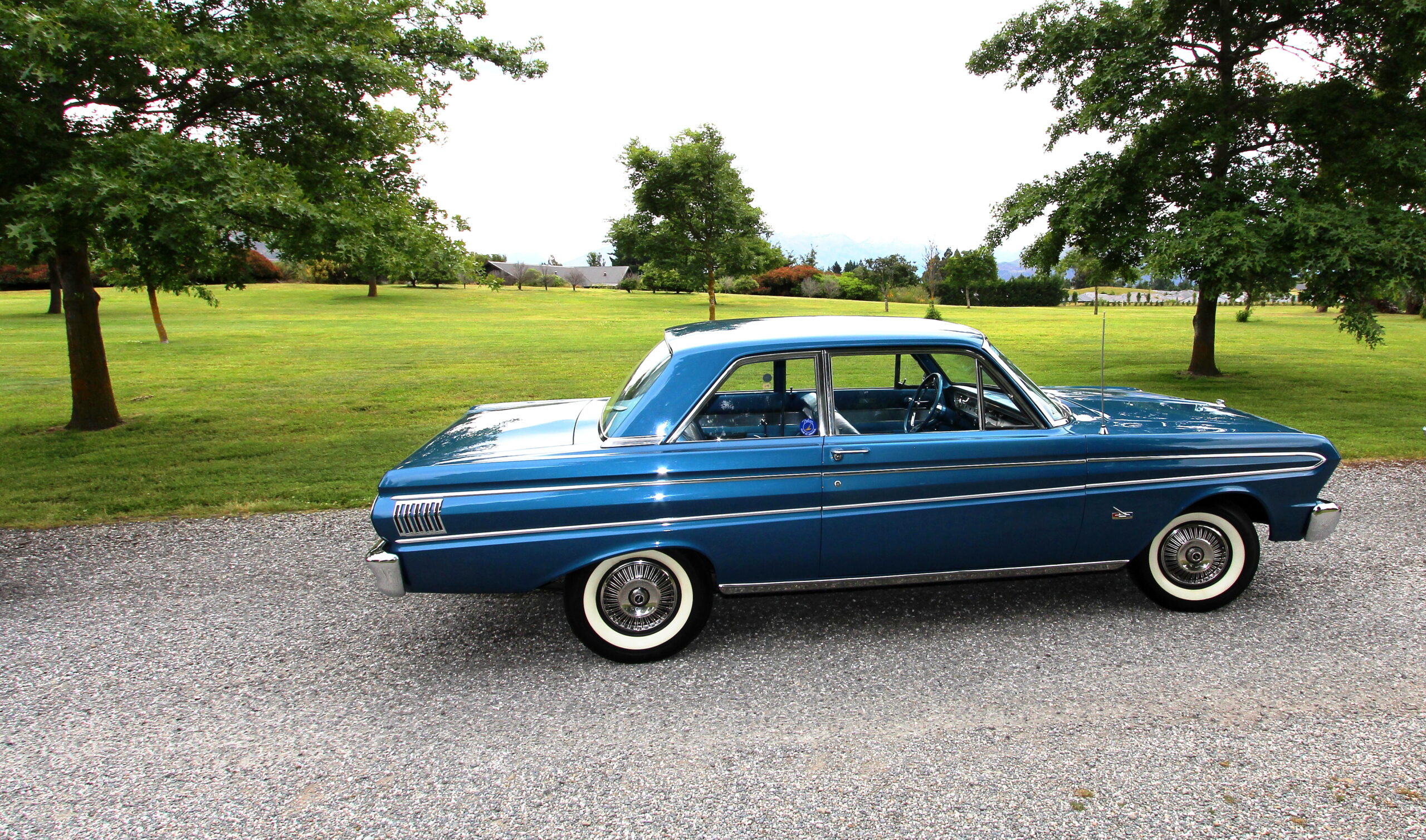
1964 Ford Falcon Futura 2-door sedan 
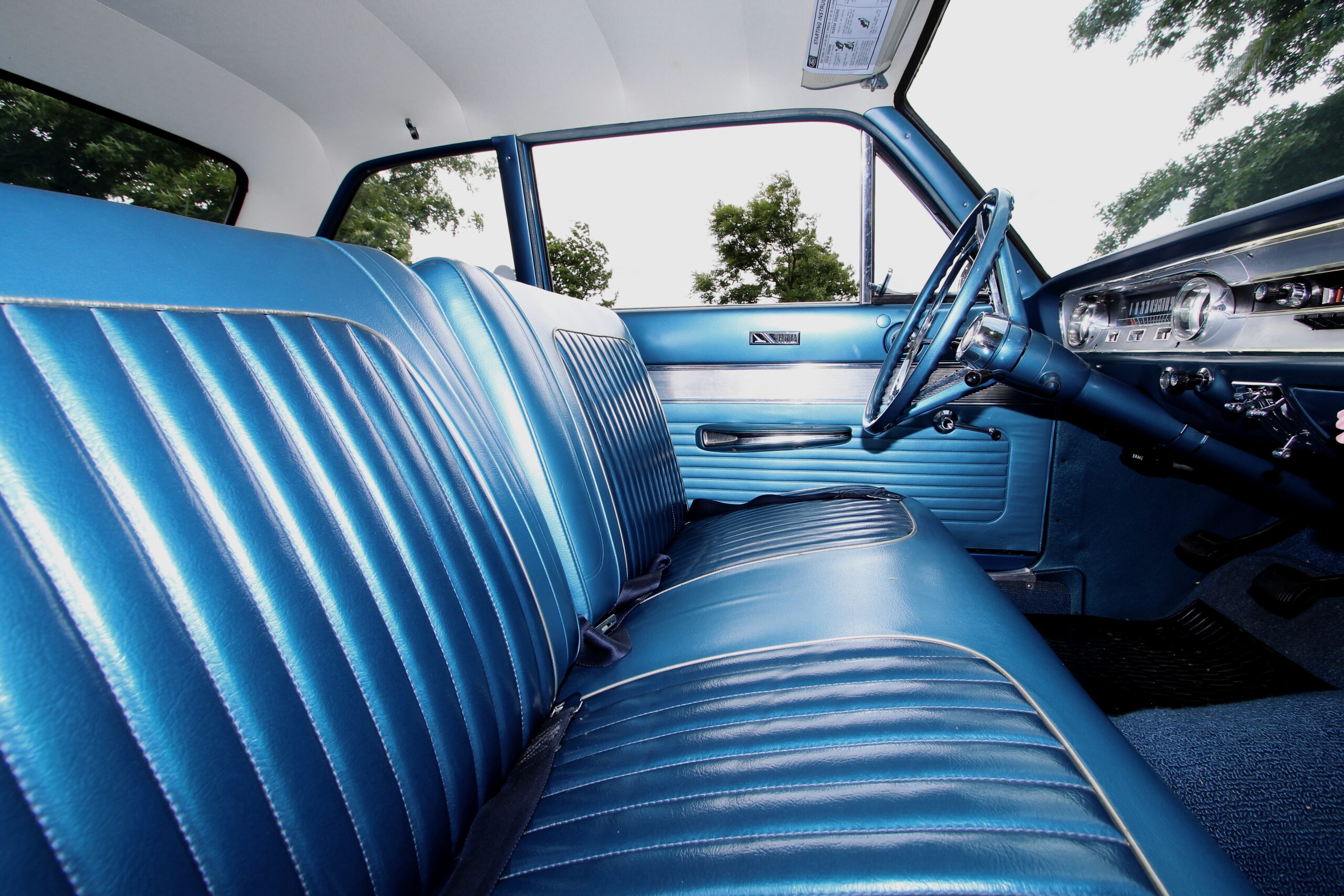
Top of the range, the Futura came in a new angular sporty style in 1964. A full-width stainless steel grille and larger square bumper bars added to the angular look and large glass area.
This stunning blue two-door car was well looked after by its first owner until 1991. It then went to a family who maintained its appearance until its original owner bought it back eight years later, keeping it until his death. Then, in 2013, Jim brought it to New Zealand with only 35,170 – 56,600 kilometres – recorded miles.
“The perfect, accident-free and rust-free body has had one repaint in the factory original colour. It has its original mint condition upholstery, dash, and instruments, and the mechanicals are all completely original.”
Ford America Falcon Owners club badges show an enthusiastic ownership evidenced by its ‘First Place, Senior’ three-time wins at national shows and first place senior awards at American Automobile Club National shows.
“It’s considered to be one of the best, most original Futura, 2-door sedans in the USA by the American Falcon Club who said …we doubt there is a better example anywhere.”

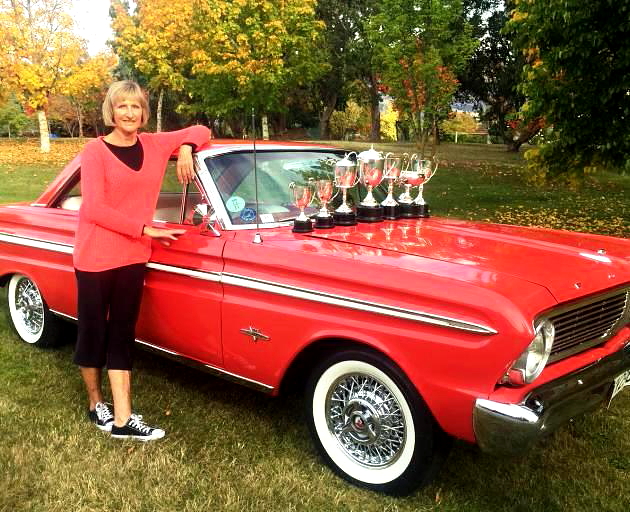
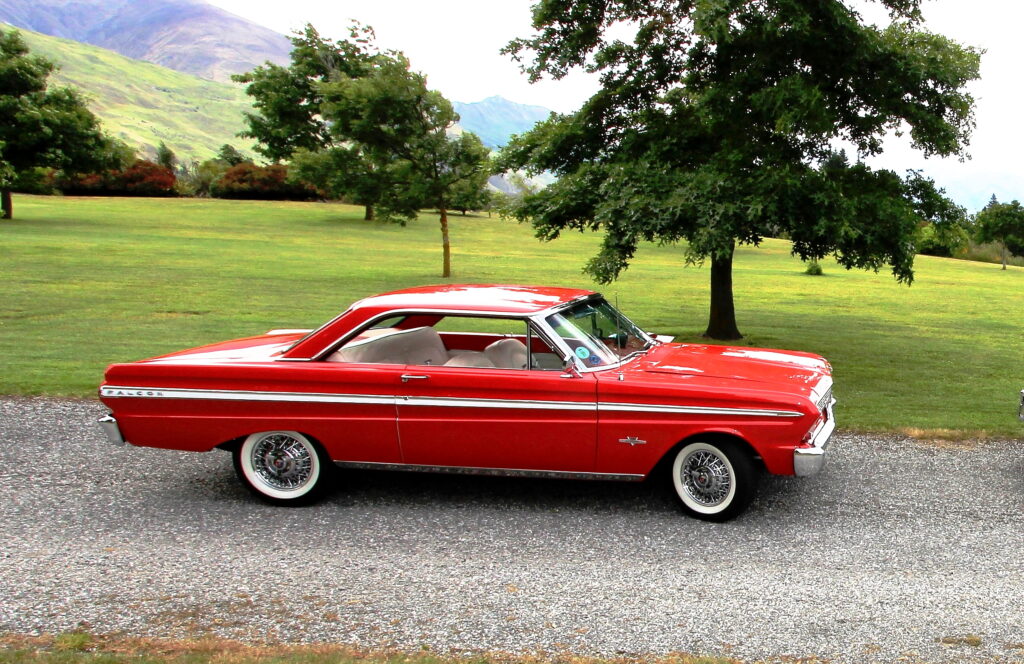
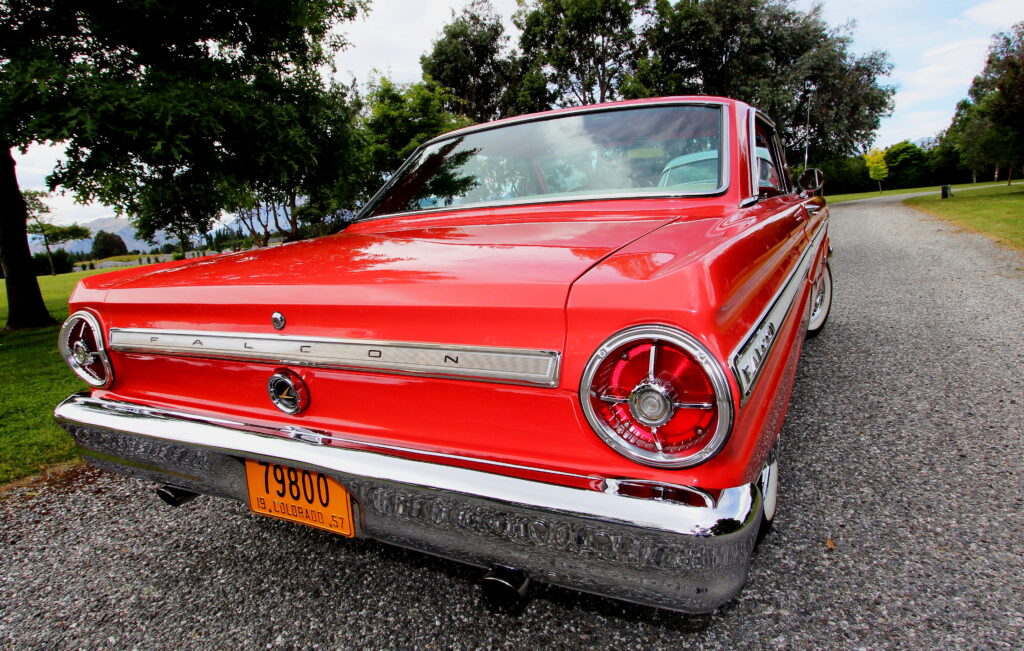
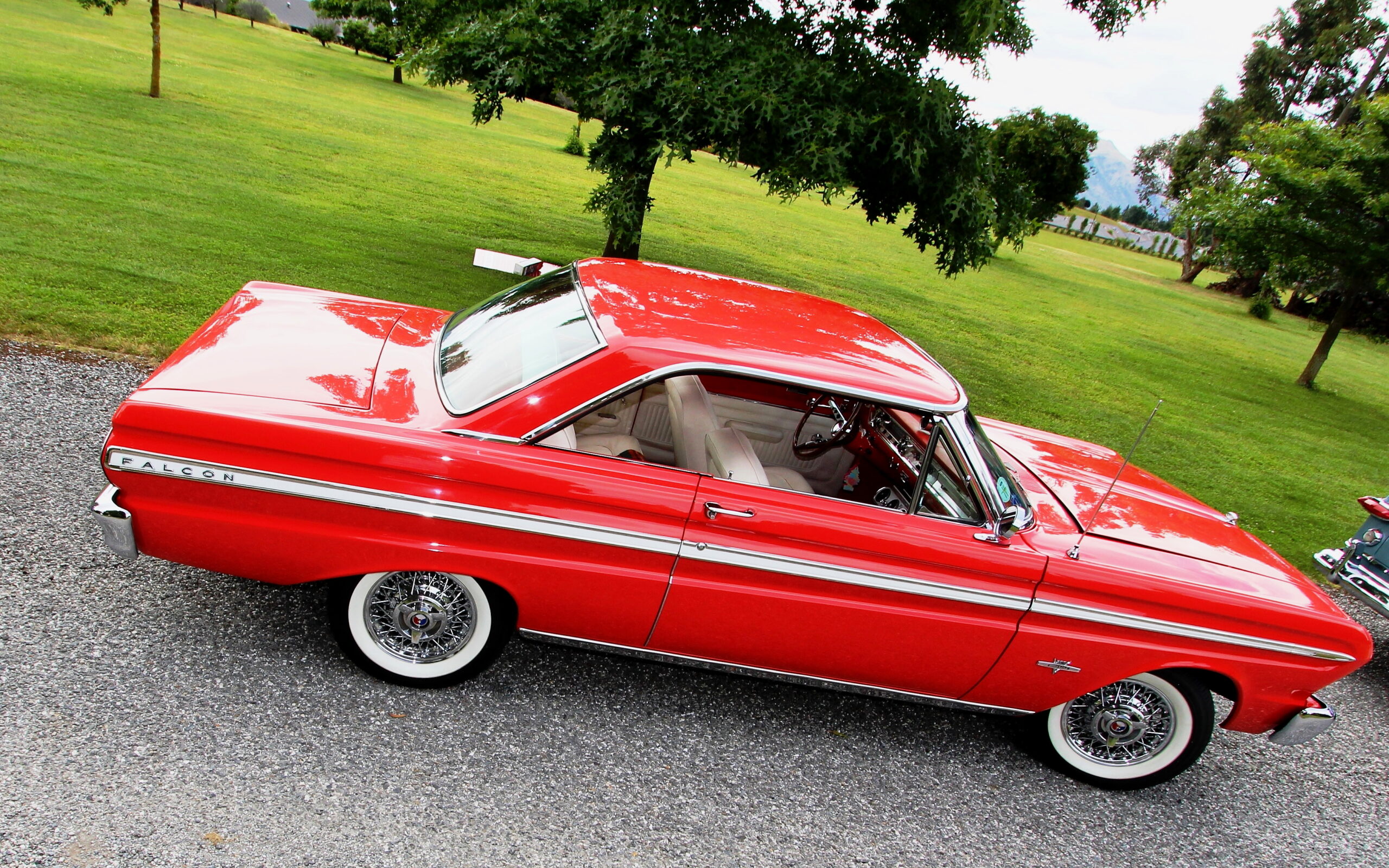
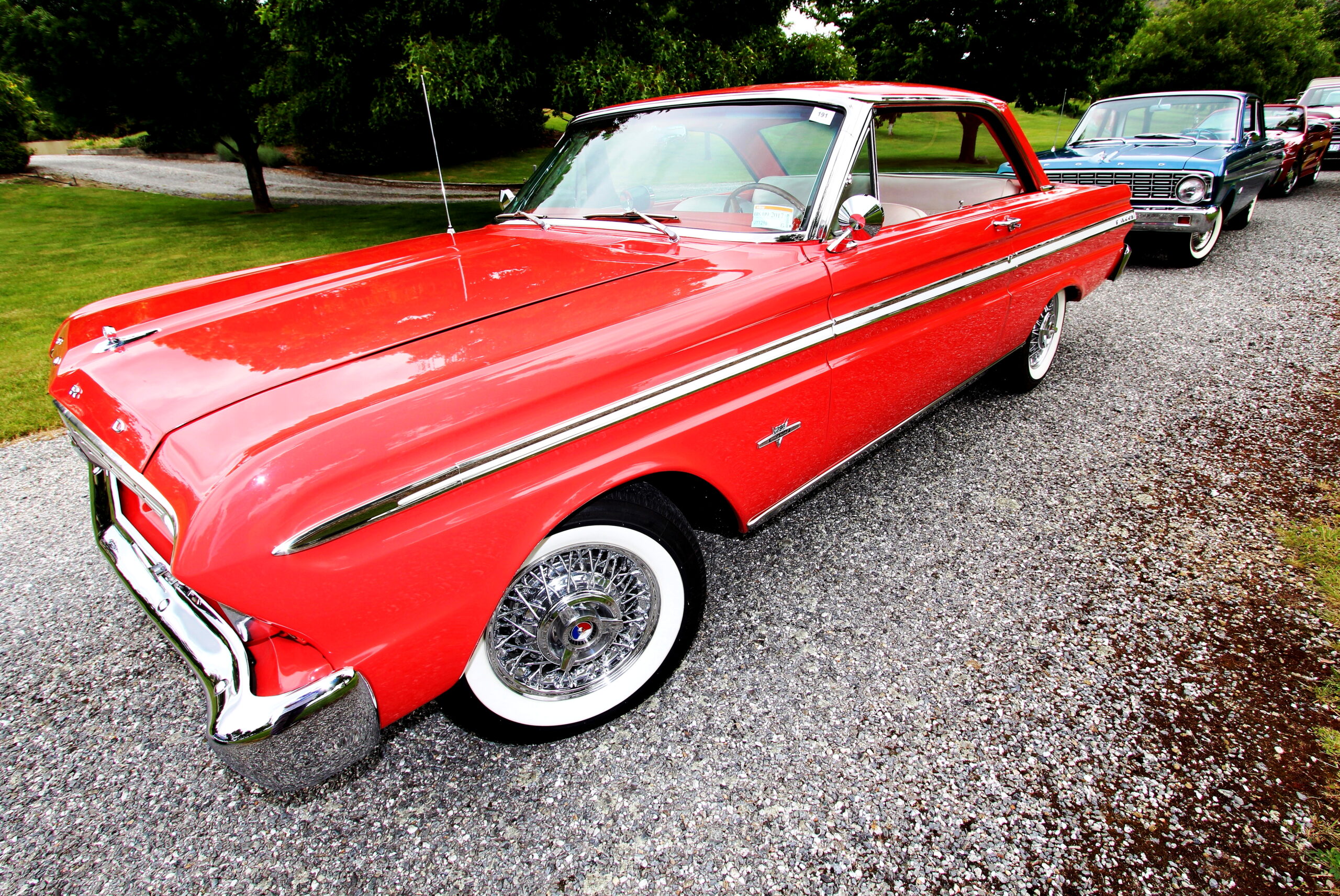
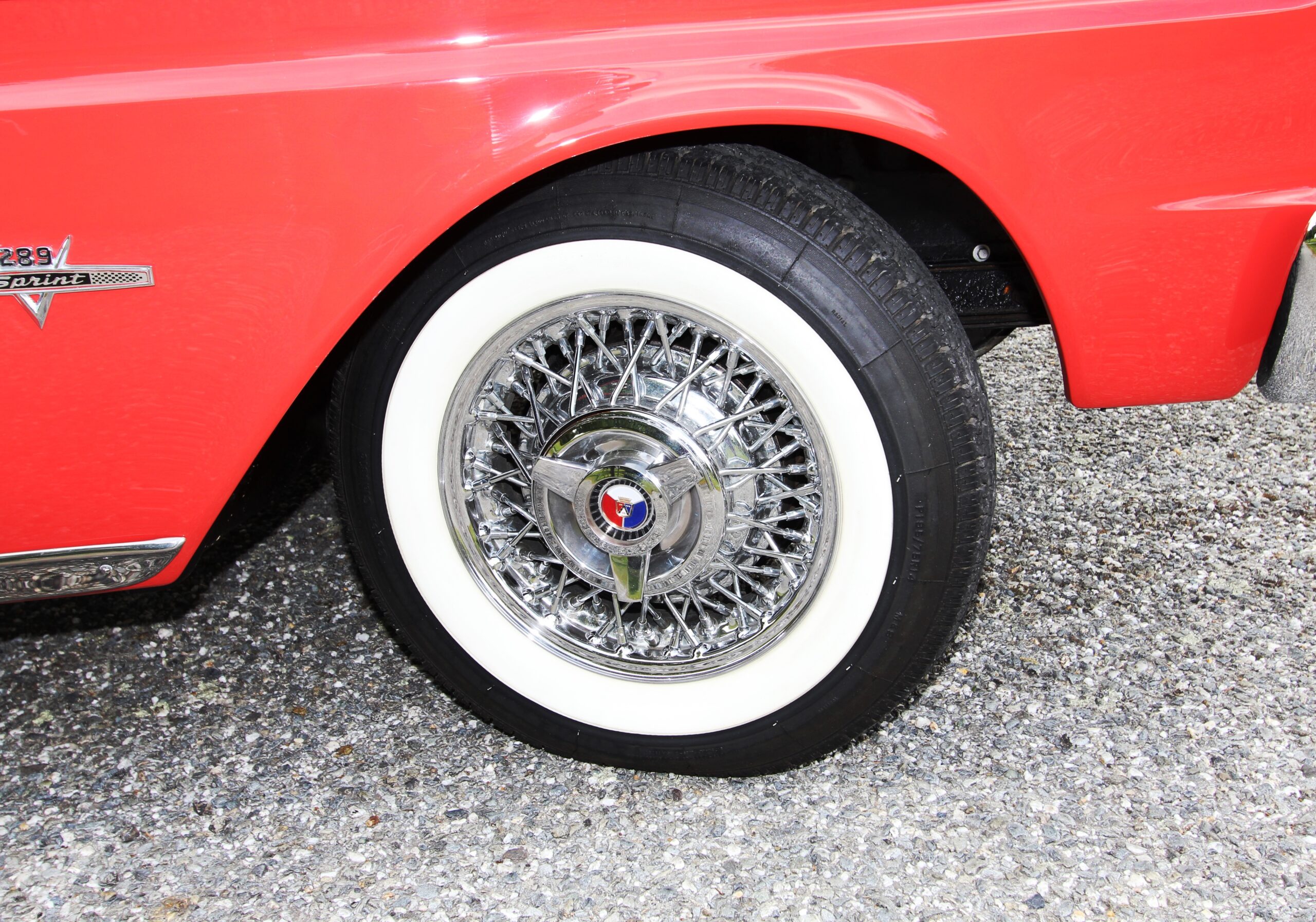
Ford Falcon Sprint Two-Door Hardtop, 1965, ‘Ruby’ 
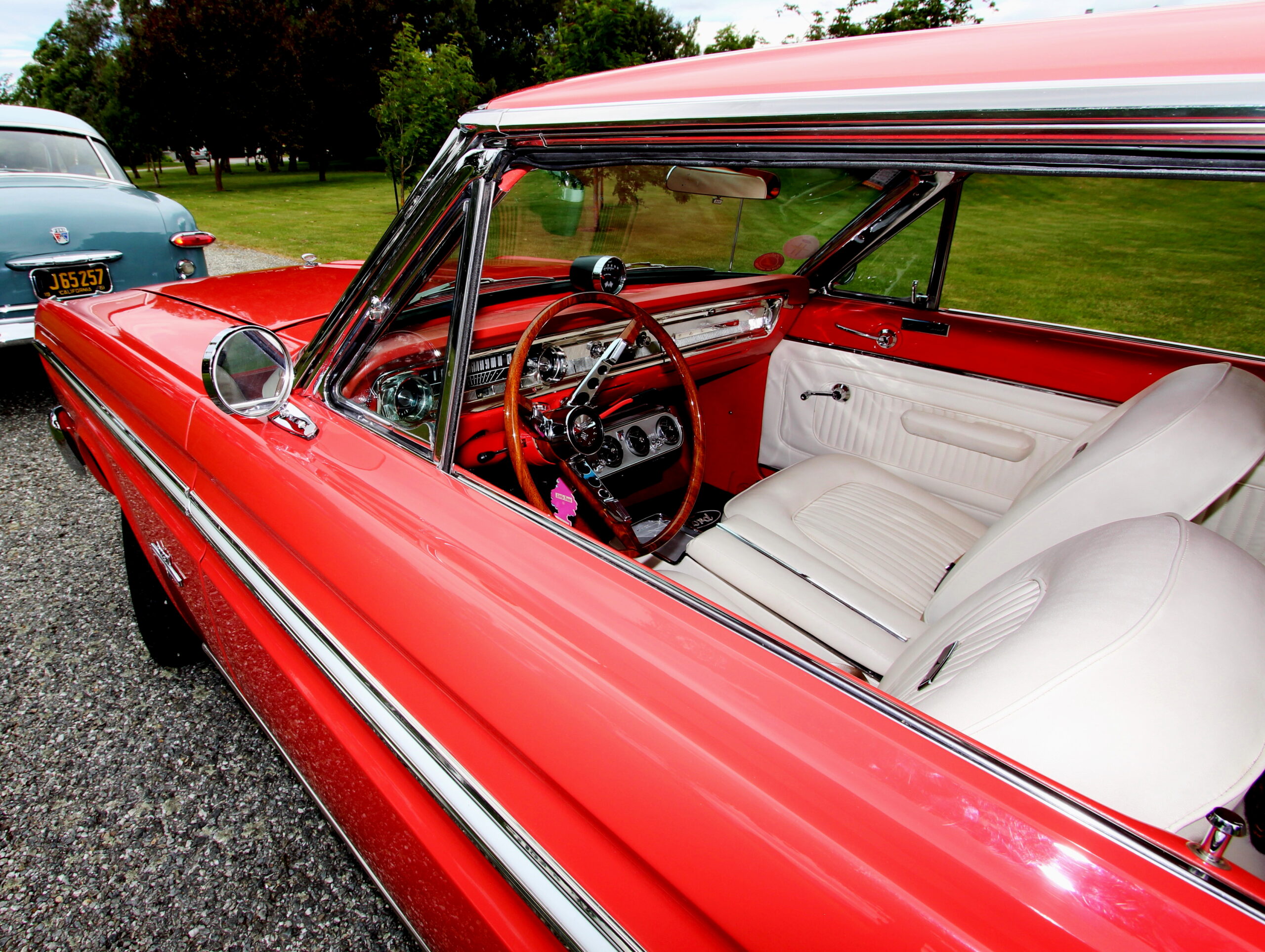
This Ford Falcon was bought new by a Ford sales executive and is equipped with all the factory extras. Jim explains that it also has some items not usually seen.
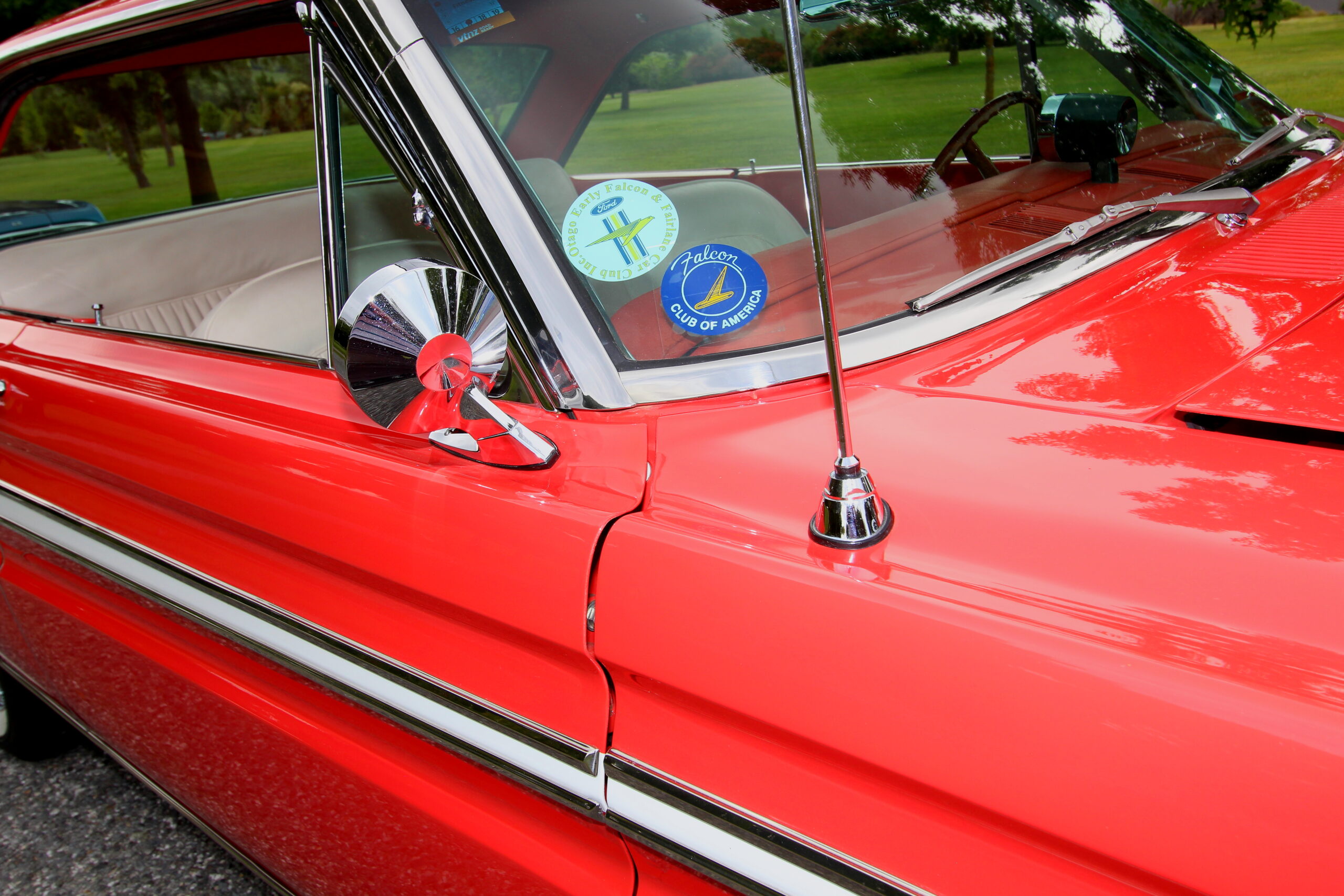
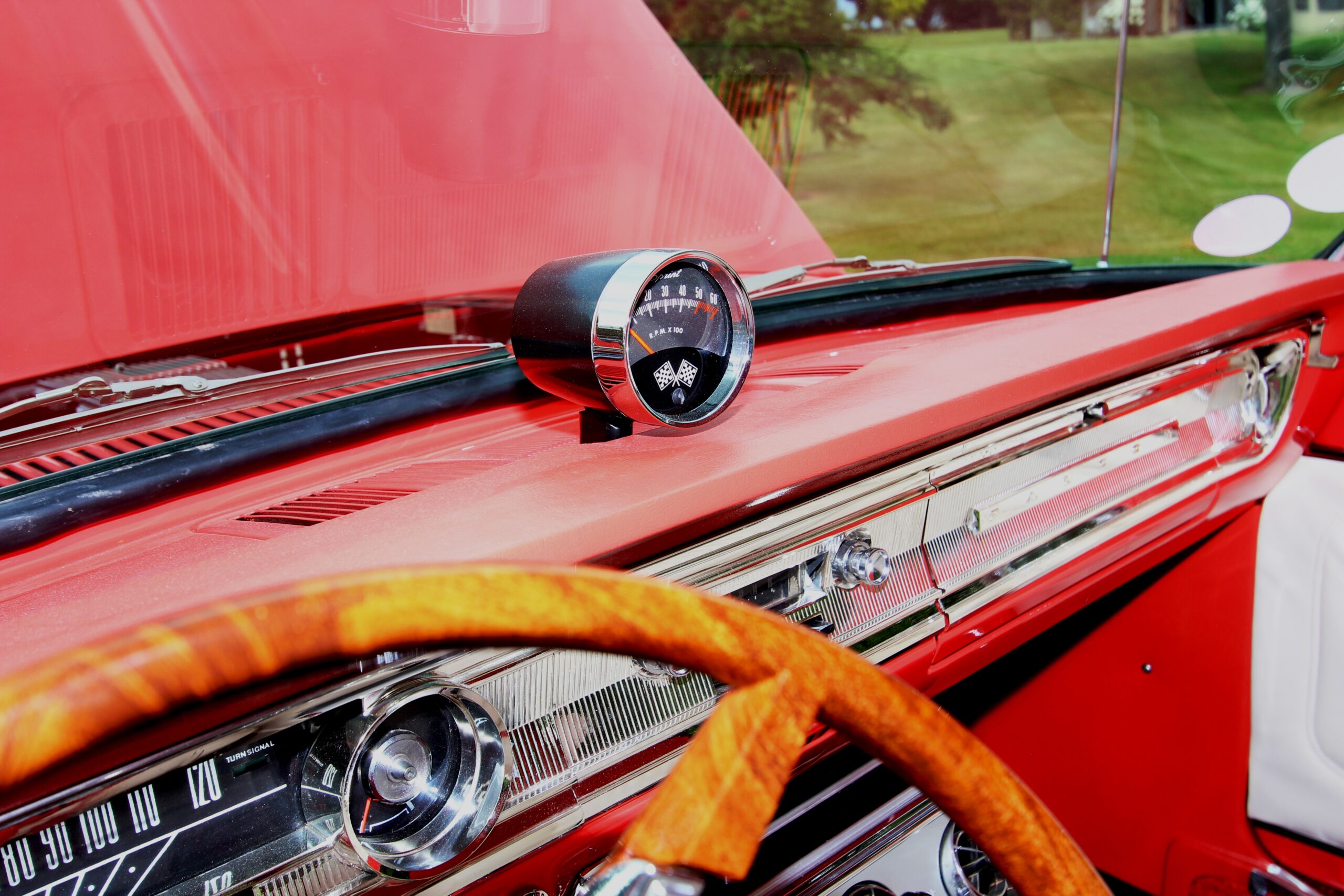
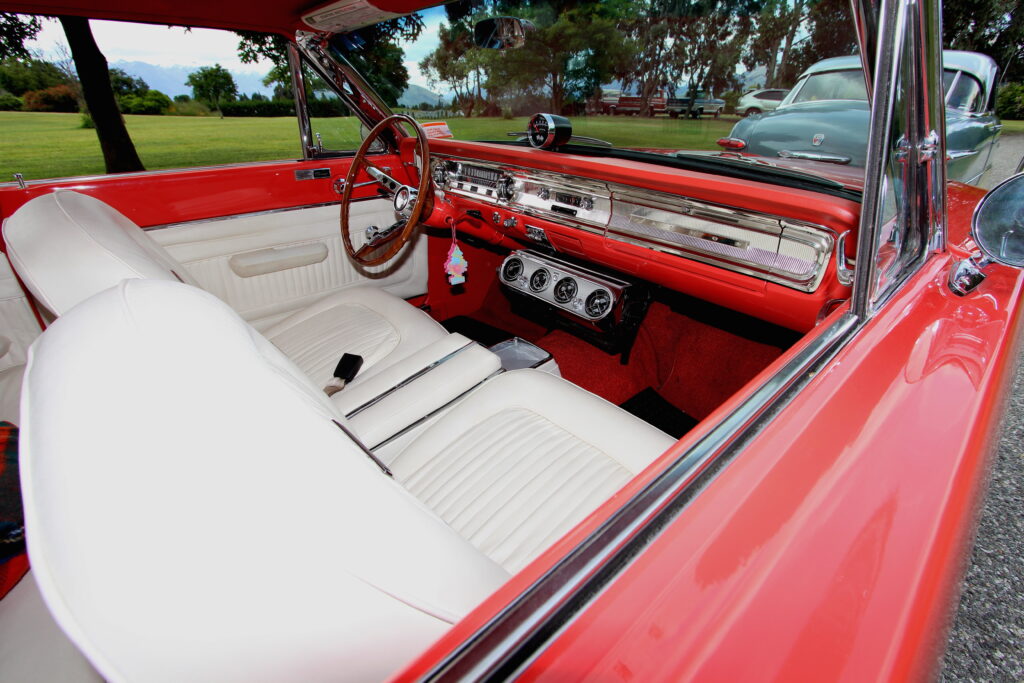
“It’s the only one built with a 1956 Ford Colour ‘Fiesta Red’ exterior and soft white interior. Extras include: a Sprint steering wheel, Sprint tachometer, bucket seats and console, window washers, padded dashboard and sun-visors, rear radio speakers, dual remote-operated side mirrors, day/night rear vision mirrors, rocker mouldings, backing lights, dual exhaust, factory air-conditioning and power steering.”
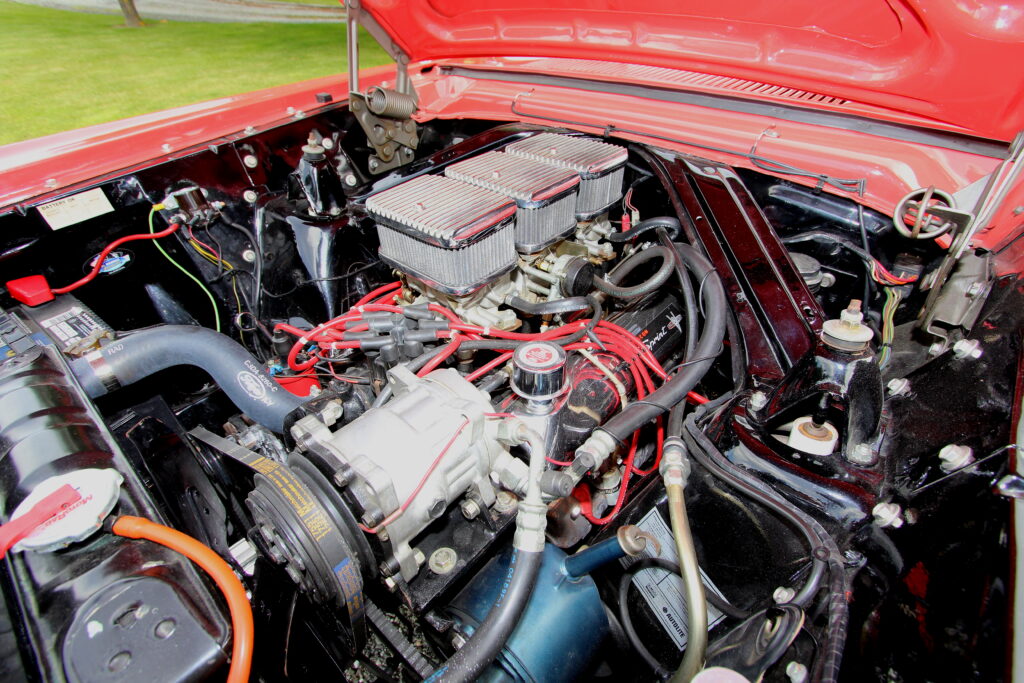
It’s an impressive car from any angle, highlighted by those 14-inch Kelsey-Hayes wire wheels. Under the bonnet, Ford’s 289cu in V8 was factory installed with triple carburettors, a C4 automatic transmission, and 350 differential. 
“A Florida car for all its life, it was always garaged and pampered. The second owner had it for 28 years before I bought it back to New Zealand. It’s won many first place trophies here too, including Best in Show at an All Fords show with over 1200 entrants.”

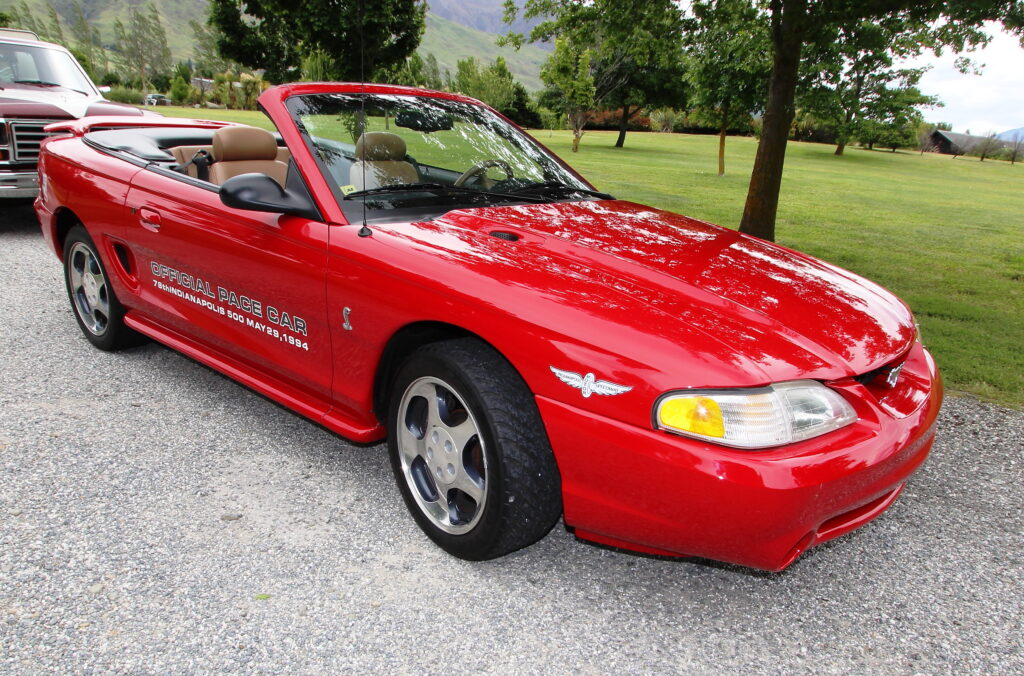
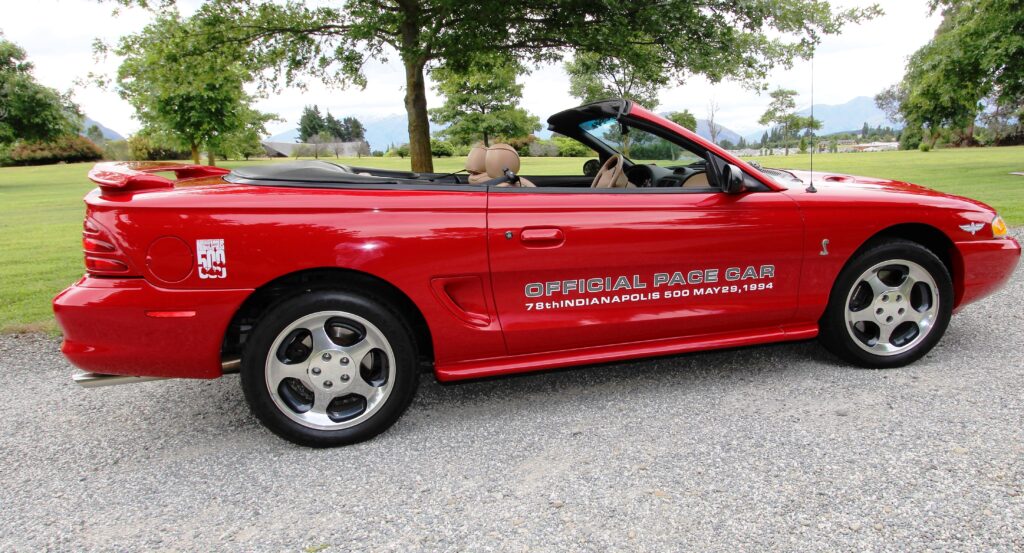
Ford Mustang Cobra Official Pace Car, 1984 
Ford’s top Pony car—the Mustang Cobra—is a rare car in any form. The special decaled SVT Performance Windsor Mustang Pace Car replica livery is from 1000 convertible examples is number 423 of a total production of 6009.
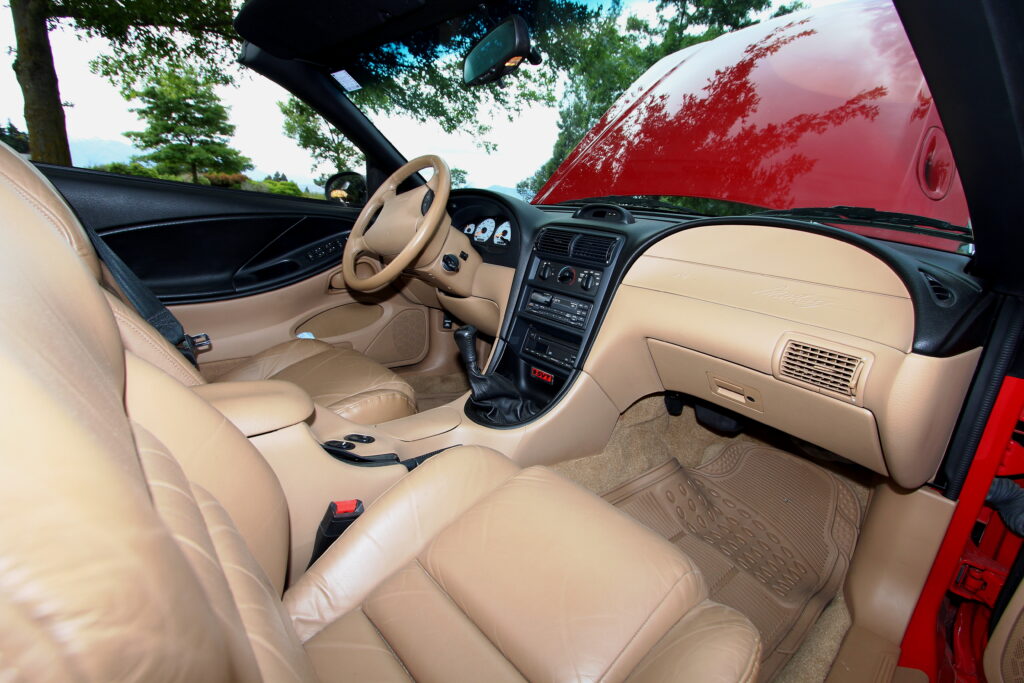
“It has an amazingly low 5,703 miles (9,178KM). The colour is a specially tinted ‘Rio Red’ clear coat with Saddle Indy leather interior along with a Saddle convertible roof.”
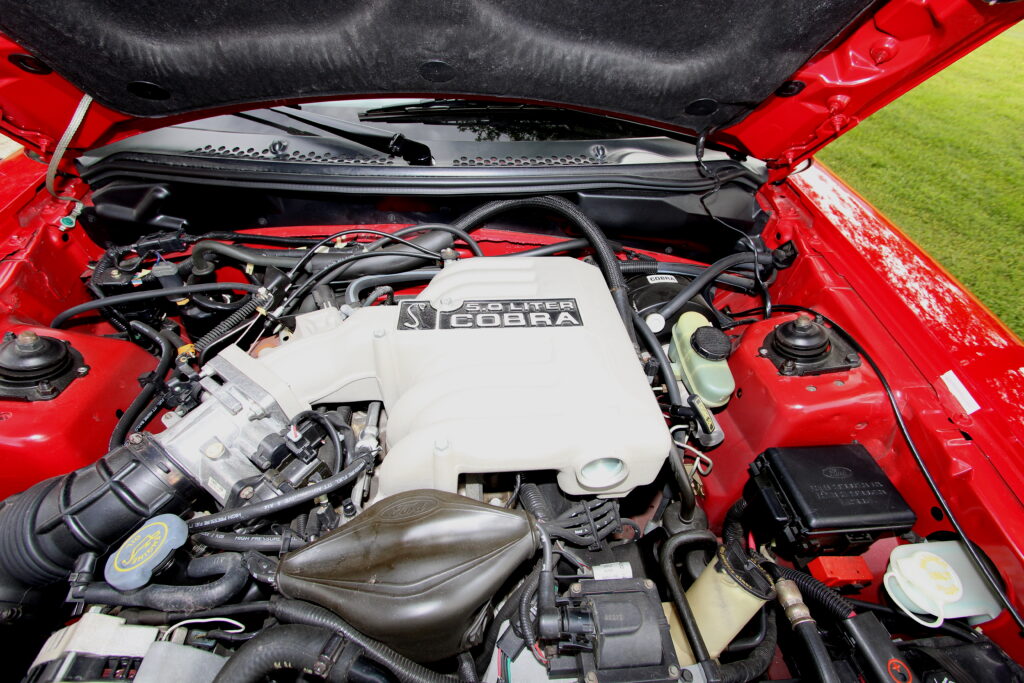
Powering the Cobra is a tuned multi-port, fuel-injected, 5 litre, Super High Performance Windsor block V8 rated at 240bhp (179KW) with a five-speed manual transmission.
Daphne is a fan of this particular machine, however, the recent addition of a late model red Roush Ford Mustang in right-hand drive is her preferred daily driver.

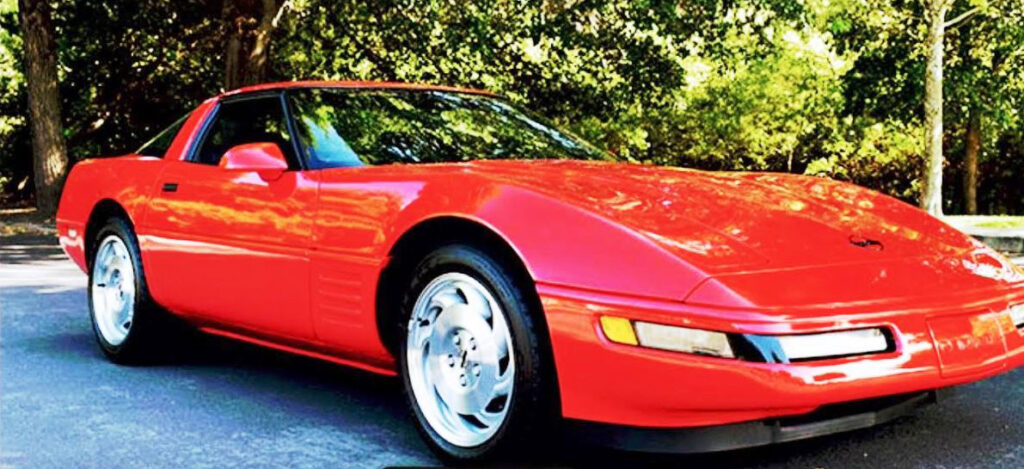
Chevrolet Corvette C4, 1994 
With only 1700 miles on the speedometer, the GM Red 1994 Chevrolet C4 Corvette Coupe Jim bought is in outstanding condition. Although it was not at Wanaka on the day we visited but away with other collections. 
“This really is as close as I’ve ever seen to a brand-new car. It even smells new! It has never been exposed to sunlight, so therefore, the paint is superb. Being plastic [bodywork], Corvettes normally suffer from tiny lines in the paint. The 5000 kilometre black Indianapolis Pace Car I had certainly did have some of it, but this one has none of that as it has always been covered.”
An original Californian car, the Corvette has only had two previous owners before Jim, who originally purchased it specifically for presentation purposes. Chevrolet has been described as ‘The Heartbeat of America’, and Spud’s Garage took this a step further, describing this car as ‘A heartbeat in a bubble’ due to its uniqueness. The car was stored in a protective air-controlled bubble environment for more than 20 years.
Over the years, Jim has built up a rapport with Spud’s Garage owner Brian Hanold, aka ‘The Spudman’. Based in Lake Havasu City, Arizona, Brian has spent many years in the industry. Dedicated to sourcing special interest cars from hot rods to rare classics all over the USA, Brian posts online videos of all the cars he sells.  
The Corvette runs a 5.7L, 350cu in, 300bhp (224KW) V8 with sequential fuel injection, fitted to a four-speed automatic transmission. Trimmed with a Group 1 option package it comes with electronic air-conditioning, Delco-Bose sound system, 6-way powered seats, a performance rear axle ratio, and a number of power options.

Chevrolet Corvette, C4, 1986 
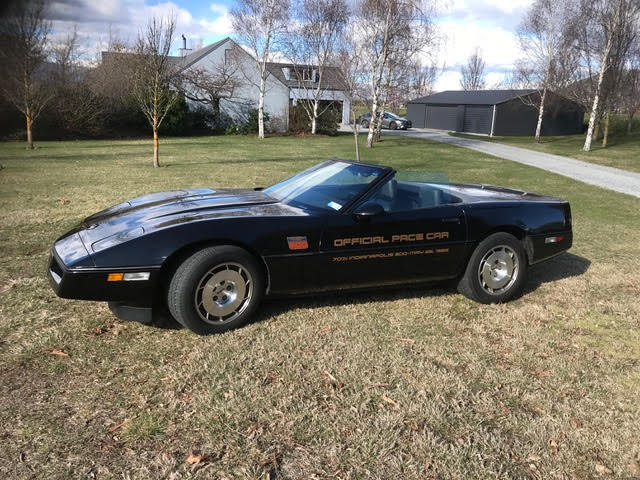
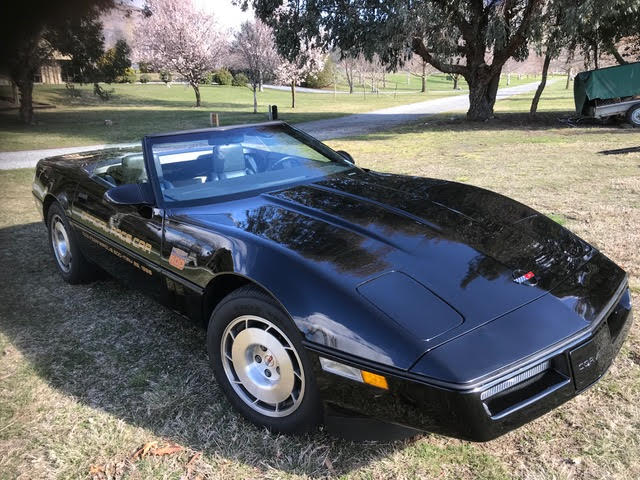
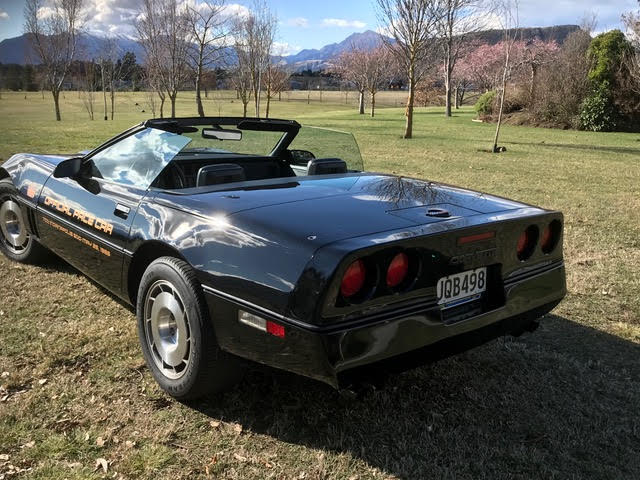
Currently in Dunedin is another example of a 1986 Indianapolis Official Pace Car. This striking black Chevrolet Corvette sold new in California with only 7367 miles (kms) on the speedometer and just one previous owner. It has been garaged all its life. Its paintwork is original and unmarked, and it’s loaded with every extra, including full leather interior seats and trim. Prominently displayed on the dashboard is GM’s Indianapolis Official Pace Car badge. The car is powered by a 350cu in V8 with twin-port fuel injection and fitted with a four-speed automatic transmission. With gold Indianapolis decals over the glossy black paint, this is an impressive car.  
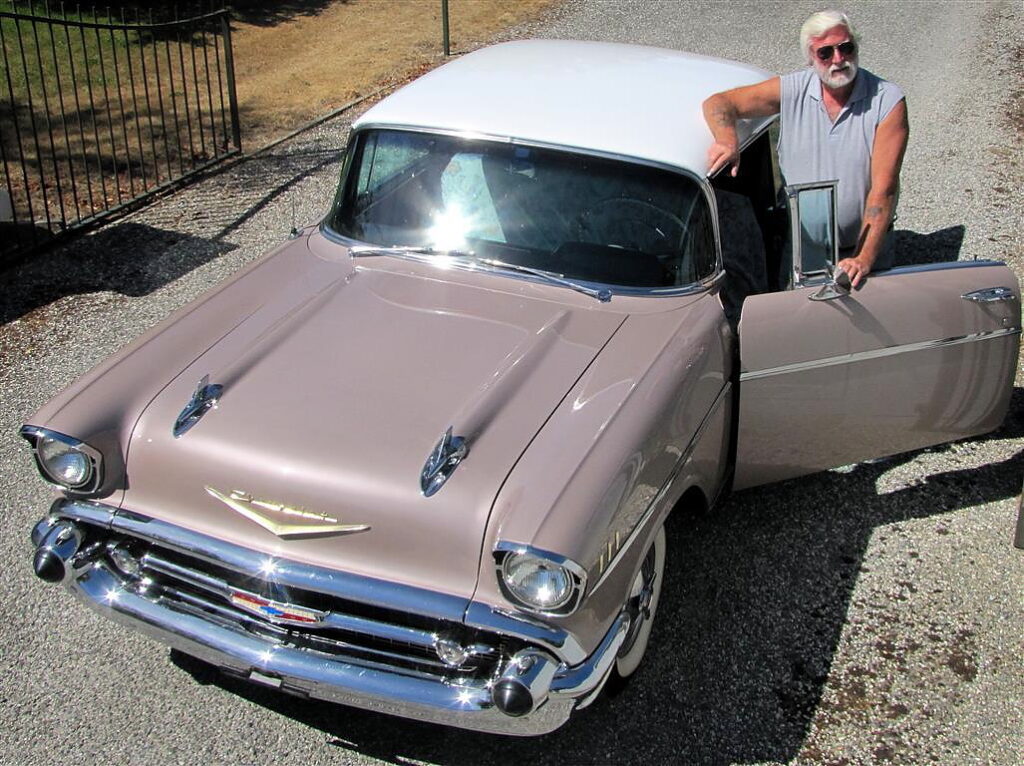
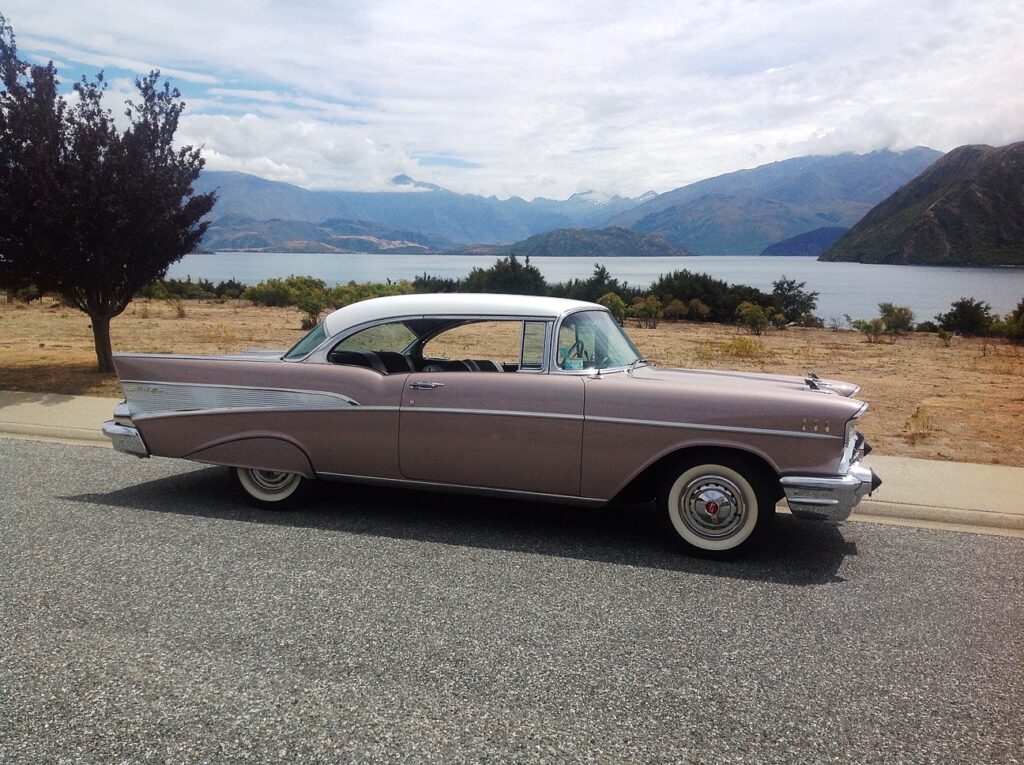
Jim rarely sells any of the collection, but in 2016, there was one notable exception for a 1957 Chevrolet Two-Door Hardtop. The car’s second owner, Ron Gajarian, had contacted Jim with a pleading letter, explaining how he regretted selling the car in 2004 after he’d restored it, so Jim returned the Chevrolet to Ron in Clovis, California. 
“My immediate reaction was, no, I don’t sell any of my cars. But on further reflection, here’s a guy who had that car most of its life and would like it back again. So, the car’s gone back.”
Back in the USA, its delighted new owner sent Jim and Daphne a heartfelt email saying, “Thank you…What a day. Having her back is like a reunion with a relative or family member. And you made it all possible.”
He also appreciated Jim and Daphne’s kind gesture by placing a collection of New Zealand memorabilia inside the Chevrolet.

NZ Classic Car magazine, September/October 2026 issue 407, on sale now

We love bugs!
A bit of TLC that became a major restoration
The 1302S, or ‘Super Beetle’ as it became known, was built for two years before it, too, was replaced by a further-enhanced Beetle, the 1303, continuing an amazing 65-year lineage for one of the World’s best-known shapes.
The world’s best-selling single-model vehicle, the VW Beetle, possibly established another record for the amount of controversy it has created since the inception of the Type 1.
In a meeting with Hitler in June 1934, Ferdinand Porsche was contracted to build a ‘People’s Car’ that could accommodate two adults and three children, was air-cooled and simple to maintain, and could cruise economically at moderate speed along Germany’s proposed new Autobahns.
Our feature car, a 1972 1302S ‘Super Beetle’, was found by Dave and Michelle Dickie in Mosgiel a few years back. It was a runner, but like most VWs of this age, it needed a little TLC. They were looking for a daily driver for Michelle when they first came upon the VW being sold locally on behalf of its owner.
“The owner offered it to his grandchildren, and they didn’t want it, so he got the guy out at Mosgiel in the Mobil petrol station to sell it for him, and he put it on Trade Me for them. We never met the owner, and we were always dealing with the guy at the petrol station. We put a bid on it, and we were the only people that bid on it.”
Their bid was eventually successful, eight years ago. Not knowing much of the history, in situations like that, it’s always a risk buying a car, but they were in for a bit of a surprise.

The other Q car

Say the word ‘bond’ to anyone in the street and around 80 per cent straight away think of pop culture’s least-secret secret agent. The other 20 per cent may think of the wad of cash required to secure a flat or hire equipment that one gets back providing the fixtures and fittings stay much as they were.
However, mention ‘bond’ in specialist classic car circles and people will spin a very different yarn. If you dig deep enough, you will find an eccentric British carmaker that, throughout its 23 years in business, spawned some quirky and charming little cars.
The company was founded by Paul Sharp in 1922 under the name of Sharp’s Commercials Limited. However, the company did not start producing cars until 1948. The first car to carry the Bond name was the Bond Minicar. A three-wheeled, soft-top, two-cylinder eco car, the Minicar was a big hit at the time as the desire for an economical urban runabout that didn’t attract four-wheel car tax was strong in post-war Britain. All in all, 34,285 Minicars were produced over 26 years in a variety of variants.