The ultimate journey – 1959 Cadillac Commercial

2 October, 2024

Christopher Moor had always wanted to ride in a 1959 Cadillac and, happily, he was still in a position to enjoy the sensation
By Christopher Moor, photography Ross de Rouffignac

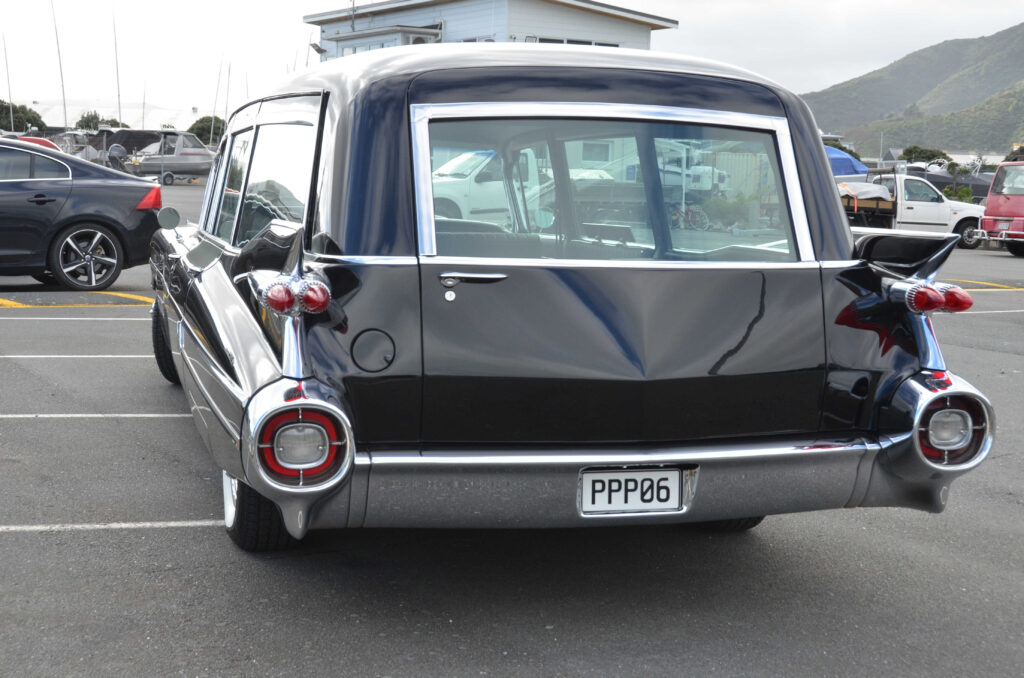
Simon Manning had a clear idea of a dream hearse: a 1959 Cadillac. He found one but it took eight years of restoration to give this handsome classic a new life in New Zealand, where it would once again ferry those entering the next life.
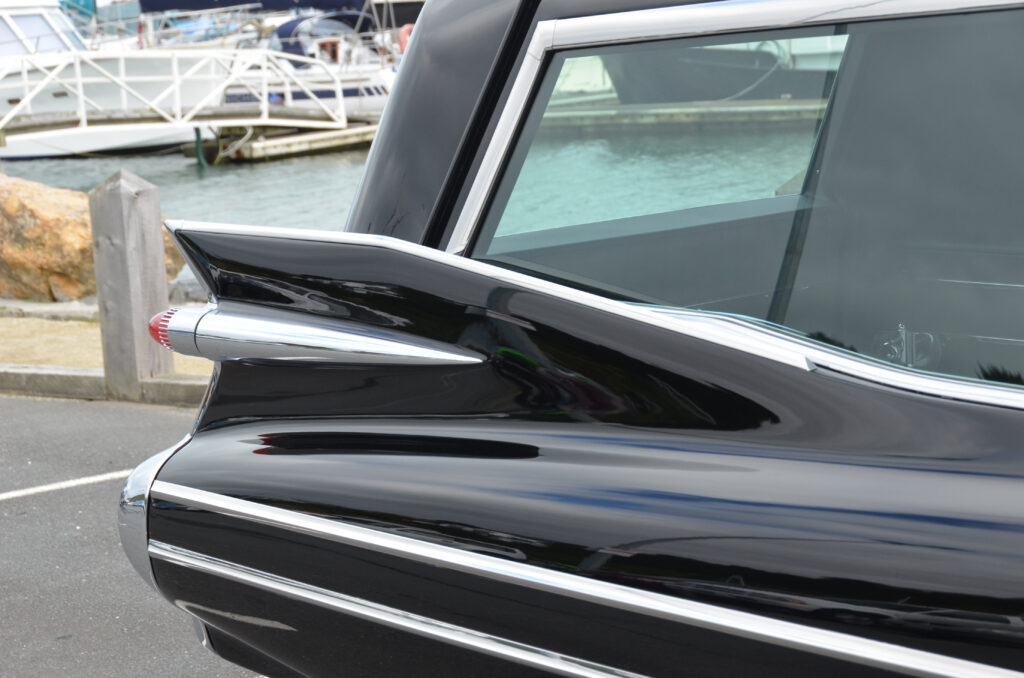
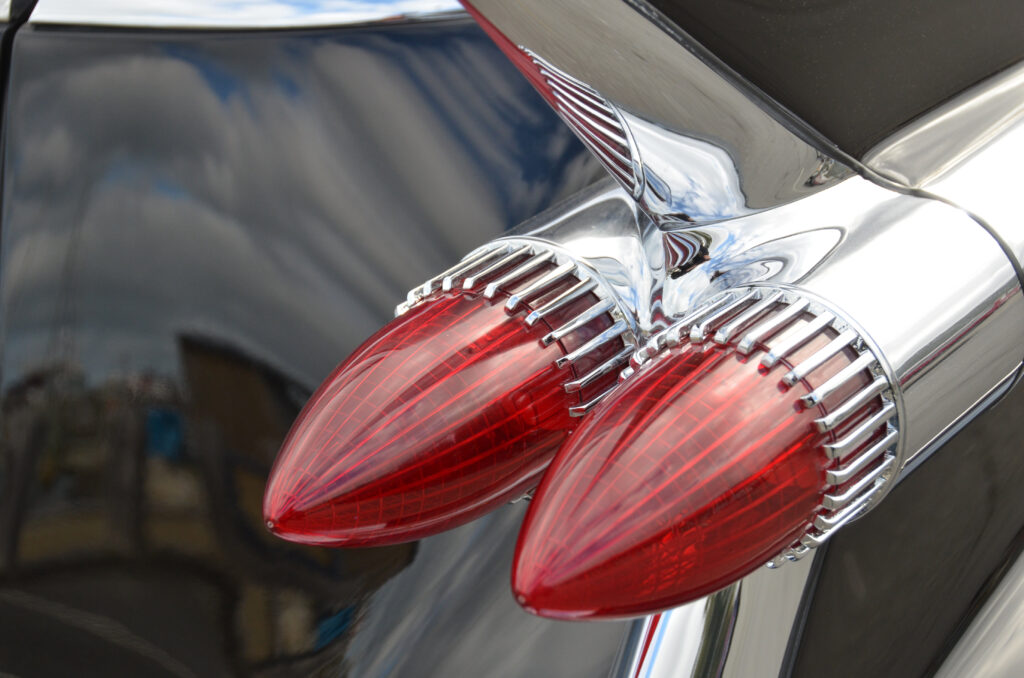
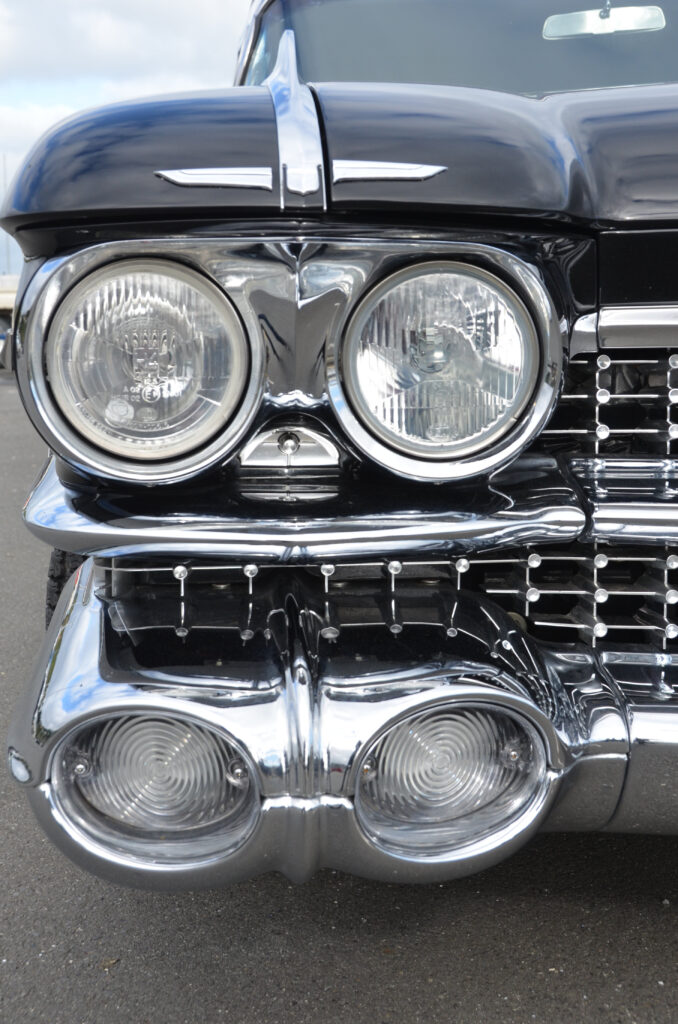
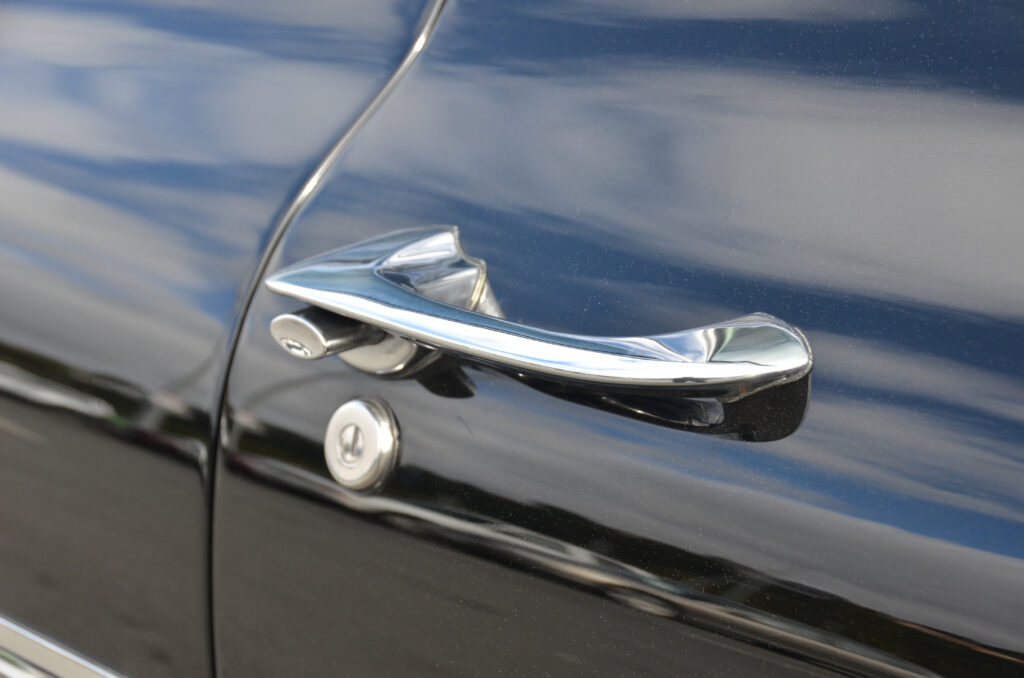
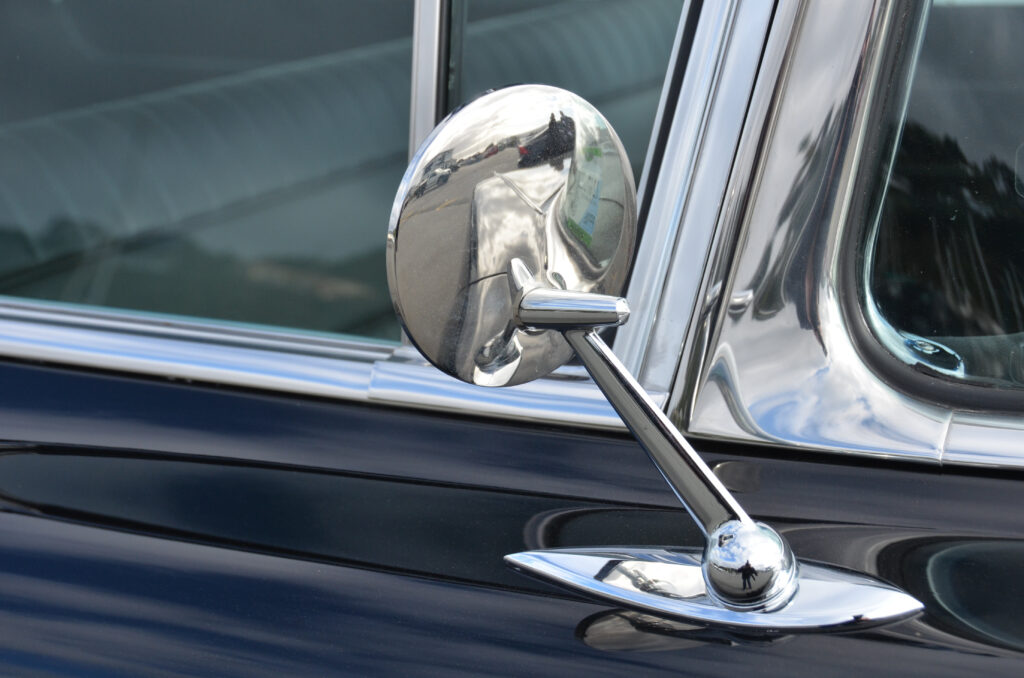
Simon says every part of this American import received attention in the restoration, right down to the last nut and bolt. During the photo shoot, photographer Ross de Rouffignac said the workmanship looked flawless through both his naked eye and his camera lens.
I first saw this hearse during its first New Zealand public appearance at Moonshine Rod and Custom Club’s American Vehicle Day in February 2021. During the show, Simon received many compliments about his Cadillac’s gleaming chrome and smooth, shiny paintwork. While the vehicle looked ready for work, what the public couldn’t see was the fine-tuning required before the vehicle became ready to join the team at Harbour City Funeral Homes.
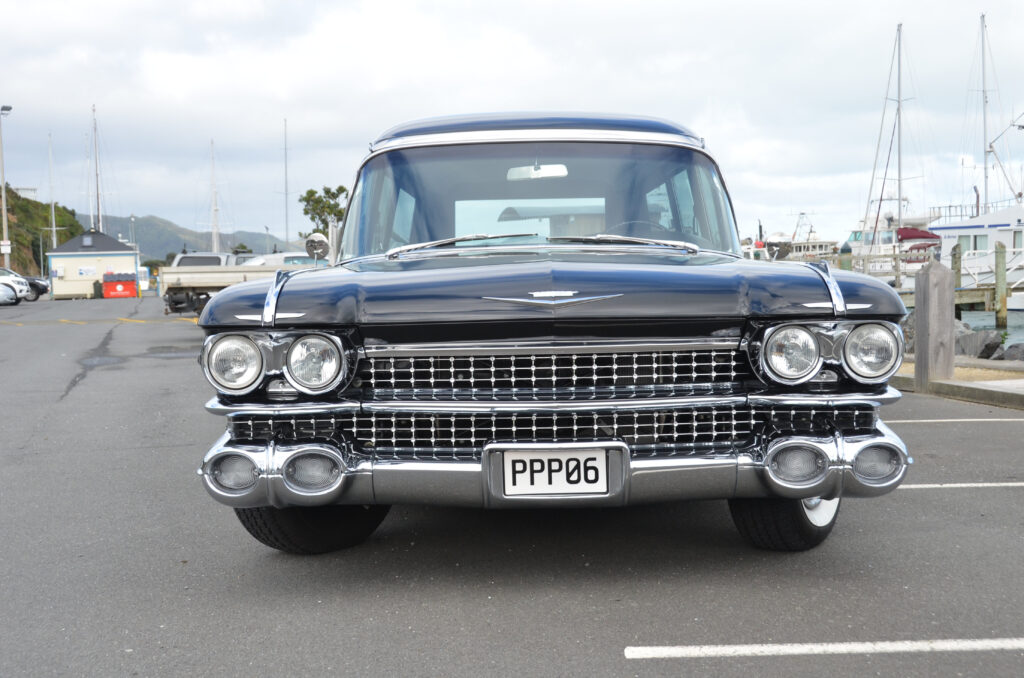
Simon calls his hearse Colin, in memory of the remarkable artist Colin Simon (1938–2021), whose funeral a branch oversaw in early 2021. He says Colin Simon’s family was over the moon that his story will be shared many times as people come to admire the Cadillac. Simon had a minor disappointment when he couldn’t get the personalised plate ‘Colin’; someone else had already registered it.

A tale of two Colins
If Colin Simon’s name is not familiar to many readers, his work may be. They could have a piece in their homes without actually realising it. His designs included New Zealand’s Olympic Games logo, and his competition-winning, iconic logo for the 1974 Commonwealth Games is now a design classic. The popular Crown Lynn Carnaby dinner set pattern won him the New Zealand Pottery’s 1967 design competition.
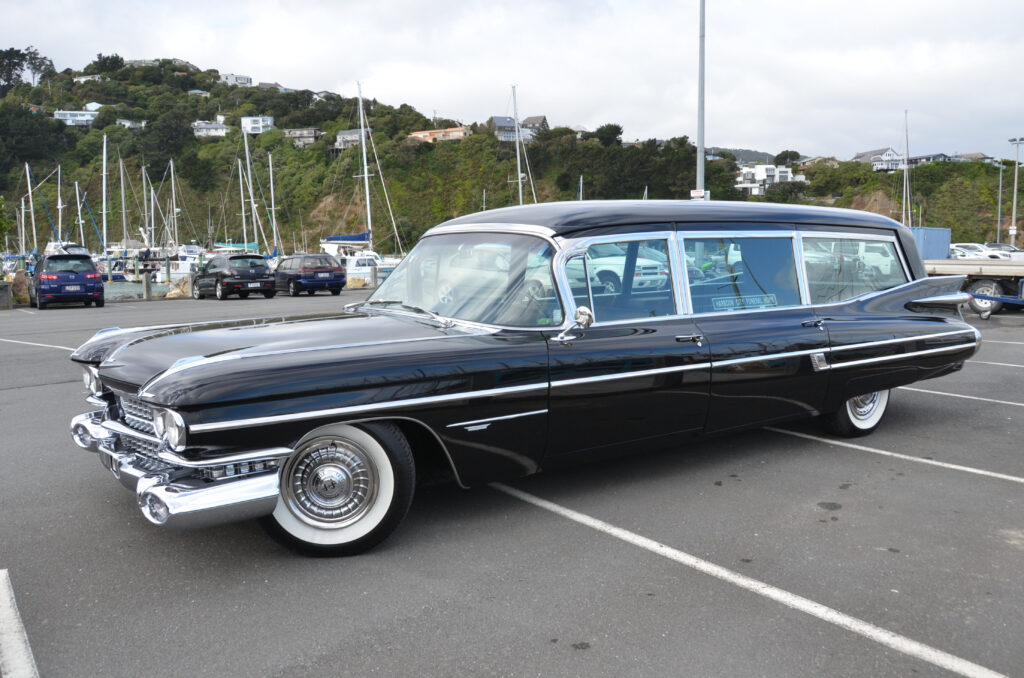
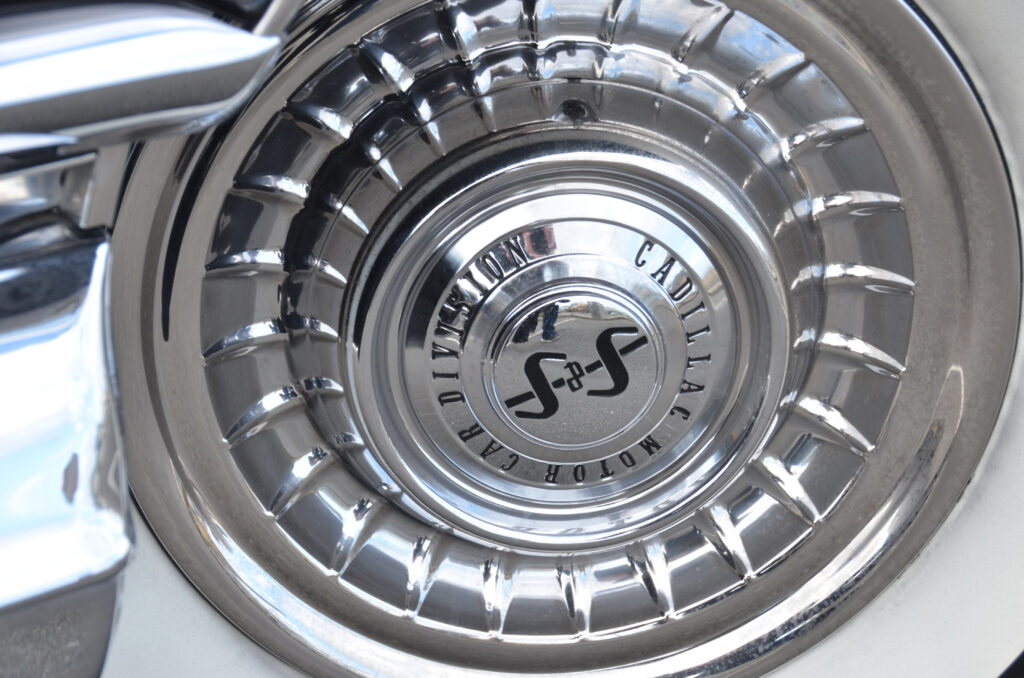
Colin the Cadillac is an S&S-style combination hearse ambulance on a 1959 Cadillac commercial chassis. The letters S&S stand for the Sayers and Scovill Company, a coachbuilding firm in Ohio that specialises in coachwork for Cadillac hearses and professional cars.
General Motors’ Cadillac division built the Cadillac Commercial chassis from 1931 to 1979. The chassis was designed for coachbuilders to manufacture and fit the required bodywork to customer specifications. Originating on the Series 355 models, the Commercial chassis moved to Series 75 models after the discontinuation of the Series 355 in 1935. A change in design regulations and the downsizing of Cadillac sedans coincided with the phasing out of the range’s Commercial chassis.
Ever since he was a young funeral director Simon Manning had dreamt of owning a 1959 Cadillac hearse, after seeing pictures of them in the older professional publications. He believes this Cadillac model is the most attractive hearse ever produced.
At least two years before Simon bought Colin in the US in 2013, he had made preparations for the arrival of a 1959 Cadillac hearse in the fleet, with the design of the glass-fronted garages at the funeral homes. They also had to accommodate Dotty, his 1936 Packard hearse (NZCC Dec 2006) which would share duties with the Cadillac.

Axe-ident damage
Simon knows more about the Packard’s history than he does about Colin the Cadillac’s. He has no idea how many owners this hearse has had, and believes a former owner had the body painted pale blue for the purpose of selling.
Colin arrived in New Zealand with the unbecoming pale blue body and a silver vinyl interior. While the hearse looked quite good in the auction photos, the reality told another story. When it came to the sales blurb, the seller was at least guilty of the sin of omission.
Colin had spent three years rusting in an open paddock prior to Simon’s purchase. During that time someone had senselessly attacked the glass and chrome with an axe. When the carpet was removed, it was discovered 90 percent of the rusty floor needed renewing.
Simon decided to restore the hearse to the condition an owner receiving the car new in 1959 would experience. He handed the car over to the care of David Wilkens, Damon Turipa, and the able team at Bristols Automotive Specialists in Upper Hutt, where a complete restoration occurred.
“I’d never do it again,” says Simon. “I would never have dreamt of spending what I have, but you can’t stop once you’ve started.”
Simon called the cost astronomical and quickly steered the conversation in another direction.
David Wilkens drove the hearse from the shipping yard to the workshop, a decision he would change with hindsight. The vehicle’s brakes were shot and it was very unsafe to drive.

A considerable number
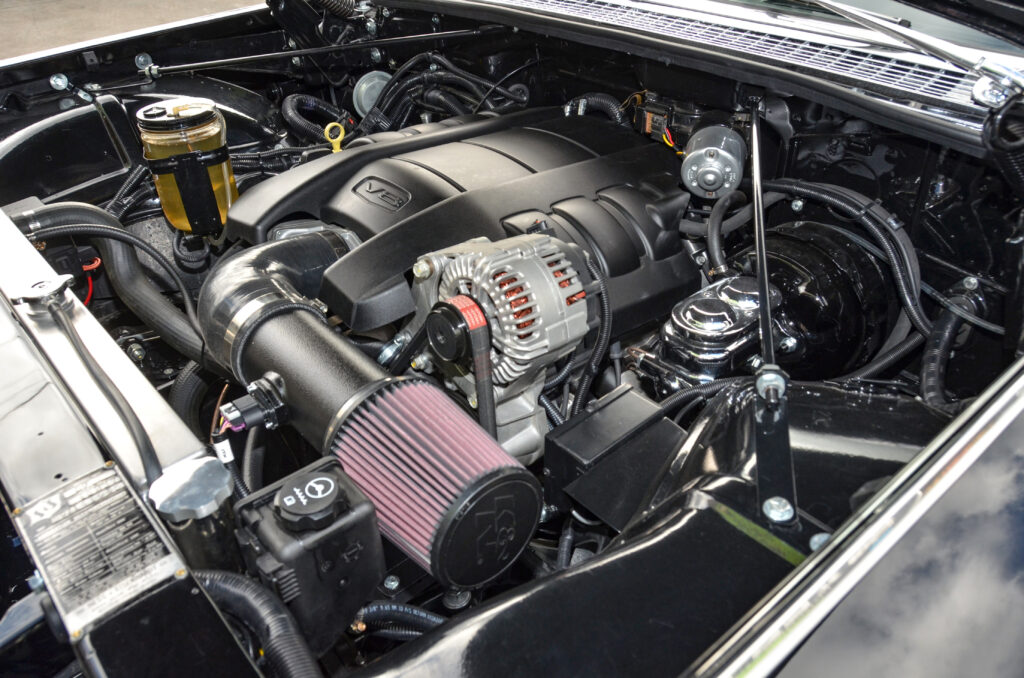
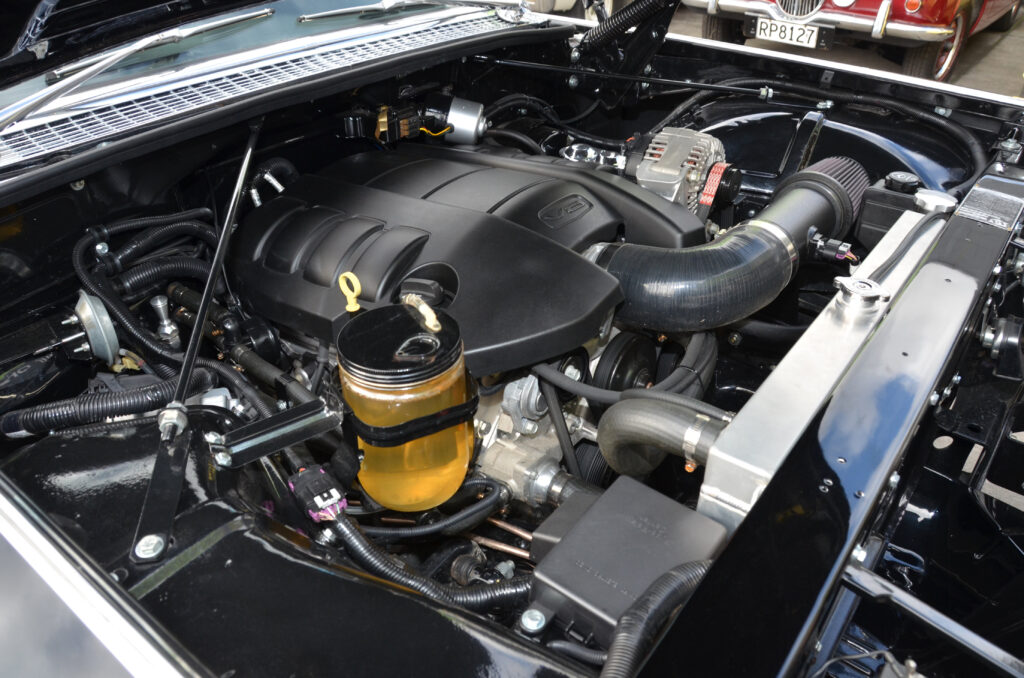
An indication of where some of the money went is in the skilled, painstaking workmanship of David Wilkens, who told me he spent a considerable number of the total of 800 hours in removing all the small dents from the chrome work. About 60 percent of the body eventually required rust removal or replacement, A new 6.2-litre Chevrolet LS3 crate motor with 317kW (431hp) has replaced the Chev 350, which replaced the original Cadillac 390ci V8. Suspension, brakes, wheels, and tyres were all upgraded, adding to the cost.
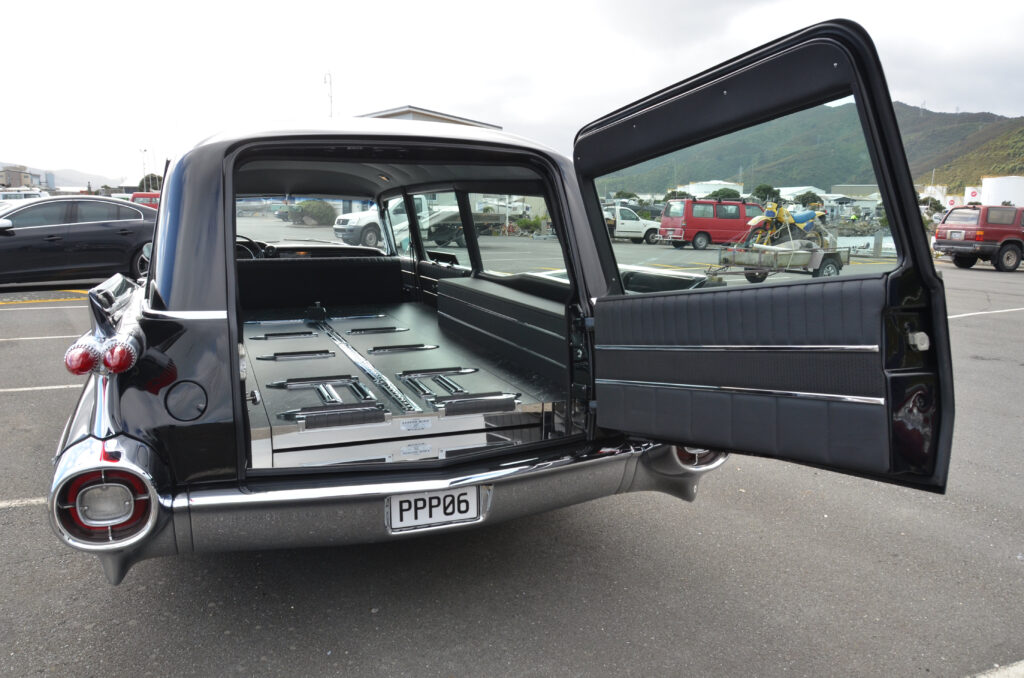
David says working on the Cadillac was a labour of love for him and his crew. It took three men to manoeuvre the grille, proving what Simon says about everything on Colin being big. Colin’s dimensions are: length, 251 inches — one inch under 21ft; wheelbase, 156 inches; and side doors, 64½ inches.
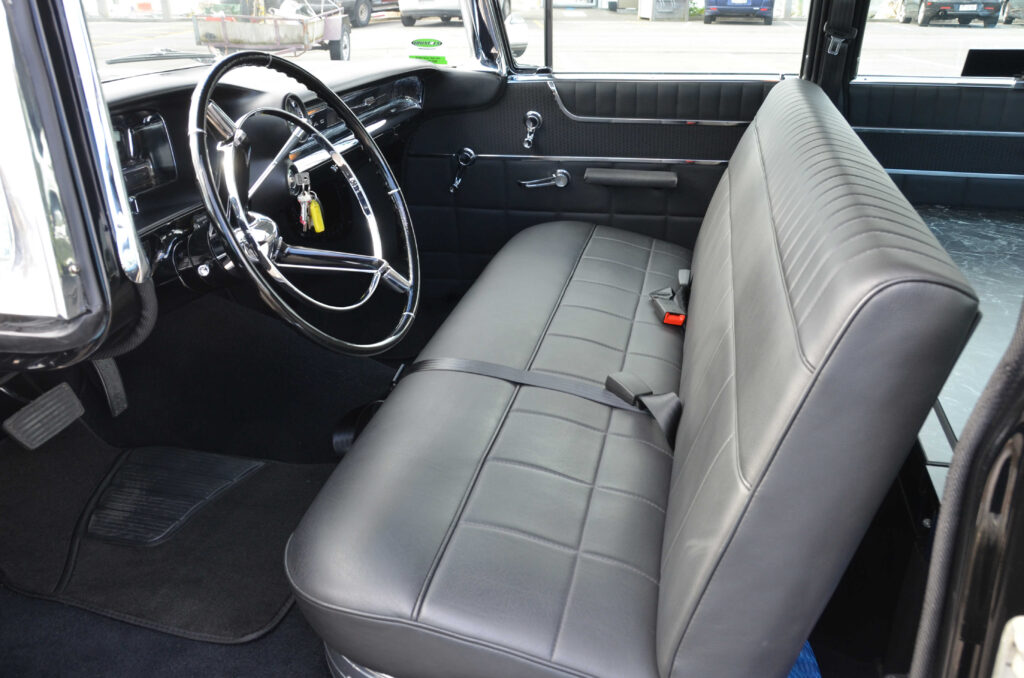
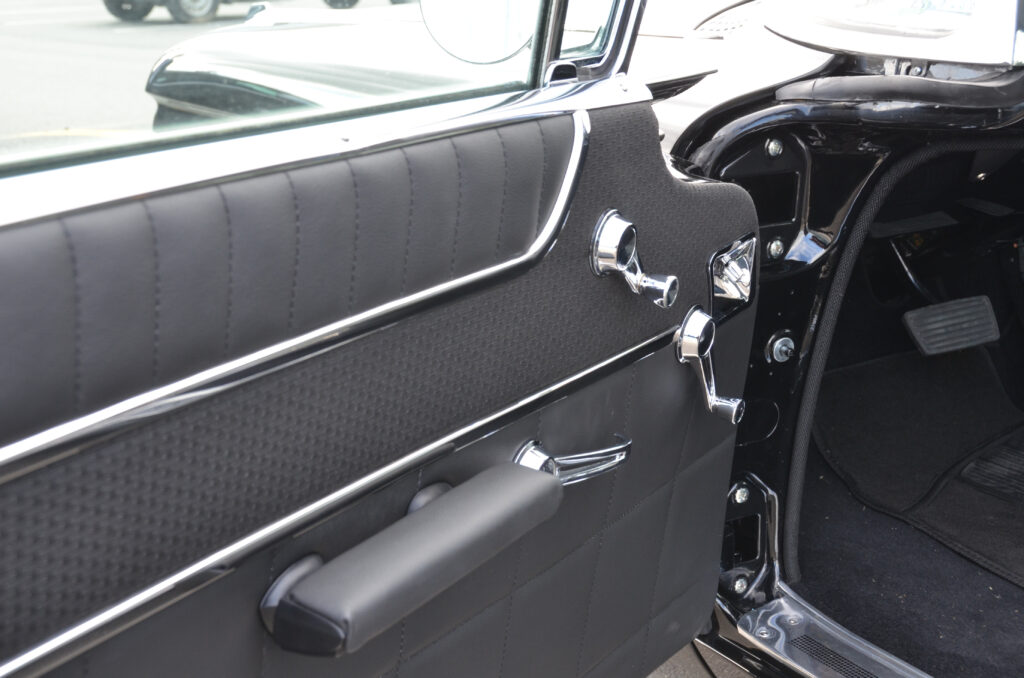
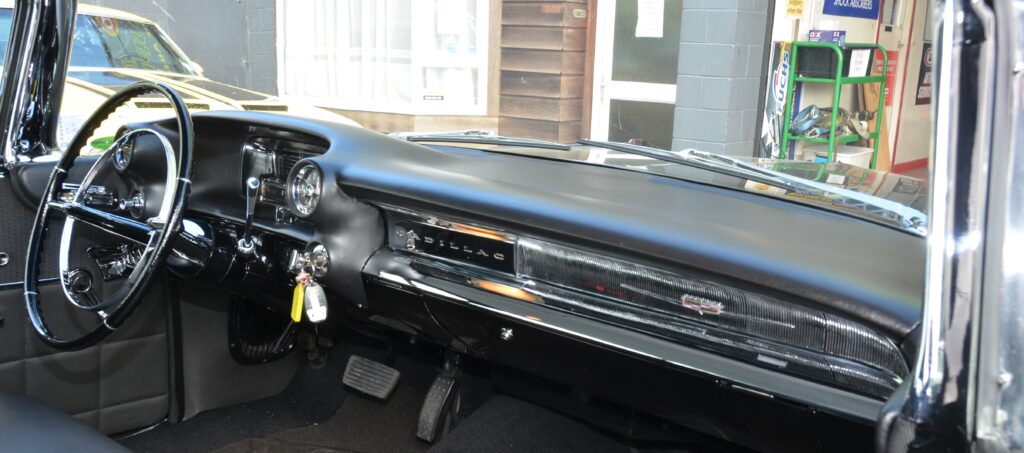
The interior now features smart black leather roof linings and upholstery with black carpet to match the repainted black exterior. The two folding seats at the rear were removed during the restoration and an electric deck fitted to aid the funeral directors with lifting the coffins. This extra space means two coffins could lie side by side for a joint funeral.
Heavy rain the day before the photo shoot restricted the choice of locations. Puddles and slushy ground ruled out several possible sites. Snapping a mud-splattered hearse was not in Ross’s brief.
Simon, Ross, and I wanted something that would bring some colour to the background without detracting from Colin. Seaview Marina was chosen.
With Simon at the wheel, the bench-style front seat comfortably sat the three of us.

Return journey
The ride was quiet and smooth, and judder bars were barely felt, if at all. Colin has a flexibility not expected in such a large vehicle.
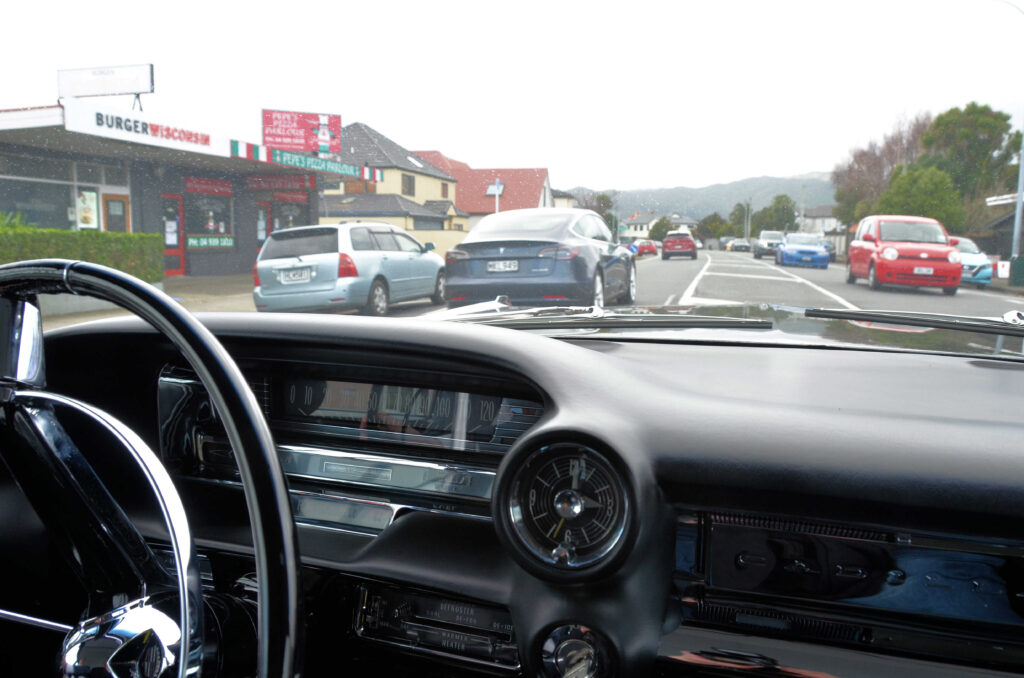
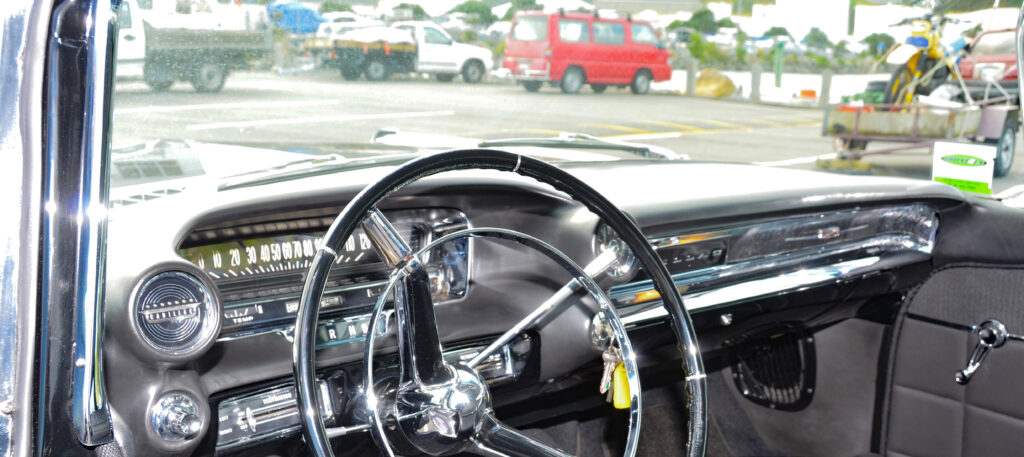
Suburban Lower Hutt has never looked so good as in the view through Colin’s new wrap-around windscreen, which brings the passengers right into the picture.
Simon needs no special license to drive a hearse. He says Colin’s fuel consumption is “hideous” at 8mpg. To be able keep the hearse as a left-hand drive vehicle, he needed to convince the New Zealand Transport Agency that Colin had been built by the manufacturer for use as a hearse and would serve as one again in New Zealand.
Thanks to a talented group of Upper Hutt restorers, Simon’s wish has been fulfilled beyond expectations. Colin, the Cadillac hearse, looks as immaculate as, if not better than, the 59er did when playing his pivotal role at his first American funeral more than 60 years ago. It was a privilege to ride in him while I was alive to enjoy it.
My bucket list wish of riding in a 1959 Cadillac is now fulfilled, albeit in a different model than envisaged. I enjoyed every moment.

Last Tango in the Fast Lane

In the mid ’80s, I locked into a serious Nissan/Datsun performance obsession. It could have kicked off with my ’82 Datsun Sunny, though this would have been a bit of a stretch of the imagination, given its normally aspirated 1.2-litre motor — not the sort of thing to unleash radical road warrior dreams. But it did plant a seed, and it was a sweet little machine and surprisingly quick, in contrast to all the diabolical English offerings I had endured.
I was living in South Auckland at the time and was an unrepentant petrolhead. Motor racing was my drug of choice, and I followed the scene slavishly. Saloon car racing, with the arrival of the international Group A formula, was having a serious renaissance here and in Australia and Europe. There was suddenly an exotic air in local racing that had been absent for 15 years.
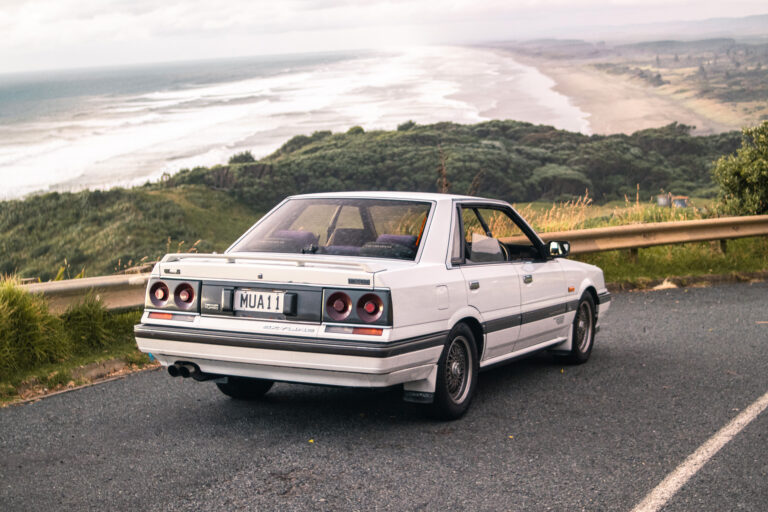
I was transfixed by this new frontier of motor racing that had hit our tracks in 1985–87 and the new array of machinery on display. In 1986, the Nissan Skyline RS DR30 made a blinding impression on me. The Australian Fred Gibson-run, Peter Jackson-sponsored team of George Fury and Glenn Seton were the fastest crew of the 1986 Australian Touring Car Championship. But Kiwi legend Robbie Francevic snuck through to win the Aussie Championship in his Volvo 240T after a strong start and consistent finishes.

NZ Classic Car magazine, May/June 2026 issue 405, on sale now

Reincarnation of the snake
We are captivated by a top-quality sports car
The Shelby NZ build team at Matamata Panelworks has endured a long and challenging journey, culminating with the highly anticipated public unveiling of the 427SC and firing up of its sonorous V8 at the 2026 Ayrburn Classic Festival of Motoring in Queenstown on February 20. This is a New Zealand-built car with loads of character and potential.
The car is now back in Matamata, and I finally have an opportunity to get up close and personal with it. But before then, the question that must be asked is, “Why would ya?”
The first answer is easy, as mentioned in the last issue of New Zealand Classic Car (#404). It was a great way to use up all the surplus Mustang parts acquired while converting brand-new Mustangs into Shelbys. The unused new Mustang parts would be great in any kit car, but the 427SC in front of me cannot be classified as one.
This is not a kit car. The reality is that it is a high-quality, factory-made production car.
Possibly the second answer is because the CEO of Matamata Panelworks, Malcolm Sankey, wanted to build a replica of the car that is a distant relation to the Shelby Mustangs scattered around his showroom floor, a car created long before the first Mustang was even thought of, and the brainchild of Carroll Shelby back in the early ‘60s.